
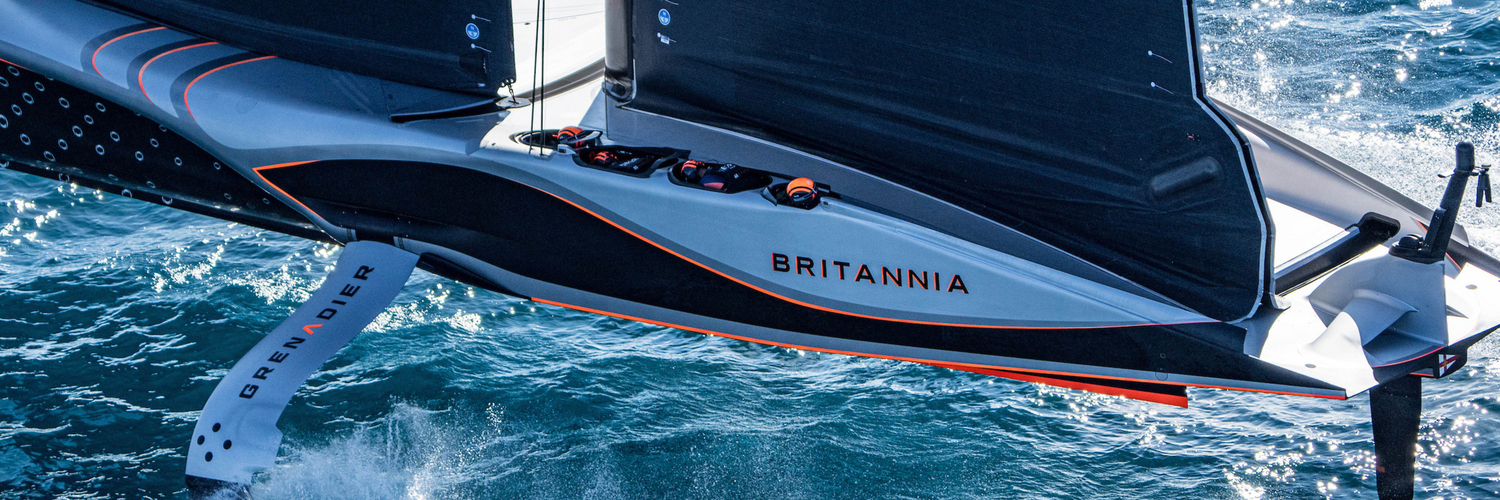
AC 101: Everything you need to know

The America’s Cup is the oldest trophy in international sport. Older than the modern Olympics, older than the Ashes, older than the FIFA World Cup. First contested in 1851, it predates virtually every major sporting competition on the planet – and is also one of the hardest to win.
In over 174 years, just four nations have lifted the famous silver ewer: the United States, Australia, New Zealand and Switzerland. Britain, despite initiating the competition and mounting more challenges than any other nation, has never won it. Teams from Italy, France, Spain, Germany, Japan and others have tried. None have succeeded.
For many sailors, the Cup represents the pinnacle of the sport – a fusion of cutting-edge technology, elite athleticism and staggering budgets. For everyone else, it can seem bewildering: a competition wrapped in arcane rules, legal battles and billionaire egos.
Here’s everything you need to know…
1851: The race that started it all
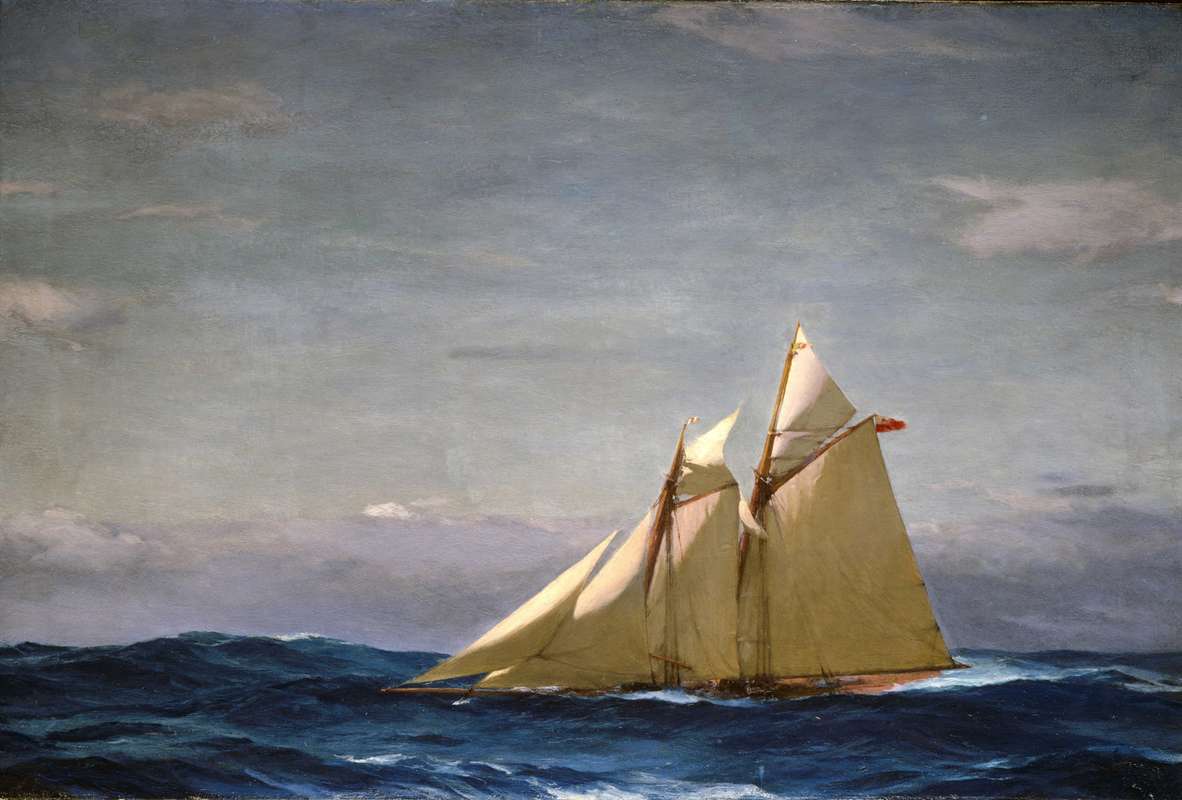
The trophy was manufactured in 1848, crafted by the Crown Jewellers R&S Garrard on London’s Panton Street. Originally called the RYS £100 Cup, it was put up by the Royal Yacht Squadron for a race around the Isle of Wight on 22 August 1851. That summer, a 93-foot schooner named America had crossed the Atlantic from New York. Her syndicate of wealthy sportsmen wanted to showcase American shipbuilding ingenuity at the Great Exhibition – and to take on the best the British fleet could offer. America was radical from the outset: sleek lines, flat-cut cotton sails where the British used heavy flax, and a hull form that sliced through the water rather than ploughing over it. When she arrived off Cowes, the effect was immediate. The Times reported that her appearance had ’the effect which the appearance of a sparrow hawk on the horizon creates among a flock of wood pigeons’. Wealthy owners who had been eager to wager suddenly went quiet. On race day, Queen Victoria watched from the Royal Yacht as America carved through the 15-boat fleet. The tale goes that when she asked which vessel was winning, a signalman replied: ’The America, Your Majesty.’ And which was second? ’Ah, Your Majesty, there is no second.’ The story may be embellished – the signalman’s name was never recorded – but it stuck. That phrase has defined the competition ever since. Six years later, in 1857, the surviving syndicate members donated their trophy to the New York Yacht Club under a Deed of Gift, renaming it the America’s Cup and establishing it as a perpetual challenge trophy for ’friendly competition between foreign countries’. They had apparently considered melting it down for commemorative medals. Thankfully, they thought better of it. What followed was the longest winning streak in sporting history. American boats successfully defended the Cup 24 consecutive times over 132 years – until Australia II, with her revolutionary winged keel, finally broke the drought in Newport, Rhode Island in 1983. That moment changed everything, opening the floodgates to challengers from around the world. But the Cup’s peculiar structure, rooted in that original deed, endures to this day.
Defender vs Challenger: How the Cup format works
The America’s Cup is not a regatta in any conventional sense. It’s a match race – one boat against another, sailing’s equivalent of a boxing title fight. And like boxing, there’s a champion and a challenger. Except in this sport, the champion gets to pick the venue, set the rules and design the ring.
This is the Cup’s defining quirk. The Defender – the yacht club that holds the trophy – enjoys enormous structural advantages. They choose where the next edition will be held, they negotiate the class of boat to be sailed, and they’re guaranteed a place in the final match while everyone else fights for the right to face them.
The Challengers, meanwhile, must first battle each other in an elimination series. Since 1970, when multiple international challengers arrived wanting to take on the New York Yacht Club, this has evolved into a formalised competition. For decades it was known as the Louis Vuitton Cup; in 2021 it became the Prada Cup, before Louis Vuitton returned as title sponsor in 2024.
The first valid challenger to lodge their bid becomes the Challenger of Record – a privileged position that allows them to negotiate terms with the Defender on behalf of all challengers. It’s a delicate dance of diplomacy and self-interest, and it doesn’t always go smoothly.
Part of the America’s Cup’s mystique is that it has never been contested on a level playing field, literally or metaphorically. The deck is deliberately stacked in favour of the Defender. Critics call it antiquated; purists argue it’s precisely what makes winning so difficult and so prestigious.
In over 174 years, just four nations have managed it. There really is no second – and the boats those nations have sailed have changed beyond recognition.
The endless reinvention
The America's Cup has always been a design race as much as a sailing contest. From the moment America arrived in 1851 with her radical flat-cut sails and sleek hull, outpacing the British fleet's 'cod's head and mackerel tail' schooners, innovation has been baked into the competition's DNA.
The boat classes have evolved dramatically. Schooners gave way to sloops in the 1880s. The glamorous J-Class yachts defined the 'Golden Age' of the 1930s – huge, beautiful machines between 76 and 88 feet on the waterline, bristling with technological advances like duralumin masts and early electronics. After World War II, economic reality forced a shift to the smaller, more affordable 12-Metre class, which produced some of the fiercest battles in Cup history – culminating in Australia II's revolutionary winged keel that ended 132 years of American dominance in 1983.
Since then, change has accelerated. The International America's Cup Class monohulls dominated from 1992 to 2007. Then came the multihull era: first the giant AC72 catamarans that foiled spectacularly beneath the Golden Gate Bridge in 2013, then the smaller AC50s in Bermuda in 2017 – boats that would later evolve into the F50s now used in SailGP.
For the 36th Cup in Auckland in 2021, the competition returned to monohulls – but not as anyone had known them. The AC75 is a foiling monster, capable of speeds exceeding 50 knots, flying above the water on hydrofoils in a way once thought impossible for single-hulled boats.
Why do classes keep changing? Because the Defender chooses. However, the AC75 has now been used for three consecutive editions – AC36, AC37 and the upcoming AC38 – bringing rare continuity to a competition defined by constant reinvention.
The deal that could change everything
For 174 years, the America’s Cup has operated on a simple if brutal principle: win the trophy, and you inherit the burden of defending it. The Defender chooses the venue, negotiates the rules and foots much of the bill. It’s a system that has produced drama, innovation and no shortage of legal battles – but it has also made long-term planning almost impossible.
That changed in October 2025 with the formation of the America’s Cup Partnership.
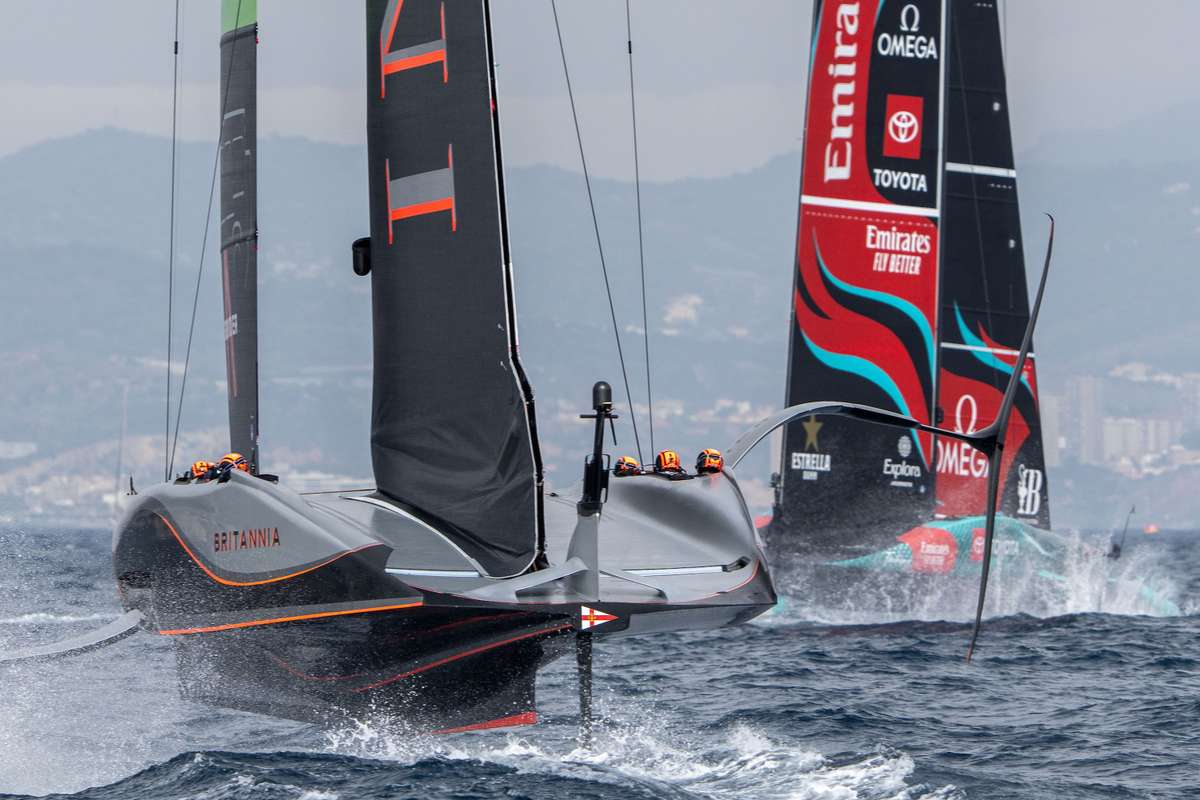
The architects were Grant Dalton, CEO of Emirates Team New Zealand, and Sir Ben Ainslie, whose Athena Racing team represents the Royal Yacht Squadron as Challenger of Record. With support from the New York Yacht Club, the pair spent over a year convincing stakeholders that radical change was necessary. Dalton’s motivation was clear: without restructuring, he believed the Cup might not survive another decade. Ainslie called it the biggest step change in the competition’s history.
Under the new structure, teams entering the Cup take a seat on a governing board that agrees on rules, schedules and venue selection. The financial burden of hosting is shared. The aim is to enable longer broadcast and sponsorship deals, and potentially shift to a two-year cycle.
Not everyone is convinced. Critics argue that democratising the Cup strips away its unique appeal – the winner-takes-all ethos that has drawn billionaires and national pride for generations.
Supporters counter that without change, the Cup risked fading into irrelevance – too expensive, too infrequent, too difficult to monetise in a modern sporting landscape increasingly dominated by circuits like SailGP.
Whether the Partnership secures the Auld Mug’s future or dilutes what made it special remains to be seen. But the debate speaks to a deeper question: where does the America’s Cup really sit in the modern sailing world?
Pinnacle or sideshow?
Ask ten sailors whether the America’s Cup is the pinnacle of the sport and you’ll get ten different answers – several of them unprintable.
For its advocates, the Cup represents the ultimate expression of what sailing can be. It’s an innovation laboratory, a forcing function for technology that eventually trickles down to the rest of the sport. Carbon fibre rigs, composite sails, foiling technology – all were refined under the intense competitive pressure of Cup campaigns before filtering into everything from offshore racers to weekend dinghies. The comparison with Formula 1 is apt: teams spend years and hundreds of millions developing marginal gains, and sometimes those breakthroughs change how all of us sail.
But for many traditional sailors, the modern Cup feels alien. The boats fly above the water. The crews are hidden in cockpits. The sails are referred to as wings. Nothing about an AC75 resembles the experience of racing a club dinghy or cruising a keelboat. Some fans who grew up idolising 12-Metre duels and visible crew work now admit they simply check the scores and move on.
There’s also the question of what gets tested. The America’s Cup optimises for flat-water speed in a narrow wind range on a short course. It doesn’t reward seamanship across an ocean, or crew choreography through sail changes, or the tactical depth of a 30-boat fleet. Those skills are celebrated elsewhere – in the Vendée Globe, the Sydney to Hobart, or increasingly in SailGP, which many fans now consider a superior television product thanks to its fleet racing format and one-design boats.
And yet, at least for now, the Cup endures. The trophy’s age, its history of legal battles and billionaire egos, its winner-takes-all brutality – these things still captivate, even if they sometimes feel like prestige sustained by sheer force of wealth and tradition.
Perhaps the truth is that the America’s Cup no longer represents sailing as most people experience it. Instead, it’s what sailing becomes when money and engineering ambition are given free rein. Whether that excites or alienates you depends on why you fell in love with the sport in the first place.
What’s next: AC38 in Naples
The Louis Vuitton 38th America’s Cup will be held in Naples, Italy for the very first time, in the spring and summer of 2027. Emirates Team New Zealand return as Defenders, seeking an unprecedented fourth consecutive title, while Sir Ben Ainslie’s Athena Racing – representing the Royal Yacht Squadron, the club that started it all 176 years ago – lead the challenge.