
AC38: Everything we know so far

Updated on 11 Jan
What is AC38?
The 38th America's Cup. The oldest trophy in international sport, first raced off the Isle of Wight in 1851 when a New York schooner called America humiliated Queen Victoria's fleet so thoroughly that legend says she asked who came second. The answer, supposedly: "There is no second, Your Majesty."
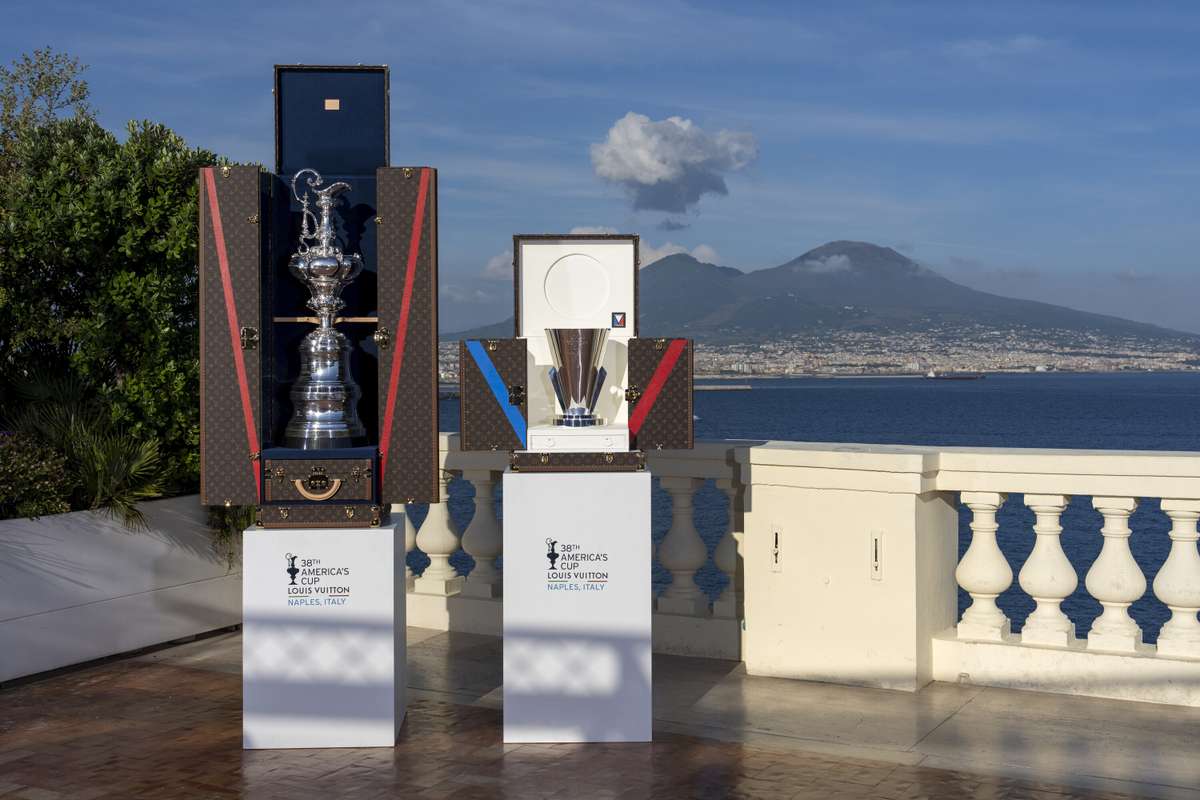
175 years on, the boats, the rules, and the technology have changed beyond recognition, but the fact remains: only one team can leave with the trophy. One Defender. One Challenger. Head-to-head match racing, best of 13, first to seven wins takes the Auld Mug. Naples will host in 2027, with Emirates Team New Zealand defending for what they hope will be a fourth consecutive victory.
The AC75s are back, but protocol changes have redrawn the battle lines and generated no shortage of drama. Whether AC38 represents the Cup's reinvention or its slow unravelling depends on who you ask – and we'll get to that.
Who’s defending the Cup?
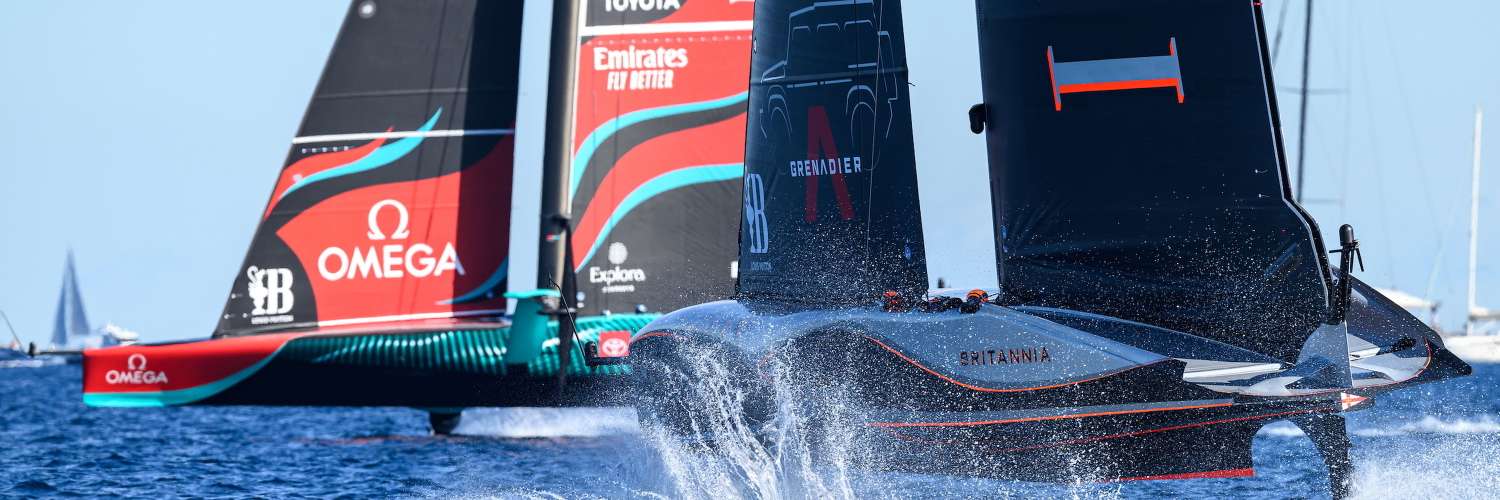
Emirates Team New Zealand are back, representing the Royal New Zealand Yacht Squadron. In Barcelona October 2024, they dispatched INEOS Britannia 7–2 to claim their third consecutive win and their fifth Cup overall, cementing their status as the most successful team in modern Cup history. Their AC75 was undoubtedly the quickest package in Barcelona. The question now is whether they can maintain that edge with a different driver at the helm.
Peter Burling, three-time Cup winner and arguably the best sailor of his generation, departed for Luna Rossa in June 2025, along with fellow Kiwi Josh Junior. Grant Dalton, Emirates Team New Zealand CEO, moved quickly to reload. Nathan Outteridge – Olympic gold medallist, SailGP driver for new Team Sweden, and co-helmsman alongside Burling in Barcelona – will now lead the charge. His crew includes Andy Maloney, Blair Tuke, Sam Meech, and new signing Chris Draper. The Defenders are already training on their AC40s in Auckland and will launch their AC75 in Naples this year.

Who is the Challenger of Record?
The Royal Yacht Squadron Racing – the same club that lost the Cup 175 years ago and has been chasing it ever since – holds Challenger of Record status for the second consecutive cycle. But the team representing them has undergone a traumatic transformation.
When ETNZ lifted the trophy in Barcelona, everyone assumed the British challenge would continue as INEOS Britannia, with Sir Ben Ainslie at the helm and Sir Jim Ratcliffe's petrochemicals fortune bankrolling the operation. That setup lasted barely three months. By January 2025, Ainslie and Ratcliffe had split – acrimoniously and publicly – and by April, INEOS had withdrawn from Cup racing entirely.
Ainslie described the divorce as "probably the most difficult thing I've ever been through in my life, from a personal or sporting perspective."
Ainslie’s Athena Racing was there to pick up the pieces. He retains Challenger of Record status, the AC75 hull from Barcelona, and most of the sailing squad. Ian Walker – Olympic medallist, Volvo Ocean Race winner, former British Sailing Team performance director – has been appointed CEO. Dylan Fletcher, who co-helmed Britannia to the Cup match in 2024 and more recently steered Britain to the SailGP title, will be back on the wheel.
But Ainslie won't be sailing. For the first time in his America's Cup career, he's staying on shore, focusing on design, funding, and strategy. The man who won four Olympic golds and lifted the Cup with Oracle in 2013 is hanging up his sailing boots. Whether by choice or necessity – he also has a SailGP title to defend – Ainslie's keeping his feet on dry land.
After a year of uncertainty, the funding question was answered in late December 2025. Oakley Capital, which owns North Sails Group and a portfolio of marine industry suppliers including Southern Spars, Doyle Sails, Quantum Sails, and Hall Spars, secured majority ownership of Athena Racing to replace INEOS as primary backer. Their investment provides long-term financial stability to compete not only in AC38 but across multiple future Cup cycles.
What are they sailing?
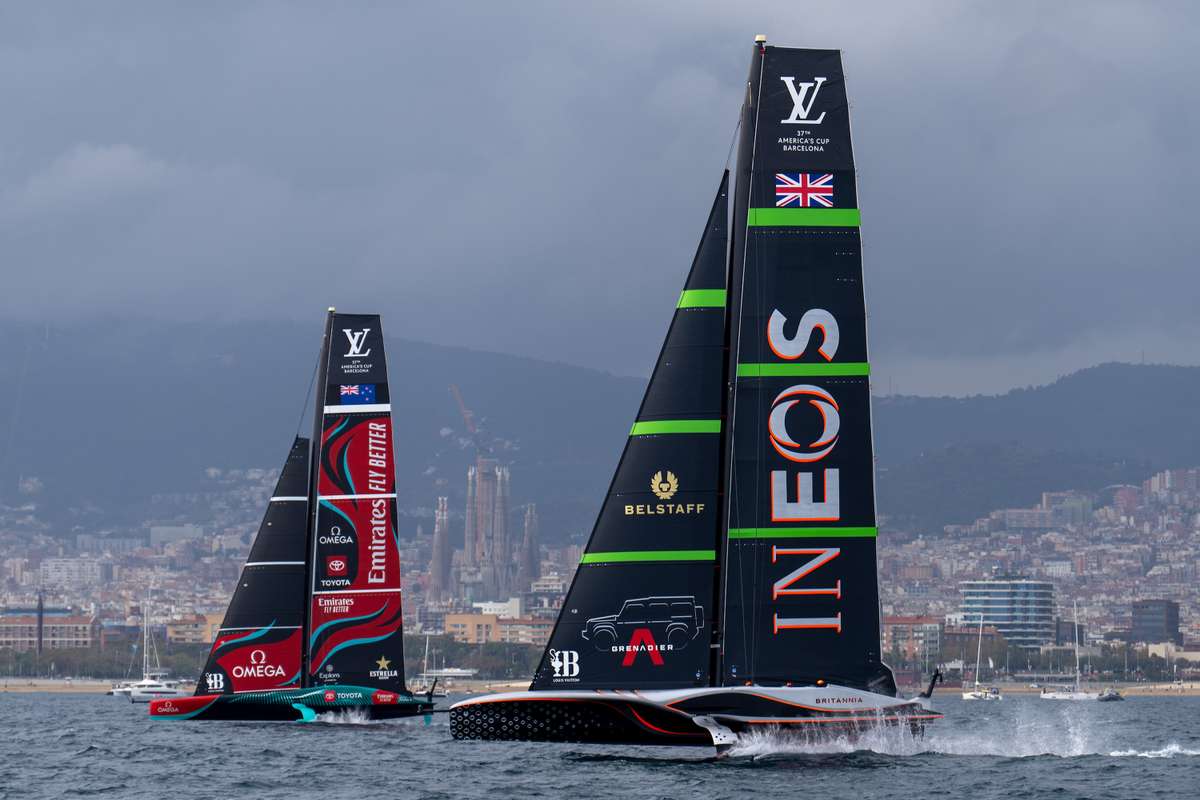
The AC75 foiling monohull returns for its third Cup cycle, but with a few tweaks. The main one: no more human-powered systems. Gone are the cyclors who pedalled in Barcelona to generate hydraulic power. Instead, AC75s will be completely battery-powered, with manual power prohibited. All functions on board – foil cant, sail trim, flight control – will be electric.
The batteries are designed to mimic the power output of four cyclors, using data from the last Cup to ensure there's no unlimited-power scenario. Teams will still need to manage power carefully. They just don't need to pedal for it.
With cyclors out of the picture, crew size drops from eight to five. The composition is mandated: four open positions, plus one female crew member and a guest spot on the boat. There's no youth requirement for the main Cup – that's reserved for the Youth and Women's events.
The AC75 hulls themselves stay largely the same. Teams won’t build new platforms for this cycle. They're reusing the hulls from Barcelona, which saves significantly on cost and environmental impact. The performance gains, then, come from foils, sails, and control systems. Dan Bernasconi, chief architect of the Kiwi AC75, has said the biggest development runway lies in sails – shape, structure, and how they work across a wider range of conditions.
There's also a sailing blackout. No AC75 may touch the water before 15 January 2026, theoretically levelling the field for new entrants. Sailing days are capped at 45 between 15 January 2026 and 14 January 2027, with another 45 days allowed from mid-January 2027 until the date of the first Cup race. A budget ceiling of approximately €75 million is also being enforced.
How do nationality rules work this time?
The America's Cup has always wrestled with what it means to represent a nation. For decades, teams exploited loose residency requirements to field mercenary crews – the joke during Oracle's 2010 and 2013 victories was that it should have been "Oracle Team AUS" given the Australian talent doing the heavy lifting.
The strict nationality rules in the last cycle frustrated newer teams, who felt established Cup nations held an unfair advantage. AC38 loosens the grip, but with a notable loophole that's been dubbed the "Burling clause."
The core rule: at least three of the five crew (including the woman) must be nationals of the country they represent. However, a maximum of two non-nationals may race, provided they didn't compete in the AC37 Final Preliminary Regatta, Challenger Selection Series, or Match itself. This prevents wholesale poaching of crews from Barcelona – and conveniently blocks Burling from helming the Italian boat.
The Youth and Women's America's Cup events are stricter: 100% national crews, no exceptions. It's a clear signal that the pathway programmes are about developing homegrown talent rather than assembling all-star squads.
When and where is it happening?
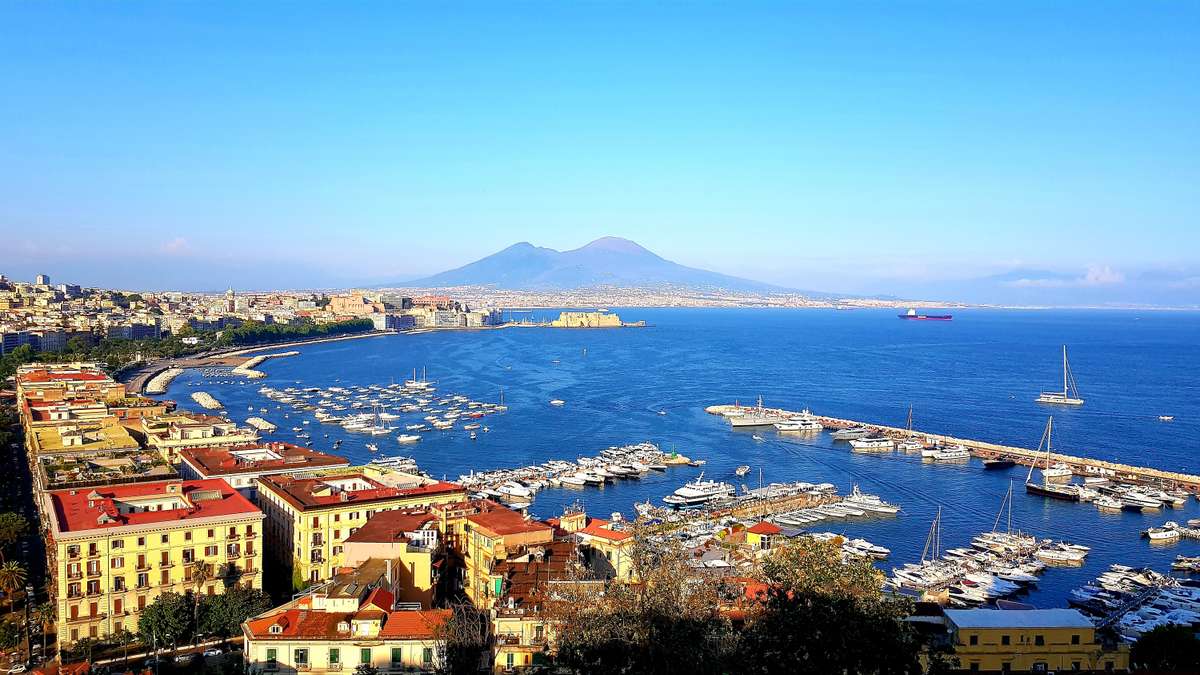
Naples, Italy. The first time the America's Cup has been held in Italian waters, despite Luna Rossa's three decades of trying to win the thing.
The announcement came in May 2025, with Emirates Team New Zealand and the Italian government confirming the venue after Auckland was ruled out when the New Zealand government declined funding. Of the previous 37 Cup matches, 33 have been held in the Defender's home waters. This will be ETNZ's second consecutive defence abroad, following Barcelona.
The build-up begins this year. Three preliminary regattas are planned for 2026 around Europe, raced in AC40s – the smaller, one-design foilers that served as development platforms in Barcelona. Teams can enter a second AC40 crewed by their Women's and Youth sailors, giving pathway athletes competitive race time without inflating costs. Racing kicks off in spring 2026, with Luna Rossa’s home base of Cagliari, Sardinia tipped as the venue for the first preliminary regatta.
A final preliminary regatta in 2027 will see the AC75s race competitively for the first time, using the same hulls that will contest the Challenger Selection Series and the Match itself. The Challenger Selection Series kicks off early summer, with the Match set for July as outlined in the protocol.
Why Naples – and why is it controversial?
Short answer: money, and who was willing to spend it.
Barcelona, despite generating a reported €1 billion GDP impact from AC37, wasn't interested in a repeat. The port itself recorded a €3.5 million loss. Valencia, Jeddah, and others were reportedly in the mix, until Naples stumped up, with Italian government infrastructure investment reportedly approaching €180 million.
But the announcement landed awkwardly. The venue was revealed in May 2025, before the protocol had been finalised – a reversal of standard practice, where host agreements follow the sporting framework. Athena Racing and American Magic both expressed concern about what exactly had been agreed between ETNZ and Italy when the event's rules didn't yet exist. ETNZ maintained they'd sent the protocol to Athena Racing ten days before the Naples announcement and had received positive acknowledgement. American Magic's Terry Hutchinson was franker, citing a "lack of transparency" as one reason for their eventual withdrawal.
Beyond the politics, Naples presents logistical questions. The designated site at Bagnoli carries an industrial past in need of significant works. The city's two historic yacht clubs are private, typically berth in Capri, Sorrento, or Procida, not the city itself. Infrastructure is being built, but with 18 months to go, the timeline is tight. Local residents have also voiced concerns about displacement, fearing they'll be pushed out to make way for the wealthy and their yachts.
On the positive side, Naples offers stronger average breeze than Barcelona, making it better suited to foiling conditions and potentially reducing the lottery of light-wind days that plagued parts of AC37.
How will the racing work?
The pathway to the Cup follows the now-familiar funnel: Preliminary Regattas, Challenger Selection Series, then the Match itself.
Throughout 2026, teams will contest up to three preliminary regattas in AC40s – the smaller, one-design foilers that served as development platforms and Youth/Women's Cup boats in Barcelona. Each team can enter two AC40s, provided the second is crewed by their Women's and Youth sailors (two of each) – a good way of getting pathway athletes competitive race time without inflating costs.
The stakes go up in 2027. A final preliminary regatta at the Naples venue will be raced in AC75s – crucially, the same hulls teams must use for the rest of the competition. What you race in the prelim is what you're stuck with for the Match – so don't break it. Fleet racing looks to be part of the programme, a departure from the pure match-racing format of recent cycles. Whether that means points-based fleet racing feeding into knockout match racing, or something else entirely, remains to be seen.
As usual, the Challenger Selection Series will determine who earns the right to face ETNZ. The Defenders can compete in the early stages of the Challenger series – useful for staying race-sharp and gathering intel – but cannot progress to the Semi-Final or Final stages.
The expectation from those close to the teams is that racing should be closer in AC38. Reusing hulls from Barcelona means teams can focus on extracting untapped performance rather than starting from scratch.
Then comes the Match itself: best of 13, first to seven wins. Two boats, one trophy. No changes there.
What is ACP and why does it matter?
The America's Cup Partnership is the most significant development in AC38 – and possibly the most consequential change to the competition in its 175-year history.
Traditionally, winning the Cup meant inheriting the burden of staging the next one. The Defender's club became responsible for everything: venue negotiations, sponsorship, broadcasting, logistics. It concentrated power but also risk. Every cycle began from scratch, making long-term commercial deals nearly impossible. Sponsors couldn't commit to something that might not exist in three years. Host cities couldn't plan beyond a single event.
The ACP changes that. Formed by the Defender, Challenger of Record, and participating teams, the partnership becomes the Event Authority – collectively managing timing, format, media rights, and commercial operations. Any challenger entering the America’s Cup joins the board. One team, one vote. Decisions are shared, and so is the financial exposure. Teams will hold equity stakes in the partnership, making the Cup – in theory – an investable asset rather than a money pit.
The ambition extends beyond Naples. Dalton and Ainslie have talked about two-year Cup cycles, multi-event venue deals, and the kind of rolling commercial infrastructure that sustains Formula 1. Naples reportedly wanted to negotiate for multiple editions but couldn't under the old model.
Critics see something else: the dismantling of what made the Cup unique. The winner-takes-all ethos, the Defender's absolute authority, the prize of bringing the trophy home – all potentially diluted. Some view it as necessary modernisation, while others call it selling the crown jewels.
Crucially, the ACP isn't yet recognised under the Deed of Gift, the 19th-century document registered with the New York Supreme Court that governs the Cup's fundamental rules. Any future Defender could theoretically withdraw and revert to traditional arrangements.
For now, though, this is the direction of travel. Further details of the partnership will be revealed on 21 January in Naples.
Who’s in and who’s out?
As of January 2026, five teams are officially confirmed as founding members of the America's Cup Partnership:
Emirates Team New Zealand (Defender) – Representing the Royal New Zealand Yacht Squadron.
Athena Racing (Great Britain, Challenger of Record) — Sir Ben Ainslie's team, representing Royal Yacht Squadron Racing.
Luna Rossa (Italy) — Representing Circolo del Remo e della Vela Italia, not their traditional Yacht Club Costa Smeralda. This will be their seventh Cup challenge.
K-Challenge (France) — Reverting to their original name after the Orient Express branding in AC37 and representing Société Nautique de Saint-Tropez. Active on the SailGP circuit.
TUDOR Team Alinghi (Switzerland) — Representing Société Nautique de Genève, Swiss billionaire Ernesto Bertarelli’s team won the Cup in 2003 and defended it in 2007. Their entry marks the most dramatic 180-degree turn in recent Cup history. In April 2025, Alinghi announced they were winding down operations and wouldn't compete. They criticised ETNZ's approach, citing a lack of "accountability" and "transparency." By December, they were back in, confirmed as a founding member of the ACP. No corresponding clarity came from Alinghi's own channels at the time. Their inclusion was announced in an ETNZ press release, leaving observers scratching their heads about what changed behind the scenes.
American Magic, who represented New York Yacht Club, are out. Their withdrawal in October 2025 marked the end of a four-month dispute over the protocol and partnership agreement. Skipper and president of sailing operations Terry Hutchinson cited concerns about "long-term financial sustainability and competitiveness". He was diplomatic but firm: "The Protocol and Partnership Agreement do not meet the conditions required for American Magic to participate."
If no American team enters by the 31 January 2026 late-entry deadline, AC38 will be the first America's Cup in 175 years without the Stars and Stripes.
Riptide Racing, an American outfit aligned with the Seawanhaka Corinthian Yacht Club in New York, announced in early December they'll attempt to challenge. The team is headed by match racing world champion Chris Poole and is reportedly targeting $50 million in fundraising. Whether they can assemble a credible campaign in time – including acquiring an AC75 hull – is another matter. American Magic's boat is the obvious target, but nothing’s been confirmed.
Rumours persist of a second Italian team and an Australian challenge eyeing one of the old Kiwi boats. Dalton has said both are possible for Naples, but the clock is ticking. Late entries face escalating fees – €100,000 per month on top of the base €7 million entry – and joining in time for spring AC40 racing is looking increasingly unrealistic.
The late-entry window closes 31 January 2026. After that, the grid is locked.
What's happening with Youth + Women's Cups?
Both the Youth and Women's America's Cups will return for AC38, building on their successful introduction in Barcelona – though "successful" comes with caveats. The compressed formats and limited media exposure drew criticism, but the principle of creating pathways into Cup sailing has broad support.
The rules are straightforward. Youth sailors must be under 25 on the date of the first race of the Match. The Women's Cup carries no age restriction. Both events require 100% national crews – no Burling clause, no borrowed talent.
Critically, participation isn't optional. Competing in the Youth and Women's events is a condition of entry for the main Cup. Teams must field programmes in both, which should prevent the pathway regattas from becoming afterthoughts staffed by whoever's left over.
The preliminary regatta structure offers additional racing opportunities. Each team can enter a second AC40 during the 2026 events, provided it's crewed by Women's and Youth sailors. It's a meaningful upgrade from Barcelona, where pathway athletes received limited seat time before their standalone competitions.
A Notice of Race is due at least 12 months before racing begins. Whether the events receive the broadcast treatment and prize money to genuinely elevate women's and youth sailing – or remain footnotes to the main spectacle – will depend on how seriously the ACP takes its own stated ambitions.

What is still unknown?
The picture has become considerably clearer since the ACP announcement, but a few gaps remain.
Start with the fleet. Five teams are now locked in. Riptide Racing are scrambling to raise $50 million and secure an AC75 by 31 January. Rumours of a second Italian team and an Australian challenge persist, but with weeks until the deadline, time is running out.
Alinghi's sudden return raises more questions than it answers. What changed between April's dramatic withdrawal and December's quiet reappearance? What guarantees did they receive? Why announce via an ETNZ press release rather than their own channels?
Preliminary regatta dates and venues for 2026 are unconfirmed, though Cagliari looks likely for the first event in spring. Full schedules – including for the Youth and Women's America's Cup – are expected to be announced alongside further details on 21 January in Naples.
AC75s can hit the water from 15 January onwards, and the Recon programme resumes alongside it. Whether teams unveil significant modifications immediately or keep cards close to their chests will become clear soon enough.
Hovering over everything is the ACP experiment. The America's Cup has survived courtroom battles, billionaire feuds, and technological revolutions. Whether it can survive being run by committee? That won't be answered in Naples. It may take multiple cycles to know if Dalton and Ainslie's structural gamble saved the Cup or stripped it of the very qualities that made it worth fighting over.
For now, the pieces are slotting into place for the 38th America’s Cup. After months of tug-of-war, the talking is nearly done. Time to go sailing!
The Foil will be bringing you all the latest America’s Cup coverage in the coming weeks and months.