How to understand SailGP: A new fan’s guide

You don't need a sailing background to follow SailGP. You don't need to know your port from your starboard, your tack from your gybe, or why everyone keeps talking about 'dirty air'. Forget all of that, at least for now.
If you're coming from Formula One, your brain already has the operating system. You understand speed, pressure, tiny margins, and the fact that outcomes often get decided by the boring stuff done well. SailGP rewards the same mindset. The difference is the track moves, and the power source arrives in invisible gusts.
Here's everything you need to follow the racing…
The shape of a race
Each SailGP race is a compressed windward-leeward course – essentially upwind, downwind, repeat – packaged for TV.
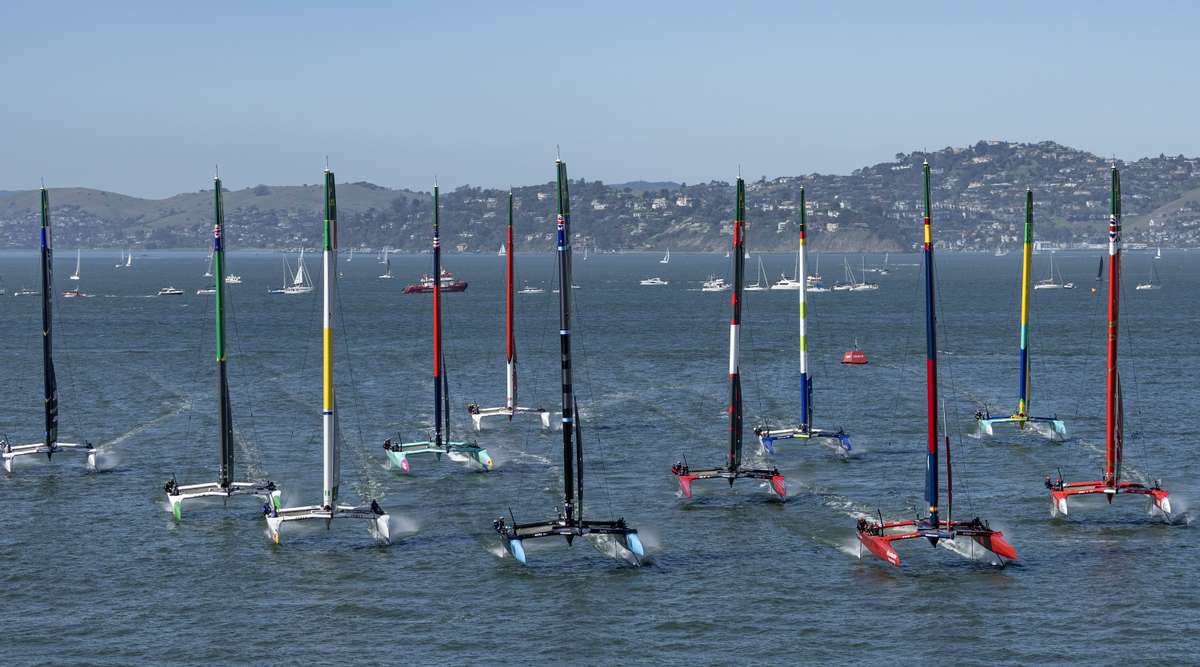
Thirteen boats circle inside a virtual pre-start box while the clock ticks down, then slingshot towards Mark 1 in a drag race that tops 100km/h when the wind is really blowing. From there, the fleet works between gates at the top and bottom of the course, zigzagging upwind and downwind before a final sprint to the finish.
It's over quickly. One bad decision early can haunt you for the entire race, and there's usually no time to claw back if you're buried mid-fleet after the first leg. This isn't endurance racing. Mistakes compound fast.
The start: where races are won or lost
The goal at the start is beautifully simple: hit the start line at zero on the clock and with full pace.
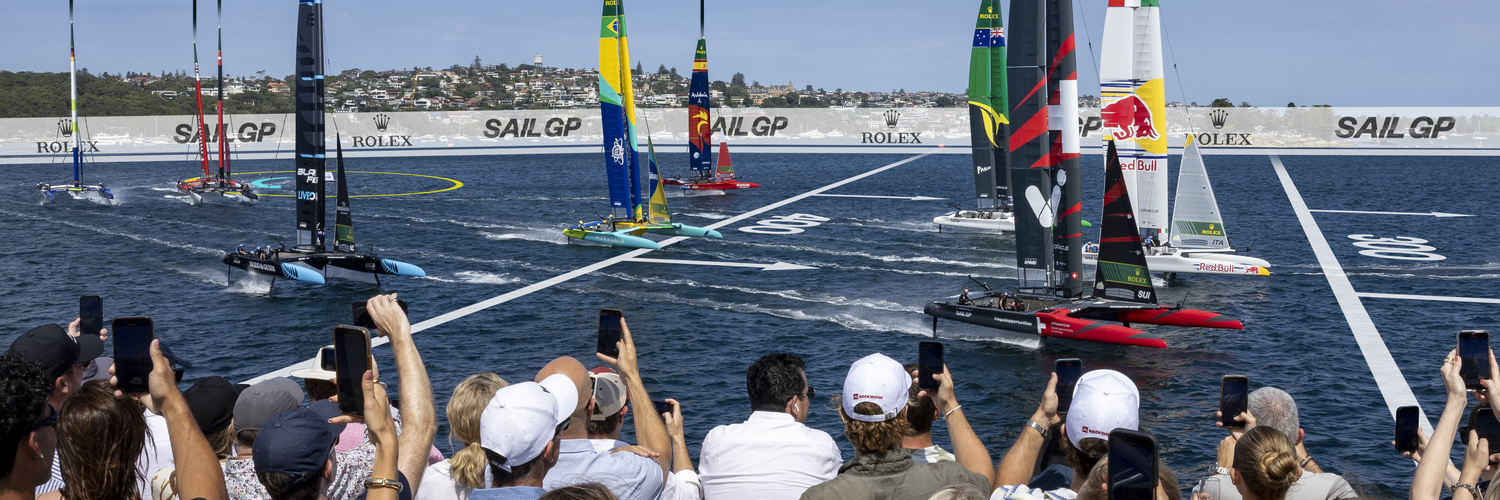
Teams time their run so the bow crosses at maximum speed the moment the gun fires. Get it right and you're away with clean air and open water ahead. The best in the fleet – Australia, New Zealand, Great Britain – regularly nail starts within just a few metres. That precision is worth positions.
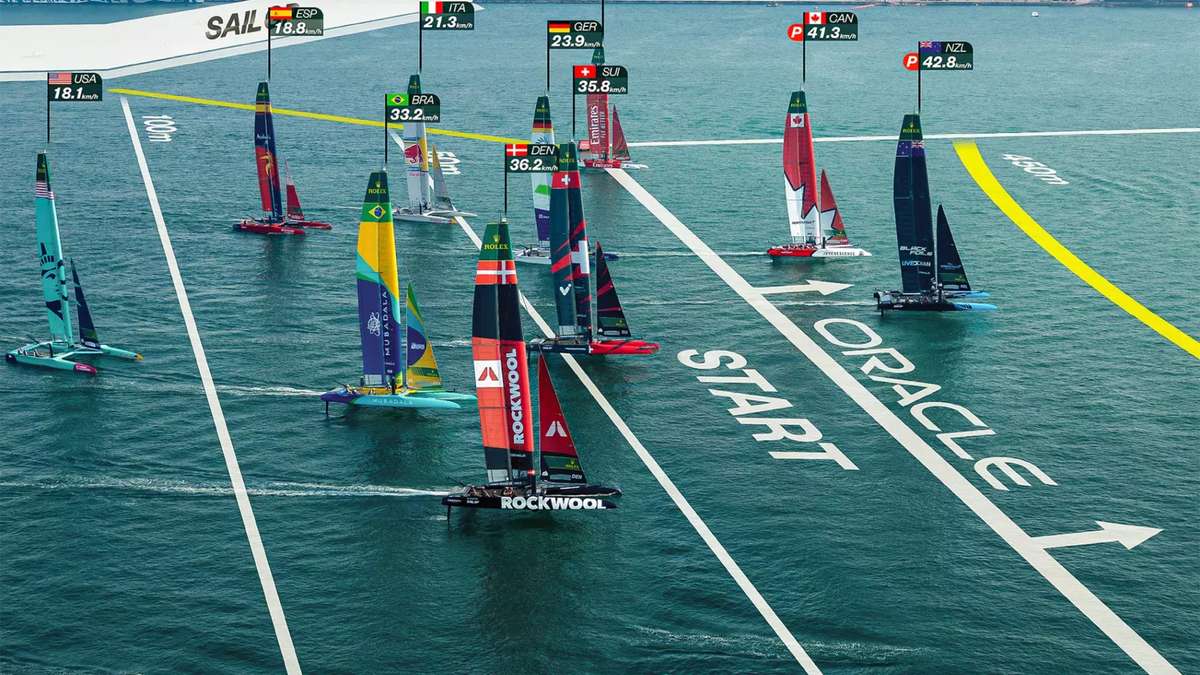
But the margins cut both ways. Cross too early and you're called OCS – On Course Side – which means slamming on the brakes and waiting for the entire fleet to pass. That could mean your race is over before it's started. Too conservative and you're swallowed by traffic, stuck in the disturbed airflow from 12 other wings while your rivals disappear.
In short: mess up the start and you'll need a miracle to recover.
Mark 1: the compression point
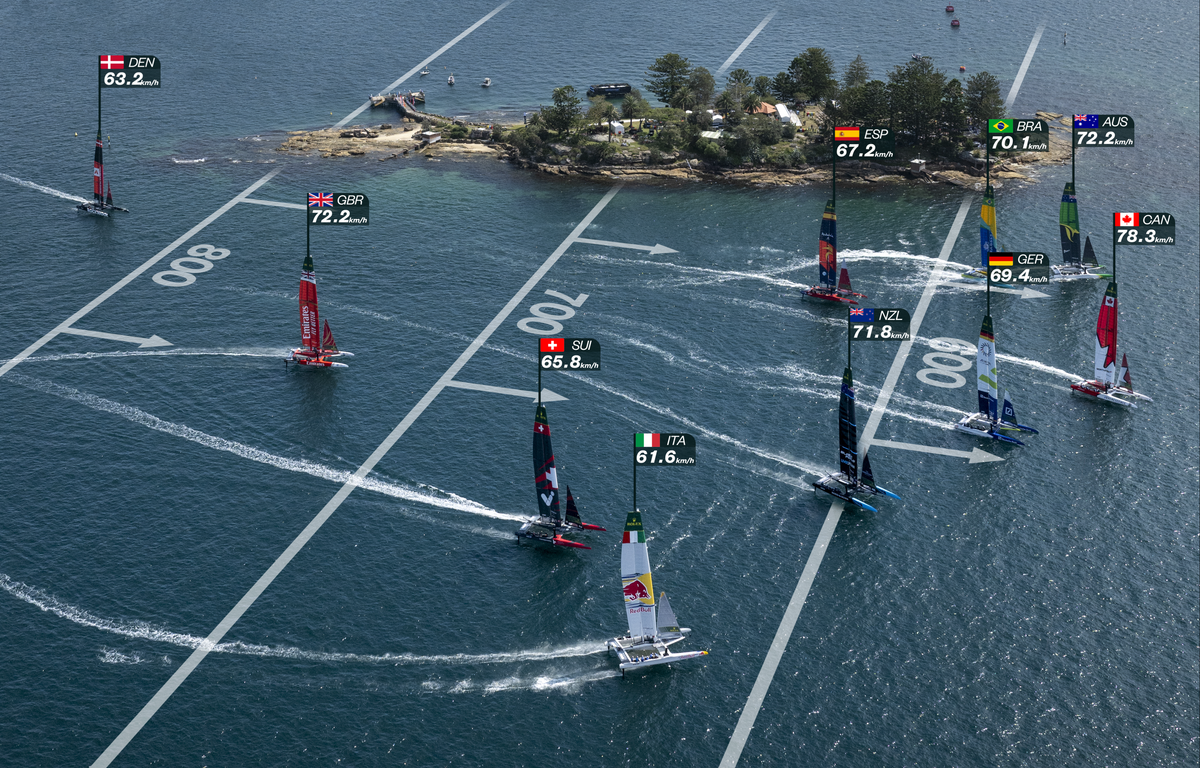
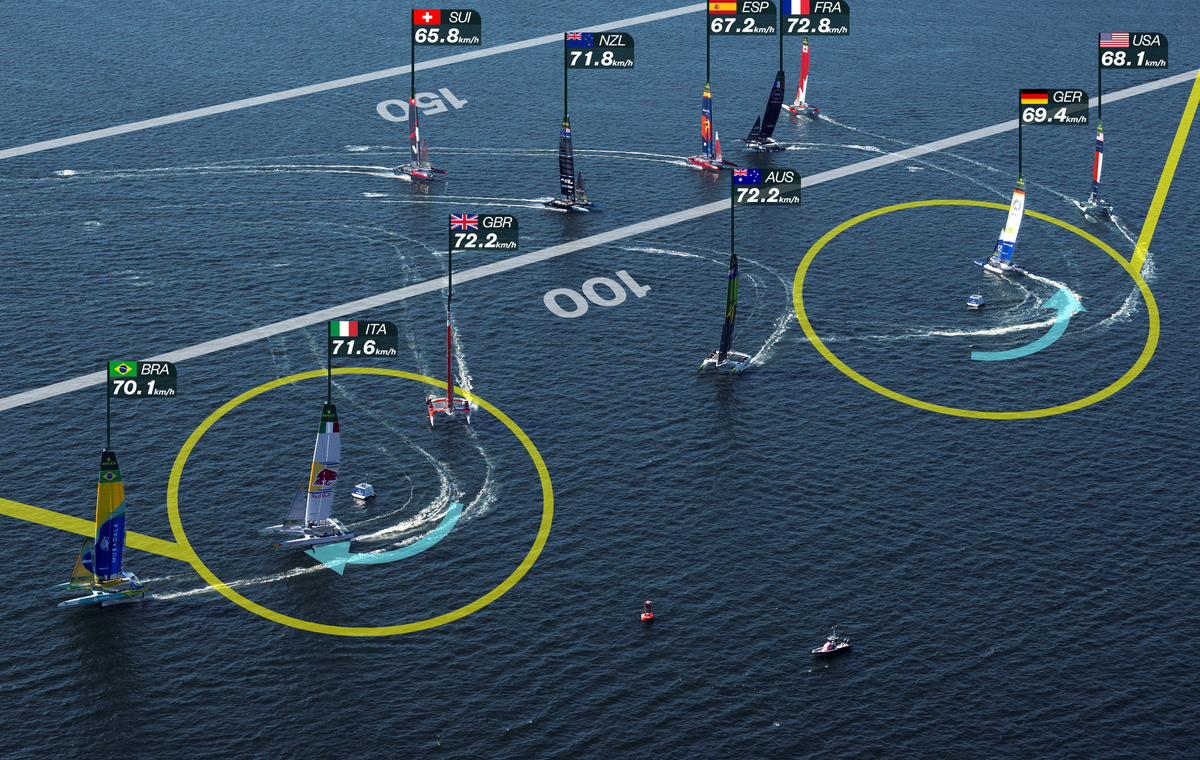
Off the line, the fleet funnels towards Mark 1. This is the compression point – all 13 boats converging on one tiny area of the course, at speeds that can top 50 knots (almost 100km/h). When the F50s approach from different angles, closing speeds can exceed 160km/h. Things can get chaotic fast.
The golden rule at marks: the inside boat has right of way. If you're on the outside trying to muscle into the same space, you have to give room. Barge in anyway and the umpires will be on the radio before you've completed the turn.
Watch for the yellow circle around the mark – the three-boat-length zone where overlap status gets locked in. The moment the leading boat crosses into it, positions are frozen. If you've got any overlap on the boat ahead at that moment, you're entitled to room. Miss it by a nose and you’ll have to wait your turn.
Nail your start and get around Mark 1 first, and you've done the hard part. Now it's about not throwing it away.
The course: zigzags and boundaries
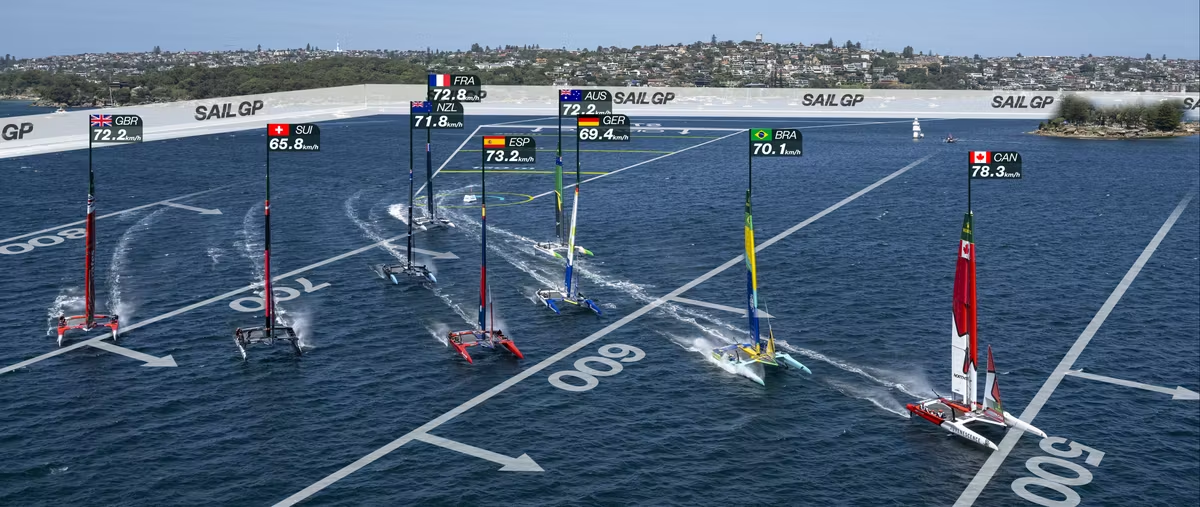
Here's something that surprises total newcomers to sailing: sailboats can't sail directly into the wind, and heading straight downwind is slower than angling across it. Instead, the F50s zigzag their way around the course. Heading upwind, they execute tacks – turning the bow through the wind. Downwind, they gybe – turning the stern (or back of the boat) through the wind.
Every manoeuvre costs speed and risks stability. A slick tack looks effortless. A botched gybe sends the boat crashing off the foils, hulls dragging through the water while rivals pull away. The best teams read the wind shifts, pick the right moments to turn, and minimise how many manoeuvres they need.
The course is fenced in by electronic boundaries, compressing the fleet and keeping the action close to the crowds. Stray outside and you'll cop a penalty. Tight boundaries mean tight racing, which is exactly the point.
How to gain (or lose) places
Once the fleet settles into lanes, overtaking becomes difficult. From there, gaining places comes down to three things:
- Finding more wind and turning it into raw boatspeed
- Reading the racecourse better to plot a shorter route
- Sailing the F50 faster in identical conditions through superior technique.
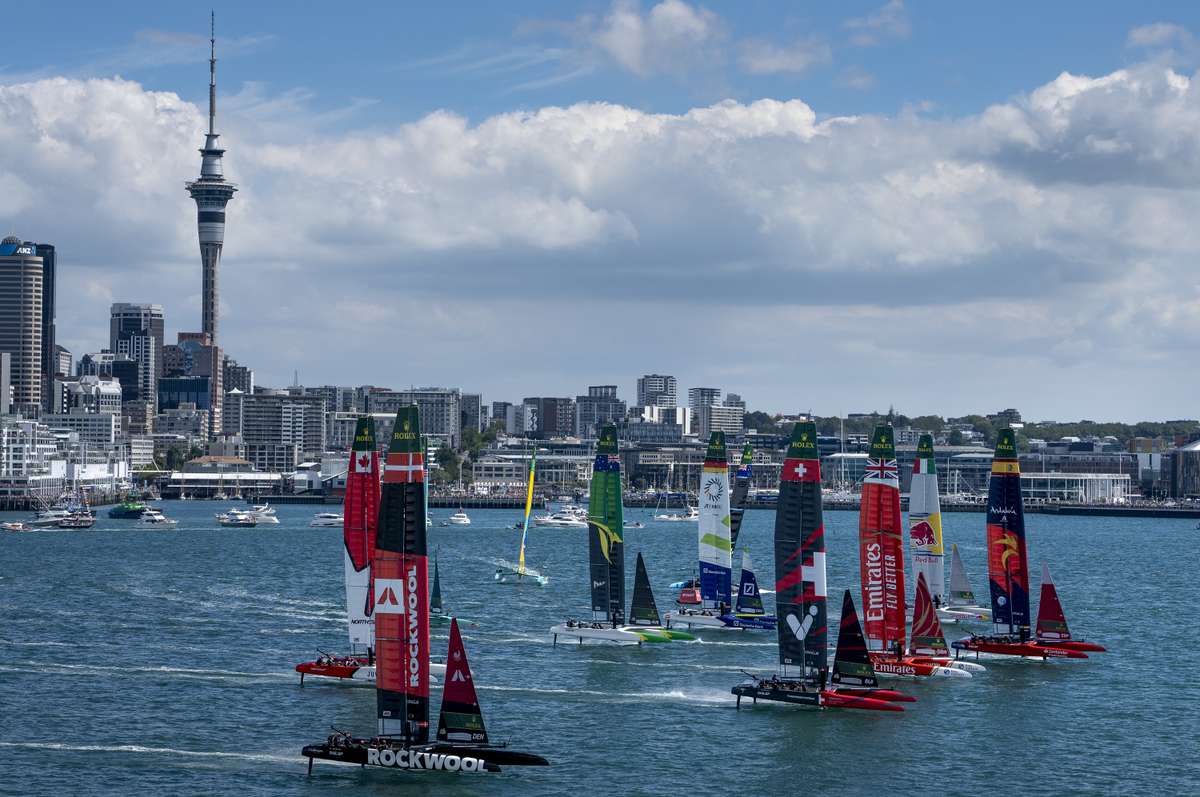
The catch? Boats in front can 'sit' on your wind, disrupting the clean airflow you need to maintain speed. Boundaries and mark zones create predictable congestion points where bold moves can gain places or destroy your race in equal measure.
SailGP rewards those who get it right early and protect their position. Comebacks are rare – but all the more exciting when they do happen.
Penalties: live justice
Sailing has a lot of rules. You don't need to know them all.
Here are the basics:
Starboard beats port: If the wind is hitting your right-hand side, you have priority. Boats with wind from the left must give way.
Leeward beats windward: When two boats sail the same direction, the one furthest from the wind can hold its line – and even push the other out of the way.
Inside gets room at marks: If you're on the inside as boats round a mark, you're entitled to space. The outside boat must make room.
OCS kills your race: Cross the start line early and you'll have to slow down and let the entire fleet pass before you can accelerate up to full speed.
Boundaries are hard limits: Stray outside the electronic course limits and you'll be penalised.
SailGP has umpires based remotely in London who watch via GPS tracking and dish out penalties live during racing. You'll hear it called on the broadcast, and the consequence is immediate. The offending boat must drop behind the one they fouled.
The graphics make this easy to follow. A green circle means right of way – that boat can hold its line. Red means give way – that boat must yield. When you see two boats converging and one's circled red, you know exactly who needs to move.
Green circle = right of way – can hold their line
Red circle = give way – must yield
Yellow circle at marks = the zone – overlap locked here
Inside boat at marks = has priority – outside must give room
Collisions are treated seriously. Both boats can be penalised if the umpires decide neither did enough to avoid contact. Penalty points get deducted from event and season scores alike.
Why consistency wins
Event winners rarely have a single standout race. What they have is a string of solid results over the weekend.
That’s because it's easier to protect a lead than to recover from a penalty or a botched start. In a championship decided by tiny margins across a season, the teams who avoid disasters beat the ones chasing glory.
The final: where it all resets
After the fleet racing, the top three teams advance to a winner-takes-all final where everything resets. The only thing that matters is who crosses the line first. You can lead all weekend and lose it in 15 minutes.
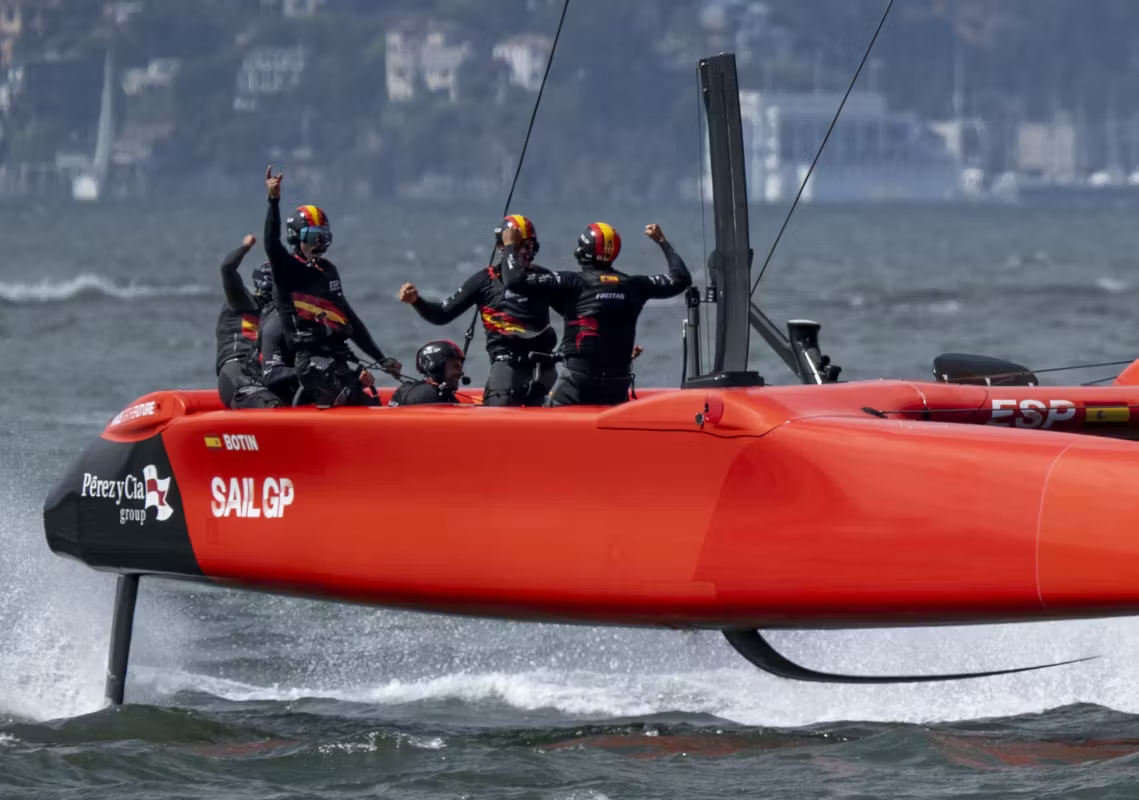
The Grand Final follows the same format, which means an entire season can unravel in a single race. Just ask Australia, who dominated Season 4 only to watch Spain snatch the title in San Francisco’s sudden-death showdown.
Key terms
OCS = On Course Side – crossed start line early, must drop behind fleet
Dirty air = disturbed airflow from boats ahead – slows you down
Tack = turn with bow passing through wind – used heading upwind
Gybe = turn with stern passing through wind – used heading downwind
Foiling = hulls lifted clear of the water on hydrofoils
Off the foils = hulls drop back into the water – dramatically slower
Starboard tack = wind hitting the right side of the boat – has priority over port
Port tack = wind hitting the left side – must give way to starboard
Leeward = the boat furthest from the wind – has right of way over windward
Windward = the boat closest to the wind – must keep clear
Mark room = the space an inside boat is entitled to when rounding a mark
Boundary = electronic course limits – cross them and you're penalised
Now pick a team
That’s SailGP, from the start box to the finish line. You don't need to memorise the rulebook or understand the physics of foiling. Just watch the starts, follow the chaos at Mark 1, and pay attention when the umpires get on the radio.
The quickest way in is to start rooting for a team, whether it’s your country, an underdog story, or a rivalry that grabs you. Then stick with them for a season. You'll learn faster by watching the same crew month after month, noticing what they do well and where they throw it away.
Do that for a few events and you'll find yourself yelling at the screen, second-guessing tactical calls, and using sailing jargon without even noticing.
That's when you know you're hooked.