AC38: 6 key questions that still need answers

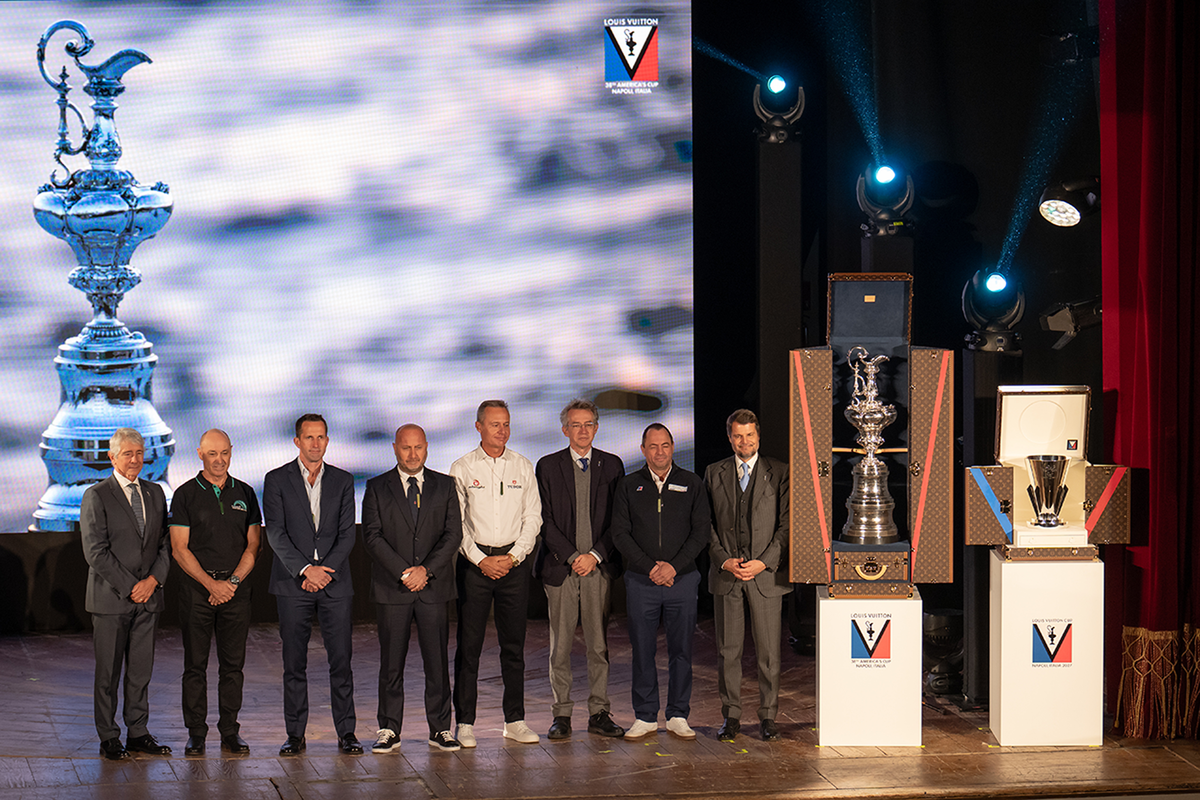
The launch event in the Palazzo Reale di Napoli for the 38th America's Cup this week was certainly impressive. But in terms of things actually learned? We're not left with a whole lot more than we already knew from the America’s Cup Partnership press release back in December.
The main takeaway: the Defenders at Emirates Team New Zealand look to have yielded considerable power in establishing the America's Cup Partnership. Grant Dalton was clear that "the Defender has no more right than any other team in the organisation of the event," with the only advantage being a larger share of profits once the Cup becomes profitable – which it isn't yet.
Meanwhile, Sir Ben Ainslie confirmed the Challenger of Record title is now largely ceremonial. When asked what status it gives him, he replied simply: "It doesn't really give us anything."
Overall, we left the event with more questions than answers. So what remains unclear?
1 What actually is the ACP agreement?
We haven't been made privy to the document that all five founding teams have signed. Ian Walker confirmed the Defender has no veto rights and that everybody is equal when it comes to voting, with "everyone going to have to work together for the good of the event moving forward".
But we still don't know the specifics. Decision thresholds? Deadlock handling? Who has the power to appoint the CEO? What exactly counts as a founding team – is it the yacht club, the head of the team, how does that work?
And crucially, what stops a future Defender walking away from the ACP and reverting to the old model? Lourdes Millet, general counsel for Alinghi, explained that all teams have signed a commitment: "If one of us win and one of us becomes the Defender, we commit to continue because we are all convinced that if we do not do it this way, the Cup will vanish."
To me it seems more like mutual trust than anything truly binding.
One small detail that did emerge: the ACP is currently run by Grant Dalton's people as an interim arrangement, but a new CEO will be appointed. When will this happen, and who will it be?
2 What’s the full schedule?
I was expecting (perhaps hoping) we'd hear the complete race schedule for AC38. Alas, it wasn't meant to be. We now know the first and last races – the first preliminary regatta in Cagliari from 21-24 May, and the final Cup Match starting 10 July 2027 – but nothing in between. Ian Walker confirmed the second preliminary in Naples would take place roughly a month after Sardinia, so late June. But that still leaves the third preliminary regatta and the Challenger Selection Series off the calendar.
The third prelim – the first time this generation of AC75s will race – may be around six months after the second. Dalton dismissed the idea of turning the America's Cup into a SailGP-style 'circuit', though, drawing a football analogy: "The Champions League and the World Cup can exist in harmony with each other."
Dalton is betting on the franchise value model working like Formula 1, where teams that were bankrupt in 2005 now cost "hundreds of millions, if you can even get involved". With all the talk of making the Cup financially viable and providing a good return for sponsors, there’s quite a void in this year’s calendar. Teams need to demonstrate value to their backers, and long gaps without racing don't exactly help with that.
There's also no word on the Women's and Youth schedules beyond their chance to race in the preliminary regattas alongside the other AC40s – which I think is a fantastic step forward, and should lead to some spectacular fleet racing with 10 boats on the course.
Finally, beyond AC38, are we getting Naples for the 39th Cup in 2029? It's a big investment to redevelop Bagnoli to then host it for just one cycle, but still nothing is confirmed.
3 What are the full rosters?
GB1
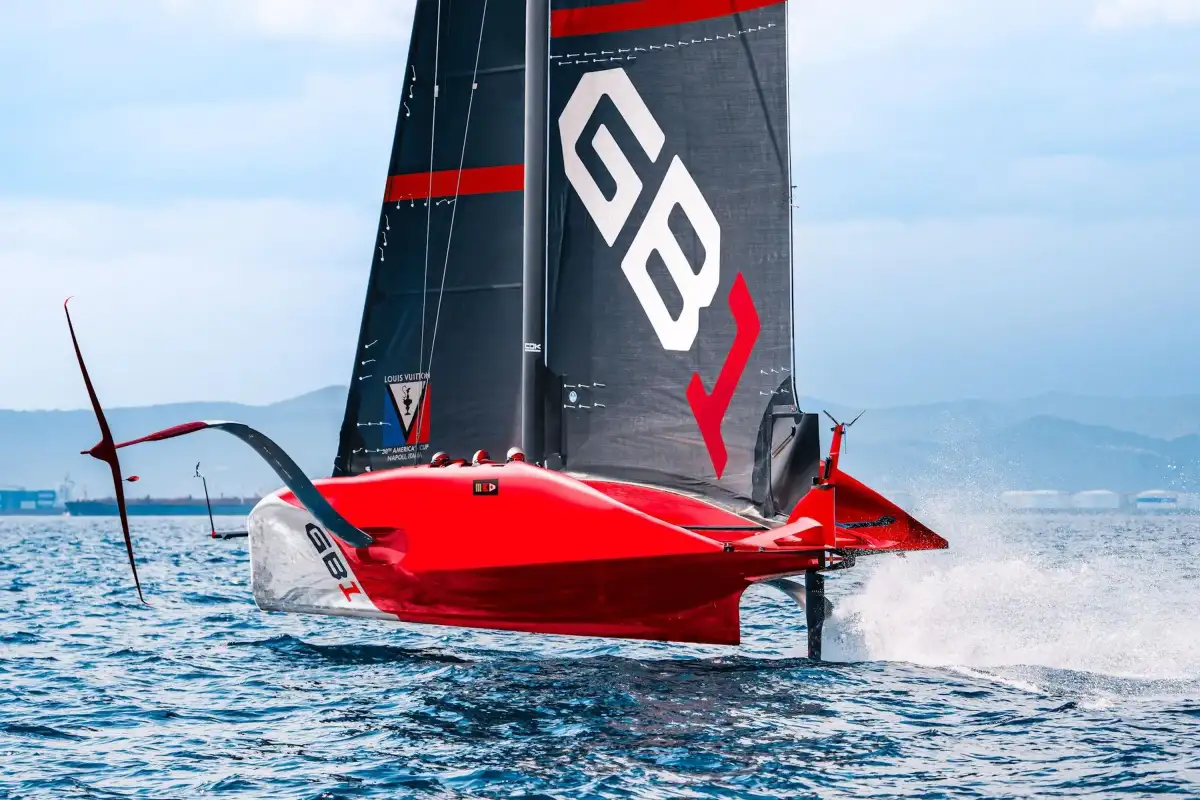
Dylan Fletcher was confirmed, with Ben Ainslie joking that Fletcher’s "doing so well at the moment that we decided he could sail the boat on his own." More seriously, Ainslie hasn't confirmed whether he'll return to the boat, saying it's "about trying to bring through the next generation." But it wasn’t an outright ‘no’ from Ben, which has me thinking we could see him back in the AC75. In the last Cup, the Brits showed the most progress throughout the competition. Surely he’ll want to keep building on that experience. If not Ben, Hannah Mills is looking a very likely candidate for co-helm alongside Fletcher.
Luna Rossa
Marco Gradoni – who helped Luna Rossa claim the last Youth America’s Cup – was confirmed to helm, alongside Margherita Porro, presumably for the main team and not only the Women's. The big question is Pete Burling: after his surprise exit from ETNZ last year, he promptly joined the Italian team. It looks like the new nationality rules won’t allow him to race, so what exactly will his role be? In terms of local talent, will Ruggero Tita return to the AC75? Tita’s got serious pedigree with two Olympic gold medals and lots of time working with the Italian team last cycle, though he couldn’t compete last edition due to Olympic commitments.
K-Challenge
Quentin Delapierre raced for the French team in the last Cup and also drives the team’s F50 in SailGP. The French have confirmed the coming months will focus on building a strong Challenger crew around Delapierre as team leader, but that’s all so far.
TUDOR Team Alinghi
Nicolas Rolaz was there at the conference with the Swiss. After being promoted from the Youth squad to wing trimmer for Alinghi in the last Cup, is he now the helmsman? His AC37 crewmates Arnaud Psarofaghis and Bryan Mettraux have left for the Swiss SailGP team, while Rolaz has recently joined the Canadian team as a reserve athlete. When prompted about the lineup, he said: "Even if I knew, I couldn't tell you. Honestly, I don't know. Discussions are going on and you can imagine that it's hard with SailGP." The SailGP scheduling challenge is one we keep coming back to, and Rolaz was philosophical: "I think SailGP needs the America's Cup and the America's Cup needs SailGP."
Emirates Team New Zealand
We know the most about the Kiwi roster, as they’ve already been spotted training on the water in the Hauraki Gulf. Some are jokingly referring to the new SailGP team Artemis Racing as 'ETNZ' – Nathan Outteridge, Chris Draper and Andy Maloney are all sailing for the Defenders and the Swedish SailGP team, which may work in their favour. Kevin Shoebridge explained how they manage the juggling act with SailGP's relentless calendar, noting there's just 45 days maximum sailing time per year for AC75s: "It is not all about how much time you spend on the water; it is really about the quality of time you spend on the water." Meanwhile, double Olympic medallist Jo Aleh looks likely to be the female sailor on board the AC75.
So we know a few key names, but with the new nationality rules – permitting two non-national crew members to race, provided they didn’t compete in any of the last Cup’s events – it’ll be very interesting to see who lands where. The Sardinia event in May should make this a lot clearer.
There’s also the small possibility of an American challenger in Riptide Racing, plus rumours of an Australian team and second Italian challenger. But with only four months until the first preliminary regatta, I wouldn't bet on it.
4 What’s the rationale for removing cyclors?
The switch from cyclors to battery power is one of the most significant rule changes for AC38, but we still don't know why it happened. Was it about cost reduction? Making the boats more equal? Or perhaps making the racing more accessible for TV audiences who struggled to understand what the grinding crew were actually doing?
Caption: Last edition I remember casual viewers asking whether the cyclors were propelling the AC75 forward…
What about the implications for racing? How likely is it that a team could run out of power mid-race? Will there be safeguards like minimum reserves or modes allowing the teams to limp home? Any boost mechanics like Formula E, where teams can deploy extra power at strategic moments? Or is that explicitly banned?
There are broader questions here too. As Andy Rice asked in his article yesterday, is sailing straying too far from its roots of human power against natural elements? In a climate where AI and automation are threatening jobs across industries, what message does it send to replace athletic input with batteries?
5 How is AC75 fleet racing going to work?
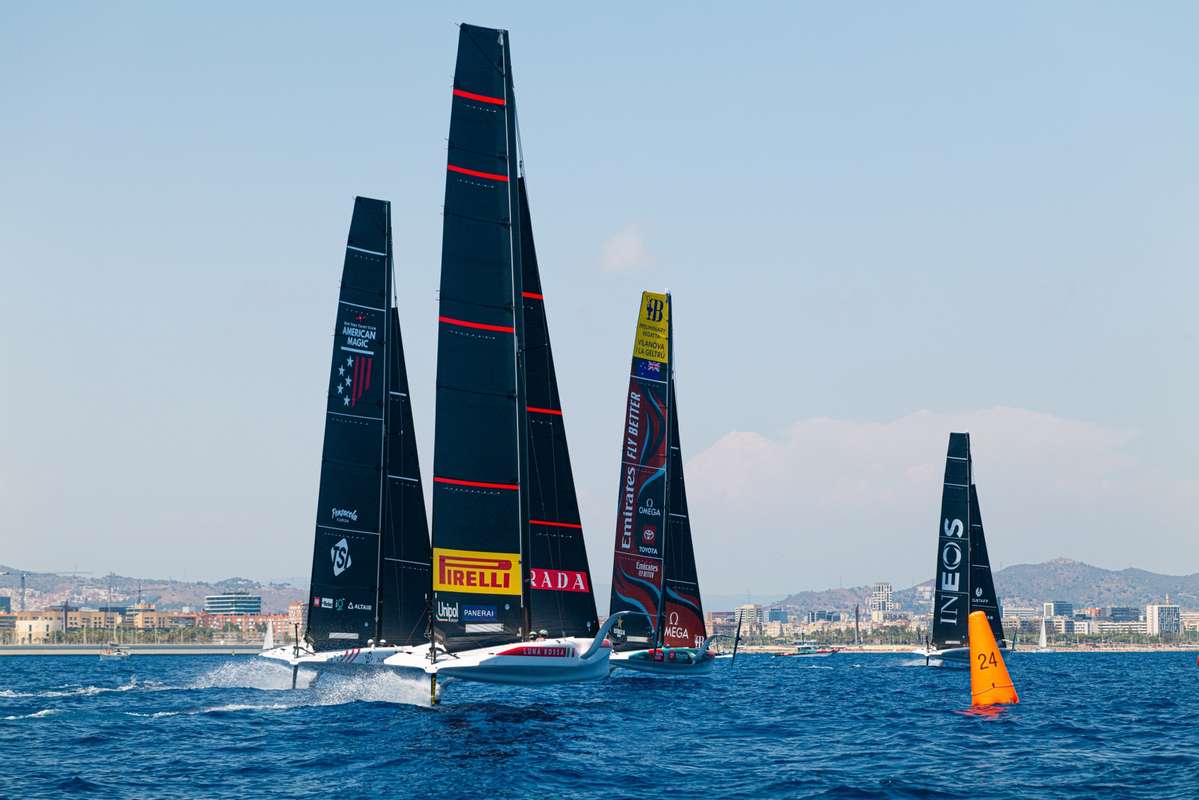
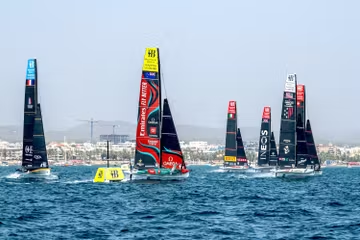
A relatively small point compared to the above, but after the rather processional match racing in AC37 – whoever won the start usually won the race – mixing up the format is one of the aspects I'm most looking forward to. With five AC75s on the course, I'm sure we’ll be seeing some thrilling and unpredictable racing.
Will this happen in the third preliminary regatta? The Challenger Selection Series? Both? To accommodate five AC75s, it may need wider course boundaries, allowing the boats more freedom to pick their own lanes and read the shifts – much more room for surprise results than the usual format.
6 What will success look like?
We also don't really know what the ACP's own definition of success is. By 2030, say, what targets will the ACP want to have hit?
Dalton's betting on rising franchise values for everyone. That only works if the teams can maintain this cooperative spirit beyond the honeymoon period. The impression I'm getting right now is that it's a big achievement that the five teams have agreed on anything at all.
All the mystery and intrigue may have us scratching our heads, but that’s precisely what makes the Cup so special! The uncertainty, the politics, the unanswered questions are all part of the fun.
Articles You Might Be Interested in
The results are in! What's missing in sailing media?
From coach boat to control room: How data and AI are redefining coaching
The Foil Weekly Wrap - 2 Feb '26
Russell Coutts wants Olympic sailing to think bigger
Iain ‘Goobs’ Jensen joins ETNZ
How to unite the fractured world of sailing
How SailGP decides who's right at 50 knots
Where America’s Cup careers will be made