
Burling's boat coming back together

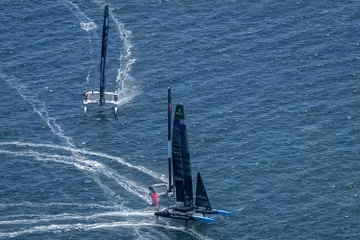
Pete Burling is feeling ready to take on the world again after the Black Foils F50 suffered that race-stopping collision with the Swiss on the first lap of the first race of the first event of SailGP Season 2026.
The initial fear was whether the Kiwi 50ft catamaran could be glued back together in time for Burling and his Black Foils to take on his 12 international rivals in front of the home crowd in Auckland in a week and a half from now.
Rebuild on track
On Wednesday Burling assured us that the boat would be fully back up to speed for the Friday practice session before the race weekend. Although for sure it won’t be lost on Burling that the date of that practice session is none other than Friday 13th.
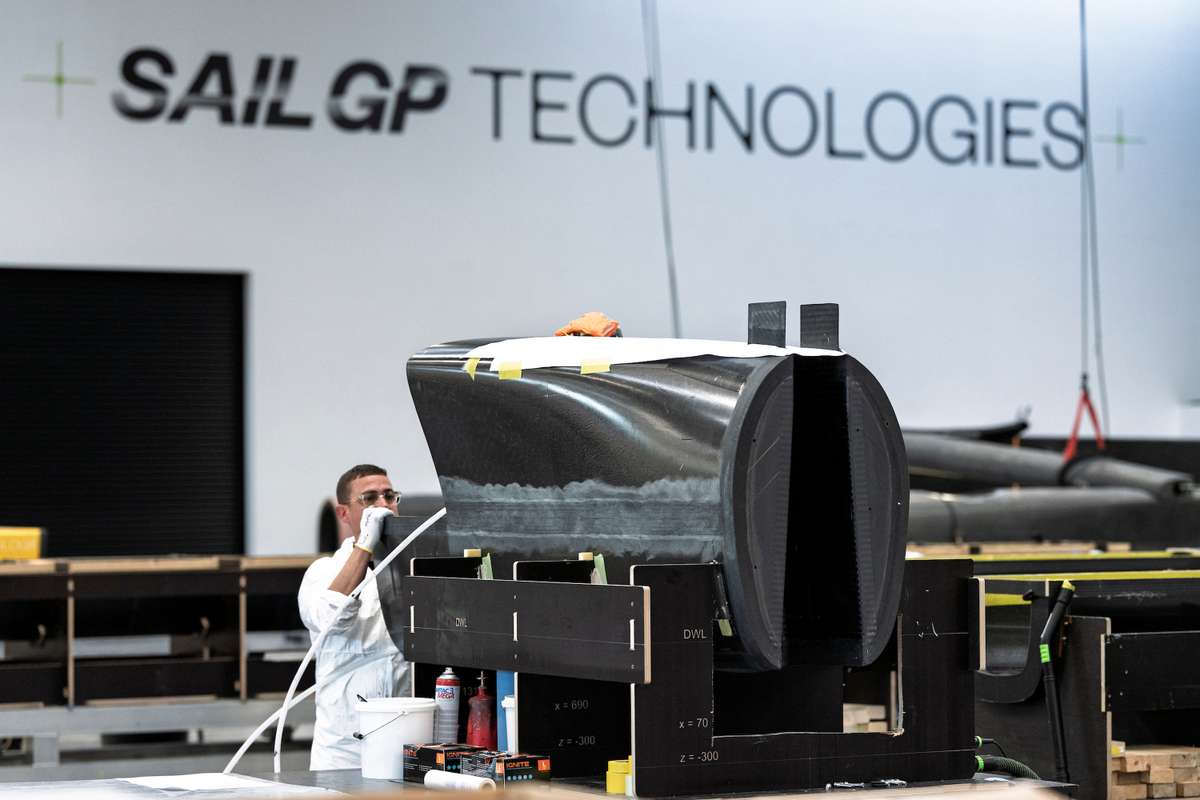
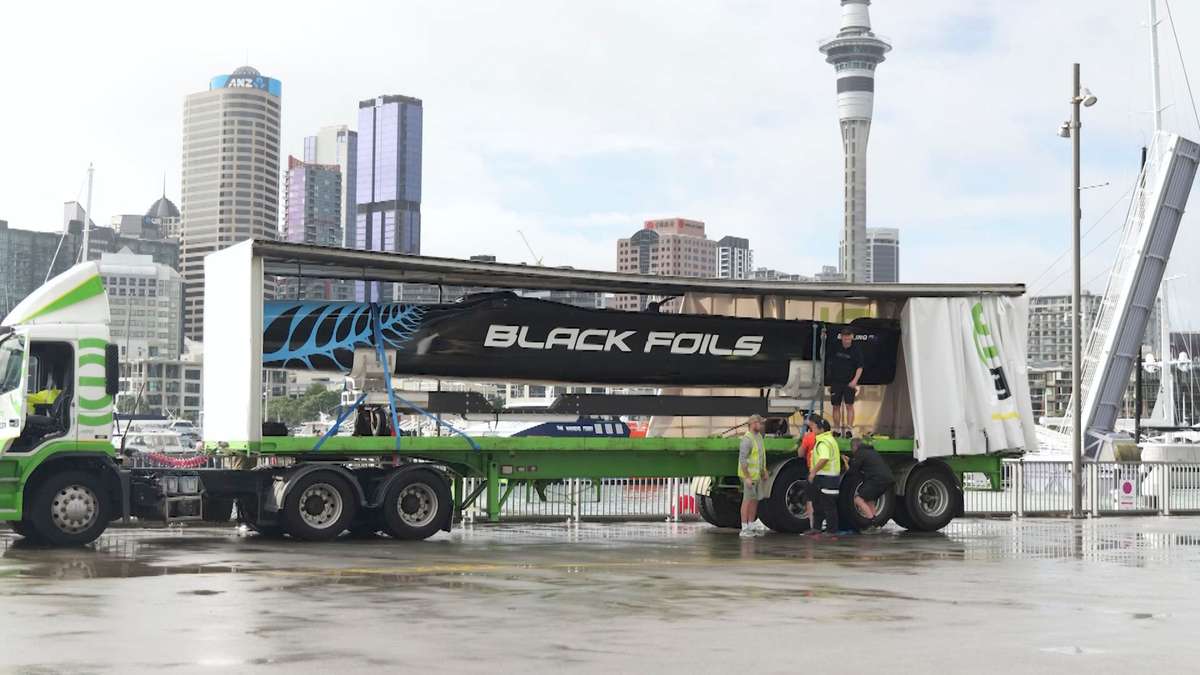
“We’ve always been very confident we'd be on the water here,” he said. “SailGP Technologies and the whole tech team do an amazing job keeping all the boats in one piece and back together. We saw the boat arrive and get shipped out to [specialist composite builders] C-Tech where they're putting the new piece on. The stern's already here as well, so that arrived a couple days ago. Obviously there's some complications around getting the physical parts to New Zealand in time, so that part's all gone well. I'm sure the team will do an awesome job finishing it off now.”
Burling said the team wouldn’t be afforded any more time than any other of the teams in the build-up to the Grand Prix weekend. “No, and I don't think we should need any additional hours,” he said. Burling noted that last season their boat had suffered from a number of technical gremlins, with the electronics occasionally misbehaving. But the back of the boat, the bit which got knocked off in the Perth collision, is a fairly simple piece to replace with minimal systems running through that part of the hull.
The real cost
While Burling is happy with the progress in getting the boat, Amokura, repaired, missing out on the racing in Perth was doubly painful. It’s not just about failing to get any points on the leaderboard, it’s about the loss of learning time. “Missing two days of racing like we did in Perth is never ideal. You learn a lot during the race weekends and obviously every race weekend you go into with parts you want to practice, parts you want to improve, on things you're working on. You know, SailGP is very much about evolving while you're racing, while you're doing it.”
Burling is tired of seeing the collision crop up over and over again in the media, although he knows it’s an inevitable part of competing in the most visible and professional league in sailing. Still, when asked, he goes back through his interpretation of the controversial port v starboard incident with the Swiss. “Well, from my point of view, we have a good vision of them. You're obviously keeping a good eye on all the boats around you. You know, everything's going on.
“We tried to match their turn as quickly as we could,” he said. “They have to give us room and opportunity while they're turning and then, once they get to straight, we've got to avoid. So, there's a lot of changing rules going on in those kinds of situations. And we've had a lot of discussion with the umpires over the previous events. You know, if you look back to the final of the New York event last year, we had exactly the same incident where we were in the Swiss's position against the Spanish who end up winning the event - where the umpire's green flagged it.”
The precedent problem
It’s the perceived lack of consistency that rankles with Burling, and he is concerned that the wrong precedent has been set by the Perth incident. “For me, the boat that is doing the aggressive manoeuvre always has the opportunity to bear away and go the other way, you know? From my point of view, I'd love to see people give a good margin if they're going to try and swing over people's transoms like the Swiss did there. You know, where you always have the option of diverging the boats’ courses, which I'd prefer to see the umpires really incentivise.”
We haven’t heard the last of this incident, or its ilk. It’s the nature of the beast when 13 high-speed foiling machines do jousting battles on such tight courses. And Auckland, by the way, is one of the tightest.
Articles You Might Be Interested in
The results are in! What's missing in sailing media?
Coutts wants teams hunting for young blood
From coach boat to control room: How data and AI are redefining coaching
How SailGP decides who's right at 50 knots
From feeding cows to racing an F50: A chat with SailGP super-sub Glenn Ashby

Valencia joins SailGP calendar in three-year deal
Was Burling really at fault? Perth SailGP collision explained