Dash for (not very much) Cash

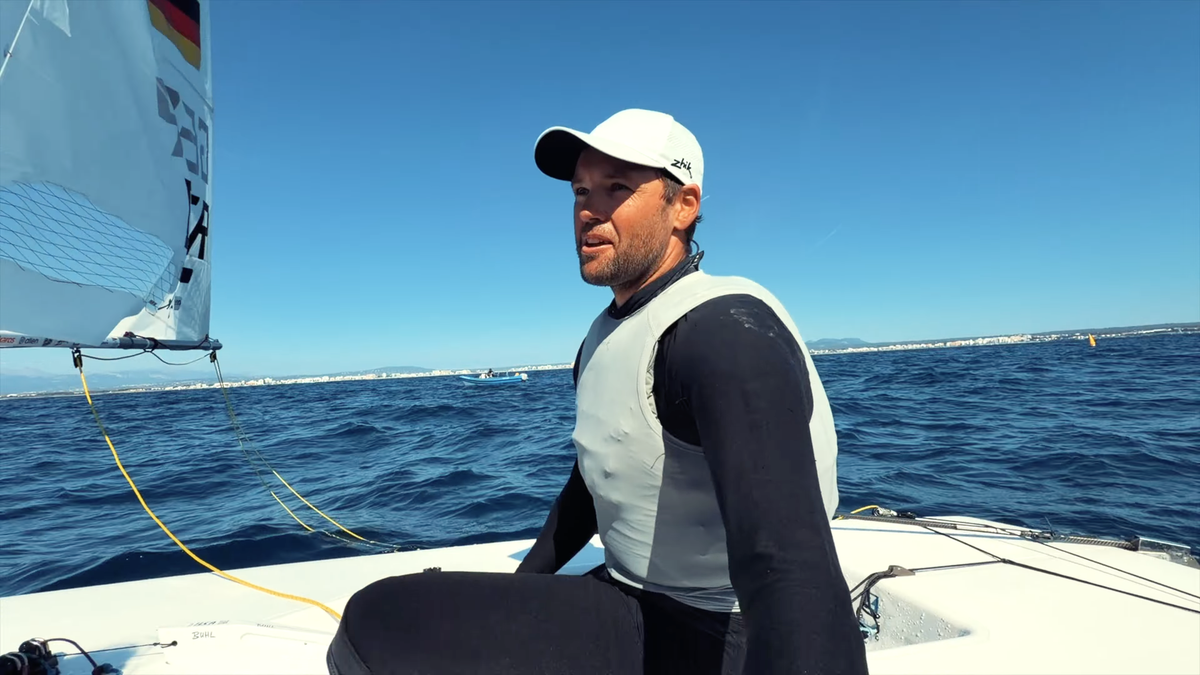
It was only €100, but Philipp Buhl looked delighted to grab the cash all the same. He’d just finished first in an experimental race, the start of a new project called the Sailing Energy Series, and it involved eight of the world’s best ILCA 7 sailors, including Buhl himself, the 2020 World Champion.
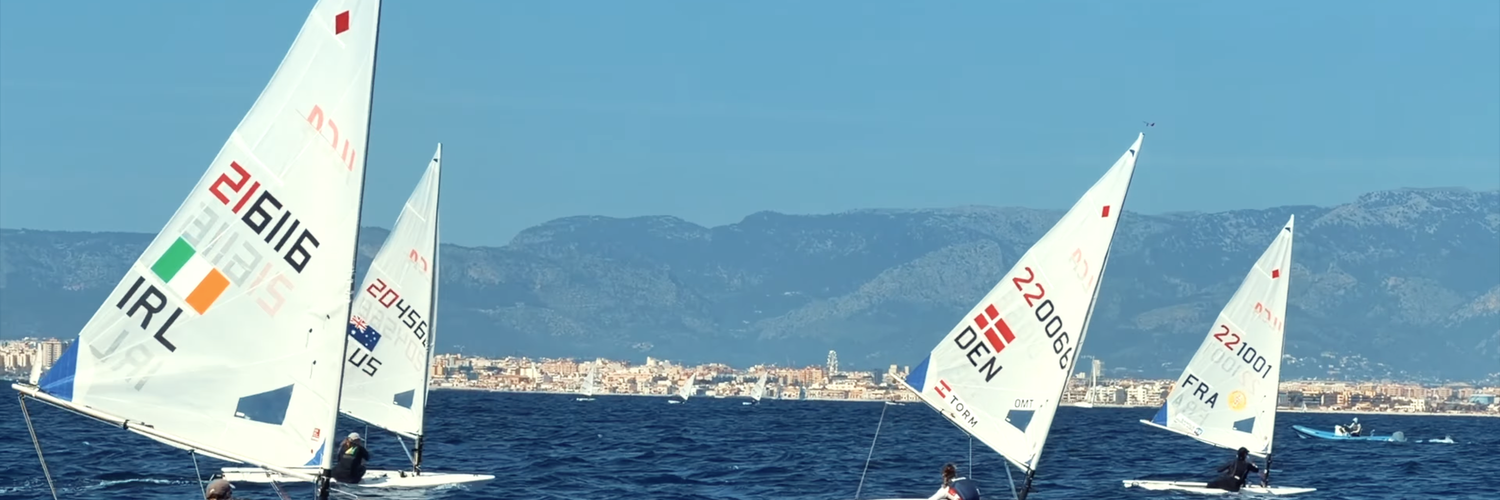
Matt Wearn, the double World Champion and double Olympic Champion from Australia; Pavlos Kontides, the double Olympic silver medallist and double World Champion from Cyprus; and five other big names from the men’s single-hander. It was a 15-minute race on the Bay of Palma, a literal dash for cash with Olympic silver medallist from Athens 2004, Rafael Trujillo, holding out a 100 Euro bill at the finish line.
In the men’s race, it was the German, Buhl, who grabbed the cash. Half an hour earlier, in the women’s ILCA 6 race, it had been France’s Marie Barrué who grabbed the cash ahead of Australia’s Zoe Thompson and Hungary’s Mári Érdi.
A New Media Model
So, 100 euros prize money - not a big deal. The race wasn’t filmed live; it was recorded and then post-edited, with commentary added after the race had actually been recorded. But it’s financially viable. It’s the idea of top sailing photographer Pedro Martinez, who, with his business partner and friend Jesus Renedo, has been running Sailing Energy for more than a decade. When it comes to photography, they are the acknowledged experts of shooting Olympic sailing. Increasingly they are experimenting with new media formats and venturing further into video.
The Sailing Energy Series puts down a marker for what’s possible using on-board cameras and a few drones in the sky. Apart from the really big events like the Olympic Games and the once-every-four-years Sailing World Championships, it’s up to the individual Olympic classes to decide how they portray their sailors and their heroes to the media and to the wider world of sailing fans. Some of these classes have done a great job, particularly the newer ones on the block like the iQFOiL windsurfers and Formula Kiteboard circuit, as well as the good work that the 49er, FX, and Nacra 17 classes have been doing with live coverage for more than a decade.
The laggardly Laser (aka ILCA)
But at the bottom of the pile has definitely been the ILCA fleet. Media has been more or less completely absent. Some of the world’s best sailors contest their annual World Championship and some years it comes and goes with barely a whimper. There’s been more emphasis on reminding the world how many boats have been sold. The ILCA class association insists every time the sailors race with a new sail, they have to do that fiddly job of sticking on a six-digit sail number on each side of their sail. Not only is this a pain for the sailors, it’s not very environmentally friendly.
The biggest reason for having sail numbers on the sail is so that the race committee at the finish can take down the sail numbers, which just gets way more confusing when you’ve got six-digit numbers. Why not follow the example of some of the other classes, like the 49er, who pioneered the concept of allocating a number for life? It’s been long used by other sports. In Formula One, the number 44 is synonymous with Lewis Hamilton. The nine-time world champion in MotoGP Valentino Rossi used the same number, 46, that his father had used in the 1970s. But ILCA sailors are obliged to have 212579 or some such six-digit anonymity on their sail. What a waste of an advertising billboard.
There’s been a change of management at the top of ILCA in the past year or so, from what I understand, so hopefully things might change and the management at ILCA might see more sense in promoting their sailors. When Buhl crossed the finish line having just grabbed his 100 Euros and was speaking to on-the-water interviewer Evi Van Acker - herself an Olympic medallist - he seized the opportunity to say that he hoped this would be the start of bringing more visibility to the sailors. Let’s hope that ILCA are paying attention and decide to do something to serve their sailors better. Pedro is showing what can be done.
The Future of Olympic Coverage
The Sailing Energy Series consisted of a women’s and a men’s race, each with eight of the best sailors. These two 15-minute races were filmed a few days before the start of the Trofeo Princesa Sofía in the Bay of Palma, and Pedro has self-funded the whole project because he thinks it needs to happen. Hopefully, he’ll get the backing to do more. Since the end of World Sailing’s ambitious World Cup project, which disappeared around the same time as Covid brought competition to a halt back in 2020, there hasn’t been much organised coverage of the Olympic sailing classes other than what the classes organise for themselves at their own major championships.
Pedro has proven what you can do on a limited budget if you’re prepared to move away from pure live coverage. Live, while it is the most exciting form of sports entertainment, is also extremely expensive. Instead he decided to film the Sailing Energy Series as an "as-live" product, which more or less yields the same result but for a fraction of the cost.
Lessons from the Past
I was involved in World Sailing’s bells-and-whistles media production of the Sailing World Cup back in 2017 to 2019, and it was a fantastic showcase for the sport. But it did involve about 20 people, huge amounts of logistics and complexity, and was so expensive it was one of the contributory factors that drove World Sailing towards the brink of bankruptcy. So, Olympic sailing went from a platinum media product to no almost no media product at all.
In recent years we’ve been spoilt by the likes of high-end media coverage in SailGP and the America’s Cup. Pedro’s production might seem paltry by comparison, and in many ways it is; but it’s a start and it’s financially viable. I wish him all the best in getting this small snowball rolling, and hopefully others will pick it up and keep it rolling.
As we know from SailGP, it’s all about consistency of story, and there have been very few events or series in sailing, if any others, that have managed to consistently tell their story month-in and month-out. The America’s Cup has never done that, nor the great ocean races, and certainly not the Olympic classes.
The Sailing Grand Slam
Consistency counts. Which is why last season five Olympic class events decided to organise themselves into the Sailing Grand Slam. Next week’s Trofeo Princesa Sofia in Palma is the season opener. The Grand Slam started pretty quietly last year and hopefully will gather more momentum this coming year. The idea of forming a series across five events is an obvious move, and maybe one day it will reach a status where it can be considered a World Cup of Sailing. If we’re to achieve consistency of story, then we need to start somewhere, and it’s better to be doing small, shoestring projects like Pedro’s Sailing Energy Series than doing nothing at all.
Articles You Might Be Interested in
Trofeo Sofía 2026: Updates from Palma
Podcast Ep. 13 - Olympic dreams, TP52 action and America's Cup secrets
Freddie Carr: The authentic grand prix class I just can't get enough of
The Foil Weekly Wrap - 30 March '26
WASZP Games: Ball and Lattanzi deliver USA's first-ever double
WASZP Games: How a boat designed to stop young sailors quitting became an elite feeder class
The Foil Weekly Wrap - 23 March '26