Freddie Carr: The authentic grand prix class I just can't get enough of

If you’ve ever had the privilege of racing a TP52 – of any generation, under any rule, in any format over the past two decades – you’ll probably agree: it stands as one of the finest box-rule classes keelboat sailing has ever produced.
Few sports have evolved as dramatically as sailing over the past 25 years. Advances in materials, computational design and performance analysis have reshaped the leading edge into something almost unrecognisable. And yet, through all of that change, the TP52 has remained remarkably true to its original concept. It has adapted where necessary, but never lost its essence. The obvious question is: why?
The answer starts with the boat itself. The TP52 is, at its core, a sailor’s boat. It demands skill, rewards precision and brings together some of the sharpest minds in the sport. At the same time, it offers an accessible platform for those looking to step into Grand Prix racing and truly learn the craft. Campaigning a TP52 still means managing a full crew – typically 11 to 14 sailors – each with defined, traditional roles: tactician, navigator, mainsail trimmer, pitman, spinnaker trimmer, grinders, helmsman, bowman. In an era where top-end sailing increasingly borrows language from aviation – pilots, flight controllers, drivers – that feels refreshingly authentic.
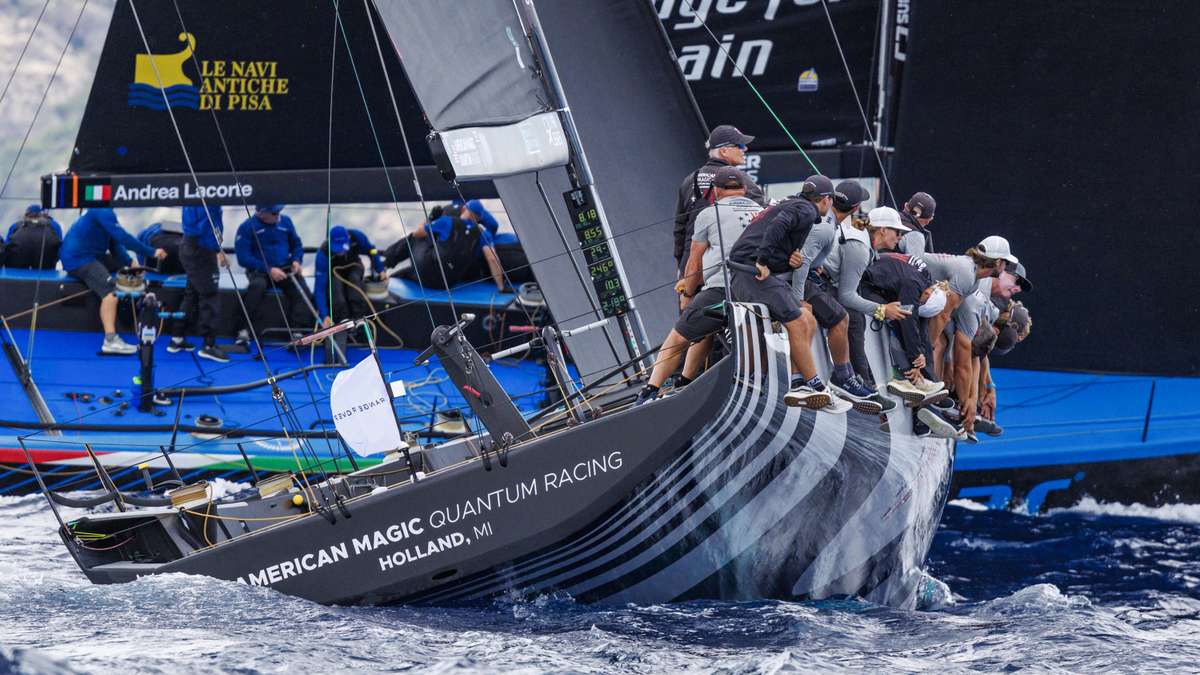
Crucially, the skills developed on a TP52 translate anywhere. The demands of coordination, timing and communication create crews that are not just competent, but highly refined. Whether stepping onto an Etchells or a J Class yacht, the foundation built on a TP52 holds firm. It strikes a rare balance: enough crew to create complexity and depth, but not so many that individual impact is diluted. Every role matters, and performance is a true reflection of how well the team functions as a unit.
Look across the global fleet – whether in the TP52 Super Series, the growing 52-foot circuits in the United States, the expanding presence in Australia, or boats racing competitively under IRC, and you’ll see a striking diversity. Ages vary, backgrounds differ and résumés range from seasoned professionals to ambitious amateurs. That breadth is no accident. It speaks to the enduring appeal of the class.
In a sport that continues to push forward at pace, the TP52 has found a way to remain both relevant and rooted. And in doing so, it may well have defined the gold standard for modern box-rule racing.
The TP52 rule emerged in the early 2000s from a growing frustration with handicap racing and a desire to return to pure, high-performance competition. At the time, most top-level racing operated under systems like the IRC rule and IMS, which aimed to level the playing field but increasingly encouraged designers to “beat the rule” rather than build the fastest boats. The result was often compromised, awkward-looking designs and outcomes that felt decided more in the rating office than on the water. In response, a group of predominantly Mediterranean-based owners pushed for something simpler and more authentic: fast, owner-driven grand prix racing with close competition and minimal distortion from handicapping.
The TP52 class was born around 2001 as a box rule, setting fixed maximum dimensions –most notably the 52-foot length – while allowing designers freedom within those limits to optimise performance. The concept struck a balance: boats similar enough to race head-to-head, yet open enough to encourage innovation, ultimately reshaping the landscape of modern grand prix sailing.
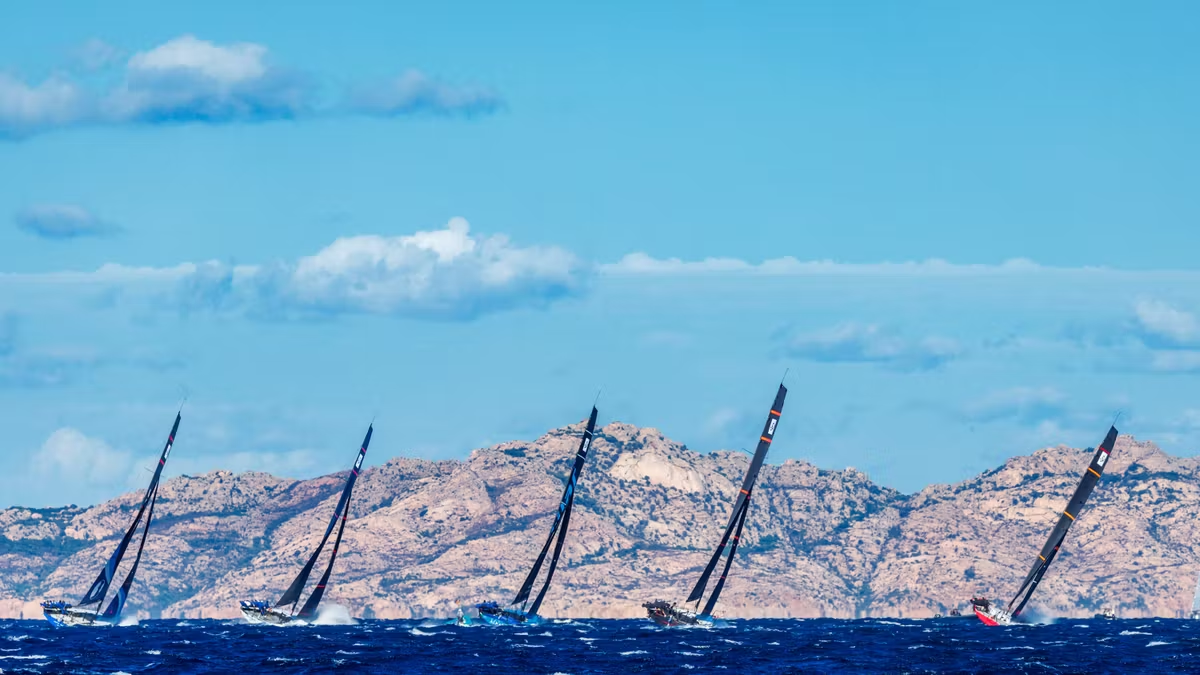
The Audi MedCup ran from 2005 to 2011 and, at its peak, regularly drew fleets of more than 20 boats to the TP52 World Championship. It arrived at a fascinating moment in the sport’s evolution – when the America’s Cup was still contested in non-foiling monohulls and the major offshore races remained raw, fully crewed contests without the sophisticated autopilot integration we see today. Backed by significant investment, the MedCup became a cauldron of the world’s best sailors and designers. The result was explosive growth: a surge of new builds, rapid development, and a level of competition that set a new benchmark for grand prix monohull racing.
Around 2009–2010, a series of rule changes transformed the TP52 into the modern racing machine we recognise today. Among the most significant were the introduction of square-top mainsails and split backstays. Bowsprits replaced traditional spinnaker poles and jockey poles, while the removal of the bulky coach roof was a welcome streamlining that improved both performance and aesthetics.
From this moment, all new TPs had to be built to Germanischer Lloyd’s certification which brought a new level of structural scrutiny to TP52s, forcing designers to balance extreme performance with verified safety. With GL reviewing hull structures, keel attachments and rig loads, teams could push the limits of weight, sail area and carbon construction while still passing third‑party checks. This pushed TP52s toward lighter, stiffer and more optimised structures, accelerating innovation in materials and engineering while ensuring the boats remained seaworthy and compliant for racing. So many boats from 2010 onwards are still competitive today because of this change.
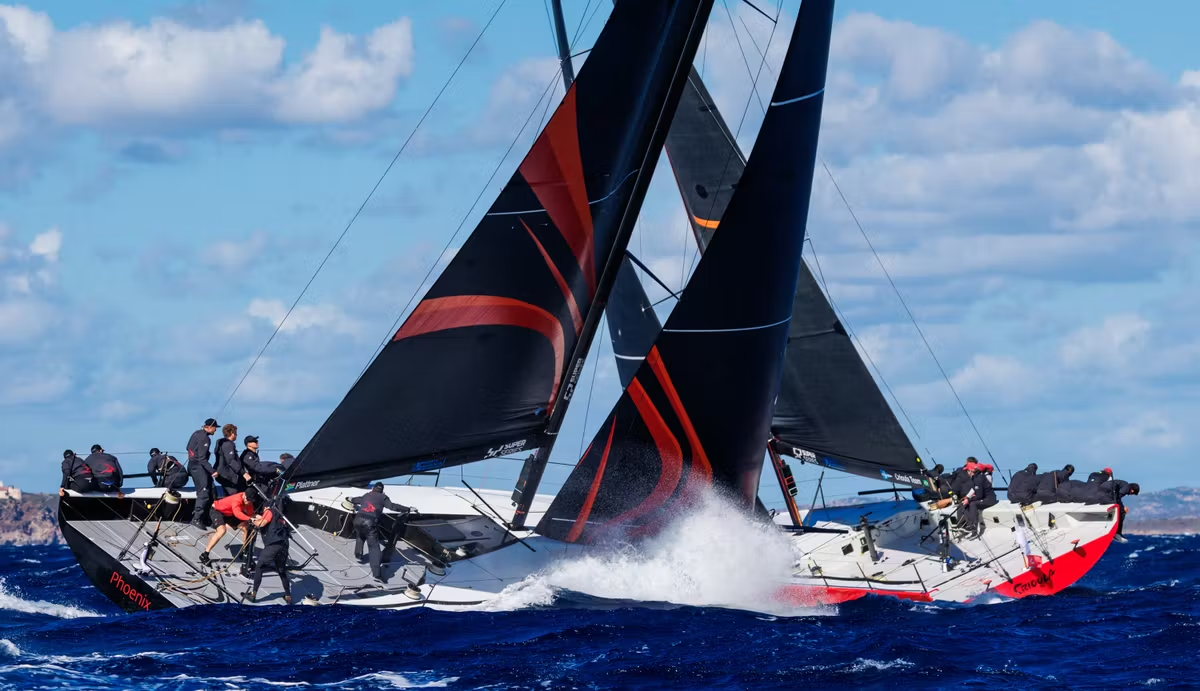
From 2012 onwards, the baton passed from the Med Cup to the 52 Super Series, now widely regarded as the premier grand prix monohull circuit in the world. Built around five regattas per season with up to 10 races at each event, the format is deliberately unforgiving – there are no discards. Every start, every leg, every manoeuvre carries weight, and consistency across an entire season is what ultimately defines success. It is a structure that rewards precision and resilience in equal measure.
Put simply: the MedCup professionalised the class – the Super Series perfected it.
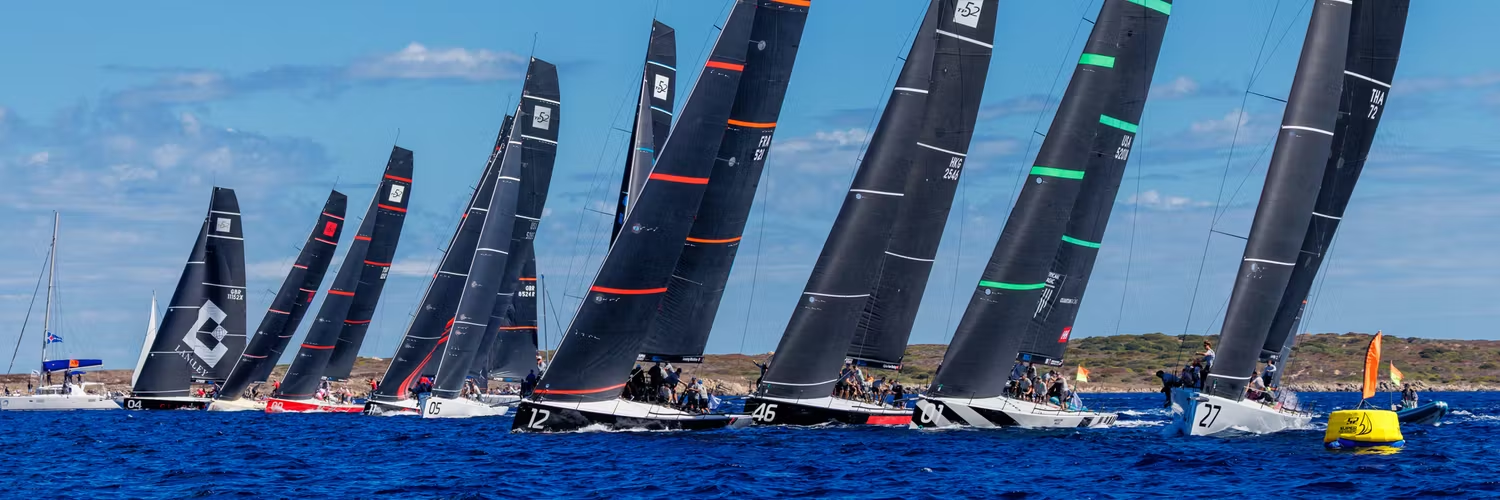
At the heart of the TP52’s enduring appeal is its purity. First boat across the line wins – no handicaps, no caveats. While the box rule has evolved incrementally, it has never been over-engineered, allowing boats from different generations to remain competitive. That longevity is now evident in the class’s global spread. From the growing fleet racing on Sydney Harbour to the GL 52 Series in the United States – where slightly older Super Series boats enjoy fiercely competitive racing – the formula continues to deliver.
It’s simple, transparent and uncompromising: pure racing, with nowhere to hide.
It has also been fascinating to see a boat originally designed under a box rule perform so strongly under the IRC rating rule system. A well-optimised IRC TP52 will put its owner at the front of the fleet from the start, provided it is sailed skilfully. TP52s featured prominently at the relaunch of the Admiral’s Cup last summer and are set to dominate again at the Sardinia Cup in 2026.
The success of the TP52 under the IRC rating rule comes down to one simple idea: it is an exceptionally well-balanced boat operating in a rule that rewards exactly that. IRC uses a closed formula that tends to favour designs which are efficient across a wide range of conditions rather than those optimised for a narrow performance window. The TP52, originally conceived under a strict box rule, naturally delivers this kind of all-round capability. Its hull form, stability profile and appendage setup are refined without being extreme, allowing it to perform consistently upwind and downwind without attracting significant rating penalties.
A key factor is the boat’s balance between power and restraint. The TP52 carries a relatively light displacement combined with a powerful sail plan, yet avoids the exaggerated features – such as excessive beam, canting keels or ultra-light structures – that IRC tends to penalise. At 52 feet, it also benefits from a favourable length-to-rating relationship, delivering strong real-world speed without a proportionate increase in handicap. Combined with the depth of design expertise behind the class, this creates a platform that regularly sails faster than its rating would suggest, particularly across mixed conditions and varied racecourses.
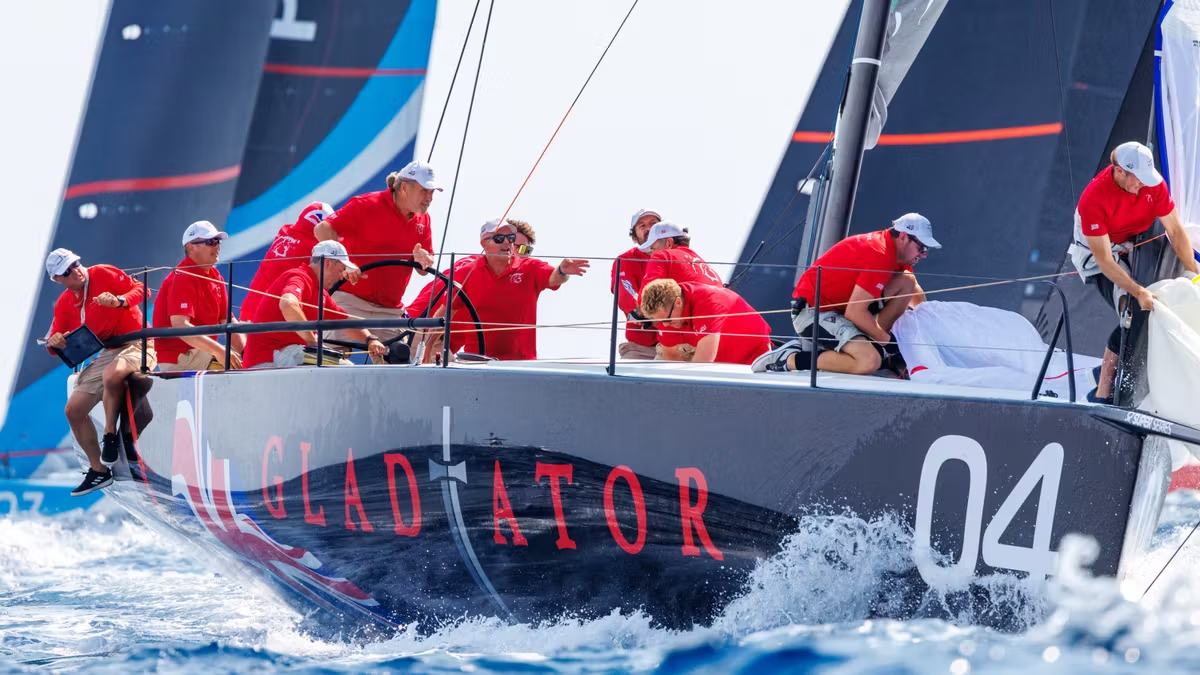
I’m currently at a TP52 training camp with my teammates on board Gladiator. Having been with this team on and off for more than 15 years between multiple America’s Cup campaigns, I’ve witnessed firsthand the evolution of the MedCup and the Super Series. It consistently offers the best racing I’ve experience over the years. After just two days back on the water following a six-month winter break, I felt inspired to write this column about what a truly remarkable class the TP52 is.
For a real point of comparison, I’m also lucky enough to be sailing the IRC-optimised Jolt TP52, part of the Admiral’s Cup-winning team for the Monaco Yacht Club last summer. It’s fascinating to follow the email chains between sailors and designers as they fine-tune the boat for the upcoming Sardinia Cup.
With one foot in both the box rule world and the IRC world, TP52s offer something for everyone. Regardless of the boat’s age or style, you are guaranteed one of the most rewarding and complete days on the water imaginable. While other classes have come and gone over the past quarter of a century, the TP52 is stronger than ever.
Topics
Articles You Might Be Interested in
Podcast Ep. 13 - Olympic dreams, TP52 action and America's Cup secrets
The Foil Weekly Wrap - 30 March '26
WASZP Games: Ball and Lattanzi deliver USA's first-ever double
Dash for (not very much) Cash
WASZP Games: How a boat designed to stop young sailors quitting became an elite feeder class
The Foil Weekly Wrap - 23 March '26
Luca Rizzotti bought a Moth in 2007 and accidentally started a movement