Freddie Carr: The spectacle I can’t wait for in AC38

OK, I’m calling it right now. What will be the sickest thing in the next America’s Cup?
Seeing the youth and women coming through the AC40s and racing alongside senior team-mates in the preliminary regattas will be brilliant. New names entering the sport is something I’m really excited about. But as cool as that will be, it won’t be the standout moment of AC38.
And yes, the subtle foil developments and system tweaks on version three of the AC75 will be fascinating for the hardcore sailing nerds. But again, that won’t deliver the most jaw-dropping images of the Cup.
Without a doubt, the thing that will truly shake up the sailing world in AC38 will be fleet racing in the AC75s.
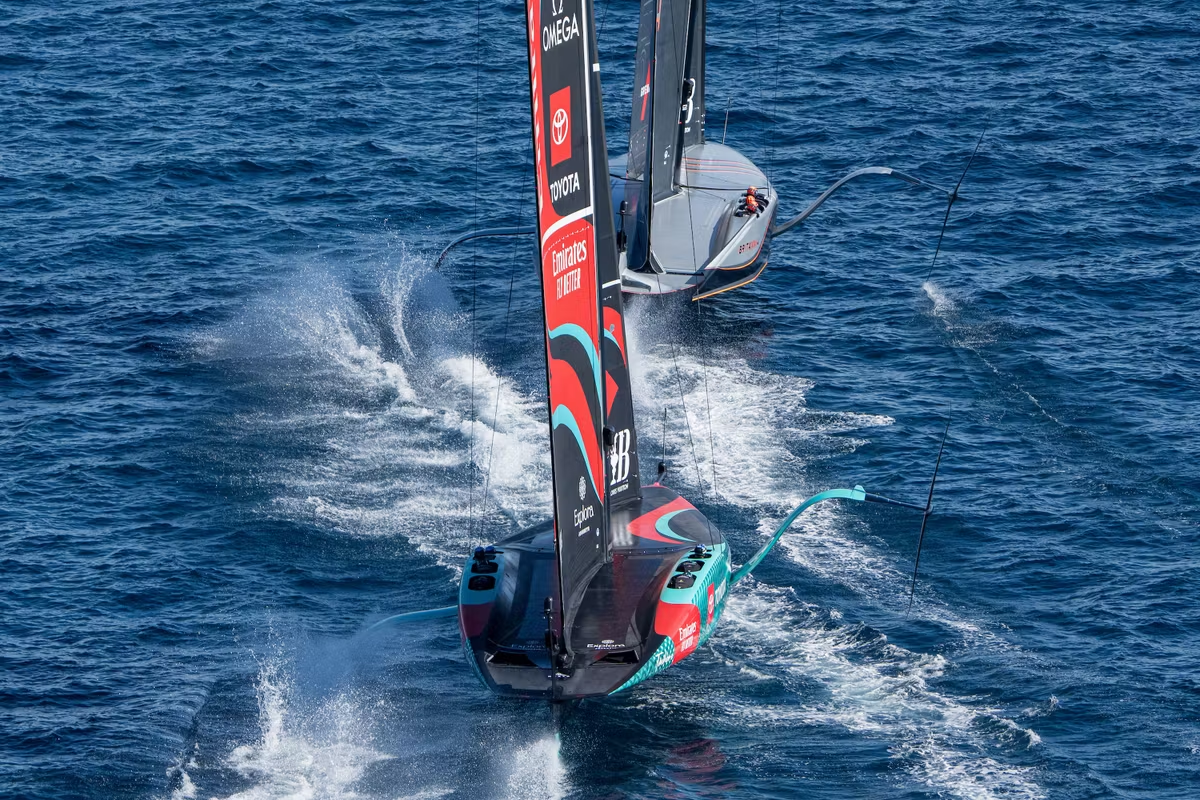
Just picture it: five of these incredible machines winding up on the start line before being unleashed onto a boundary-limited racecourse. It’s going to be an unbelievable sight.
In a traditional two-boat match race it takes about a minute to reach the left-hand boundary after the start, and the first interaction is usually spicy enough. Now imagine five boats arriving there together at 40 knots of boat speed. That’s sailing we’ve never seen before.
I’m assuming – unlike SailGP – that we’ll still see an upwind start. If that’s the case, the marginal crosses and high-speed ducks on the first beat will be insane. We saw glimpses of it with the AC40 fleet racing in Barcelona, but the raw speed and scale of an AC75 pulling off the same manoeuvres could completely redefine what foiling inshore racing looks like.
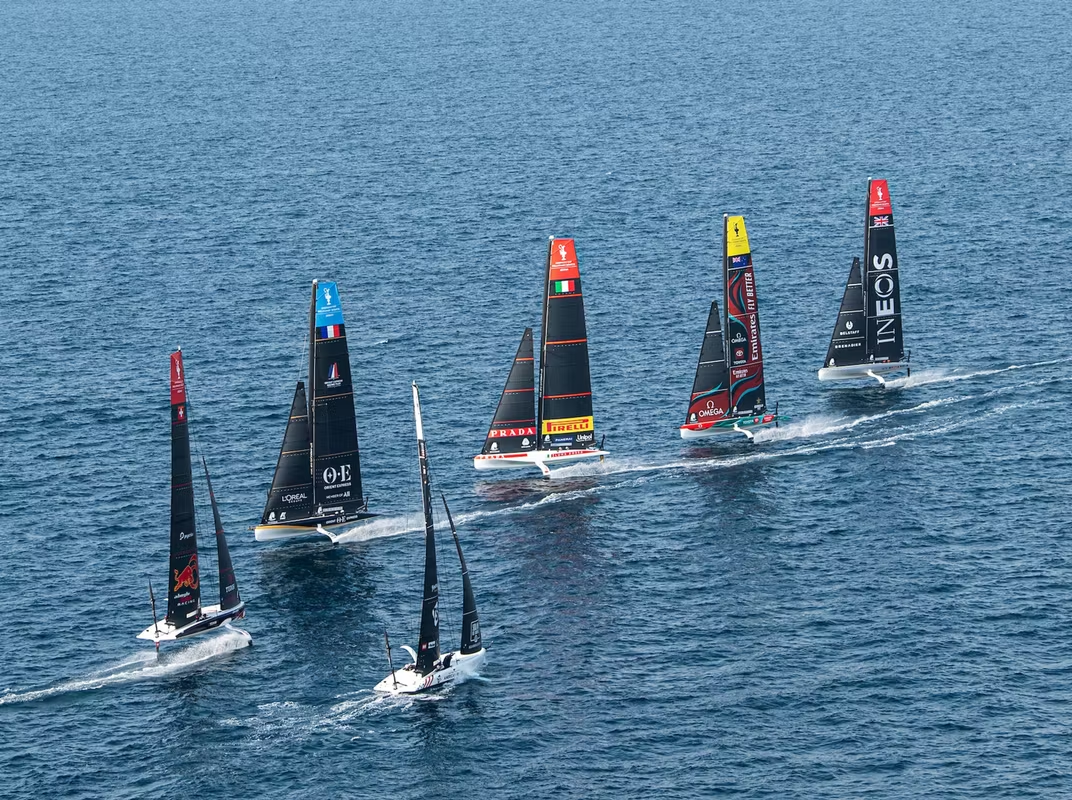
The level of tactical awareness and onboard communication required will be off the charts. In match racing you’re focused on one opponent, executing precise boat-on-boat manoeuvres to outfox them. Fleet racing is a totally different game. Suddenly you’re managing four competitors, balancing boat-on-boat tactics with classic fleet strategy – all while travelling at 40 knots.
Yes, I hear you: we see fleet racing every month in SailGP, and it’s fantastic to watch. But somehow the scale of the AC75, on a longer racecourse, is going to hit very differently.
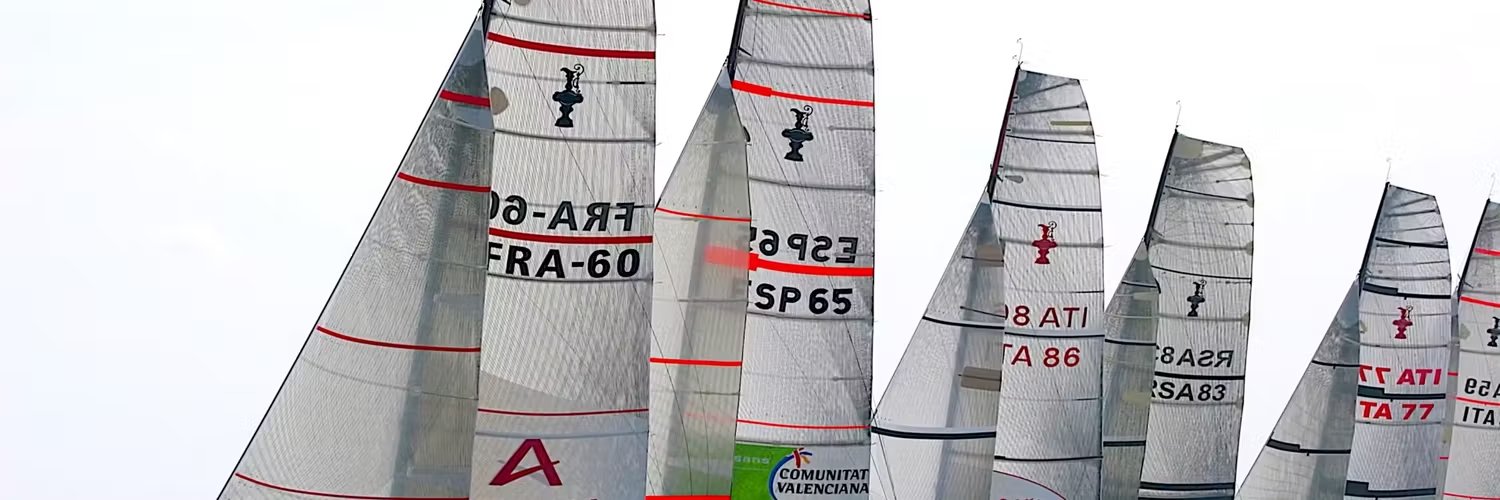
It has been 19 years since America’s Cup-class boats last raced each other in a true fleet format. You have to go back to Valencia, April 3-7 2007, when 11 IACC boats lined up together just months before the Louis Vuitton Cup began. It produced some fantastic racing.
I was racing that week on board Victory Challenge, the Swedish challenger for the America’s Cup, and I will never forget one particular start. We were set up at the committee-boat end of the line. I was standing on the main pedestal, looking down the line at 10 other 25-ton America’s Cup boats all charging toward the start line, perfectly timed.
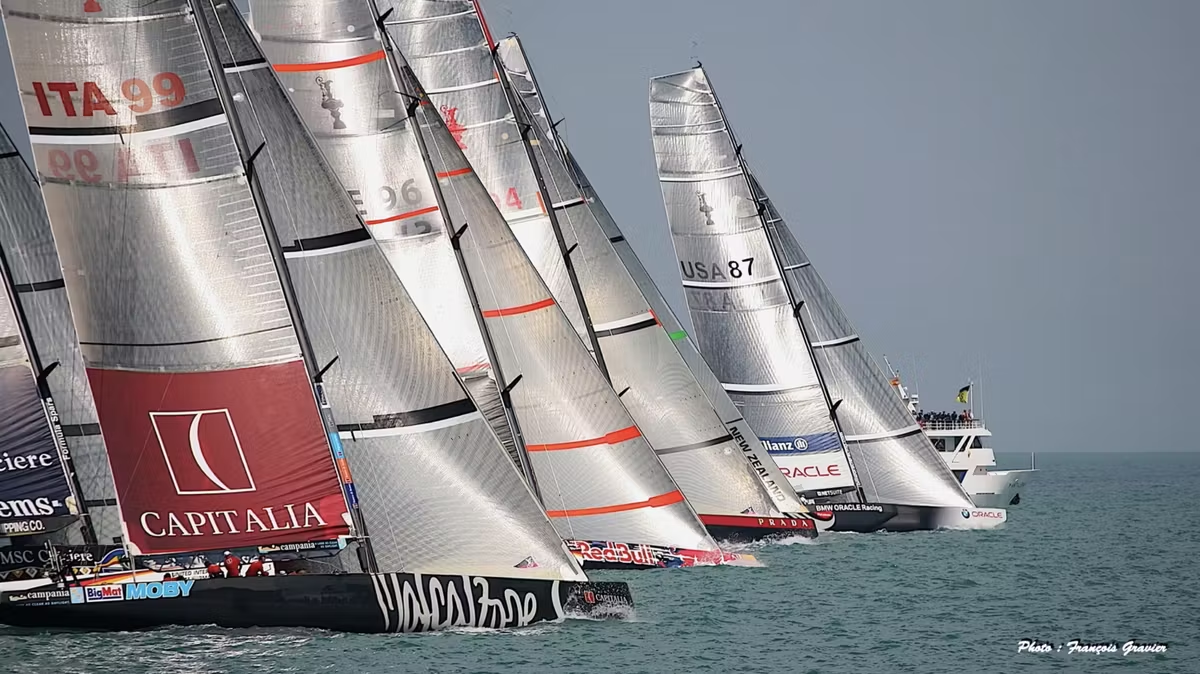
That’s 176 of the world’s best sailors, trimming the most advanced boats of their era, fighting for inches over their competition and trying to hold tight lanes until the first shift or the first patch of pressure.
And then comes the first downwind – 11 unbelievably even boats converging at the same time. How hard should you push to find your lane and launch onto the first hand wind? Consider this a cautionary tale for modern America's Cup teams.
The Italian Challenger for AC32, +39, had just stepped its brand-new mast that week and was already seeing dramatic performance gains. With Iain Percy at the helm, they had transformed from also-rans to serious semi-final contenders – all from a single piece of hardware.
On the starboard layline, perfectly positioned in the train for a clean first-mark rounding, they were hitting speeds they’d never seen before. Meanwhile, the German challenge tried to sneak behind them, looking for the perfect tack to join the queue to out hoist each other. A collision ensued – their mask hit +39’s rig, sending the Italian’s mast crashing into the water. In an instant, their chances of competing were shattered into carbon fragments, with neither time nor budget to replicate that promising mast.
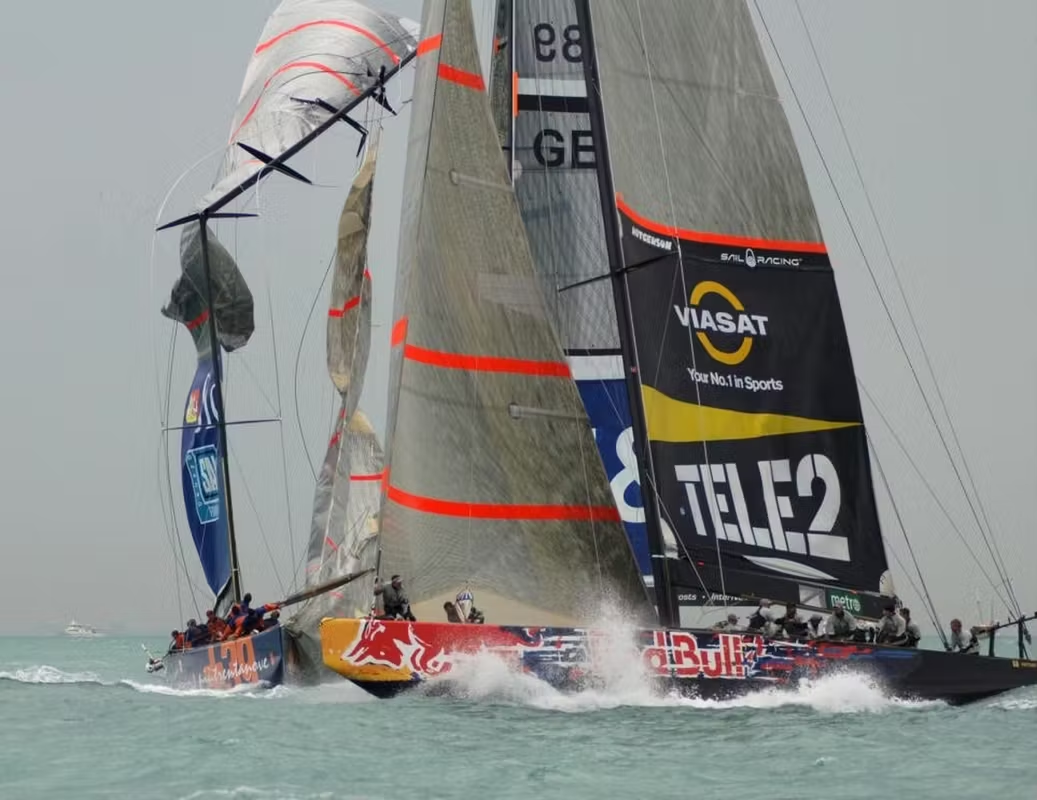
So, the question is: when do you risk revealing your full race package, like +39 did? And how hard do you push in fleet racing when the result doesn’t directly affect the outcome of the America's Cup? Let’s be honest – every one of the 25 sailors is going to be full gas, all the time.
About half the fleet were sailing their brand-new America’s Cup boats that they would campaign in the Challenger Series just a few months later. The more confident teams kept their powder dry, holding back their newest hardware until later in the summer.
By that stage the IACC rule was in its fifth generation, so the boats were incredibly close in speed and manoeuvrability. Only Alinghi and Team New Zealand seemed to have a slight edge on the rest of us.
For those of us lucky enough to race that week, it remains some of the best racing we’ve ever done – the last time the America’s Cup class truly embraced fleet racing.
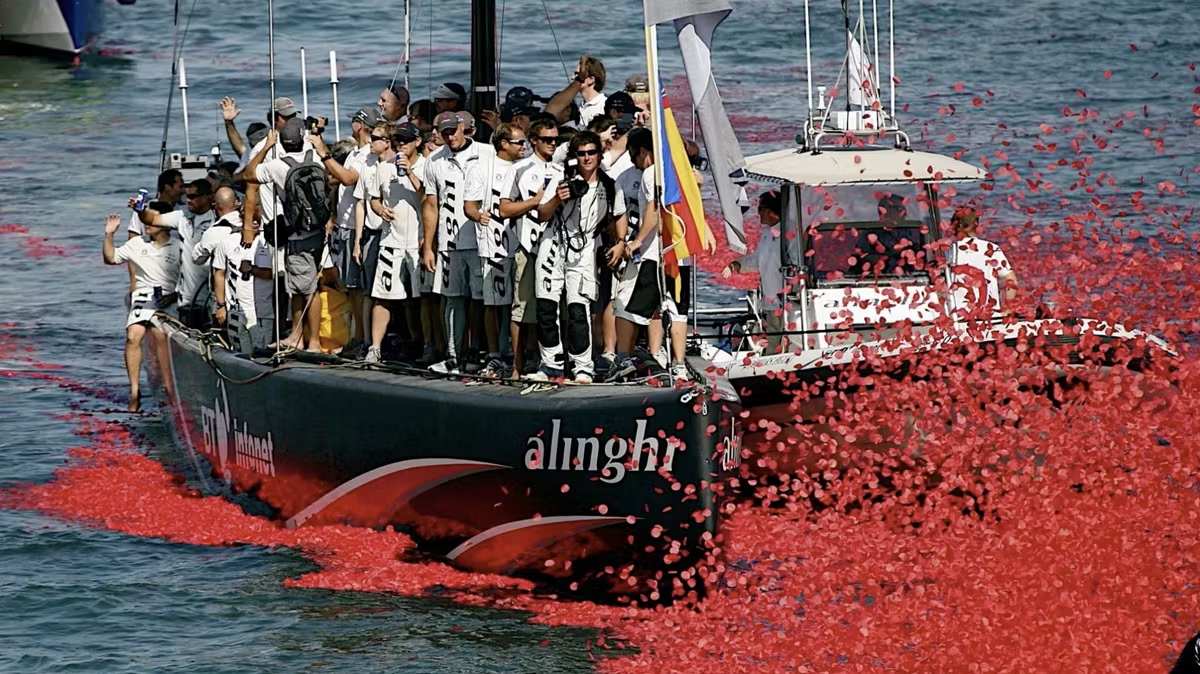
Alinghi won that final fleet race series with Ernesto Bertarelli on board calling strategy. Second place went to Emirates Team New Zealand with Grant Dalton sailing – his first appearance as leader of the Kiwi team after their disastrous defence in the 2003 America's Cup.
In fourth place was Luna Rossa Prada Pirelli Team with Max Sirena on the mid-bow. Max has been the driving force behind this iconic Italian challenge for well over a decade.
Further down the fleet was K-Challenge, also known as Areva Challenge once they secured their title sponsor. Even 19 years ago the team was under the stewardship of Stéphane Kandler.
The history of the America's Cup is incredible.
Four of the five teams that will line up in fleet racing with the foiling AC75 were racing each other 19 years ago in that International America's Cup Class fleet series.
The sport has changed beyond recognition – the boats, the speed, the technology.
But the teams and many of the key figures remain.
Once the America's Cup fever gets into your bloodstream, it never really lets go – whether you're an athlete or a fan.
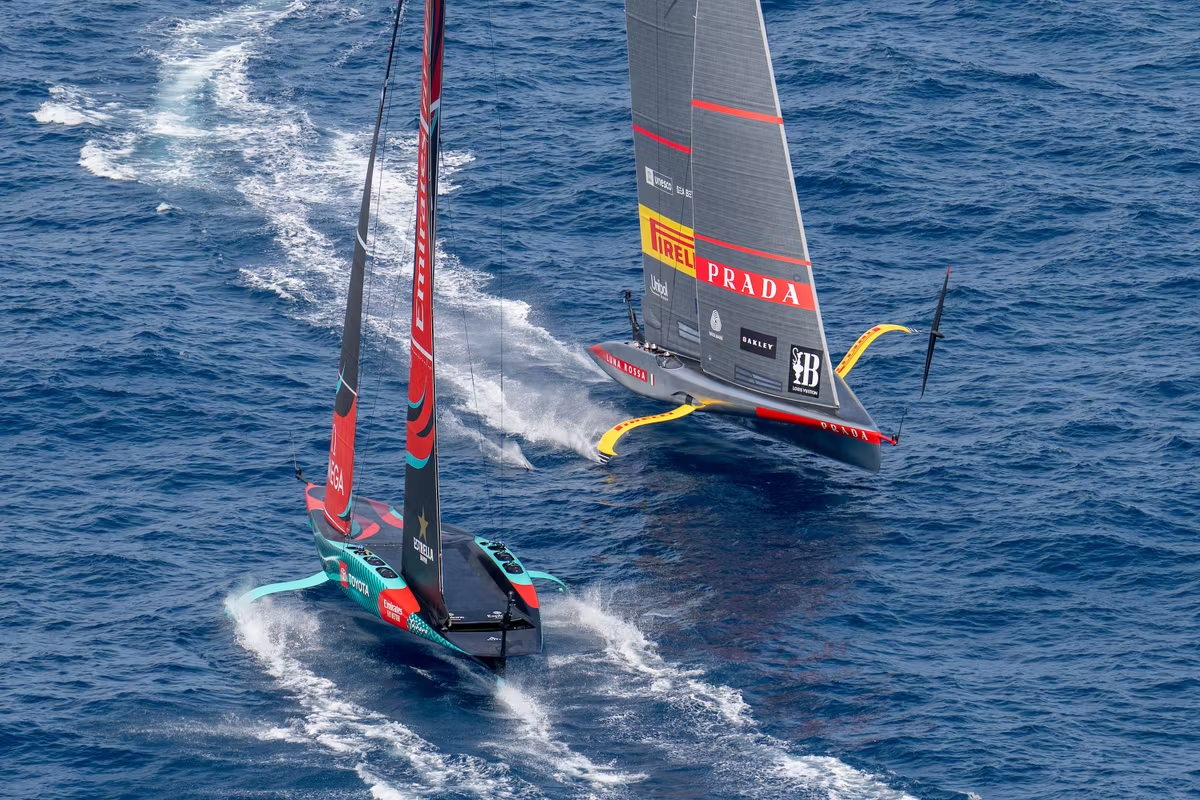
Winding forward to AC38, I’m still unsure about the real significance of AC75 fleet racing within the America’s Cup cycle. Aside from the first World Series event in 65 days, and the start of the America’s Cup on July 10th, 2027, the overall format isn’t completely clear.
My suspicion is that the fleet racing series could ultimately be used for seeding ahead of the match racing.
As a traditionalist, I believe every team’s final battle in the America’s Cup should come down to a match race. A team’s fate in the Cup should never be decided by the outcome of a fleet racing series.
That said, I also suspect the quality of the racing, along with the images and sporting moments fleet racing produces in these boats, could fundamentally change how the America’s Cup looks in AC39 and beyond.
In fact, there’s a real chance that fleet racing becomes the star of the show in 2027.
Articles You Might Be Interested in
Recon from the Hauraki Gulf: Unpacking ETNZ's first week back with Taihoro
GB1 back on the water and wasting no time in Cagliari
France reveals stacked AC38 crew as K-Challenge becomes La Roche-Posay Racing Team
The Foil Weekly Wrap - 16 March ’26
Trouble in the Strait of Hormuz points to sailing's future
Tom ‘Mozzy’ Morris: The AC75’s dramatic diet – and why it gives ETNZ an early edge
AC38 crew line-ups slowly coming into focus