Freddie Carr: Why I love this sport

So, here it is: my first column as a senior contributor and pundit for The Foil. This is the start of something new for me on a personal level, but more importantly for the sport I love. The Foil promises to be a great adventure.
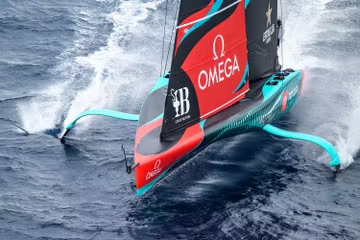
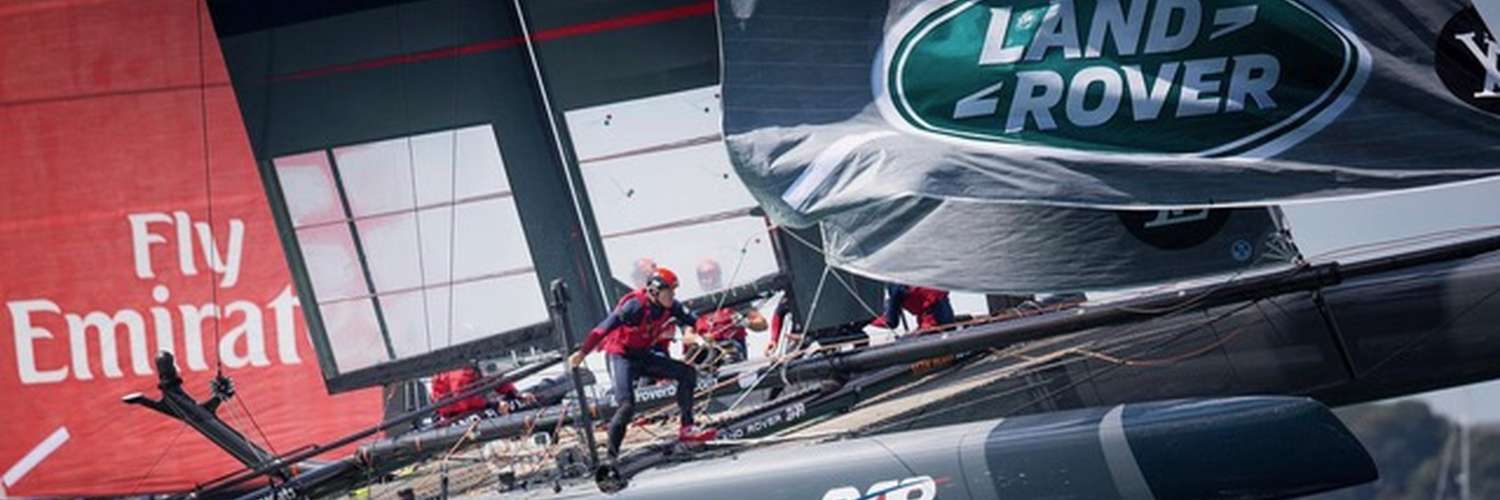
I’ve always been deeply passionate about sailing as a sport. Not just about my involvement at the top level – my youth titles at national and world level, my six America’s Cups and so on. I also just love to see the sport thriving. At The Foil, we have an opportunity to redefine how the sport of sailing is reported, to the sailing public but also to the non-sailing public too. It’s the perfect moment in time for us to launch because sailing is in such an interesting andhealthy place.
We have SailGP which is thriving. The America’s Cup is about to restart in this new partnership era. We have the Olympics, which is slightly in flux but remains such a powerful feeder into the rest of the yachting community. We have the Admirals’ Cup which restarted in 2025 and has been a shot in the arm for yacht racing on a global scale. Then below all that, the reality is every single yacht racing class is doing well. I look across the broad spectrum of our sport and I’m so encouraged. That’s why I want to share all of the stories, all of the regattas, all of the personalities. As I’ve raced across classes at every level, I feel in a perfect position to do that. I speak the language of a sailor, but then I also love sitting back and watching the racing – because I love sport.
Foundations of a sailing life
Sailing was always there for me. Like a lot of sports people who make it to a high level, I had a family connection. My Dad, Rod Carr, was an Olympic sailing coach from 1984 to the 2000 edition in Sydney. That meant for my summer holidays as a kid, if I wanted to hang out with Dad I’d be sitting in his old Volvo as he towed his coach boat around Europe, to Holland, France, Spain and Portugal, as he coached the Olympic classes.
This was the era when sailing was an amateur pursuit only, and there was no Lottery funding. These were professional people who were giving up their time and money to try and win Olympic medals. And there I was among them, spending my summers bobbing about in the back of Dad’s coach boat. I have specific memories of the build-up regattas for the Barcelona Olympics in 1992, watching him coach all these great sailors – and without really knowing it, I was learning: the language, the work ethic. I was just loving spending time on the water and with my Dad.
Reflecting now, it was a special time. I didn’t realise how much until I retired from the top end of America’s Cup sailing.
The best bits about racing
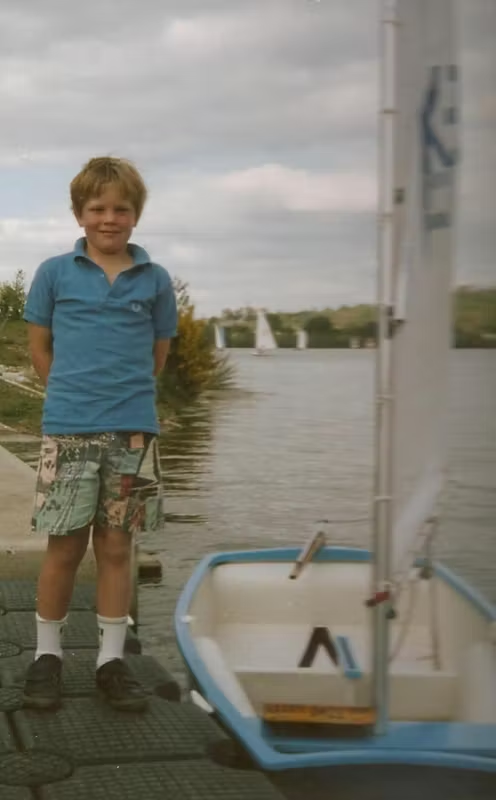
I started sailing because I had too much energy, all the time! Mum and Dad would push me off the beach at Hayling Island Sailing Club and just the freedom it gave you as a seven, eight, nine-year-old, to push off a beach in this vessel and go exploring wherever you wanted… it was just unbelievable. Then I slowly started working into racing – and I’m a competitive chap, so I was quickly hooked. It was all I ever wanted to do, and I guess the rest is history.
I’ve taken so much from this sport, but I like to think I’ve given something back too. I recognise I’m not the most talented guy on the water. But I work bloody hard and I like to think I’m a really good team-mate. That’s what I believe gave me the longevity I enjoyed in my America’s Cup career. That’s such an intense sporting environment, and everyone who gets there has a really good sailing CV. I think what made the difference for me was I really valued the people I worked with and I knew how to get the best out of that group.
For me, it was all about being a good team-mate, not just to the sailing team, but across the shore crew and the design team – to be able to talk ‘geek’ to the designers and spend time in the spray booth and hang out with the boat builders. I like to think I helped build the culture within those teams and that was why I kept getting asked back.
I’m beyond the age for the America’s Cup now. But what I will miss, and am missing now, is the daily interaction with those groups. I’m having to replace the structure of those days and I’ll admit, that’s tricky.
Sailing: it’s a way of life
But I’m still getting paid to race today, and that’s a privilege. A bit like golf with the seniors’ tour and motor racing with GT and endurance sports car racing, there’s the top level in ocean racing, the Olympics, SailGP and the America’s Cup, then just below that there’s the grand prix circuit, across 30 to 40 classes of boat, from 20-footers to 100-year-old J-Classes where you can still earn a living. It’s still a super high-level of racing – Olympic, SailGP and America’s Cup sailors do these events as well – and it’s a fantastic way to enjoy the sport as a professional.
In all, I feel like I’ve never done a day’s work in my life! I’ve just got paid to do my hobby, and I do wake up every day feeling eternally grateful for that.
The rest of the world
When you are a sailor and you’ve grown up in the sport, it’s all-encompassing. It completely takes over your life and isn’t just something you do in your spare time. That means it’s very easy when you are inside that bubble to assume that sailing is huge and that everyone in the world is aware of it. But once you remove yourself from the sport a little bit, as I have over the past year, you recognise it’s still a minority sport. That probably comes from the complications of trying to understand it, and from its demographic group. Sailing is considered a sport that is only accessible to some, and that’s wrong – that’s what we are trying to change at grass roots level today.
Right now, the wider public is not exposed to the sport, but there’s so much to take from it and so many parallels with other activities. It requires a brilliant combination of skills: of brain power, high cognitive function – like a game of chess on water. Then there’s the physicality and how fit these athletes have to be to get around these racing boats. And then there’s the design side, how we reach speeds of 60mph across the water. There are so many facets that could interest a wider sporting population.
You could argue until SailGP really got going, particularly in the past 24 months, no one in sailing had tried to speak to the wider sporting public. SailGP is striving to do that, and now we at The Foil want to do the same.
But it’s a fine line between talking to the non-sailing public and keeping the sailing community engaged. I predict we will do that well at The Foil.
In the sailing media so far, we haven’t always done a brilliant job of talking about the people, the stories, the intrigue and emotions, and that’s where I want to take us. That’s where we’ll get the buy-in from the wider audience our sport deserves.
So here we are, embarking on this new voyage at The Foil. I’m excited about the journey ahead. I hope you are too.
Topics
Articles You Might Be Interested in
AC Partnership taps Sky Italia exec as CEO
Freddie Carr: A week that changed the sport
The Foil Weekly Wrap - 23 Feb '26
The tortoise beats the hare: Marega claims 70th Finn Gold Cup
Freddie Carr: Auckland incident will be another turning point for safety
The Foil Weekly Wrap - 16 Feb '26
Hawkins and Wilson take double British victory at iQFOiL Games opener
Podcast Ep. 6 - ‘Hot laps’ in Auckland: Get set for SailGP in New Zealand