
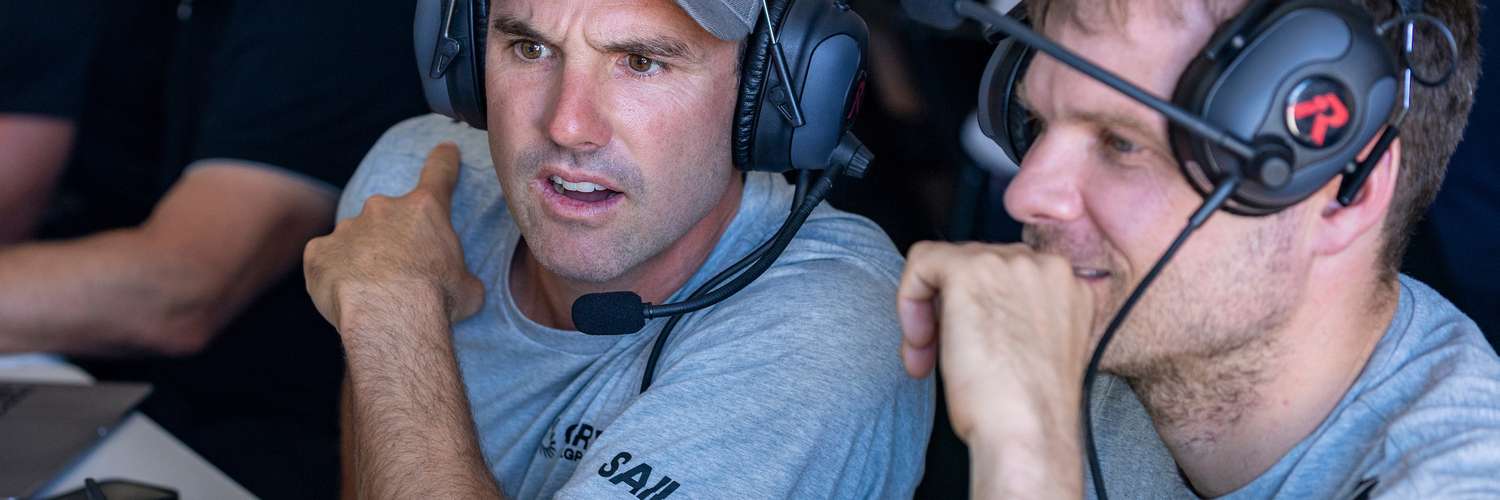
From coach boat to control room: How data and AI are redefining coaching

For decades, elite sailing coaches were defined by their presence on the water. Chasing fleets in RIBs, shouting instructions between manoeuvres and relying on instinct honed over years of racing was the norm. Today, that image is rapidly becoming outdated. Coaching at the highest level of the sport has moved ashore – and into the data room.
The shift away from on-water coaching
Modern racing environments, particularly in foiling classes and professional circuits, have limited or removed coach boats entirely. This has forced a fundamental change in how coaching is delivered. Instead of reacting to what they can see from a few boat lengths away, coaches now analyse fleets from afar, using live data streams and high-resolution tracking systems.
A perfect example of just how much this world has changed over the past 25 years comes from the way coaches read the wind. Back in Auckland in 2001, it was delightfully low-tech: a coach on a support boat watching a piece of wool tied to a wire, compass in hand, trying to sense shifts and pressure changes across the racecourse. Fast forward to the most recent America’s Cup in Barcelona, and it’s a whole different ballgame.
Coaches were monitoring the wind with LiDAR technology – essentially laser-based radar that scans the air to measure wind speed, direction and turbulence across the entire two-mile course in real time. This isn’t just a single point measurement anymore; the system maps the whole wind field, detecting subtle shifts and gust patterns that would be impossible to sense from a boat.
The data feeds directly into analytics dashboards, letting coaches see, almost instantaneously, where the pressure is building or where a shift might pay off tactically. What used to rely entirely on intuition and experience is now backed by a live, 3D picture of the wind – a mix of science, technology and old-school racing knowledge.
The rise of data-driven decision making
Real-time performance data has become central to modern coaching. Boat speed, VMG, ride height, foil settings, control inputs, wind trends and positioning are now visible instantly. Coaches are no longer just observers; they are interpreters of information, turning raw numbers into tactical insight.
The availability of this data allows coaches to identify trends as races unfold, rather than waiting for post-race debriefs. Decisions that once relied on gut feel can now be backed up by hard evidence.
In any technical sport, the ultimate goal is simple: learn faster than everyone else. In the high-stakes world of the America’s Cup, that learning happens at breathtaking speed – quite literally. I could be having a conversation at 50 knots with our software lead, in Oxfordshire, tuning mast rotation controls to optimise manoeuvres on the boat.
Just five years ago, that kind of data would have been collected during training, reviewed overnight, and only implemented in the next session. Today, with live tracking and instant analytics, we can see the impact of adjustments from tack to tack, improving performance in real time. What once required hours of post-race debrief is now part of a continuous feedback loop – a real-time racecourse classroom where every manoeuvre teaches the next.
AI as a coaching tool
Artificial intelligence has become a powerful ally in managing the sheer volume of information produced during racing. AI systems can quickly process complex data sets, highlight anomaliesand flag performance gains or losses that might otherwise be missed.
Rather than replacing the coach, AI enhances their effectiveness – filtering noise, prioritising key variables and accelerating understanding. This allows coaches to focus on decision-making and communication, rather than data overload.
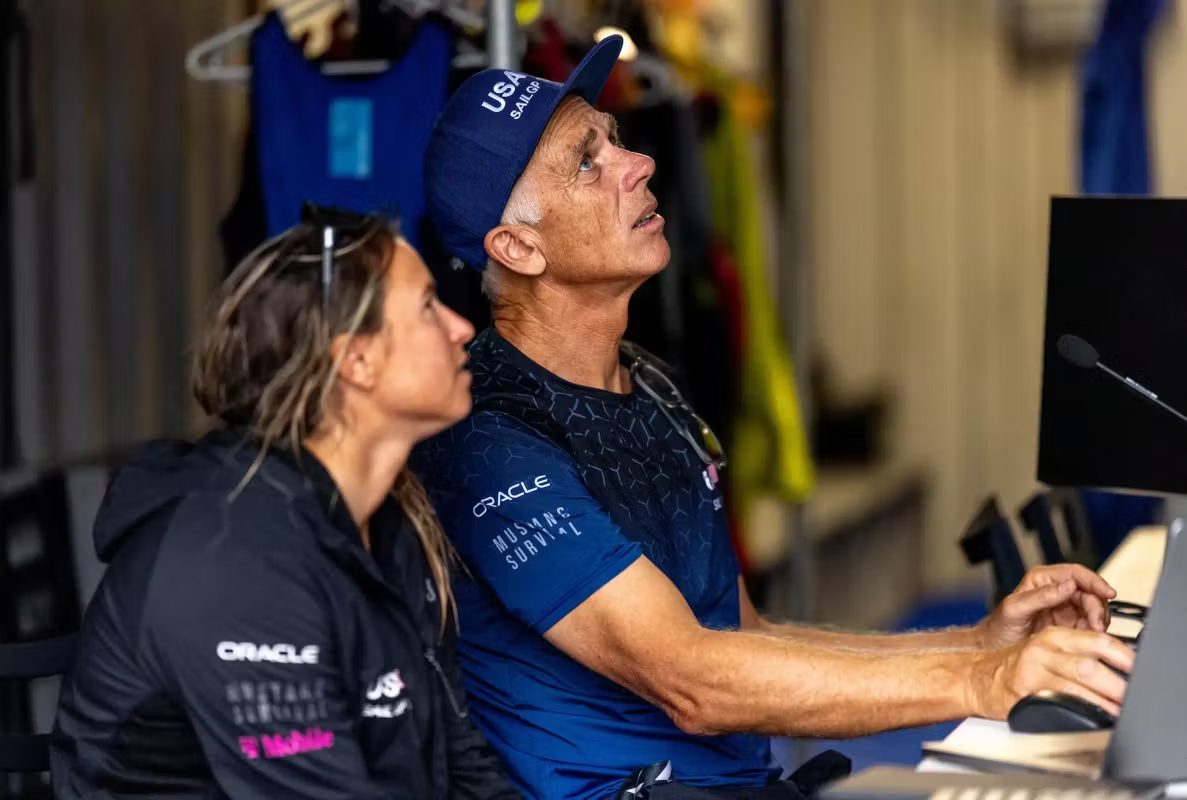
On my last trip to SailGP in Perth, I poked my head into the technical support container to catch up with in-house data analyst David Rey – you could call him the coach’s assistant. When I asked how he and the teams were using AI to improve performance, he didn’t hesitate: “It’s a game changer.”
In a series where all data is shared across teams, everyone will soon have playbooks and tuning guides that are almost identical thanks to AI. The difference won’t be in the information itself – it will come down to how quickly and skilfully teams can implement it on the water. AI may level the data field, but the human element – the instincts, decisions, and reactions during a race – remains what separates the winners from the rest. Thank goodness!
Coaching from the booth
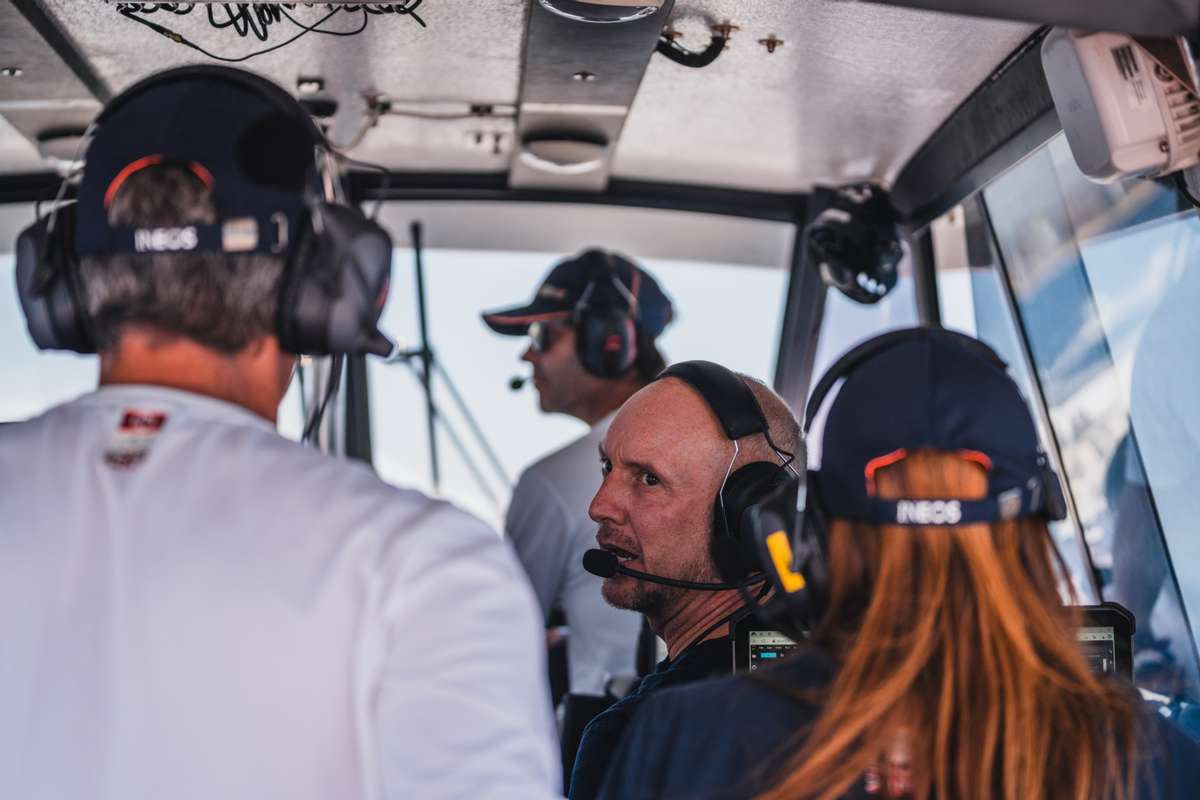
The modern coach’s workspace looks more like a race control centre than a dockside briefing room. Multiple screens display live tracking, performance metrics, weather overlays and predictive models. From these booths, coaches can see far more than any sailor onboard a single boat.
This perspective enables feedback that sailors simply cannot access while racing or training – comparisons across the fleet, subtle speed differences or long-term wind patterns that only become obvious when viewed at scale.
A broader coaching skill set
As technology has evolved, so too has the role of the coach. Tactical knowledge and sailing experience remain essential, but they are now complemented by data literacy. Understanding how to interpret metrics, question algorithms and work with analysts has become a core part of the job.
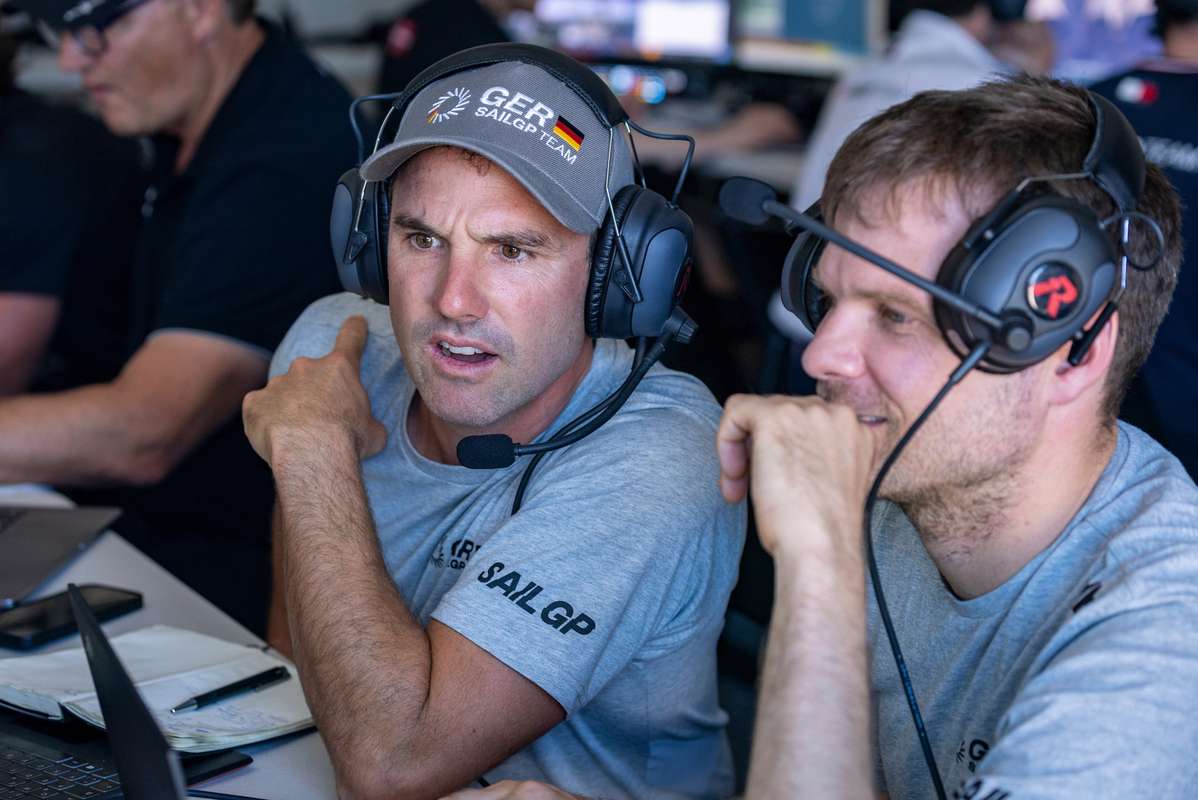
Many teams now operate with dedicated data analysts working alongside coaches, blending analytical expertise with racing intuition to build more effective strategies.
Looking at SailGP’s Canada setup in Perth really shows how far coaching has come. There were two coaches in the booth – Joe Glanfield as lead coach and Tim Hornsby providing the sailors’ perspective – while Ian Williams, the starting coach, was calling in remotely from South Africa, and Bleddyn Mon, the data analyst, was working from Belfast. It’s starting to feel less like traditional sailing coaching and more like a global NFL sideline, with experts collaborating across time zones to make split-second decisions.
Changing dynamics between coach and sailor
This technological shift has also changed the relationship between coaches and sailors. Communication is more targeted, more precise and often delayed until after racing. Instead of constant verbal input, feedback is delivered through structured debriefs supported by visual data and AI-driven insights.
This level of coaching and data integration isn’t confined to the America’s Cup or SailGP. Across all top-tier Grand Prix racing circuits, deep data analysis is now standard practice. In the TP52 Super Series, for example, it’s not unusual to be handed a 16-page performance report at the end of a race day – detailing everything from manoeuvre efficiency and speed deltas to setup trends and decision-making patterns.
It’s demanding, but it works. That level of analysis will make the boat faster the very next day, and the top sailors not only expect it, they demand it. At this end of the sport, data isn’t a luxury or a novelty – it’s an essential performance tool, and learning how to absorb and apply it quickly has become a competitive skill in its own right. The coach is pivotal in this.
In my opinion, with all these advances in technology in the coach’s world, the very best coaches are still the people who motivate you, put an arm around you, or, in my case, keep you in line. The personal relationship between a coach and their sailors remains by far the most important aspect of the job. You can have all the AI-generated data analysis in the world, but if the crew doesn’t trust or respect the coach, it’s completely wasted.
There are some things technology will never replace – and that is social intelligence. Understanding personalities, reading moods, building trust and inspiring confidence are skills no algorithm can replicate. Even in a data-driven era, the human element remains at the heart of high-performance sailing.
Articles You Might Be Interested in

The results are in! What's missing in sailing media?
Coutts wants teams hunting for young blood
Burling's boat coming back together
Burvill and Puttman crowned F18 World Champions
The Foil Weekly Wrap - 2 Feb '26

Russell Coutts wants Olympic sailing to think bigger
Iain ‘Goobs’ Jensen joins ETNZ