How SailGP decides who's right at 50 knots

Sometimes Craig Mitchell and his team of SailGP umpires feel the benefit of operating remotely from a windowless studio in London. The chief umpire of SailGP since it began six years ago, Mitchell thinks back to one particularly contentious decision that he made from the umpires’ booth in July 2022 when a Grand Prix was taking place on a sunny weekend in Plymouth in the south-west of England.
“A lot hinged on the last fleet race to determine who was going to get into the final,” says Mitchell. “We had a port/starboard incident between Australia and GBR, with Australia on starboard. We felt that GBR hadn't kept clear.”
Ghost boats
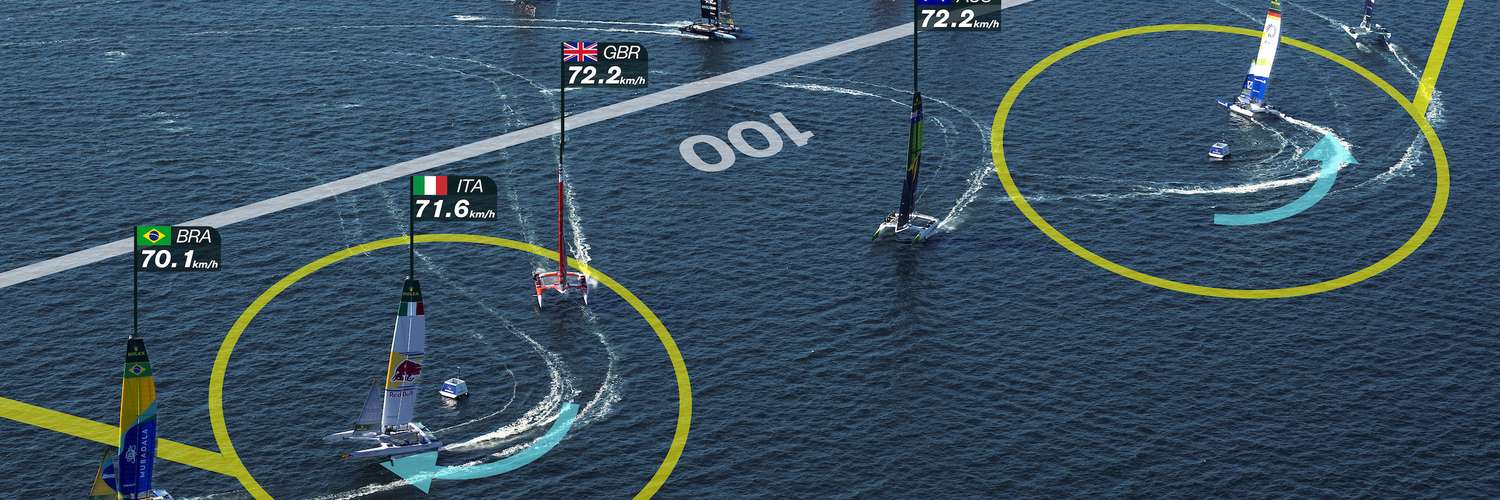
“Using the data that we've got, the ‘ghost boats’ show us a prediction of where a boat will be in three seconds' time; we decided that GBR hadn't kept clear and we gave a penalty which then meant that GBR didn't make it into the final. So that did cause a stir. I think there were some comments about throwing the umpires in the Tower of London.”
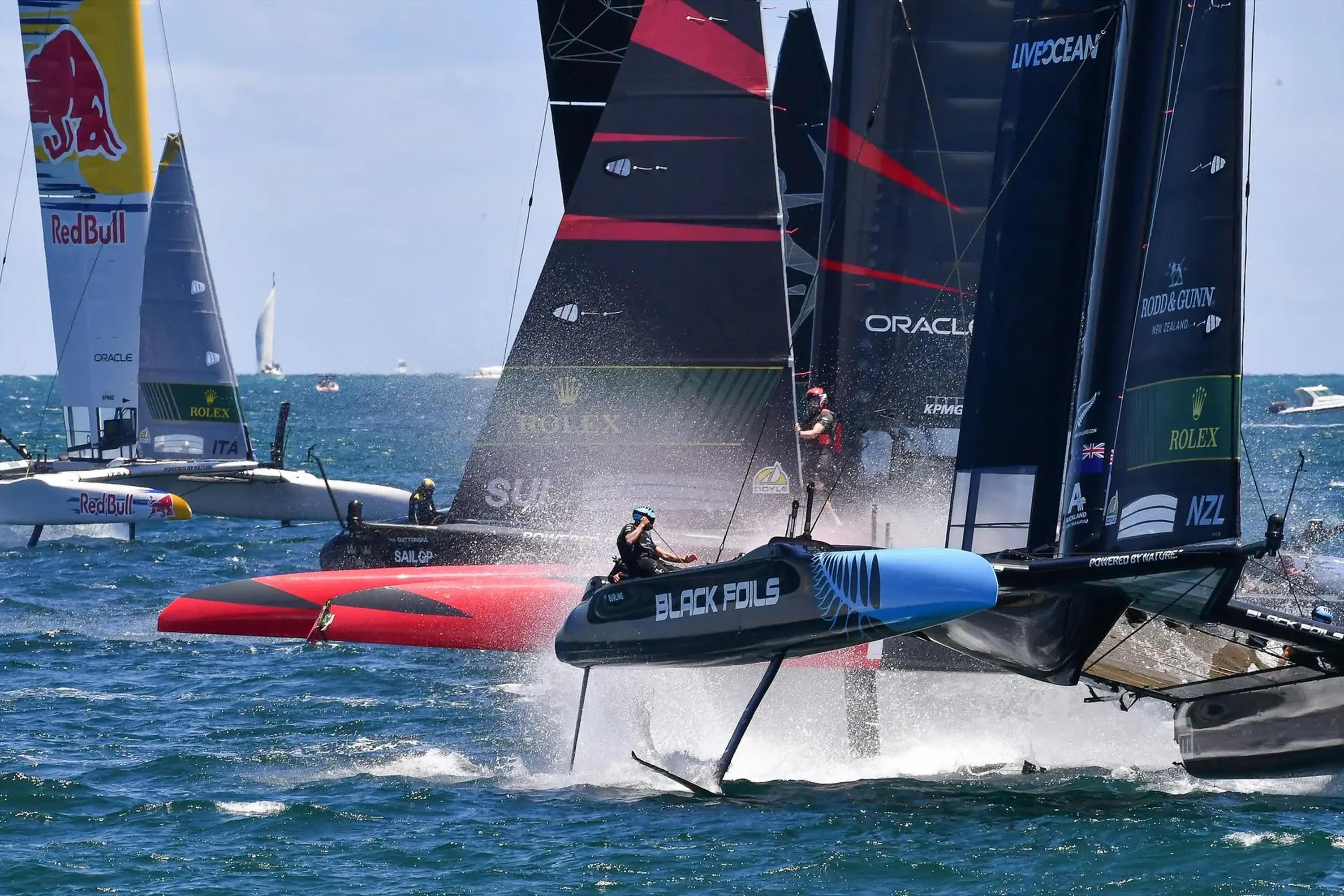
Mitchell, who hails from Southampton and is a good racing sailor in his own right, understands that sailors can get angry with him and the umpiring decisions in the heat of the moment, and sometimes a good deal of time afterwards. At the recent Grand Prix in Perth, it was clear that even the day after the collision between New Zealand and Switzerland that the Black Foils skipper Pete Burling was unwilling to acknowledge that he had been at fault in causing the damage. That said, the Kiwi skipper never directly criticised the umpires, which has happened in the past.
Robust disagreements
“Sometimes you’re going to get the robust feedback,” Mitchell smiles. “Sometimes you get it on the water. And if it gets to a tipping point, then you'll probably give a penalty for dissent on the water, which we have done in the past. And if it spills over into the press, then you look at whether you are heading towards any kind of misconduct levels, although we haven't yet had a misconduct hearing.”
Mitchell has been umpiring for more than 25 years and has been involved in the America’s Cup as far back as Valencia 2007. But the switch from plodding displacement keelboats (max. speed circa 10 knots) to high-speed AC72 catamarans for the San Francisco 2013 edition of the Cup was a game changer not just for the sailors but for the world of umpiring too. “Yeah, I think that event was the turning point really. It was the start of a new way of doing things. During that Cup we did still make the calls from the water. The umpire booth, with the data and the technology, we used that as a kind of a backup because at that point none of us had really done that much electronic umpiring.
Can't keep up!
“But it became pretty clear pretty quick that if the boats were going to go any faster then the powerboats were just not going to be able to cut it. The powerboat we had was like a 7.5 meter carbon rib which did 44 knots. And so you could hold on to the boats on the first reach. You could VMG quicker than them downwind, but upwind it just got increasingly uncomfortable.
“At the next Cup in 2017 more of the calls were coming from the booth, you know, with all the data, with more of a backup from on the water. And then moving into SailGP for the first year we had a powerboat; and then from Season 2 onwards the powerboat was history. So everything then became electronic and it became remote as well. We went from being on site to being in a studio with the TV guys in Ealing.”
Windowless office
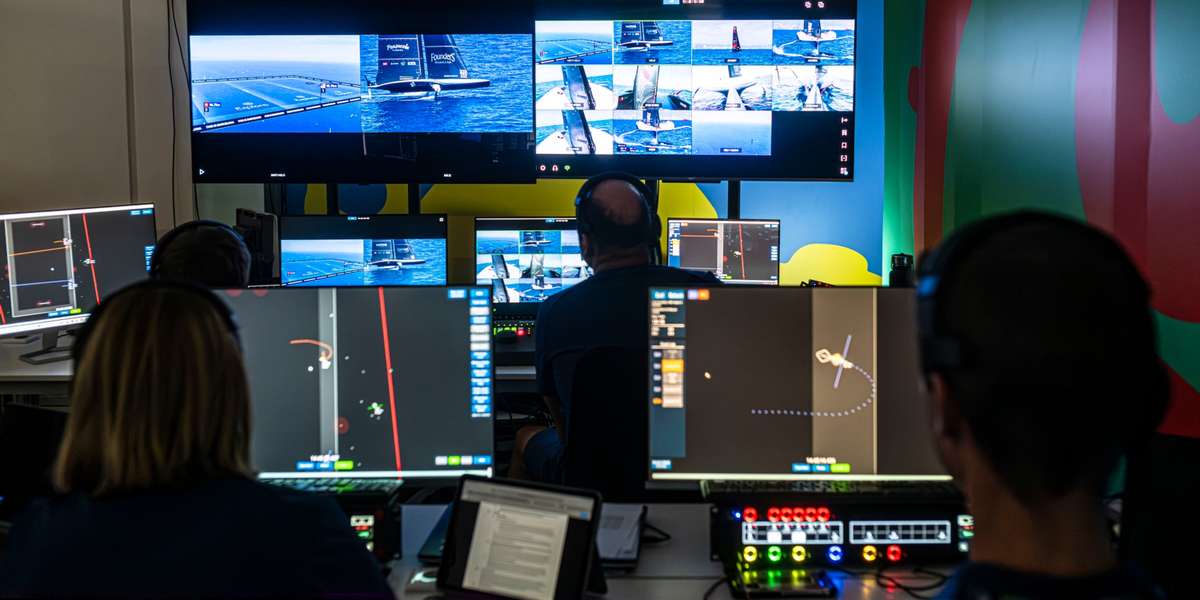
While many of his SailGP colleagues get to travel the world to glamorous locations, Mitchell says he’s not too jealous. “We go to West London, to the TV studio with the commentators and the director and all the gallery and all the EVS operators, the replay guys and the social media guys who are picking up the footage. We have our own little windowless room in Ealing, and we do enjoy it.”
Currently there are six umpires involved in the operation. “We'll have six of us involved in the process with four people making decisions and then we’ll have somebody doing the video replay. We've got our own video replay system. It's a Xeebra system, an EVS (electronic video system) like they use in football for the VAR. We control that ourselves. We have someone that operates that, does the replay, and sets up which videos and which cameras we're looking at. We get 16 feeds in on that video system, 12 from the onboards, and then four from elsewhere. So program, helicopters, chase boats, and we can choose any of those. That's one person operating that.”
Everyone off the water
Mitchell stands over the whole operation as the conductor of his little orchestra. “I’ll just be keeping the overview, look after the OCSs [On Course Side, when boats start too early], look after the TV announcements, talk to the data guys if we're seeing any problems, talk to the race committee. We work very closely with Iain Murray and Melanie Roberts who are on site running the racing, although they've also now moved remote because they no longer have a powerboat on the water. So they've moved into the coach booth area. Everyone's off the water now, we're just a bit further away from the water than others.”
The remote, electronic umpiring is all a far cry from how disputes and penalties are resolved in the majority of sailing races. Back in the day, America’s Cup disputes went to the protest room just like most sailors will be all too familiar with. Even the Olympic classes still run along traditional lines although the Formula Kite class started a move towards drone umpiring at the Paris 2024 Games.
Olympian efforts
Aside from his duties at SailGP, Mitchell has also been involved in helping develop systems for remote umpiring on the Olympic scene. “I think it will come in as the technology gets cheaper and more accessible. The main thing about digital umpiring is the timeliness of the data, whether that be video or with tracking applications. The accuracy of the GPS is getting better, coming down from 10 centimetre accuracy down to 5 centimetres.
“And you also see the data is getting to where it needs to get to in a timely manner so that you can make in-race decisions. I think initially you'll see the technology being used for OCSs, people starting too early. You’ll probably start to see it in protest hearings where you get the tracking data and you can line up all that tracking data to find out what really happened. And that'll be a good step forward because it's always better to discuss the rule interpretation rather than rely on what someone says they saw.”
Just as VAR has failed to be the panacea that it was once expected to be in football, there will surely be frustrations with the new technology-based way of making umpiring decisions. It may not be the last time that a sailor will call for Craig Mitchell to be thrown into the Tower of London for a decision that goes against them. But the umpiring developments in SailGP light a way for lower levels of the sport to consider. If we can get away from the ‘he said, she said’ arguments of a typical protest scenario to a more objective, data-led decision-making process, that can only be a good thing for sailing.
Articles You Might Be Interested in
The Olympian windsurfer with a golden future far beyond LA 2028
Lanzarote crowns its 2026 champions as Olympic cycle gathers pace

Podcast Ep. 5 - Dee Caffari: 'The doors have been blown open' for women's offshore sailing
The results are in! What's missing in sailing media?
Coutts wants teams hunting for young blood
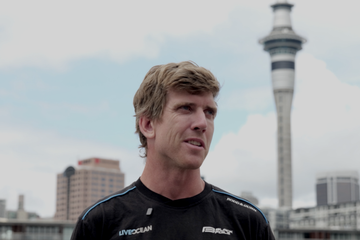
Burling's boat coming back together
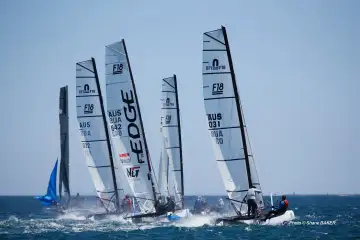
Burvill and Puttman crowned F18 World Champions
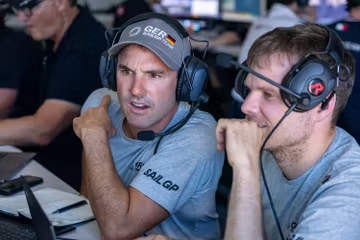
From coach boat to control room: How data and AI are redefining coaching