How SailGP’s Auckland weekend took a dark turn

It was a shocking change of momentum to witness the Black Foils’ fall from grace on home waters.
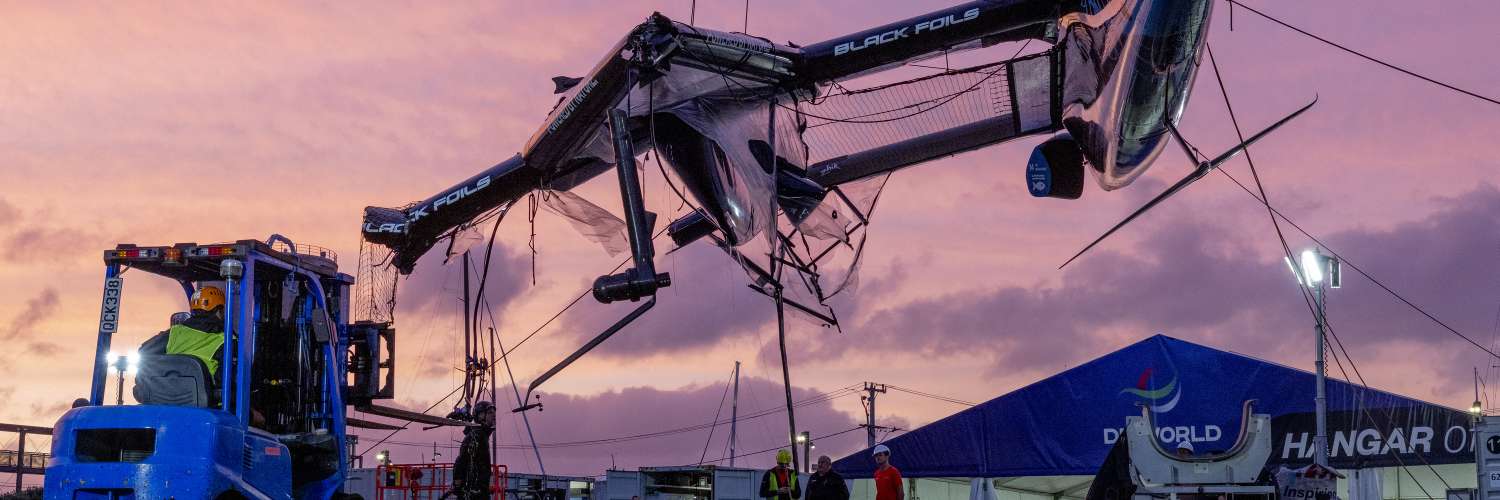
After the battle to put the broken F50 back together after that collision with Switzerland in Perth, Pete Burling and his crew came out firing on all cylinders. The wing trimmer Blair Tuke’s brother, Jesse, was one of the MCs geeing up the Auckland crowd in the enormous temporary stadium set up on the foreshore.
When New Zealand took the early lead in Race One, the local crowd were in raptures. OK, so Australia and France managed to read the wild shifts and gusts better than the Kiwis, but they still opened their account with a decent third place.
Even better in the next race, when Burling seized an early lead and pushed on for the race win to rapturous applause from the crowd, a good proportion proudly sporting their Black Foils merch.
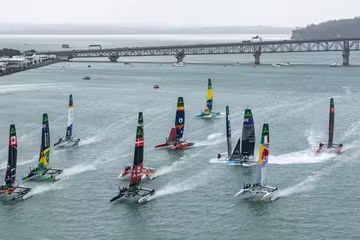
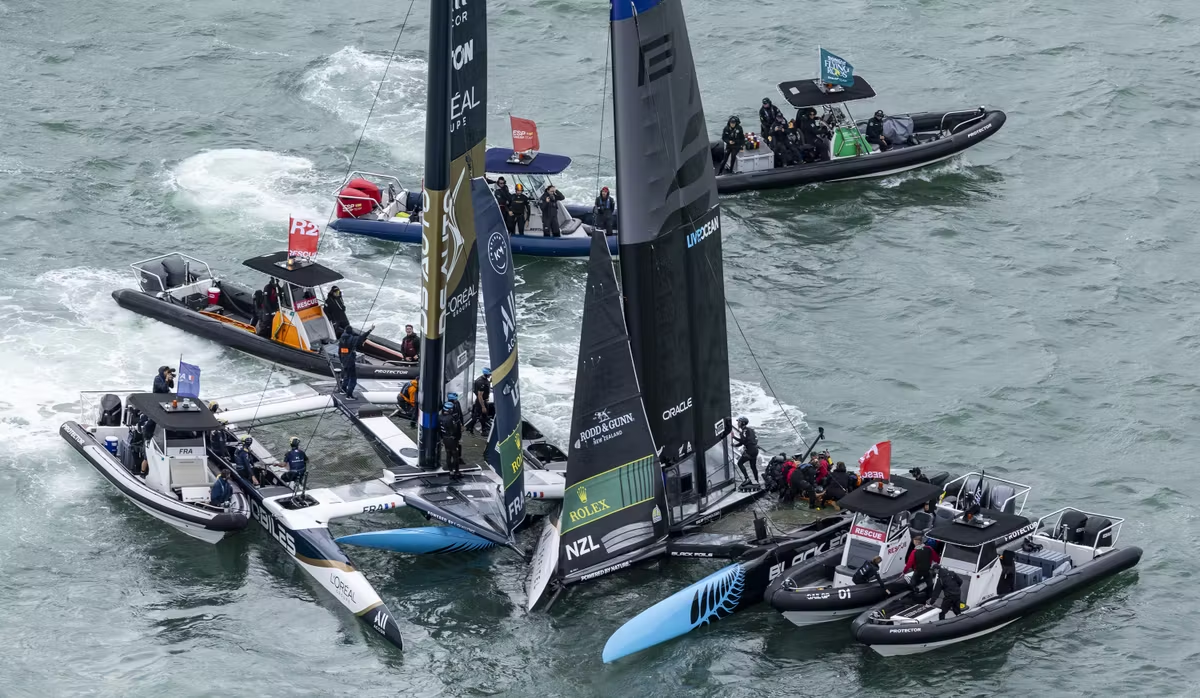
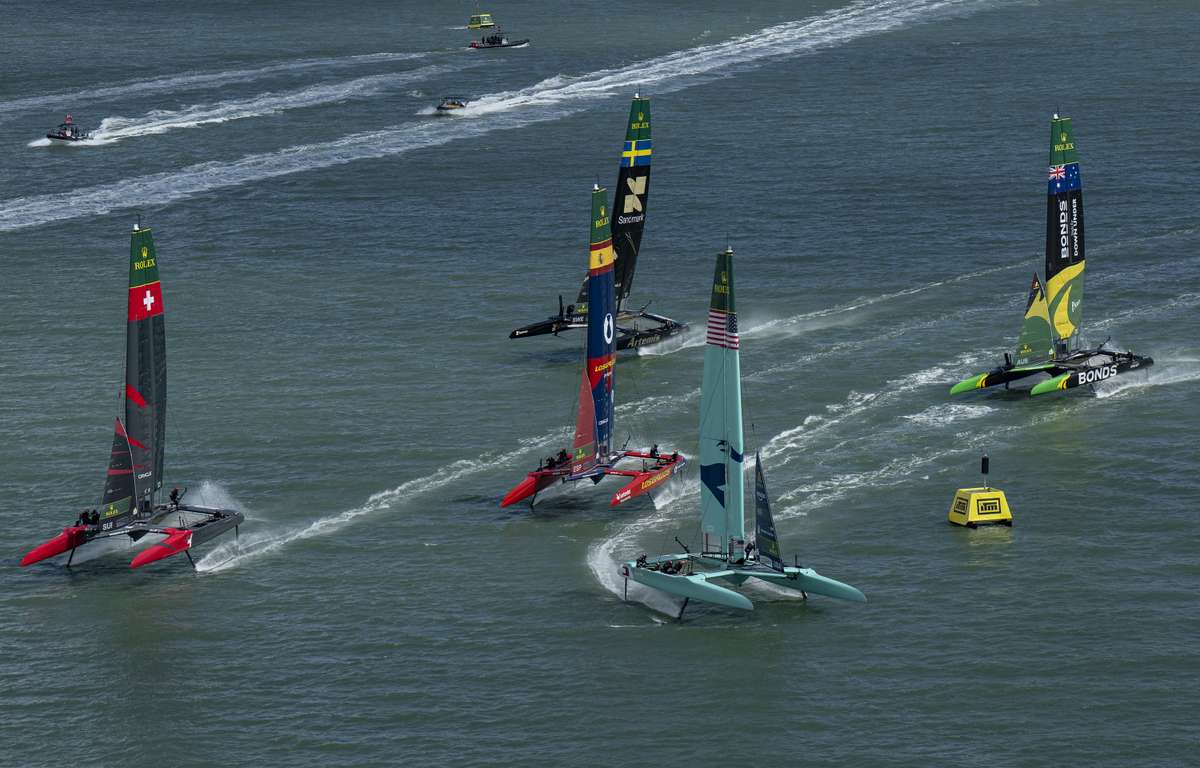
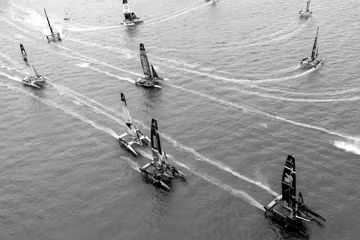
And then... the start of Race 3 and that long first high-speed reach towards Mark One. Of course, of the 13 boats that started en masse, only 11 made it as far as the first turning mark, following New Zealand’s loss of grip and control and the sudden right-hand turn that left Quentin Delapierre nowhere to go. The sickening crunch of carbon was audible even 200 metres away where I was sitting on the rocks at the foot of the stadium.
An immediate mood-change
How the atmosphere in the crowd shifted. I’ve never seen or heard anything turn quite so quickly from carnival to funereal. With the New Zealand F50 lurching over to one side as the gaping hole in the hull filled with water, and the wing rig lying almost horizontal to the raging waters of Waitemata Harbour. Even then it was clear to see the boats would not be returning to competition the following day. Highly likely not even for Sydney. But what about the sailors?
For a number of agonising minutes, Freddie Carr and I – along with our cameraman Lewis Smith – were fearful of the worst possible news. Eventually we heard that all the sailors were accounted for, which was sort of reassuring. But not so much when we later heard that two sailors – one from each of the teams – had been taken to hospital.
There haven’t been any official updates since what we reported in The Foil over the weekend, but word is that both sailors will be in hospital for at least a few days longer. Others on both crews were carrying injuries that were causing them to limp around the paddock that evening. The walking wounded were putting a brave face on it, but the impact had taken its toll on all 12 sailors, physically and mentally.
‘Focus, focus, focus’
After what happened on Saturday, it must have taken incredible courage for some of the sailors to get back on board for racing in even stronger wind on Sunday. I say ‘some of the sailors’ because speaking to the skippers in Saturday’s mixed zone, it was pretty surprising to hear such a range of emotions. Some were clearly shell-shocked by what had happened, others seemed to take it in their stride. The ultimate professionals.
When you step on board an F50, there is no time for distraction. No time to be affected by what you’ve just seen. As Phil Robertson could be heard telling his crew just moments after witnessing - and narrowly avoiding - the crash from on board the Italian boat: “Focus, focus, focus!”
The stakes have gone up in every respect. The sailors are under more pressure, they have more media and commercial responsibilities than ever before, they’re earning higher wages and if they’re successful, serious prize money. And they’re subjected to higher physical risk than ever before.
Splitting the fleet
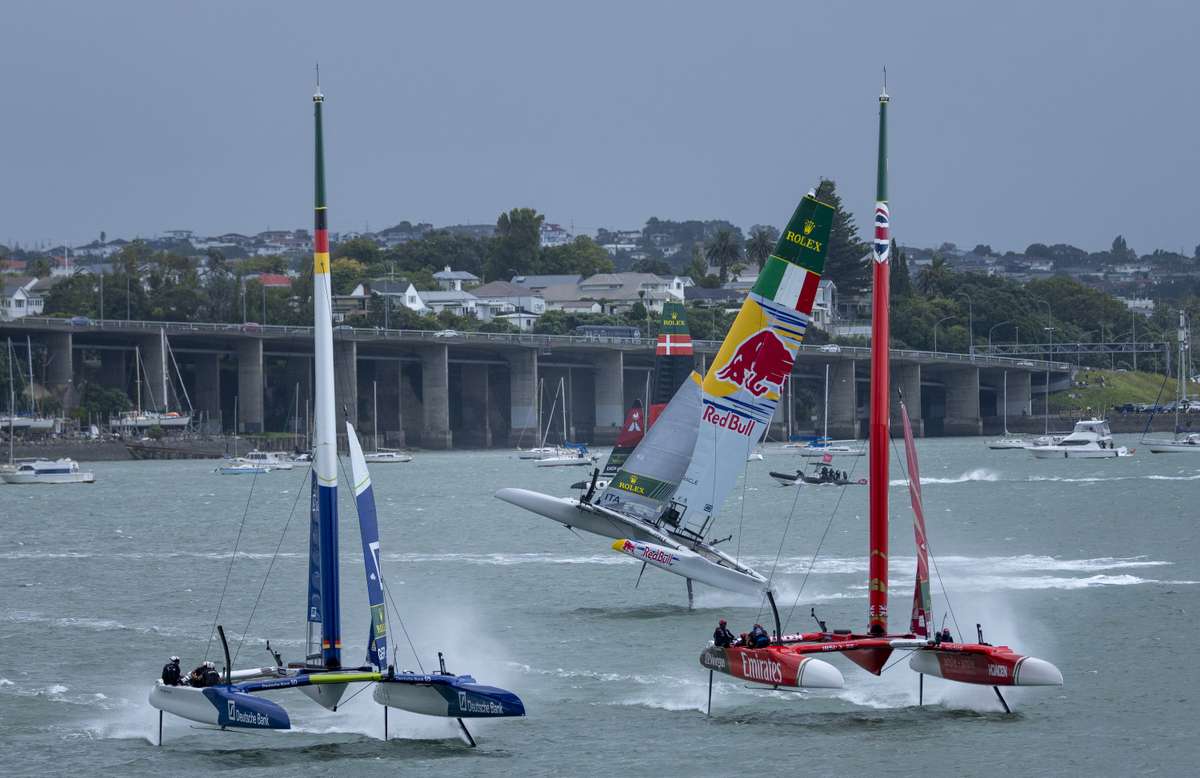
Serious questions have to be asked about how to mitigate the risk without losing the spectacle. Opting for the split fleets was a step in the right direction, as we saw within 30 seconds of the start of the first race on Sunday morning. When Italy lost grip and performed a sudden and unintended round-up into the breeze, if there had still been 12 other boats hurtling along the track, we might well have seen a copycat disaster.
So, a good call by race officer Iain Murray and his team to implement the split fleet format – even if it’s mathematically messy having a 5/6 split between the two groups. And to tighten up the angle of the first leg, making it less of a beam reach to more of a tight reach.
If it hadn’t been for Quentin Delapierre’s quick response on the helm, the horrific injuries to Louis Sinclair might have been so much worse. The French driver’s quick thinking has bought the organisers of SailGP some more time to consider how to mitigate the risk to sailors and equipment without excessively diluting the entertainment. It’s the thin line that every dangerous sport needs to tread.
The risks of offshore racing have always been inherent and well understood in the sport for decades. But for the still relatively new world of short-course stadium racing, the lessons from the first two Grand Prix of SailGP Season 6 – of what is acceptable risk and what is not – are coming hard and fast.
Articles You Might Be Interested in
United States master light winds for shock Sydney win
Spain’s Los Gallos head the fleet after day one in Sydney
Sydney SailGP preview: Could twilight racing around Shark Island shake things up?
Lightning threat calls off SailGP practice – again
Tom 'Mozzy' Morris: SailGP's Auckland safety review doesn't add up
'The safest is when you're pushing hard' - Billy Gooderham explains flight control
Podcast Ep. 8 - Sydney SailGP preview + Quentin Delapierre on safety
SailGP fixes split-fleet scoring mess