
Is SailGP's format broken? The fans weigh in

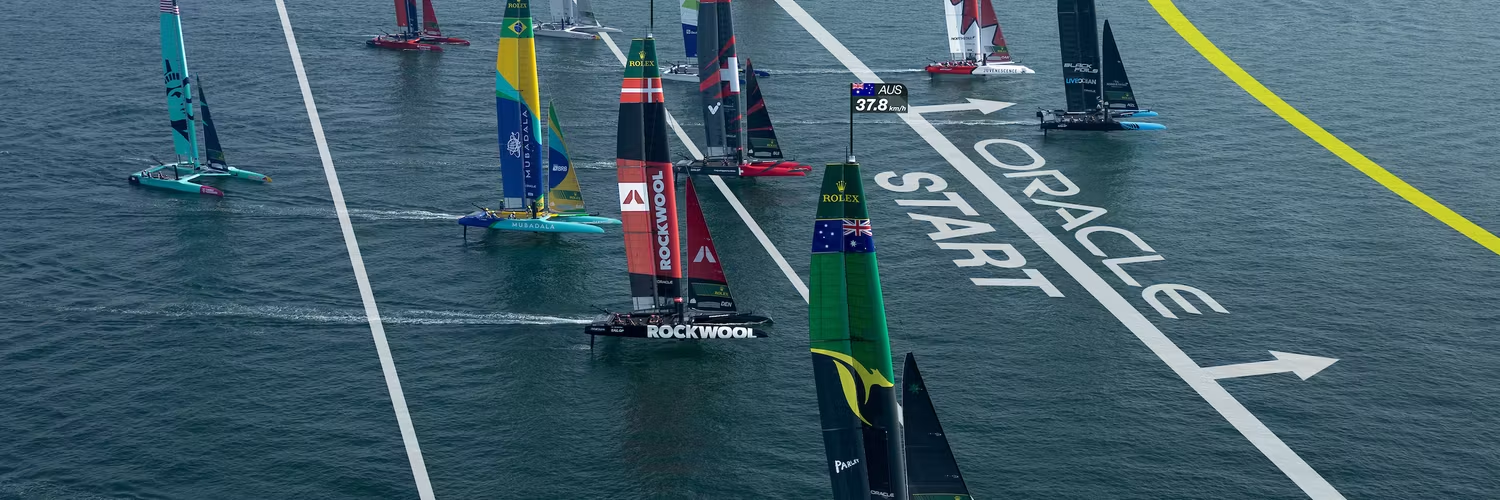
In his video last week, Tom ‘Mozzy’ Morris took aim at one of SailGP's most controversial design choices: the opening sprint leg.
Starting the fleet on a full 90-degree reach puts the F50s straight into what many sailors call the "death zone" – a point of sail where gusts can trigger a runaway power cycle. As the boats accelerate, they interact with more air, which generates more power, which drives them even faster again. In foiling catamarans with very little drag, that feedback loop can escalate quickly, leaving crews struggling to contain the loads.
Mozzy's solution wasn't to shrink the fleet or rewrite the format. Instead, he proposed adjusting the course geometry so the opening leg becomes a tighter reach in stronger winds. A narrower power band could give helms a clearer way to shed power with small steering adjustments, rather than being locked into a wide reach where the sails stay fully loaded whichever way they turn.
One viewer summed up why it’s such a pressing issue, and why F1 comparisons only go so far:
@garbo5480: "To use the F1 analogy: Imagine lining all F1 cars up across the track all to hit the start line as the lights turn green at 300kph and then having them all converge on turn 1 at the same time. I think there's a reason this doesn't happen."
Judging by the comments under the video, plenty of you had thoughts. Let's take a look…
Comments lightly edited for clarity
Slower boats?
One school of thought: slow things down before someone gets hurt.
@AngusMcIntyre: "Inconvenient as it is for the league, I feel like the best mitigation is just to have a stricter top-end wind limit. Things happen disgustingly fast on a foil when it gets windy, particularly if it's gusty as in Auckland. I went foiling days after this incident in similarly gusty, shifty 30kn conditions. The whole platform was rattling and bouncing about. It felt rubbish and unsafe. I went home to save my equipment from further torture."
@charliewalters536: "Clever thinking about adjusting the sprint reach angle. Could it equally be sensible to go for a broad reach (under appropriate conditions) as the initial sprint leg? Could they limit the ride height before the 1st mark - right up until the 1st gybe potentially?"
@johnandrews2853: "Other than in pursuit races (effectively a small fleet start of course) and on rivers where the geography restricts possibilities - reaching starts have never been good and cause problems even in normal club boats - very large numbers of boats arriving at the first mark in very close proximity for example.
"Your suggestion to change that reach angle makes a lot of sense - let's see if it gets taken up! It's a much more challenging test of racing ability to go 'high and fast' or 'low and short' at the start than we have now – and still exciting for the non-sailing viewers. Heaps better than cutting fleets in half, and ‘the incident’ could have happened with only three boats racing anyhow!"
@alexd1759: "Now, how do we get SailGP to make the changes needed to give boats enough room to recover from cascading loss of flight control? My first suggestion is a flexible no-go zone around each boat that changes in size exponentially as the boat speed increases. This implies there needs to be more room on the course, such as fewer boats in each race, or moving the boundaries out and widening the gates to remove the pinch points."
But some of these ideas go against SailGP's commercial DNA. The whole point of the league is speed, spectacle, and racing right on the ragged edge. It's hard to imagine Russell Coutts signing off on "slower and further apart."
Varied courses?
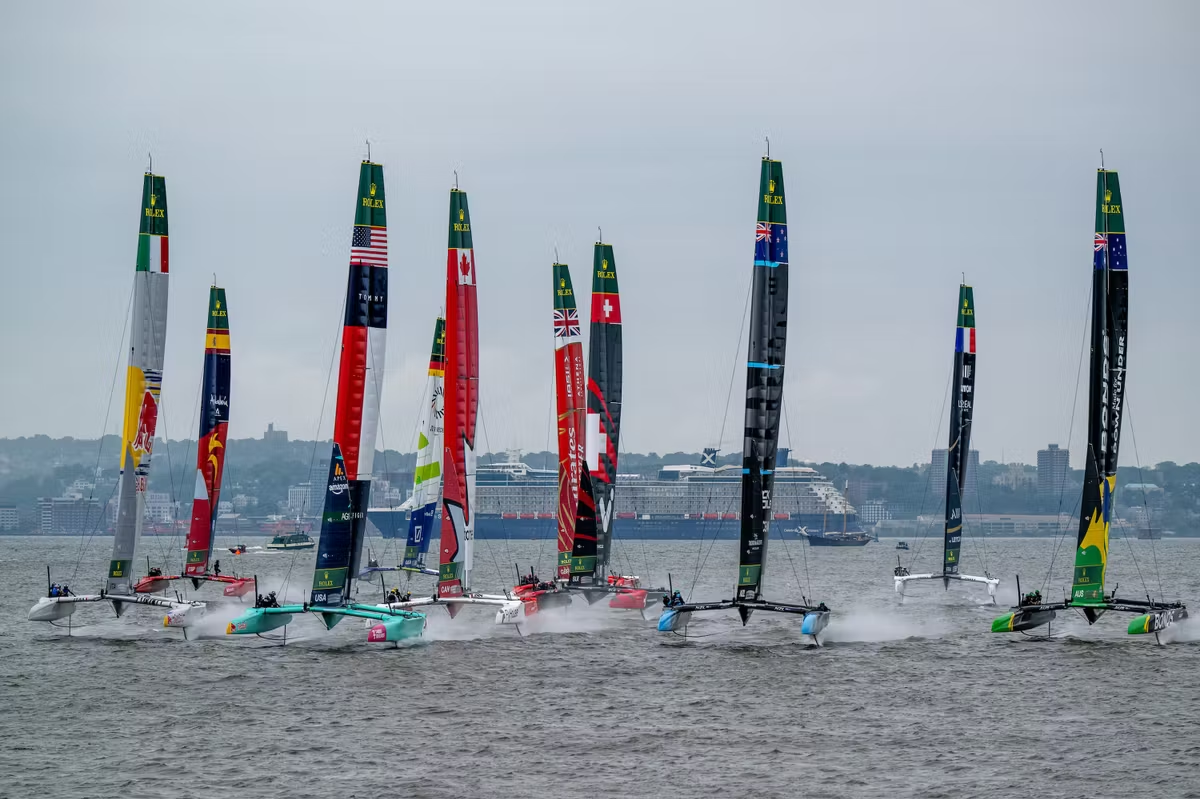
Plenty of commenters thought the real issue was the cookie-cutter nature of the courses themselves.
@Buggerupsvideos: "In my opinion, both SailGP and AC would benefit from varied courses and designs. AC for example always has a zero offset course with moving marks and is basically a drag to the first mark and then it's over. I would like to see course variation with up-wind and down-wind starts, different courses with various placements of marks and deviations of offsets to the wind, along with more laps. The course lengths are fine as they keep the boats close to spectators with plenty of action. These are the world’s best sailors and we should expect to see them being challenged in all aspects of the sailing discipline."
Some viewers went further, arguing the whole stadium concept needs rethinking.
@skibrd: "Let's get location unique courses, like an F1 track, instead of these boring courses we have now. With the fleet as big as it is, unique courses for each location. Imagine the F50s racing around the Aussie 18 course in Sydney, or a lap around NY harbour from Red Hook to the Statue of Liberty to lower Manhattan. Way more interesting."
@hunt4thetruth: "These short-course events (usually less than 10 minutes) with the team first to the wing mark usually out in front for most of the race are becoming predictable, boring and tedious to watch.
"Many of the venues, e.g. Perth, Sydney, Auckland, San Francisco, New York, Bermuda, etc., could all have decent long-course formats for at least one race of 45 minutes to 1 hour. SailGP is a televised event, and if they don't start producing a better, more compelling product, they will start to lose their online audience.
"After six years as a supporter, I'm getting bored and frustrated by many of these light-air venues, and feeling my time investment is wasted. I suspect many viewers hold the same opinion; we want the high-speed drama, the risk and danger (within reason) of Formula 1 racing."
When every course looks more or less the same, the racing can start to become predictable. SailGP's stadium format may be brilliant for the shoreline spectator, but it comes at a cost: tiny courses, limited tactical options, and a sense that every race unfolds the same way.
Windward starts?
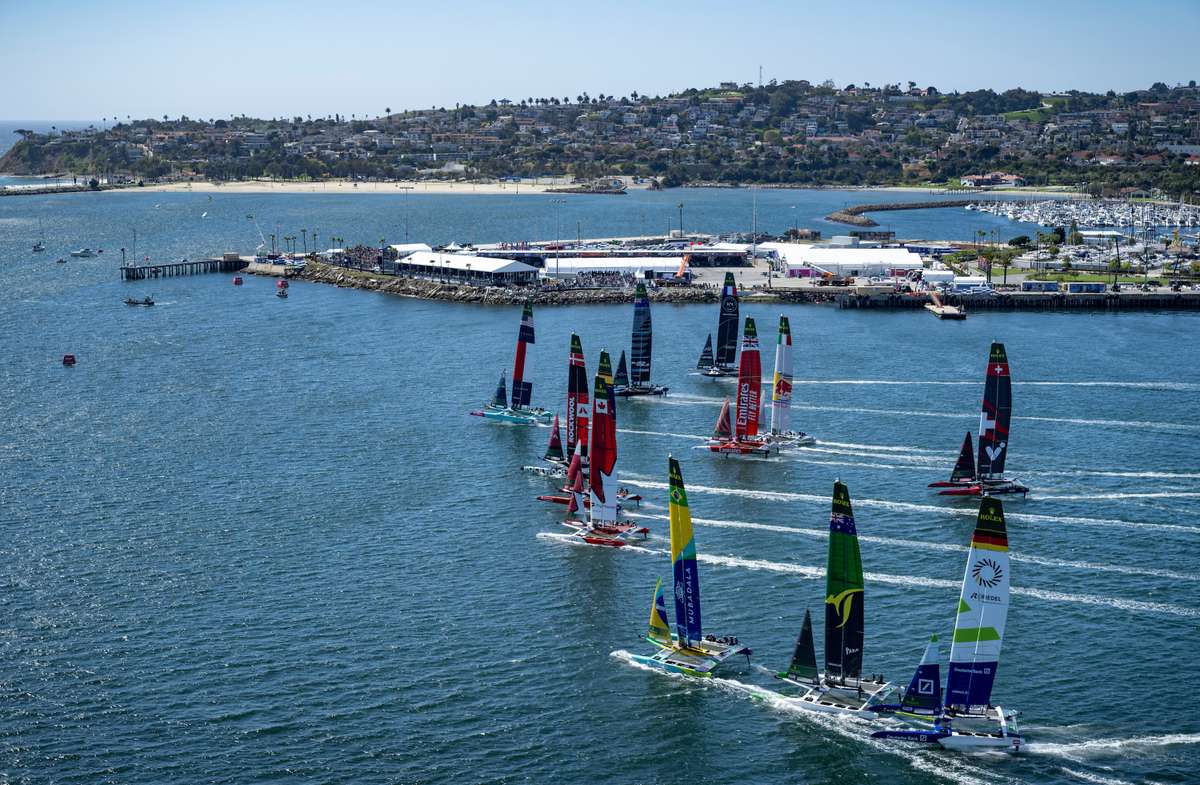
A lot of commenters landed on the same idea: just start upwind like everyone else.
@jameslittlewood7663: "I mean maybe they could ditch the sprint leg and just have a (drum roll please) windward start like every other elite level inshore yacht race ever in the history of yacht racing. Also longer courses – so-called stadium courses are a travesty on the notion of yacht racing."
@spencerogden: "The reaching starts were meant to add spectacle. With the boats now so powered up in light air, a good old fashioned windward start would be fine. At the very least, revert to windward starts when the breeze is up. Seems simpler than split fleets. Still crowded, but power is under control."
@Ranganui: "Why the reach for the first leg? Why not a "normal" windward start where first leg angles will split the fleet anyways? Would mean start box manoeuvres (low speed and off the foils) and windward tactics. Also the courses need to be longer to split the fleet naturally."
But The Foil's Freddie Carr isn't convinced. "It really doesn't work," he says. "Within 30 seconds of an upwind start, you're still all doing 30 knots as you get to that boundary. First boat that gets there gains all the rights. It would be an absolute traffic jam on that boundary. Actually, I think the reaching start does a reasonable job of spreading the fleet a little bit more than an upwind start."
And, of course, that reaching start isn't only there for the spectacle.
@jentjeb2370: "The reason why SailGP has a beam reach start: in light to moderate winds it is the best course to get the boats foiling. And I like it a lot when they are foiling. Non-foiling events are not what these boats and this format are meant for. But when you get close to the maximum wind speed these boats can handle, maybe it’s better to change to an upwind start."
Could we reach a compromise? Keep the reaching start in moderate winds, switch to a windward start when the breeze is up and the power is already there? This wouldn't need any radical overhaul of the format – just a bit more flexibility built into the race management guidebook.
Room for change
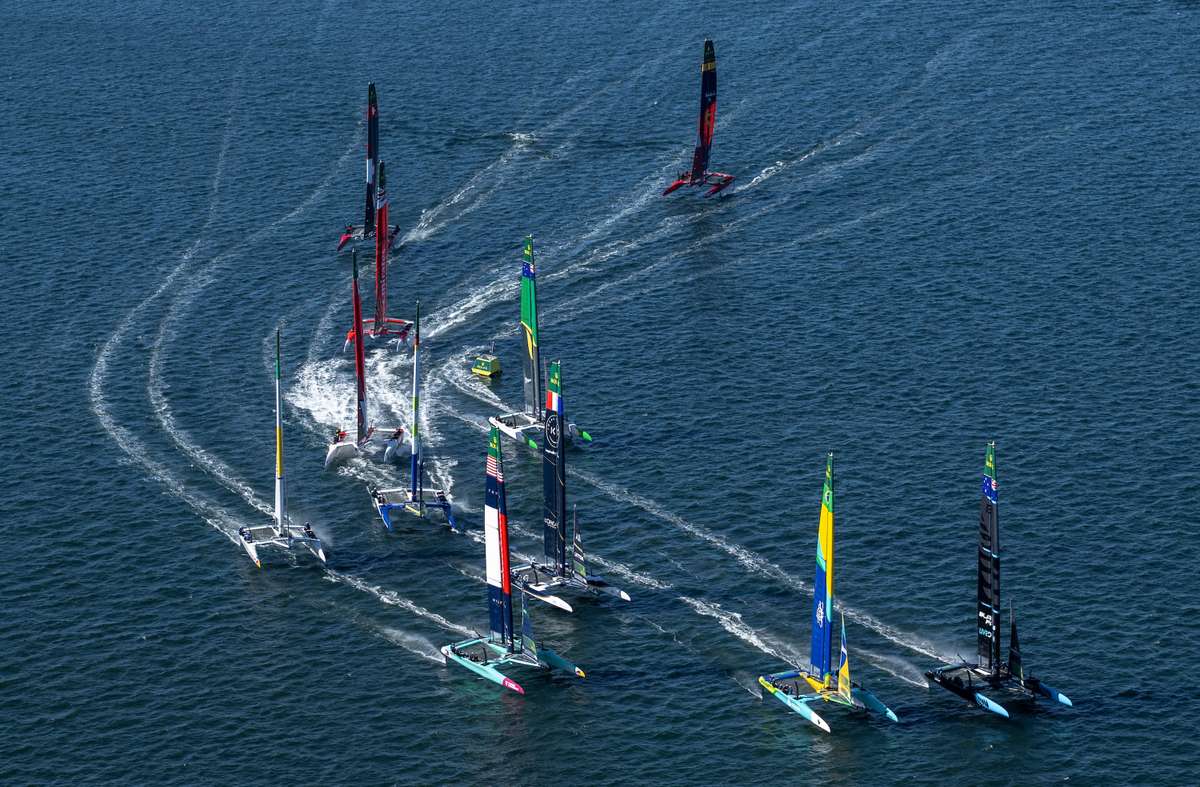
Will we actually see any of these changes? Probably not in a hurry. SailGP is built around a predictable TV product – something that slots neatly into a 90-minute broadcast window that casual sports fan can follow without knowing the ins-and-outs of the rulebook.
But that very predictability might be the reason the format’s starting to feel a bit stale. It’ll be fascinating to see how SailGP adjusts the courses and formats as the league continues to grow and evolve.
We'll leave you with one more format idea from Mozzy. Last year, he floated an alternative to the winner-takes-all final: an elimination or "devil" race, with teams starting in weekend series order like a grid and the last boat knocked out at each gate until only the top three remain to race to the finish. Check out what he said from 4:44 onwards.
What do you think? Leave us a comment under the video.
Articles You Might Be Interested in
Freddie Carr: The spectacle I can’t wait for in AC38
The Foil Weekly Wrap - 16 March ’26
Trouble in the Strait of Hormuz points to sailing's future
Tom ‘Mozzy’ Morris: The AC75’s dramatic diet – and why it gives ETNZ an early edge
The battery-power revolution that’s bigger than F1’s

Botín and Trittel join France’s America’s Cup ‘K-Challenge’
Podcast Ep. 9 - 'Worst SailGP race I've ever seen': Why Sydney's light-wind weekend split opinion