Line honours for Argo and Black Jack 100 in RORC Caribbean 600

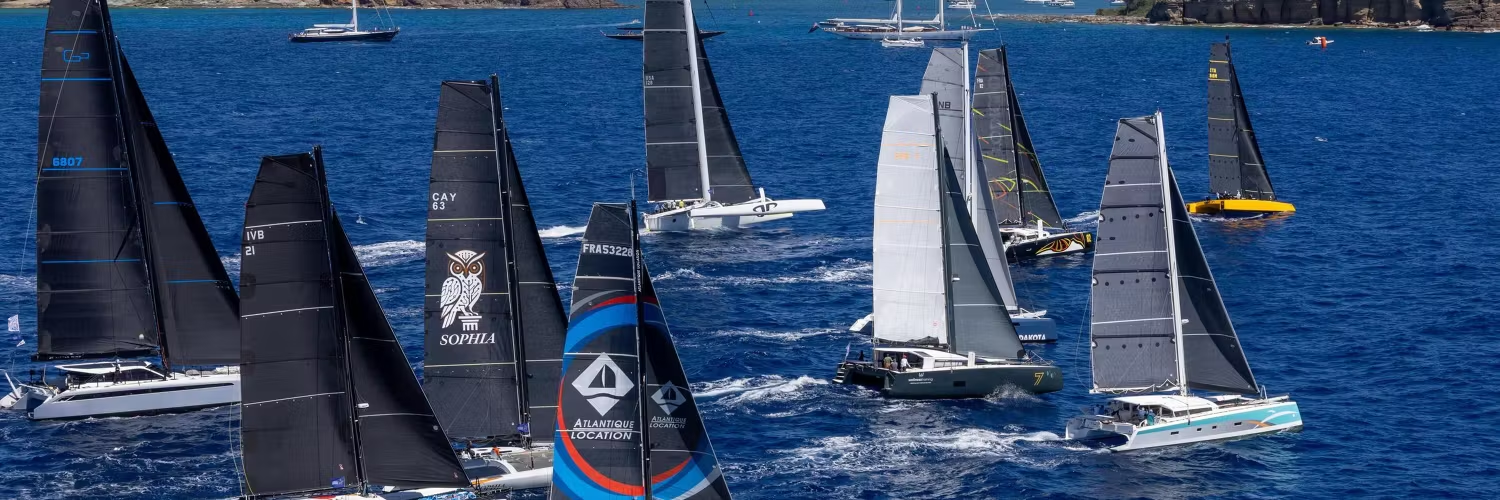
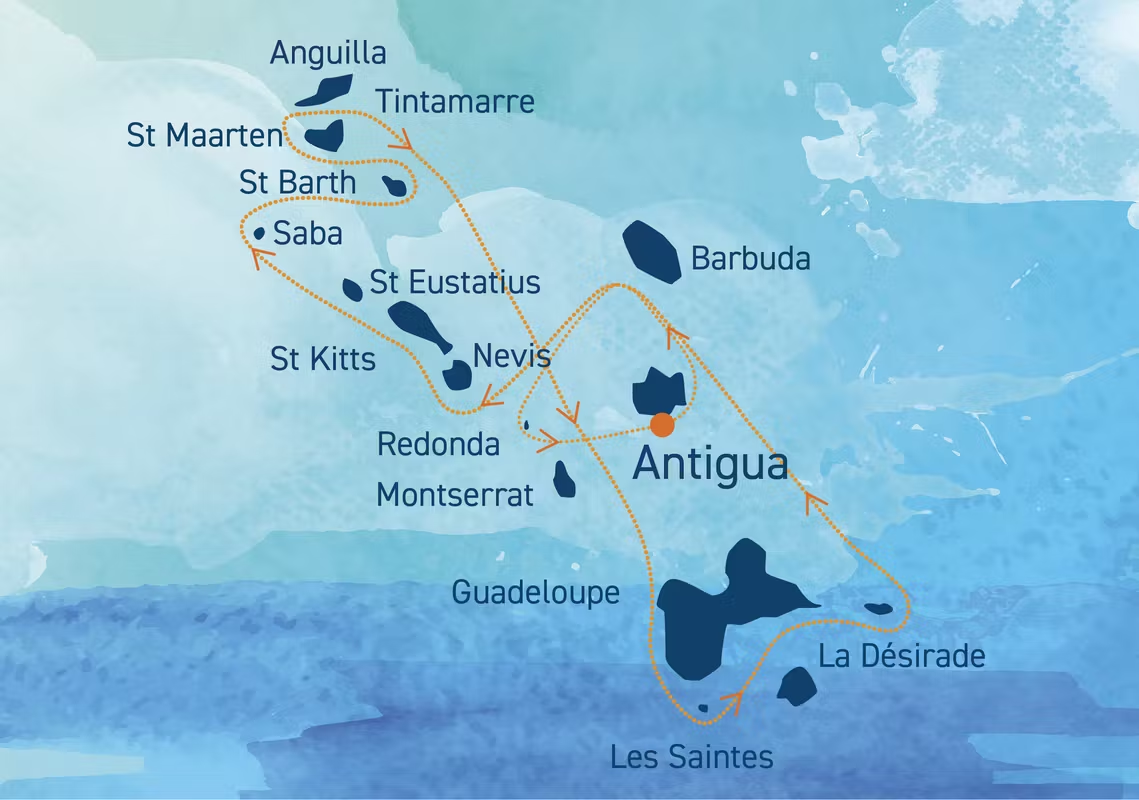
The gun fired at Fort Charlotte, Antigua on Monday morning and 56 boats poured into 15 knots of trade wind for the 17th RORC Caribbean 600. Nearly 500 sailors from 40 nations set off on one of offshore racing's most distinctive challenges: 600 miles threading through 11 Caribbean islands, from the acceleration zones off Barbuda and Saba to the notorious wind shadow beneath Guadeloupe.
What sets the Caribbean 600 apart from the other great offshore classics is how many corners it throws at crews. There's no long ocean slog to reset the mind. Every few hours brings another island, another manoeuvre, another chance for fortunes to flip. And this year, flip they did.
Multihull: Four minutes after 600 miles
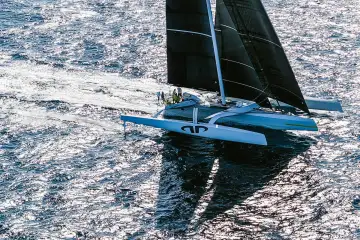
In the multihull fleet, all eyes were on the MOD70 showdown between Jason Carroll's Argo and Jon Desmond's chartered Final Final – Zoulou. The two boats had already clashed in the RORC Transatlantic Race last month, where Argo set a new record. This was the rematch.
Argo won the start by threading the gap between the pin-end traffic and the Pillars of Hercules cliffs, edging ahead by roughly a boat length. Through the northern loop – Barbuda, Nevis, Saba – the crew extended steadily, building a lead of more than 11 minutes by Tintamarre.
But at the speeds these MOD70s sail, gaps that look insurmountable can evaporate in minutes. “Eleven minutes looks huge when they're tiny on the horizon,” Desmond reflected. “Then all of a sudden you see them hit a hole, and six minutes later they're very big again.”
The wind shadow west of Guadeloupe has upended countless races over the years, and Carroll's crew knew the danger. “Guadeloupe is always our nemesis,” he admitted. “We often get there first and usually leave last.” Argo slowed dramatically in patchy air. Zoulou, sailing a slightly more offshore line, found pressure and surged past at 20 knots. By Les Saintes, the most southerly point of the race course, Desmond's crew led by more than 10 minutes. “It was the first real chance we had to pounce,” he said. “And we took it.”
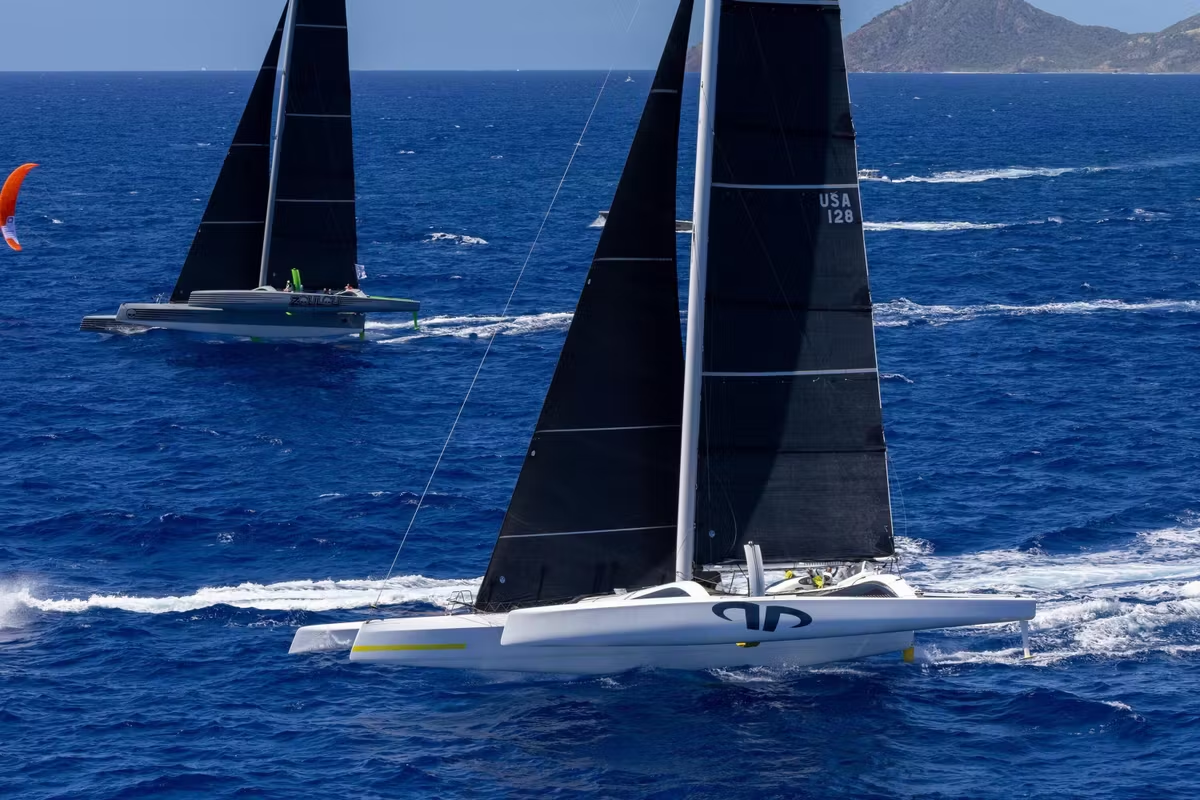
What followed was a blistering fight to the finish. Towards Redonda, both boats touched 30-35 knots, full sails, foils down, every manoeuvre at full noise. Desmond described it vividly: “It was like driving across the country on a dirt road in the rain with your head stuck out the window. Thirty knots apparent in your face the entire time. Absolutely wild.”
At Redonda, Zoulou still held a near-three-minute advantage with 35 miles left to sail. But the final leg to Antigua became an old-fashioned tacking duel, and Argo had a plan. “We talked about doing two tacks in quick succession,” Carroll explained. “The idea was to catch them off guard.” It worked. Argo threw in a double-tack, caught Zoulou with their mast not set, and squeezed into clear air. Three minutes later, it was over. Argo crossed in an elapsed time of 1 day 12 hours 1 minute 46 seconds. Zoulou finished less than three minutes behind – an extraordinary margin after nearly 600 miles of combat.
Desmond, despite his inshore multihull pedigree, was new to MOD70 offshore racing – this was only his fourth or fifth day on Zoulou. “That's one of the best teams in the world,” he said of Jason Carroll’s crew. “But the fact that we were duking it out with them for that last couple of hundred miles was so special. There's a good chance this isn't the last time you see me on a MOD70.”
Monohull: Leopard stalks, Black Jack strikes
The monohull duel was no less compelling.
Remon Vos's RP100 Black Jack 100, skippered by Tristan Le Brun, arrived in Antigua fresh from line honours victories in the 2025 Rolex Fastnet and Middle Sea Race. But this was her first Caribbean 600. Standing in her way was Leopard 3, Joost Schuijff's Farr 100, a boat embedded in the race's history and skippered by Chris Sherlock, now on his 11th Caribbean 600 campaign. Having just won both the RORC Nelson's Cup and the Antigua 360 warm-up regatta, Leopard was an obvious favourite.
The two 100-footers represented different design philosophies. Leopard's weapon is upwind grunt – her daggerboards and extra displacement make her formidable in breeze – while Black Jack's edge lies in reaching and lighter conditions.
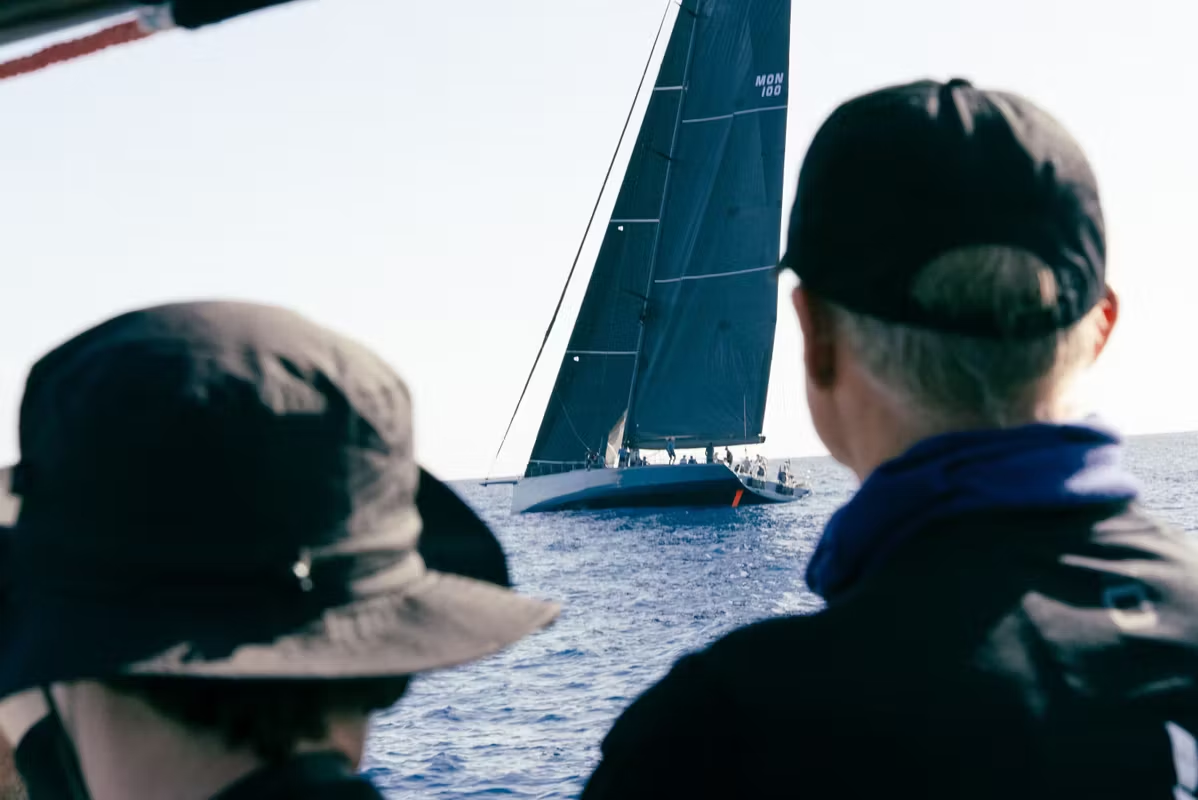
Through the northern islands, the lead swapped repeatedly – Leopard ahead at the start, Black Jack by Barbuda, Leopard again at Guadeloupe – with the island shadows compressing the race and resetting advantages. “We almost had three starts,” said Black Jack skipper Le Brun. “The main start, then a restart at St Kitts and Nevis when the wind shadow slowed the fleet. And another restart at Guadeloupe.”
But from that point on, Black Jack's reaching prowess took over. From La Desirade onwards, Le Brun's crew deployed their triple-headed combination – two staysails inside a fractional J-Zero – and lit up. By Redonda, they led by more than 35 minutes.
“That's the beauty of Black Jack,” Le Brun said. “She's light. When we reach, she's significantly faster.” Black Jack crossed in 1 day 20 hours 31 minutes 36 seconds, roughly half an hour clear of Leopard. “It was probably the best boat-for-boat we've had in this race,” Sherlock acknowledged. “Hats off to those guys.”
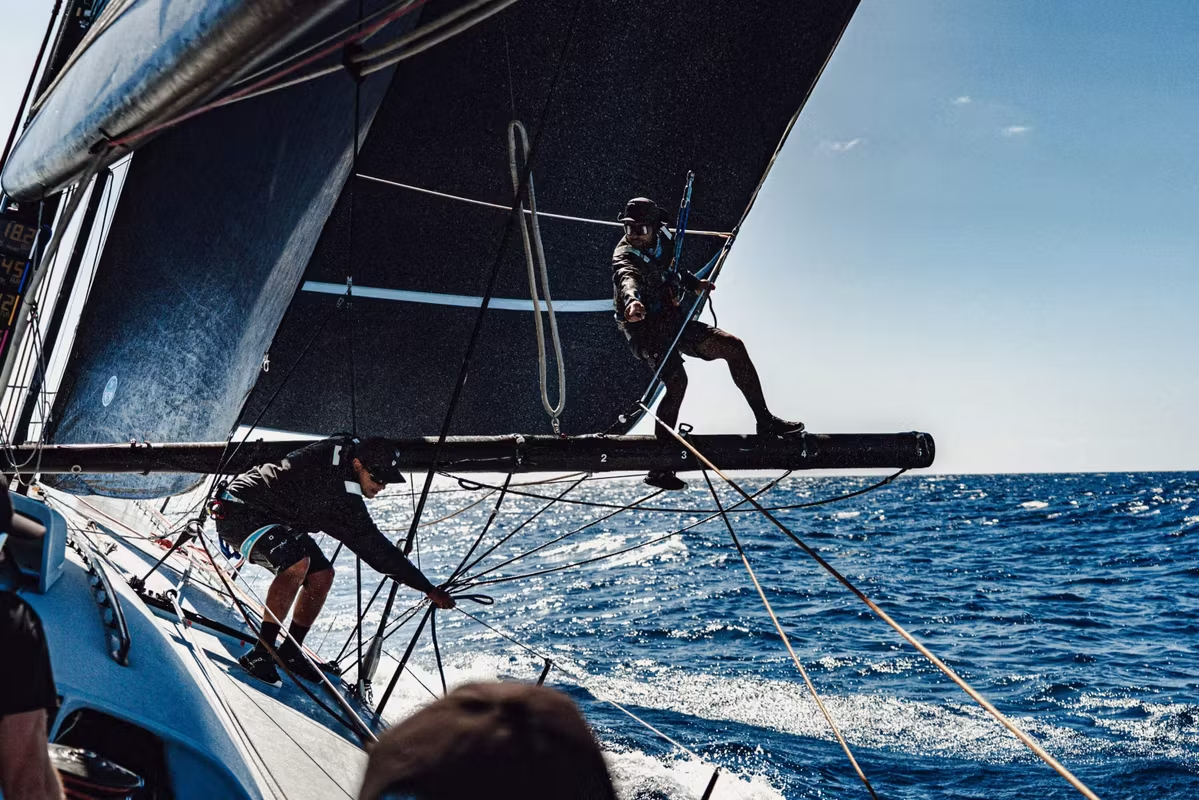
Battles across the fleet
Behind Argo and Final Final – Zoulou in the multihull fleet, Sophia took third, with Little Wing and Calamity behind. In monohull line honours, Black Jack 100 and Leopard 3 were followed home by VO65s Jajo and Sisi, then Mach 50 Palanad 4.
The IRC corrected-time battles are still taking shape. Frédéric Puzin's Carkeek 54 Daguet 5 took sixth across the monohull line and currently sits fifth overall on IRC. Puzin, whose boat finished runner-up to Niklas Zennström's Rán by less than eight minutes last year, knows island racing demands different skills to ocean crossings. “A transatlantic race is a different discipline,” he said. “Around these islands it's about manoeuvres and transitions. There are many strong contenders; this race is about adaptability.”
Ross Applebey, racing aboard Richard Dilley's Belladonna with eight class wins from 11 attempts, knows what separates contenders from also-rans. “To win this class you've got to get Guadeloupe right, especially in the dark,” he said. “Five knots difference in the trades makes a massive impact in the wind shadows. It's about clean transitions and fewer mistakes.” With just a few miles left to sail, Belladonna leads in IRC Two.
Further back, Luke Spink's First 36.7 Blueprint has about a quarter of the course remaining. Spink, who returned to competitive sailing less than a year after being paralysed in a car accident, is racing with a nine-strong international crew. “The water is the most freeing place there is,” he said. “On the boat, mobility barriers fall away, the playing field is truly level. Offshore racing proves performance is defined by decision-making, teamwork and seamanship – not physical ability.”
A few more boats remain out on the course, battling through the island chain towards Antigua. You can track their progress and results via the RORC tracker. The next event on the club's calendar is a little over a month away: the RORC Easter Challenge at Cowes, 3-5 April.
Articles You Might Be Interested in
The Foil Weekly Wrap - 23 Feb '26
The Foil Weekly Wrap - 9 Feb '26
Podcast Ep. 5 - Dee Caffari: 'The doors have been blown open' for women's offshore sailing
The Foil Weekly Wrap - 2 Feb '26
Quentin Debois smashes Mini 6.50 transatlantic record by six days
Podcast Ep. 4 - On board Argo's transatlantic record with Pete Cumming
MOD70 Argo claims line honours with new Atlantic record