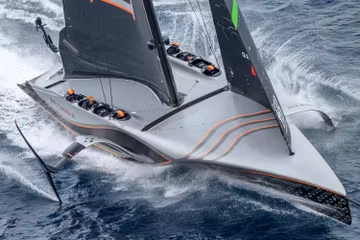

Recon from the Hauraki Gulf: Unpacking ETNZ's first week back with Taihoro

Emirates Team New Zealand has now logged three of their 45 permitted AC75 sailing days in the January 2026–January 2027 window. Taihoro, the AC75 that won the 37th America's Cup in Barcelona, is back on the Hauraki Gulf – refitted, recommissioned and now operating under the updated AC38 class rule.
Here's how their first week played out.
Day 1: Blown off before it began
Tuesday 10 March 2026
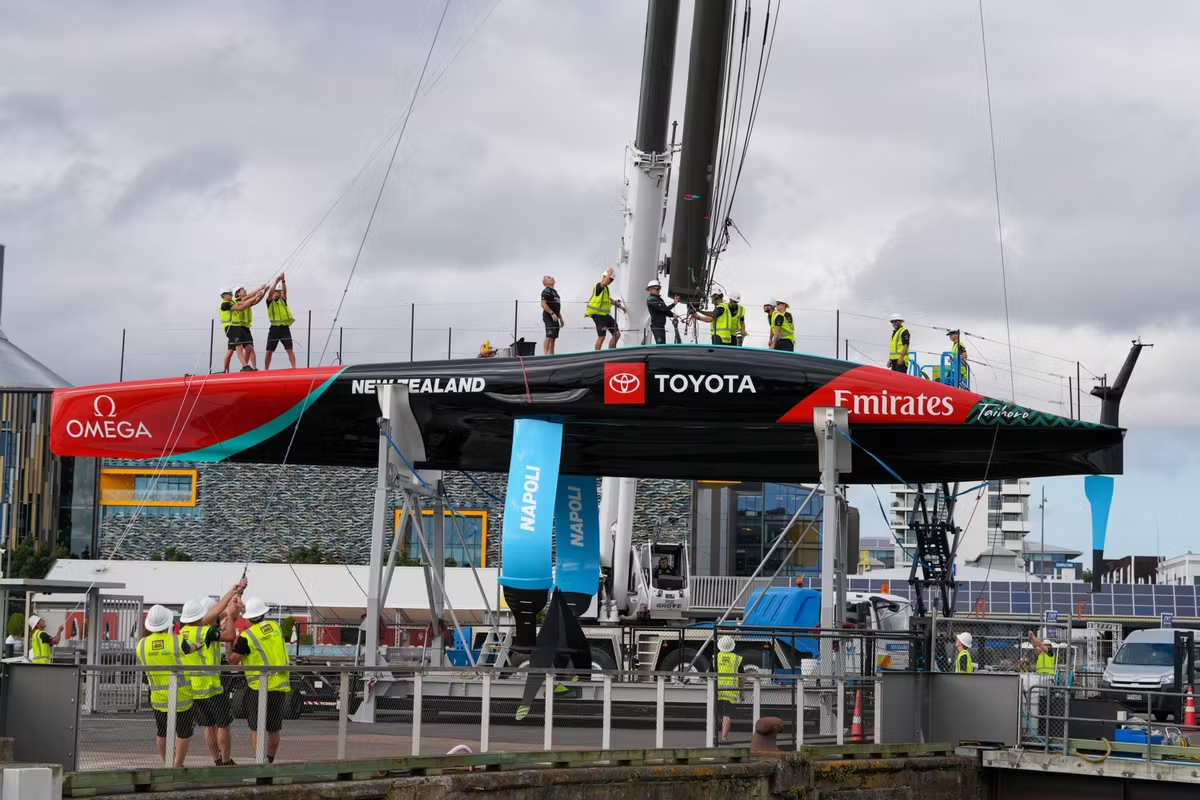
The morning after the launch event at the ETNZ base, anticipation was high. Taihoro rolled out of the shed at 09:05, and for the first time observers could clock the AC38-spec changes up close: foil wings with reduced mass under the updated class rule, a deck reconfigured with six crew pods following the exclusion of cyclors, and yellow tape fluttering from Pitot tubes fitted to the foils – a water speed measurement setup pioneered by the British team last cycle.
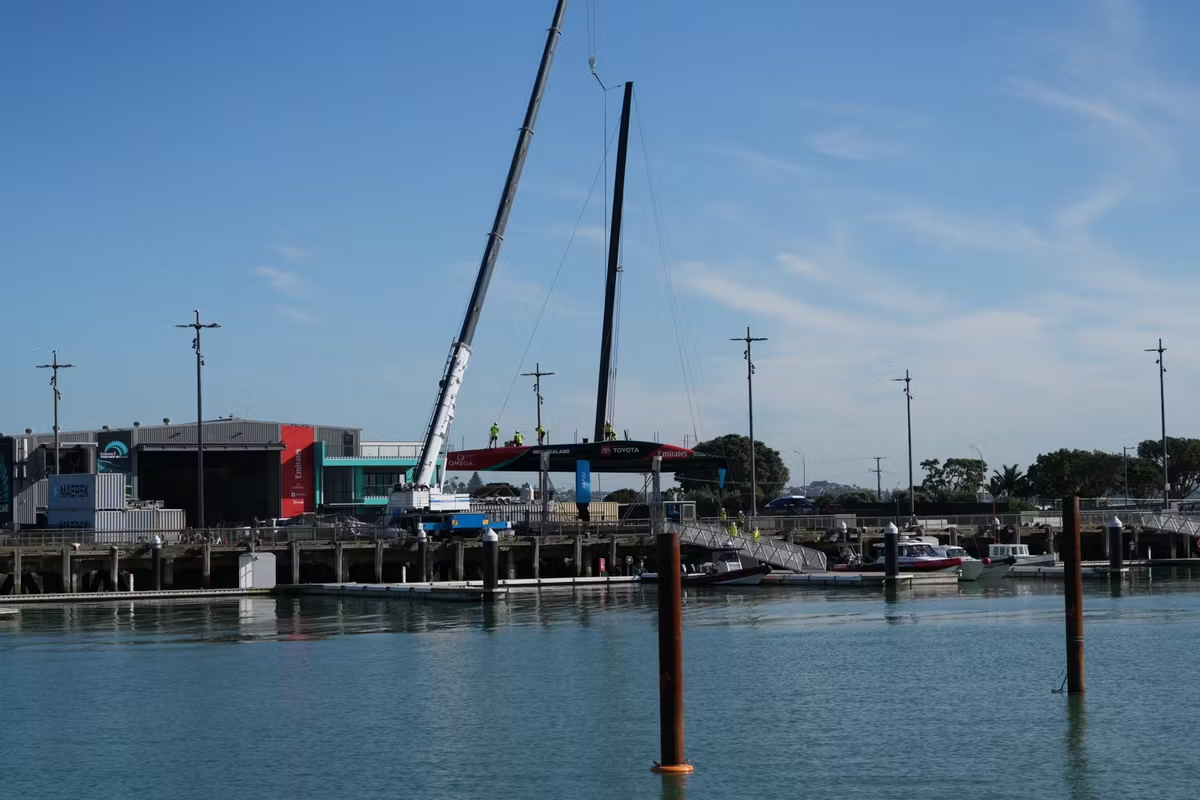
The mast was hooked up to the crane within twenty minutes. But Auckland had other plans. What had seemed a mild easterly on arrival was building fast – 20 knots on average, gusts nudging 24. The team attempted to step the rig, fighting the increasing pressure as they worked. It became a wrestle. Extra hands were called in just to keep the mast under control.
A conservative call was made: systems check at the dock only. No sailing. The mast came back out, the boat returned to the shed by 11:22, and the much-anticipated first proper look at the reconfigured AC75 would have to wait.
Day 2: First flight, first woman on an AC75
Friday 13 March 2026
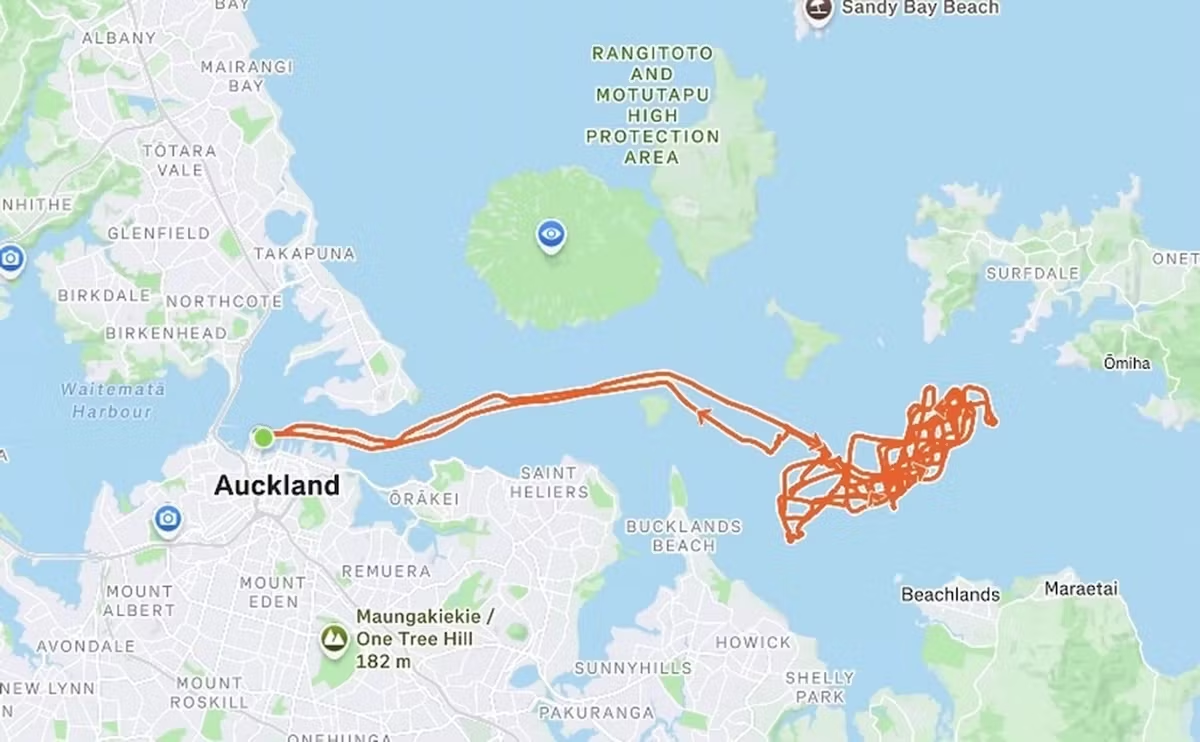
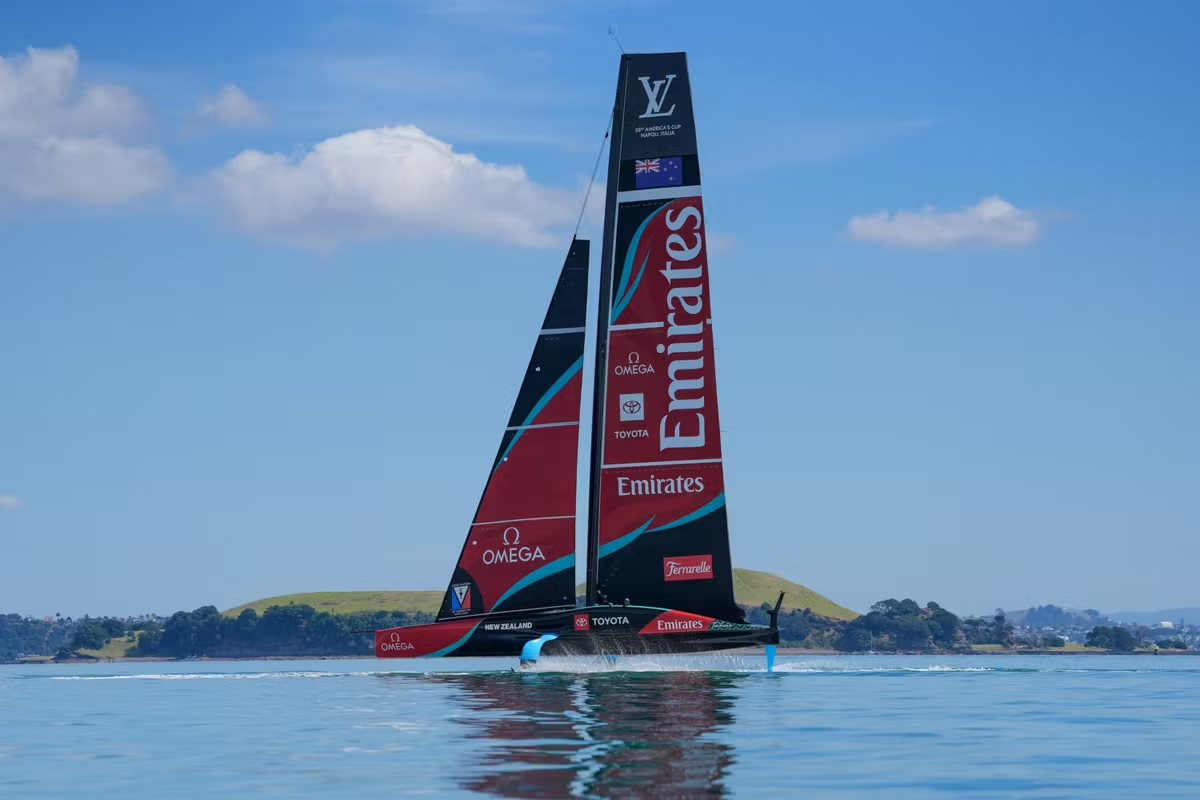
510 days. That's how long it had been since Taihoro last sailed in Auckland – a final training block on the Hauraki Gulf before the team shipped the boat to Barcelona and went on to defend the America's Cup. Now, on a grey Auckland morning with an easterly breeze of around 15 knots, the AC75 was back on the water.
It was top-end conditions for a first sail and recommissioning, but the wind was consistent, and the team pressed ahead. After a long tow out to Auckland's 'back paddock' south of Waiheke Island, Taihoro went through load testing on the rigging and internal structures, then sheeted on and worked up to full trim before popping onto the foils.
Nathan Outteridge was on the starboard helm, Seb Menzies on port, while Blair Tuke, Iain Jensen and Josh Armit rotated through control roles across the session. And in the fifth sailor position – a role introduced under the new AC38 rules – was Jo Aleh, the first woman ever to sail an AC75.
"It is a very impressive boat, definitely different to the AC40," Aleh said afterwards. "Just the raw power and speeds we got up to straight away – you can see it's going to get pretty aggressive as you get shaken around. But I felt pretty locked in already, so the training on the AC40 has been working well."
The day progressed methodically: a two-lap race simulation, a jib change from J3 to J2, more race simulations, two practice pre-starts. There were small issues – the jib foot line needed adjusting more than once – but the manoeuvres improved throughout the session. By the time the sails came down at 16:39, the boat had executed more than 20 tacks and 13 gybes across multiple sessions.
Outteridge was pleased. "Getting Taihoro back on the Waitematā is a proud moment for the entire team," he said. "It takes an army to just get an AC75 back onto the water, and a dedicated one at that." He wasn’t getting ahead of himself, though: "The boat felt great, the conditions were perfect – but it's the first step in a very long and intense road toward defending the Louis Vuitton 38th America's Cup next year."
Day 3: Proper shift
Monday 16 March 2026
A light front passed over the city overnight, and Monday dawned with almost no wind – 0–3 knots from the north-northwest. Not ideal for foiling. But ETNZ rolled out anyway, and what followed was arguably their most productive day yet.
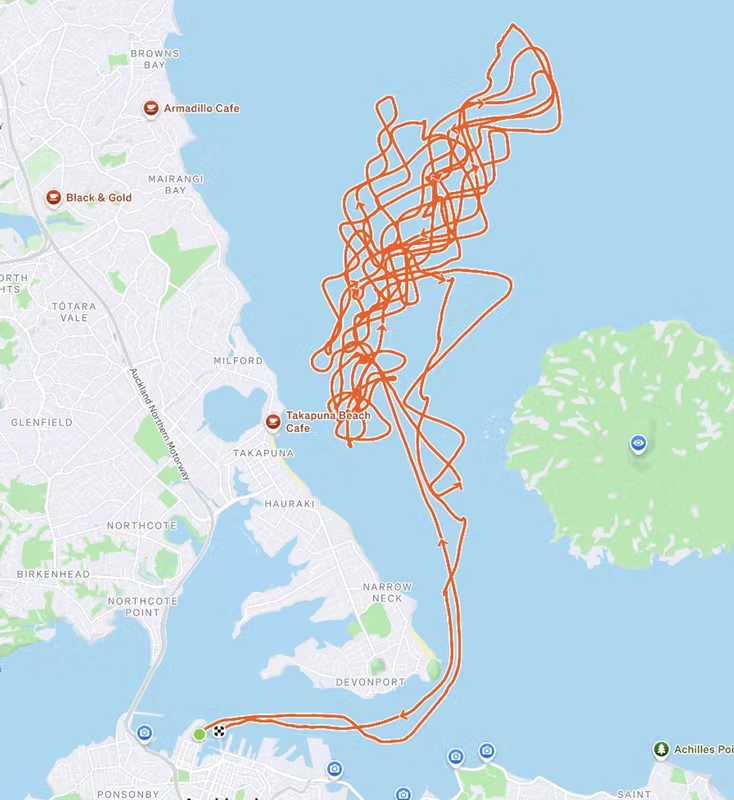
The crew left the dock at noon with Andy Maloney on starboard trim, Jake Pye to port, Outteridge and Menzies sharing the helms, and Aleh again in the fifth position. The breeze was barely there – just 2–3 knots off Takapuna Beach – so the team towed onto the foil and began manoeuvring in the puffs coming off the shore.
A marathon unfolded: seven separate sailing sessions, spread across more than six hours on the water. The first session ran until 13:30 as the breeze built to 8-9 knots. The second started shortly after. By the sixth session, the wind had filled in to a steady 10-12 knots across the whole harbour, and the runs were getting longer.
Throughout, the crew rotated – Pye, Aleh, Menzies, Jensen, Outteridge, Josh Armit all cycled through – but Maloney stayed aboard for the entire day. In the early sessions the Recon Unit noted 100% flight time, with manoeuvres remaining consistent session after session.
The final session was a long sail back up the harbour in 13–14 knots, punctuated by multiple practice starts. Sails came down at 18:22 – a full working day on the water.
Day 4: Sailing shelved
Wednesday 18 March 2026
Auckland delivered mirror calm. ETNZ rolled out just before nine for what they'd flagged as a 50/50 call – step the rig, possibly sail. By mid-morning, that possibility had evaporated.
Instead, the team focused on hardware. Rig number three was craned in and connected; rake was checked, adjusted, and measured with an electronic level on the mast surface. The adjustment appeared to move rake aft – the mast pulled further back than previously to pin the stays, the backstay purchase system shortened. Some difficulty with forestay load readings was noted, but not elaborated upon.
By afternoon, the Hauraki Gulf was glass, and the boat went back in the shed.
Day 5: Chasing puffs
Thursday 19 March 2026
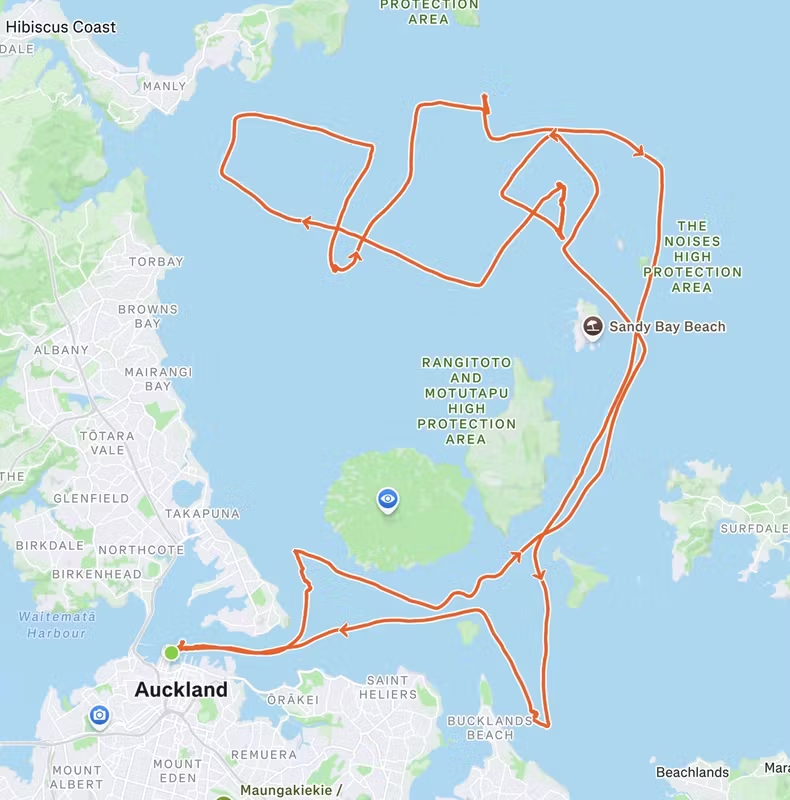
Thursday brought sunshine and, initially, decent breeze. Taihoro rolled out at 08:00 and was off tow by 10:12, with flat water just off North Head.
The configuration had Outteridge and Menzies on the helms, Maloney and Jensen trimming, Aleh again in the fifth position, with Jacob Pye in the guest spot. Notably absent was Nick Burridge – the boat captain who had been on board for the first two sessions – suggesting a shift from commissioning and troubleshooting toward pure performance work. They hoisted at 10:28 and were sailing within ten minutes.
The morning was spent on bear-away practice runs past Browns Island, followed by a long downwind leg towards Tiritiri Matangi and back upwind towards Rakino, sailed in flat water with 10-12 knots from the SSE at the start of the day.
By late morning the wind had dropped to around 6 knots. A jib change from J3-2 to J2-2 at 12:05 extended the session, but by early afternoon the wind had dropped to around 4 knots. The team attempted to resume sailing but conditions were too marginal. Taihoro went back on tow and returned to the crane by 15:18.
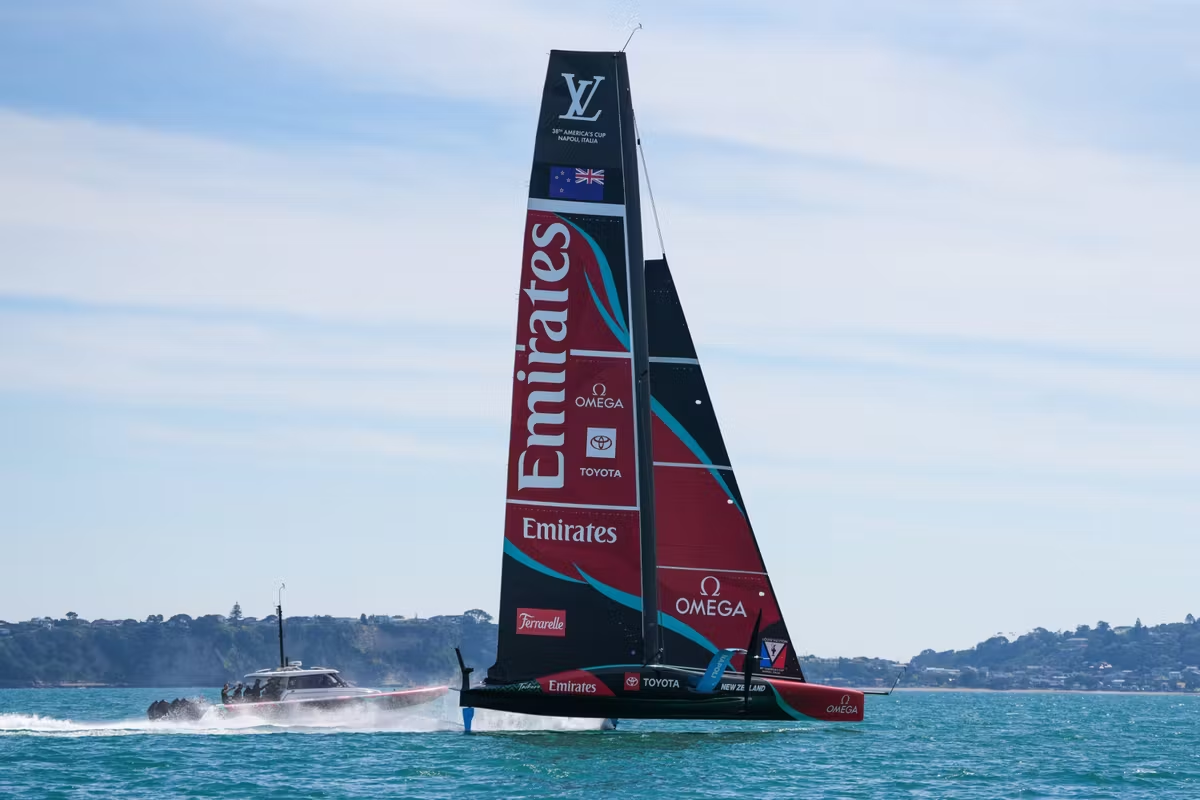
The most interesting observation: ETNZ appeared to be experimenting with different downwind configurations. Trimmer Iain Jensen indicated they were “trying a few things”, with the boat at times appearing to sail with windward heel and a relatively twisted sail setup, as opposed to a flatter mode.
Recon noted a few "bow-up, stern-squat" moments on the downwind legs, suggesting the boat was operating close to its low-speed flight threshold. Light wind performance is a design battleground in AC75 racing, and ETNZ were clearly gathering data.
During the session grey bags (likely batteries) were swapped, a white briefcase-sized unit brought aboard, with crew spending time below deck on systems work.
What we've learned so far
It's early days – far too early to draw performance conclusions – but patterns are emerging.
The crew rotations suggest the team is still evaluating combinations. Andy Maloney's marathon day stands out; Menzies and Outteridge appear locked in as the primary helm pairing. Jo Aleh is bedding into the fifth sailor role, monitoring performance data and sail trim rather than peering over the side.
The boat itself has shown encouraging signs. 100% flight time in marginal conditions. Stable manoeuvres from a crew that includes several members new to the AC75. Early exploration of different downwind modes. And the hardware evolution continues – Pitot tubes on foils, mast rake adjustments, ongoing refinements to traveller systems and jib setups.
The balancing act now is time. Sailing days are rationed, and burning one in glass-calm or 25-knot gusts achieves little. But waiting for perfect conditions has its own cost. Data gathered in March can shape design decisions; data gathered in December cannot. Manufacturing takes time, and every week that passes narrows the window to act on what the team learns.
So far, ETNZ have leaned conservative – sitting out days, methodically working through systems checks and incremental loading when they do sail. The information is feeding back into the design loop while it still matters. You can bet that the challengers will all be watching closely.
With the development race underway, we'll be bringing you all the latest AC38 news at The Foil – and you can track the official reports on the America's Cup recon site.
Articles You Might Be Interested in
GB1 back on the water and wasting no time in Cagliari
France reveals stacked AC38 crew as K-Challenge becomes La Roche-Posay Racing Team
Freddie Carr: The spectacle I can’t wait for in AC38
The Foil Weekly Wrap - 16 March ’26
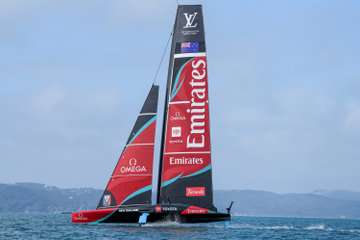
Tom ‘Mozzy’ Morris: The AC75’s dramatic diet – and why it gives ETNZ an early edge
AC38 crew line-ups slowly coming into focus
Podcast Ep. 10 - Batteries replace humans: is this still the America's Cup?