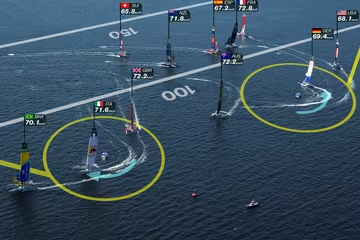

Russell Coutts wants Olympic sailing to think bigger

It can seem like Russell Coutts doesn’t talk about much else than SailGP. But that doesn’t mean he’s completely switched off from the rest of the sport. Quite the opposite in fact. The New Zealander doesn’t make much of a song-and-dance about the good works he supports and fosters at the grass roots, for example. One example of this is the Russell Coutts Sailing Foundation at Manly Sailing Club in New Zealand, where the focus is not on winning or creating elite athletes, but on ‘retention and fun’.
While we hear plenty about Coutts’s latest thoughts on the ever-expanding SailGP universe, we don’t often hear his views on the wider sailing world. So when Coutts joined double Olympic medallist Shirley Robertson for a lengthy interview on stage at last November’s Yacht Racing Forum in Amsterdam, Robertson took a rare opportunity to get his views on a wide range of topics.
Coutts has clearly given the topic of Olympic racing a good deal of thought. His son, Mattias Coutts, is currently campaigning a 49er with experienced crew Oscar Gunn. So he has a vested interest, although you get the sense he’d be equally passionate whether or not Mattias was on the circuit.
Apple and BlackBerry
Coutts Sr started out on the subject from quite a left-field point of view. “I think about how we go about making decisions. And I think that if Jony Ive [designer of many iconic Apple products] and Steve Jobs [co-founder of Apple] had asked the world what the iPhone should be, they probably would have got a Blackberry or a version of it.
“And I would have been one of those people by the way, because I liked the Blackberry back in the day, and I can remember myself saying ‘I like the feel of the keyboard’ and so forth. But clearly they had a vision that none of the rest of us could really see at that time.
“So, I look at things like the Olympic format. No doubt the sailors think that what they want is to reward consistency in a format, I get that,” said Coutts who won his Olympic gold at Los Angeles 1984 when it was one race a day and a seven-race series with a single discard. It was all about consistency, as it still is in the vast majority of sailing regattas. He continues on his Olympic theme: “What do the sailors really want? They probably want a sport that's going to grow. That lots of people would be watching. That if they win the Olympic gold medal, it'll really matter and resonate in their country.
“And if we start from that perspective and then work backwards, I would suggest that they may well get a better result than what they're all currently thinking of, which is business as usual in their world.” He is asking the Olympic sailors to be bolder in their thinking, to accept more changes to the status quo. But my experience of speaking to Olympic sailors is that they like things to stay exactly as they are. After all, that’s what they’ve been training for. Changing a format mid-stream in an Olympic cycle is a big deal, as we’ve mentioned before on The Foil.
The great disruptor
Coutts is one of the greatest disruptors of our sport, and he has spent a good deal of time with great disruptors of the business world, not least his SailGP co-founder and currently fifth richest man in the world, Larry Ellison. “We see this in politics these days where people are making the popular decision, whereas what's really required is real leadership. The good thing is we have a huge opportunity to reinvent the sport, to reposition it in a compelling way. And not many sports get that opportunity.
“You look at all the fantastic values and advantages we have in the sport; for example we’re one of the few sports where men and women can compete against each other in the same format. OK so we’re not there yet, there's a huge [gender] imbalance and so forth, but that's a strategic advantage. And I think we could play to other strategic advantages that we actually have to really see massive growth in the future.”
Coutts talked at length about the structural problems of youth and junior sailing, an area where he has achieved some success with his alternative take on the traditional Optimist racing scene, with his promotion of a different, more fun-focused style of racing with the Open Bic dinghy. But we’ll look at that in more depth in The Foil another time.
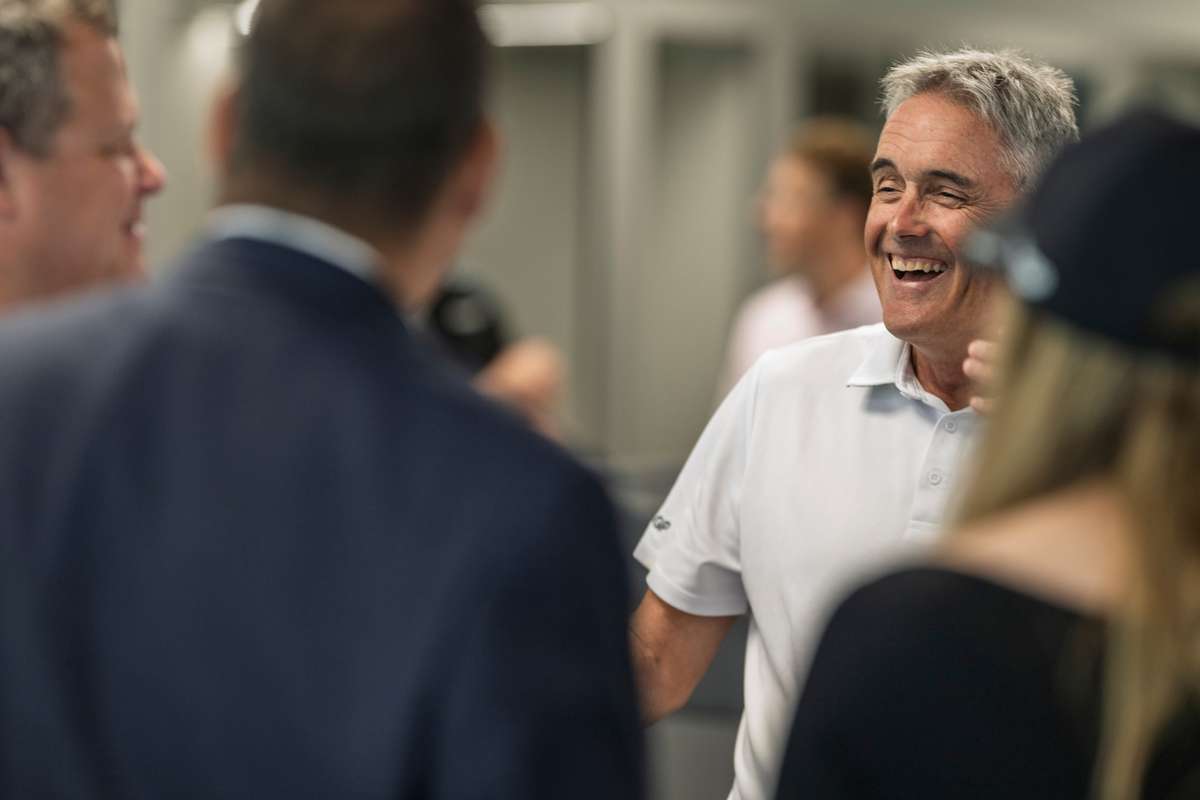
Kiwi magic
Let’s continue with Coutts’s focus on the Olympic scene, and let’s look at why he and so many other Kiwis have proven successful on the world stage. His formative years came in the 1970s when he was learning his craft. As a teenager obsessed with making small boats go fast, Coutts earned the right to represent New Zealand at the IYRU Youth Worlds in the Europe singlehander dinghy. In 1979 he finished runner-up at the World Championships in Italy, the same year that two of his peers - Chris Dickson and Hamish Willcox - won the world title in the doublehanded 420 dinghy. Dickson would go on to have a distinguished big boat career as an America’s Cup skipper and offshore racer.
After winning three 470 world titles in four years with his helmsman, the late David Barnes, Willcox has forged a reputation as one of the top coaches in the world. He coached Pete Burling and Blair Tuke in their dominant years in the 49er class as well as in the America’s Cup for Emirates Team New Zealand. Today Willcox works closely with Diego Botin and Florian Trittel, being in the coach boat for the Spanish 49er duo when they won Olympic gold in 2024 and the world title in Sardinia last October, as well as working behind the scenes for the Spanish SailGP team.
From isolation to domination
There are many others of a similar age from New Zealand who went on to make a big impact in the sport: Brad Butterworth, Murray Jones, Grant Dalton, many others who followed in the footsteps of Sir Peter Blake. A golden generation of Kiwis who learned their trade in the old Olympic dinghies like the Finn, 470, Tornado and the Star went on to dominate the inshore racing scene, from the America’s Cup down, as well as populating many of the boats that competed in the Whitbread Round the World Races and Volvo Ocean Races of past decades.
Willcox believes that one of the reasons why his generation of Kiwis were so strong was because of their isolation. It was too expensive to fly to Europe and compete internationally, so they worked tirelessly as a home-grown squad to up their game as much as possible before they spent their hard-earned money to compete at big events in Europe or the Americas.
While international travel has become infinitely more affordable over the past 40 years, Coutts advocates a return to a stronger domestic focus. Shirley Robertson clearly feels the same way. “We talk a lot about international events, but domestically there seems a bit of a gap,” said the 2000 and 2004 Olympic gold medallist. “We introduce youngsters to sailing and quite quickly - particularly if you’re in Europe - you’re driving them all around Europe to competitions when they don’t actually know very much.” She put it to Coutts that more can be done domestically.
Domestic bliss
“I think that's key. Absolutely key, particularly for the more remote countries like New Zealand,” Coutts replied. “But the trouble is the federations get most of their funding out of the Olympics, and they have these Olympic programs that actually discourage growth in domestic fleets. I think that it's time that we - the sport - mandated some sort of domestic competition.
“Now it's worse than that. It's worse than the fact that the Olympic sailors just disappear and are never seen by their local fleet. The other thing is there's no visibility around the sport locally, so you don't have domestic events that the media might report on, that we can communicate on, and promote on social channels and so forth. And so the whole thing becomes very remote and the young sailors don't get to see their peers.
“We could change it up and use our competitive advantage because I think one of the great things about our sport previously, was that people of all levels could compete against each other and have fun together. Well, to me we should get back to that. Again this might not be the popular choice among some, but if I was World Sailing I would mandate domestic competition for all Olympic athletes as part of their qualification for their world championships. Such that they had to give back something - give back a lot actually - to the local sport and local community and growth of the sport. And that, in my opinion, would snowball.”
Rubbing shoulders
This all seems a far cry from where Olympic sailing is currently. Far removed from the amateur sailing scene, the lifeblood of the sport. Coutts’s bold venture into SailGP is bringing a new level of visibility to the top level of the sport, a level of professionalism like we’ve never seen before. He’s doing his bit at the grassroots in New Zealand, as well as with the Inspire program that runs alongside SailGP. But there’s a lot of work to be done in the middle between those two extremes.
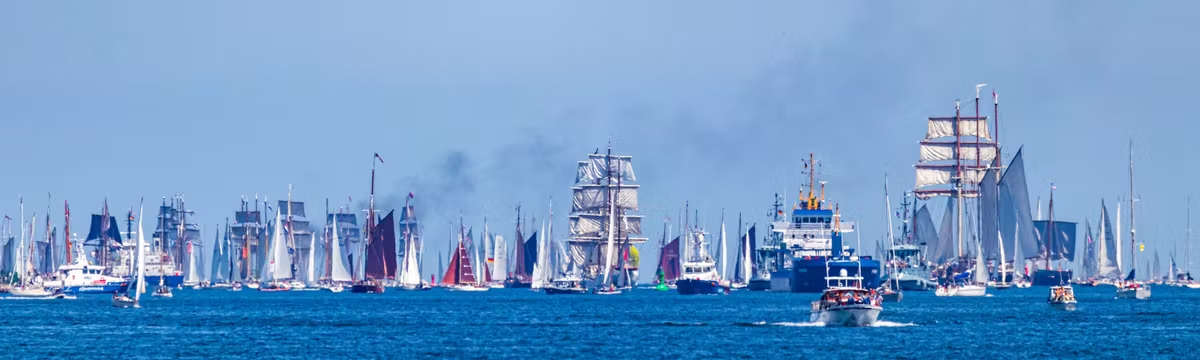
Coutts’s call to bring Olympic sailing back closer to home, to mandate a stronger domestic presence, would be a great building block. One of the few examples of this integration takes place every June at Kiel Week, the annual festival of sailing in the north of Germany which brings the weekend warriors and the Olympic campaigners together on the same waters and under the same roof in the evening. First held in 1882 and still going strong today, Kiel Week is a great model from which the rest of the sailing world can take inspiration.
Articles You Might Be Interested in
The Olympian windsurfer with a golden future far beyond LA 2028
Lanzarote crowns its 2026 champions as Olympic cycle gathers pace

The results are in! What's missing in sailing media?
Burvill and Puttman crowned F18 World Champions
From coach boat to control room: How data and AI are redefining coaching
The Foil Weekly Wrap - 2 Feb '26
How to unite the fractured world of sailing