SailGP says no system fault in Auckland crash

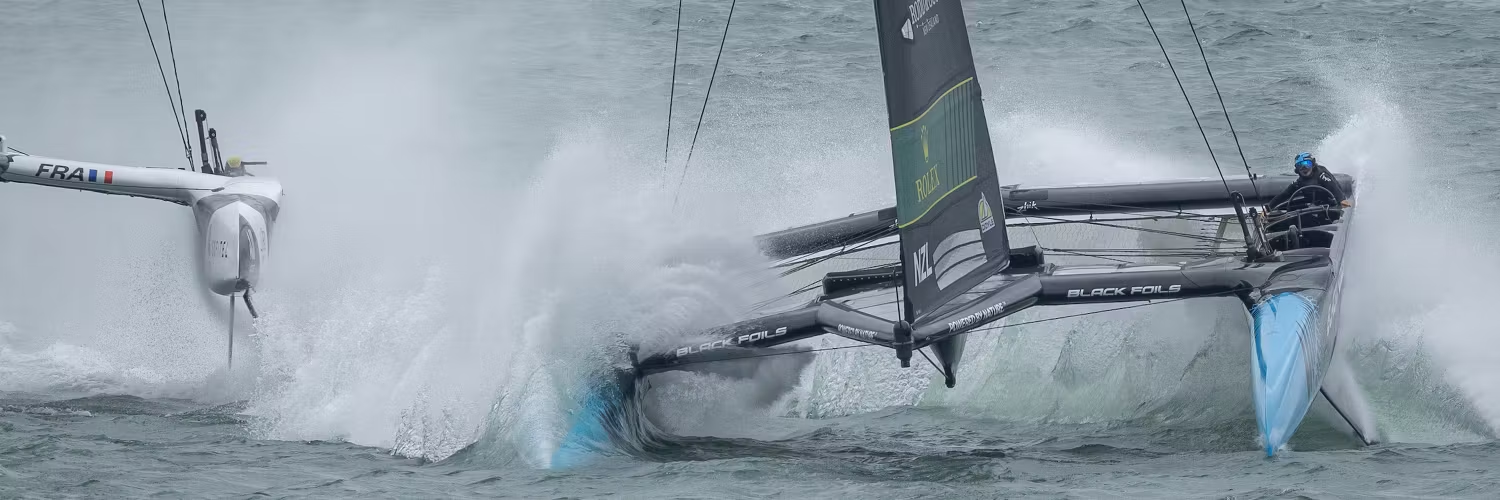
SailGP has released its technical findings into the high-speed collision between the Black Foils and DS Team France at the New Zealand Sail Grand Prix – and the league's verdict is emphatic: no mechanical fault or software failure, just physics.
The incident unfolded 15 seconds after the start of Race 3. New Zealand were travelling at 90 km/h when a gust caused rapid acceleration, increasing lift on the hydrofoils and raising the boat's ride height. As the F50 rose, the leeward foil pierced the surface of the water – triggering ventilation, side slip, and a chain of events that took seconds to spiral beyond recovery.
"The data shows the boat accelerated quickly and rose high on its foils," said Alex Reid, SailGP's Director of Performance Engineering. "Once the leeward foil pierced the surface, the boat entered a side slip where the foil began generating unwanted lift through leeway rather than via rake."
With France close astern at 86 km/h, there was no time to avoid contact once the sequence began. The rudder briefly lost effective flow before re-attaching, the windward bow dug in, and the Black Foils rounded up sharply into the path of the French boat.
Both teams will miss this weekend's Australia Sail Grand Prix in Sydney while repairs continue. Black Foils grinder Louis Sinclair, who sustained two broken legs in the crash, is now weight-bearing and expected to make a full recovery.
SailGP's analysis drew on high-rate performance data, onboard telemetry, simulator recreations and video footage. The conclusion: "a rapid hydrodynamic loss-of-control sequence triggered by foil ventilation during high-speed foiling in gusty conditions." Reid was unequivocal that "there is no evidence of a mechanical or software failure in the systems leading up to the incident."
That's the official line. But the penalty hearing decision tells a slightly different story.
It acknowledges that once the daggerboard rake hit the board protection control system's limit, the crew had limited ability to control the F50 – the same "system limit" Pete Burling described last Thursday as having "drastically escalated" the situation.
The jury's view: all teams knew the risk, and New Zealand could have avoided triggering it by sailing with a lower ride height and less foil cant angle. That reasoning underpins the eight-point penalty – seven for serious damage, plus one for aggravating factors including the 60-degree-plus angle of impact and a closing speed exceeding 15 km/h.
SailGP's technical review published today, by contrast, makes no mention of the board protection system at all.
SailGP says its engineers are now working with athletes to assess mitigations that could help crews manage similar scenarios in future, with solutions being explored ahead of Sydney and beyond.
Expect more on this story from The Foil in the coming days.
Articles You Might Be Interested in
United States master light winds for shock Sydney win
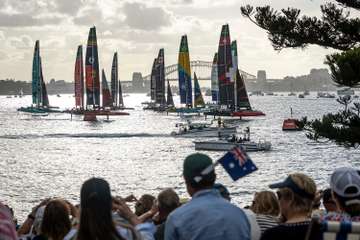
Spain’s Los Gallos head the fleet after day one in Sydney
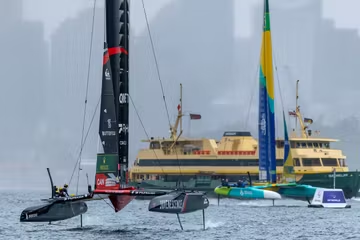
Sydney SailGP preview: Could twilight racing around Shark Island shake things up?
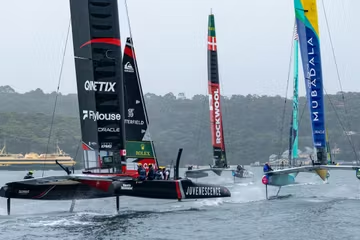
Lightning threat calls off SailGP practice – again
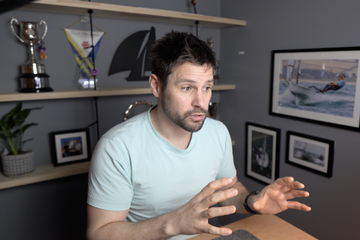
Tom 'Mozzy' Morris: SailGP's Auckland safety review doesn't add up
'The safest is when you're pushing hard' - Billy Gooderham explains flight control
Jury verdict: Black Foils pushed too hard before Auckland crash
Podcast Ep. 8 - Sydney SailGP preview + Quentin Delapierre on safety