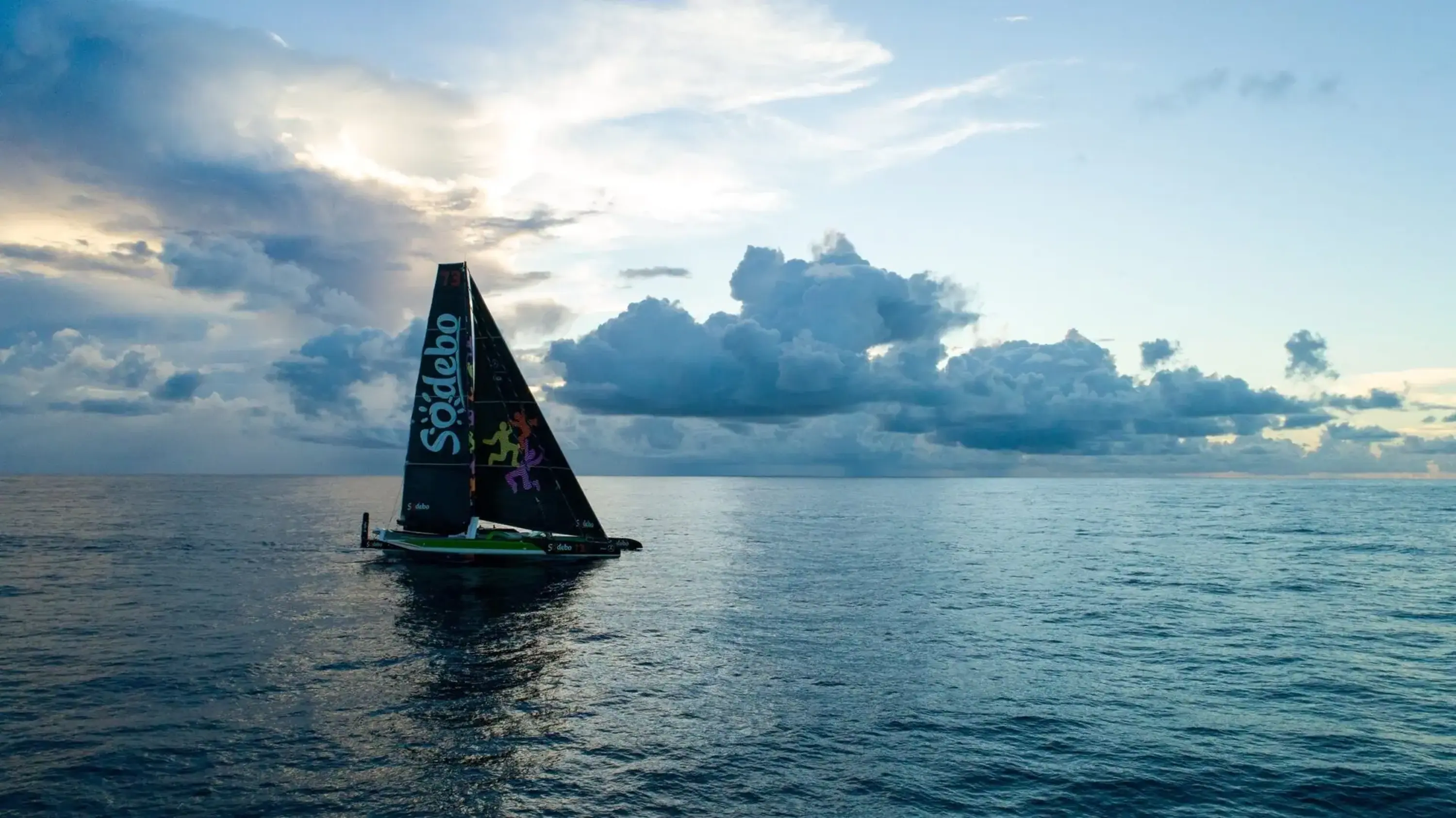
Sodebo claims Jules Verne Trophy after 40 days of relentless ocean racing

After 40 days at sea, Thomas Coville and his crew crossed the finish line looking every bit as battered as their boat, finally claiming the prize that had eluded them for six years.
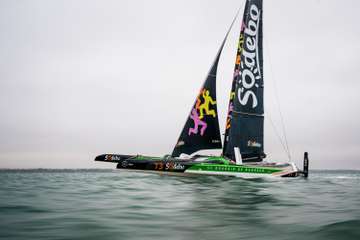
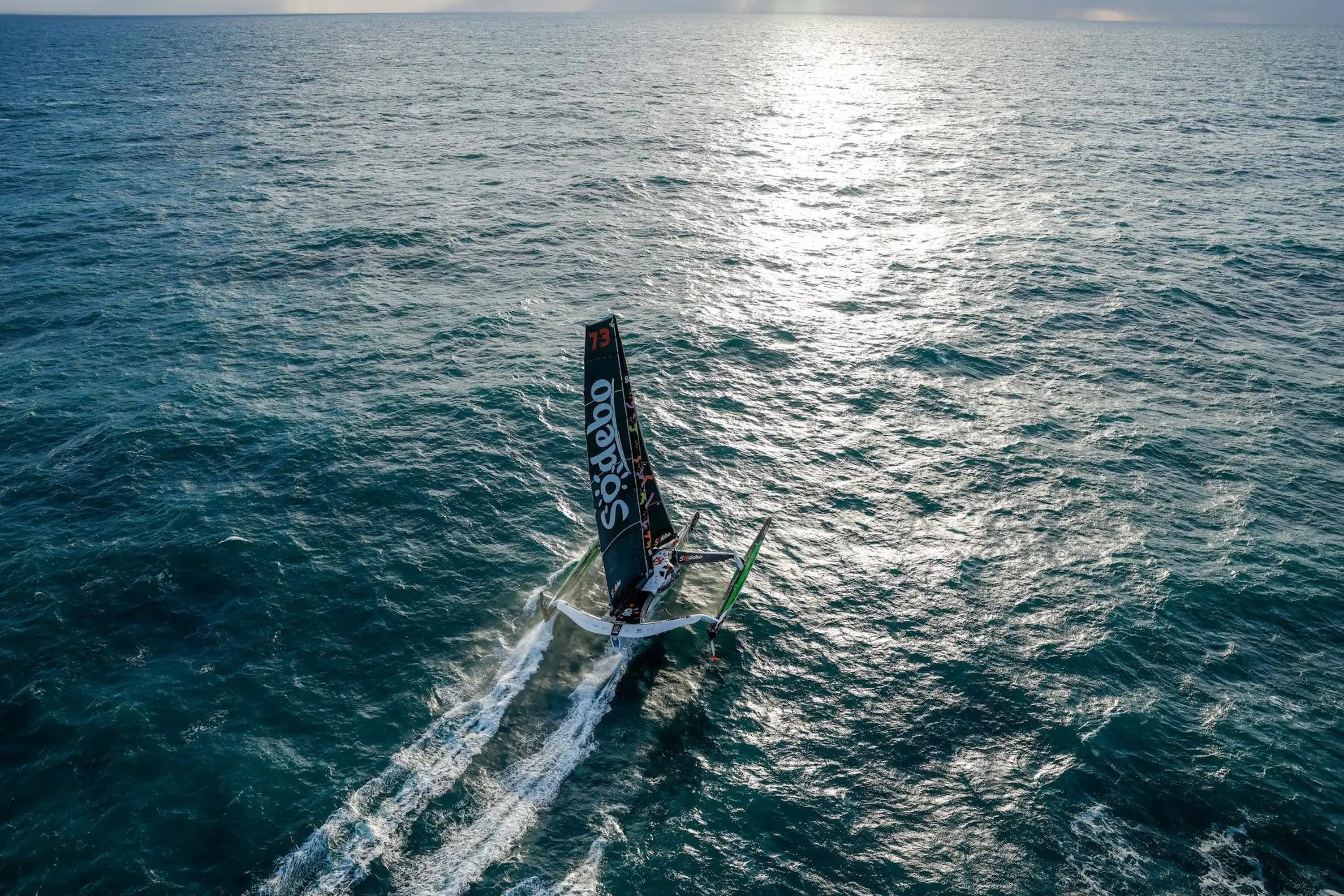
Crossing the virtual finish line between Ushant and Lizard Point at 0746 on Saturday morning, Coville and his six crewmates on Sodebo Ultim 3 rewrote the record books with a time of 40 days, 10 hours and 45 minutes – slicing more than half a day off Francis Joyon's benchmark that had withstood every challenge since 2017.
***
Sodebo Ultim 3 crew for the Jules Verne Trophy: Thomas Coville (57 years old) - Frédéric Denis (41) - Pierre Leboucher (45) - Léonard Legrand (31) - Guillaume Pirouelle (31) - Benjamin Schwartz (38) - Nicolas Troussel (51)
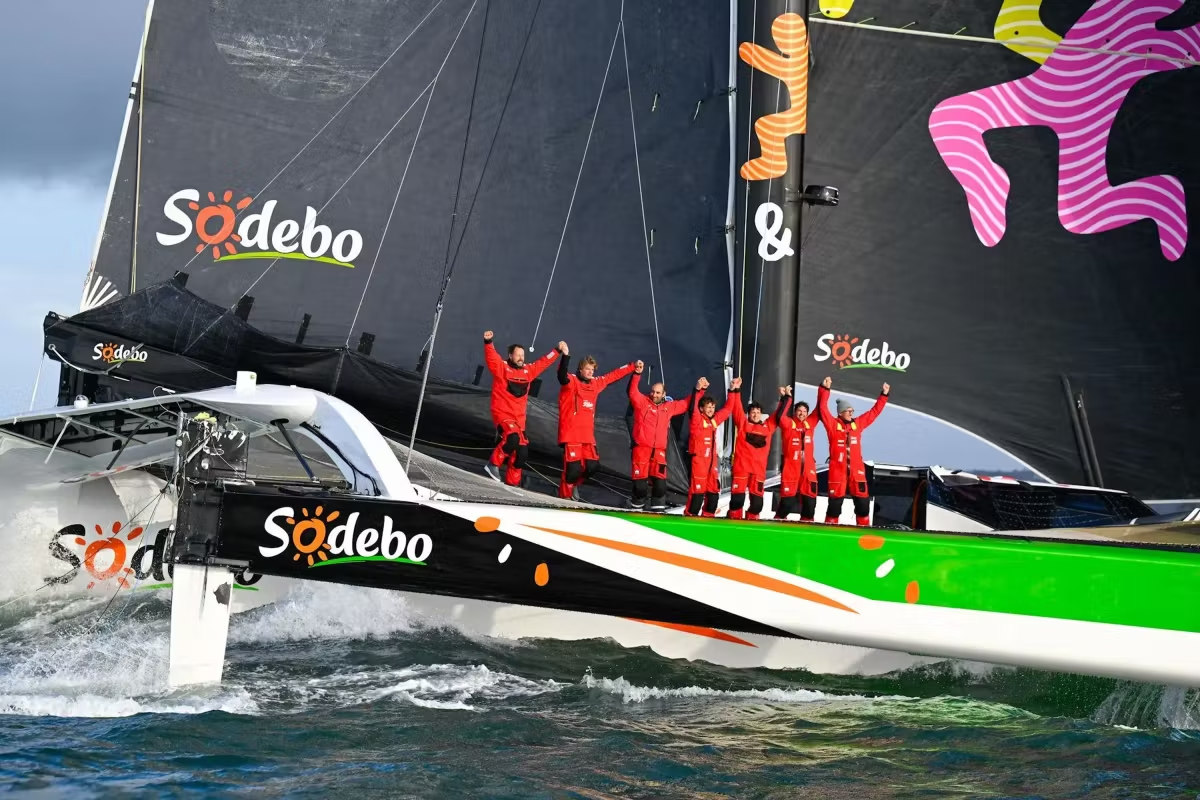
The raw stats are staggering: 28,315 miles sailed non-stop at an average speed of 27.17 knots, with new benchmark times established at every Great Cape – Good Hope, Leeuwin, Horn – and both Equator crossings, plus a Pacific transit of just 7 days, 12 hours and 12 minutes that took three hours off François Gabart's previous fastest.
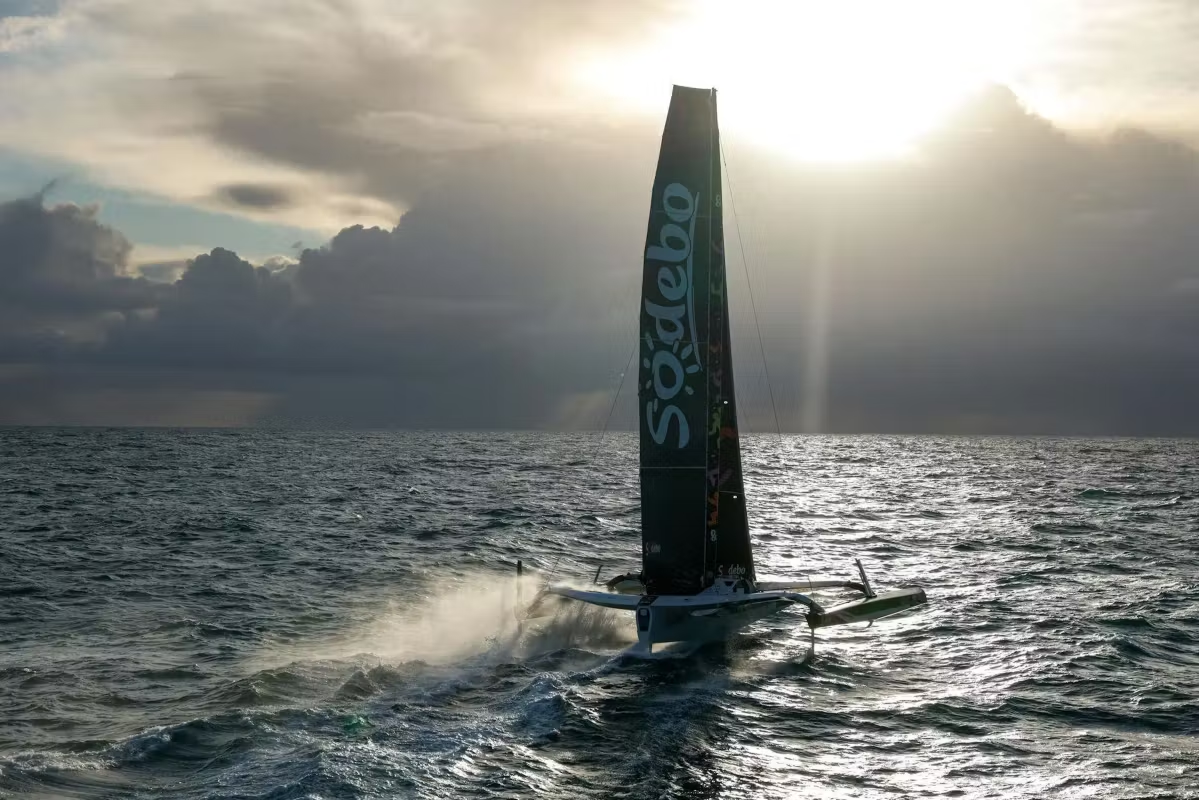
But numbers only tell half the story. Since Joyon set his record eight years ago, 13 attempts have failed. The foiling Ultims – machines at the bleeding edge of offshore technology – have repeatedly shown they can achieve extraordinary speed. Keeping them in one piece for 40 days is another matter entirely. This is the first time an Ultim has completed a non-stop circumnavigation, and Sodebo's journey was no smooth passage.
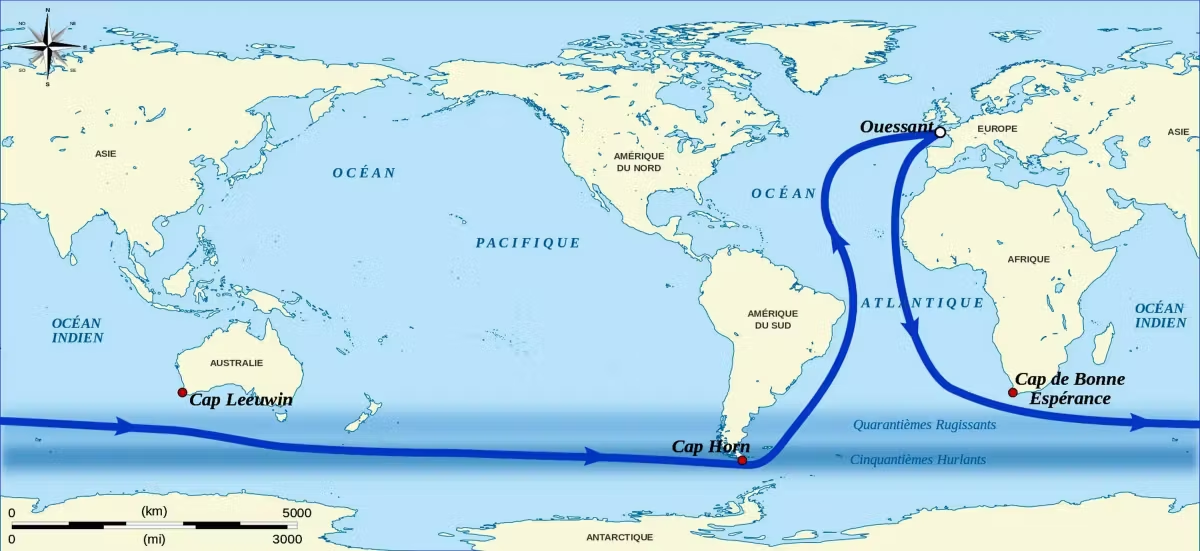
The St Helena High pushed them west and added precious miles to their route in the South Atlantic, while conditions in the Indian Ocean proved punishing enough to whittle a 1,200-mile advantage down to just 200 by Cape Leeuwin – a relentless series of gybes through systems that IDEC Sport had sailed straight through eight years earlier. Ice threatened their path in the Southern Ocean, and just when the finish line came into view, Storm Ingrid arrived with 50-knot winds and seas that topped 10 metres.
That final obstacle cost them any chance of breaking the symbolic 40-day barrier. It also damaged their starboard rudder casing. Rather than attack Ingrid head-on, Coville took the measured approach – extending west to give the boat room to run, accepting slower miles in exchange for a boat that would survive to the finish.
"There is a balance to find, a cursor to set, between continuing to go fast without breaking everything. There are moments when you have to know how to slow down, reposition, and possibly rethink a strategy depending on the conditions ahead, because everything changes so quickly in moments like these," Coville said in his final onboard video log a day before Sodebo claimed the record.
"You have to stay lucid and humble, and say to yourself that you are not going to go into the areas where the wind is strongest, even if that might be theoretically optimal for the trajectory. Finding that balance was complex. Decisions had to be taken with heavy consequences, because each decision then brings its own execution challenges and choices that could call into question the boat’s progress, or at least the small lead we had."
For Coville, this record caps a lifetime's pursuit. He has twice been crew on Jules Verne-winning boats – with Olivier de Kersauson in 1997 and Franck Cammas in 2010. In 2016, after a decade of attempts, he set the solo non-stop circumnavigation record.
Future challengers are already circling – Gitana 18 and Ferrari Hypersail both have designs on the trophy – though breaking a record that took eight years and 13 failed attempts to topple will be no simple task. There's plenty more to unpack from this record-breaking run, so stay tuned for deeper analysis on The Foil's YouTube channel and podcast over the coming days.