Sydney SailGP preview: Could twilight racing around Shark Island shake things up?

As the venue of the first-ever SailGP race, Sydney Harbour is where it all began.
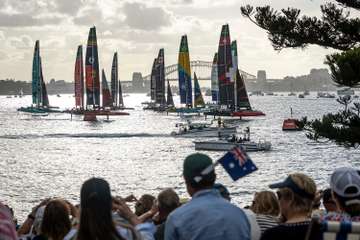
Seven years on, the birthplace of the league hosts its seventh consecutive event – and this weekend promises something the circuit has never seen before: twilight racing. The fleet will launch at 5:30pm local time and battle into the golden hour, F50s carving through the harbour as the city skyline glows behind them.
It's a fitting backdrop for what’s shaping up to be a heavyweight showdown. Australia and Great Britain come into Sydney locked together on 19 points at the top of the standings. In breeze, they've been a cut above everyone else this season. But Sydney Harbour has a habit of rewriting the script.
For Tom Slingsby, this is personal. Britain beat him here last year on home waters – the Brits’ first win of Season 5 – and that still stings. The Flying Roos are the most successful in SailGP history: three championship titles, Grand Final contenders in every season, 69 fleet race wins, 17 event victories. Auckland broke a year-long losing streak, and now Slingsby will want to pile on the pressure.
With New Zealand and France both sidelined – their F50s still undergoing extensive repairs – only 11 boats will be on the startline. Two of the strongest teams not in play leaves the door open. However, Friday’s cancelled practice racing means teams are going in somewhat blind.
The pinball machine
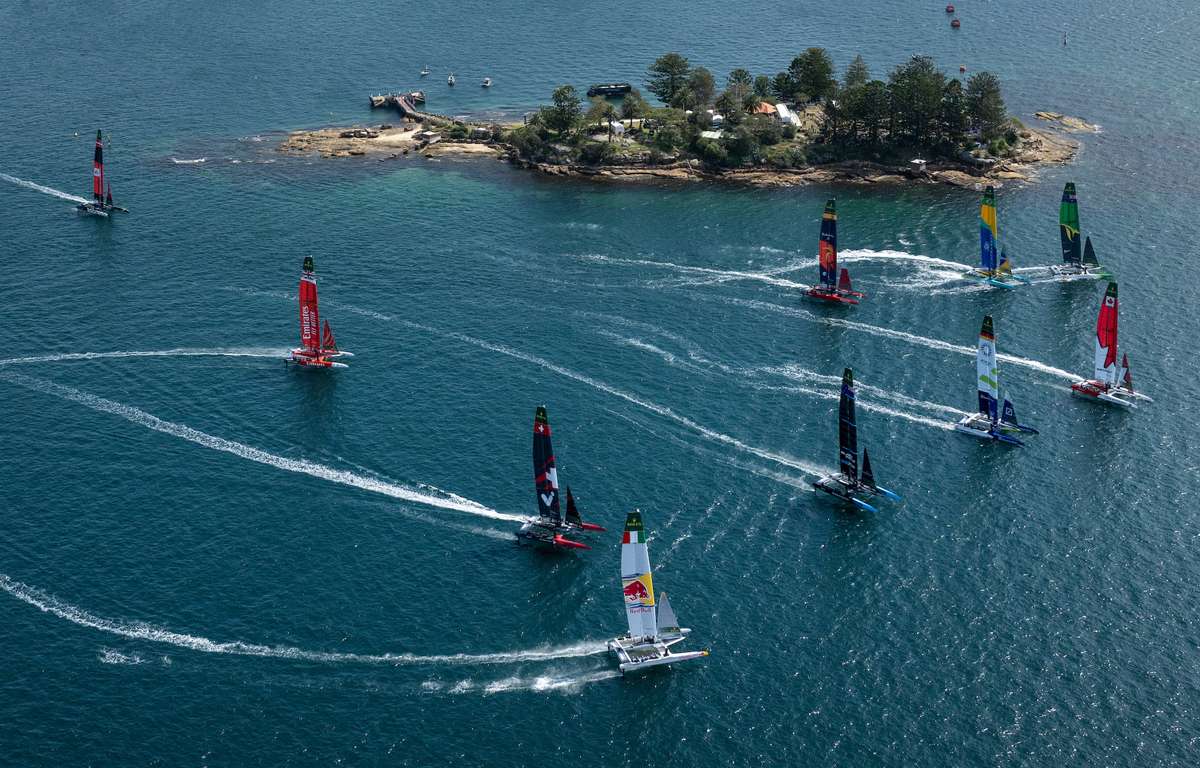
Shark Island sits slap bang in the middle of the course, and it changes everything. The reach into Mark One is brutally short – around 400 metres compared to almost 600 in Auckland – and the boundaries squeeze teams into a tight box. There's nowhere to hide.
The island creates a massive tactical fork. On its leeward side sits a wind shadow – a lull that can stop you dead. Teams can't simply tack boundary to boundary. Midway up the beat, they face a choice: punch through the lull in a fast mode to reach the right-hand side, or pay an extra tack to work the breeze up the left. And what works on one upwind leg won't necessarily work on the next.
Sydney's geography acts like a natural wind obstacle course: headlands, cliffs, bays and urban shoreline creating shifts, gusts and lighter patches that reward reactive sailing. The pressure rolls off unpredictably, and suddenly all bets are off. There's no "follow the leader" formula here.
This is what makes Sydney feel like a pinball machine. Teams bounce off one side of the course, re-engage with each other, then bounce off the other. In a confined space like Sydney, split-second decisions become match-winners.
Sunset stakes
Racing runs from 5:30pm to 7:00pm – twilight hours that create their own challenge. Expect the first race in peak sea breeze, somewhere around 8-10 knots from the east on Saturday, but as the window closes out the wind could trend down. If the fleet loses four or five knots across the session, it will test setups and modings significantly. Sunday should bring stronger, more consistent easterlies – cleaner racing, bigger speed differentials, potentially more decisive outcomes.
This is where strategists earn their keep. More than Perth or even Auckland, Sydney demands eyes out of the boat – reading the wind, reading the water, making sense of the madness. The harbour produces short, steep chop rather than ocean swell, making high-speed handling more physical and technical. Strong tidal flow around the island can influence positioning, starts and mark roundings.
The coach's booth also becomes crucial here. Sitting 10km away by the F50 paddock with a helicopter view of the harbour, the team’s on-shore advisors – virtually two extra crew members – can call in with real-time intel. Better breeze left or right? Which gate? Worth the extra gybe or not?
The start line trap
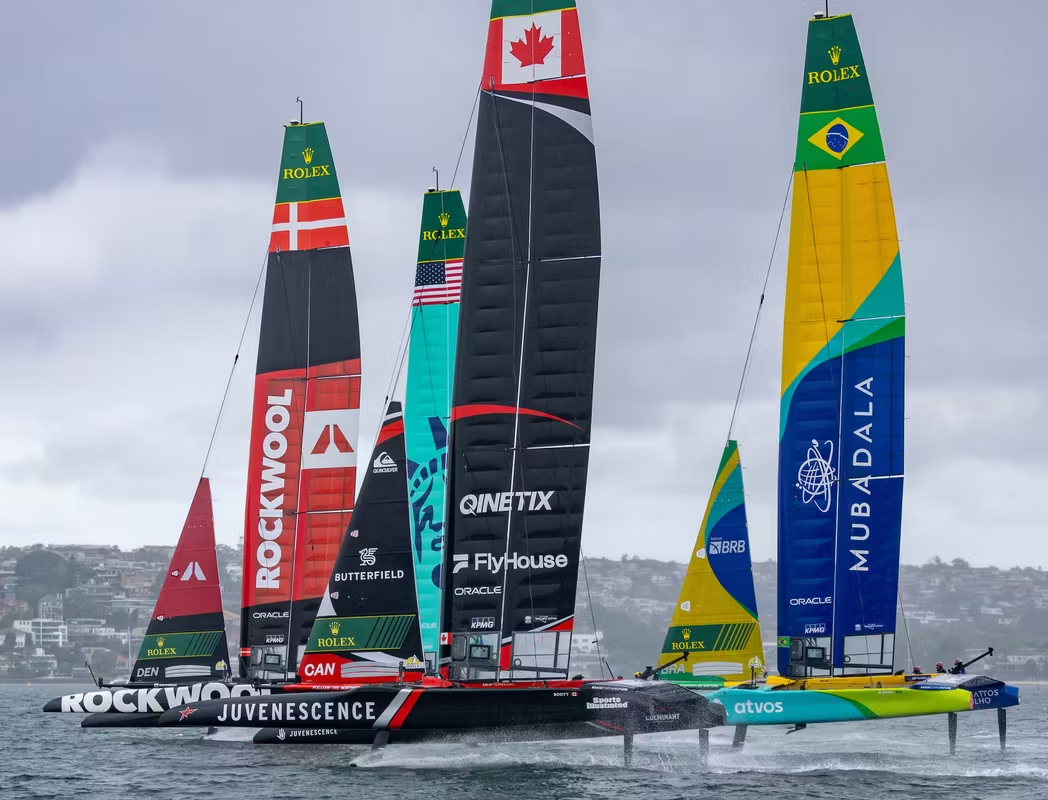
In Sydney, boats get caught late at the start more than any other venue.
The line sits between Shark Island and another landmass, funnelling breeze that can drop away without warning. Drivers think they're on time and distance, ready for a late trigger pull to hit the line at pace – then they lose three knots and just sit there, dead in the water. It's a confidence killer. Sydney rewards decisiveness, but that confidence can easily tip into overcommitment.
The strong tidal flow around the island only complicates matters, pushing boats off their timing and influencing where they end up relative to the line. And in lighter air, the boats closer to the line – the ones doing the patient semi-foiling shuffle rather than going for the glory pull – tend to pop up on their foils and get away clean while others wallow. Don't be surprised if two or three boats mistime their trigger on Saturday.
Who can shake things up?
If the breeze stays light and tactical, the established order could wobble. Taylor Canfield's United States team have found real swagger this season, and historically they've excelled in these conditions. Canada desperately needs a statement weekend after looking like genuine contenders a year ago. Both Britain and the Flying Roos have reputations for performing when it gets shifty – but in conditions like these, consistency may count for more than local knowledge.
Then there's Nathan Outteridge. The Australian skipper of Sweden's Artemis Racing has been one bad race away from the final at both events this season. After the penalty incident in Auckland – where he felt wronged by the Spanish – there's fire in his belly. With France and New Zealand absent, teams like Canada, Sweden, Spain and Italy suddenly have opportunity knocking.
Some good news came out of this morning's press conference, as Russell Coutts confirmed: "There's a bit of certainty here around the French team. The team at Southern Spars in Auckland have done a remarkable job of getting the French boat back in order. It's just about at the stage now where it's being painted and it will be back on the start line in Rio for the next event." Quentin Delapierre will be ready and raring to get back on the race course for South America's first-ever SailGP event in April.
By the numbers
Stats geek? We’ve got you covered…
Fleet Race 1 this weekend will be the 30th SailGP race held on Sydney Harbour – a tally second only to San Francisco's 32. And history at this venue follows a clear pattern: Australia have reached the event final at every single Sydney round and remain the only team to have won multiple finals here, with three victories. Their 12 race wins at the venue account for more than a third of all Sydney races, while 17 fleet-race podiums represent a 68% success rate on home waters. No other team has managed a race podium across every single Sydney event.
The season-wide figures clearly reinforce the top two's dominance. Australia and Great Britain have both finished first or second at both Perth and Auckland. The Flying Roos lead the fleet-race podium standings with a total of eight, and alongside Denmark are the only teams to have scored points in every race entered this season. The Flying Roos have reached the final at both events – a sequence they'll be desperate to continue here.
Elsewhere, the order remains fluid. The United States, who recorded the fewest top-three race finishes in Season 5 with just four, have already collected five podium finishes across their eight races this season – including first place in the final fleet race in Auckland. Brazil, Denmark and Switzerland are yet to crack a top-three race finish in 2026, while Italy and Brazil remain the only teams to have competed in Sydney without securing a fleet podium.
SailGP essential stats
Compiled by Sundaram Ramaswami
- The 2026 championship spans 316 days, making it the second-shortest season in SailGP history, behind only 2019 (219 days, five rounds).
- Thirteen rounds are scheduled in 2026, equalling the most in a single SailGP season (also achieved in 2023-24).
- SailGP has staged races in 24 cities across 13 countries, as well as the British Overseas Territory of Bermuda, spanning four continents.
- With Rio de Janeiro set to join the calendar in April, SailGP will race across five continents for the first time, and in South America for the first time.
- Three teams have won the SailGP championship to date. The Flying Roos (Australia) are three-time champions (Season 1-3), the only multiple-time winners. Los Gallos (Spain) won in Season 4, while Great Britain claimed the 2024-25 title and entered 2026 as defending champions.
- Team Australia have finished either champions or runners-up in every SailGP season to date.
- Australia remain the only team to win the opening round of a season and go on to win the championship, doing so in Season 1 and Season 3.
- Artemis Racing (Sweden) joined the 2026 grid, becoming the 15th team to compete in a SailGP season.
- During the 2024-25 season, Australia recorded the most top-five fleet finishes (52), fleet podiums (36), and fleet race wins (15), despite not winning the championship.
- Brazil and the United States recorded the fewest top-five fleet finishes (14) in 2024-25.
- The United States had the fewest fleet podiums in Season 5 (4), while the United States and Italy shared the fewest fleet race wins (1).
- Great Britain reached the most event finals in 2024-25, qualifying for seven of 12 and winning three.
The harbour has witnessed plenty of SailGP drama over the years. As twilight descends and the city lights flicker on behind the racing, someone's going to make a statement this weekend – the only question is who.
Stay tuned at TheFoil.com and @wearethefoil on socials as we bring you all the latest.
Articles You Might Be Interested in
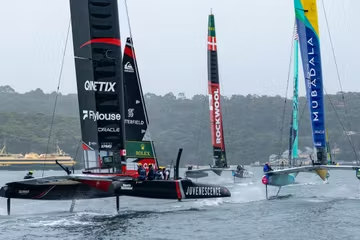
Spain’s Los Gallos head the fleet after day one in Sydney
Lightning threat calls off SailGP practice – again

Tom 'Mozzy' Morris: SailGP's Auckland safety review doesn't add up
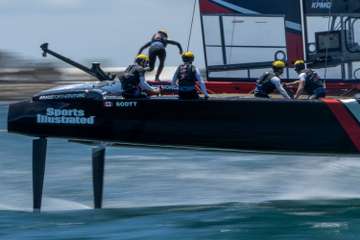
'The safest is when you're pushing hard' - Billy Gooderham explains flight control
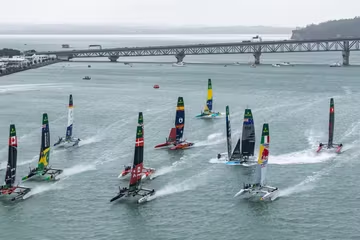
Jury verdict: Black Foils pushed too hard before Auckland crash
Podcast Ep. 8 - Sydney SailGP preview + Quentin Delapierre on safety
SailGP fixes split-fleet scoring mess