The battery-power revolution that’s bigger than F1’s

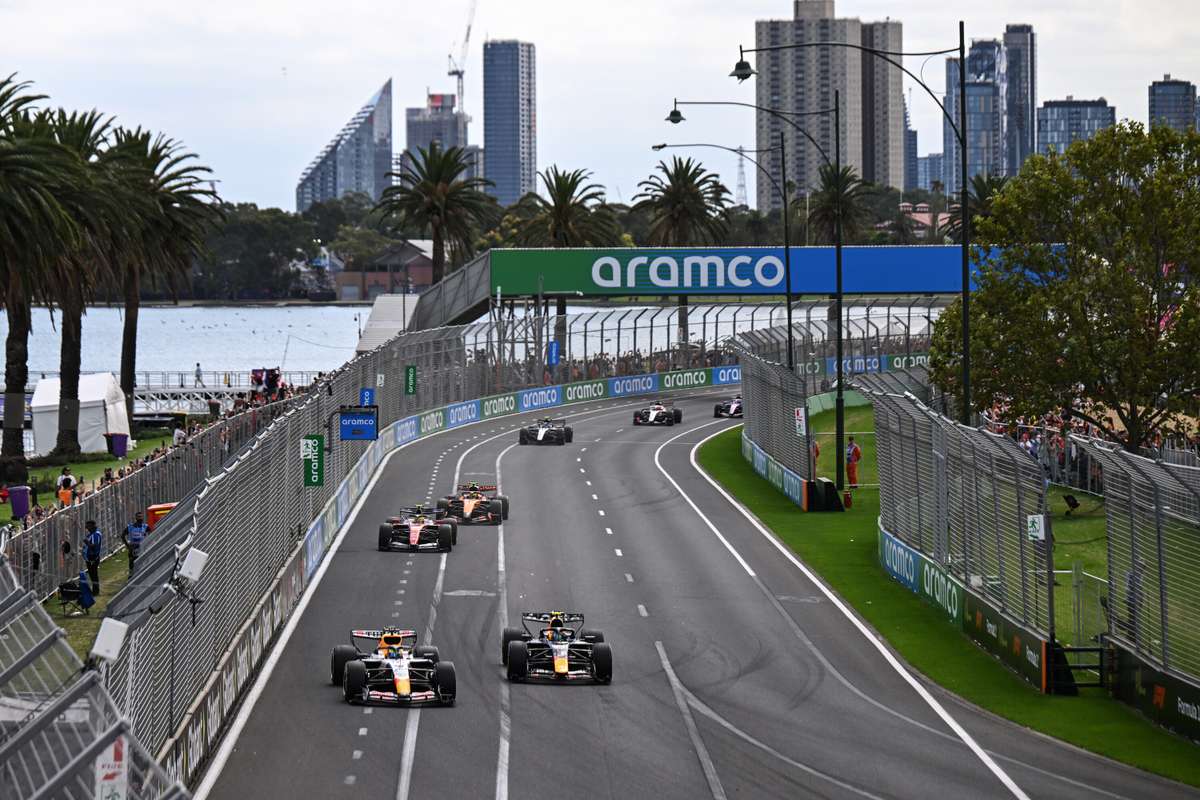
If you happened to watch the Formula 1 season opener in Melbourne this past weekend, the commentary and narrative around the race was dominated by one thing: battery power.
Is this the world the America's Cup is heading toward?
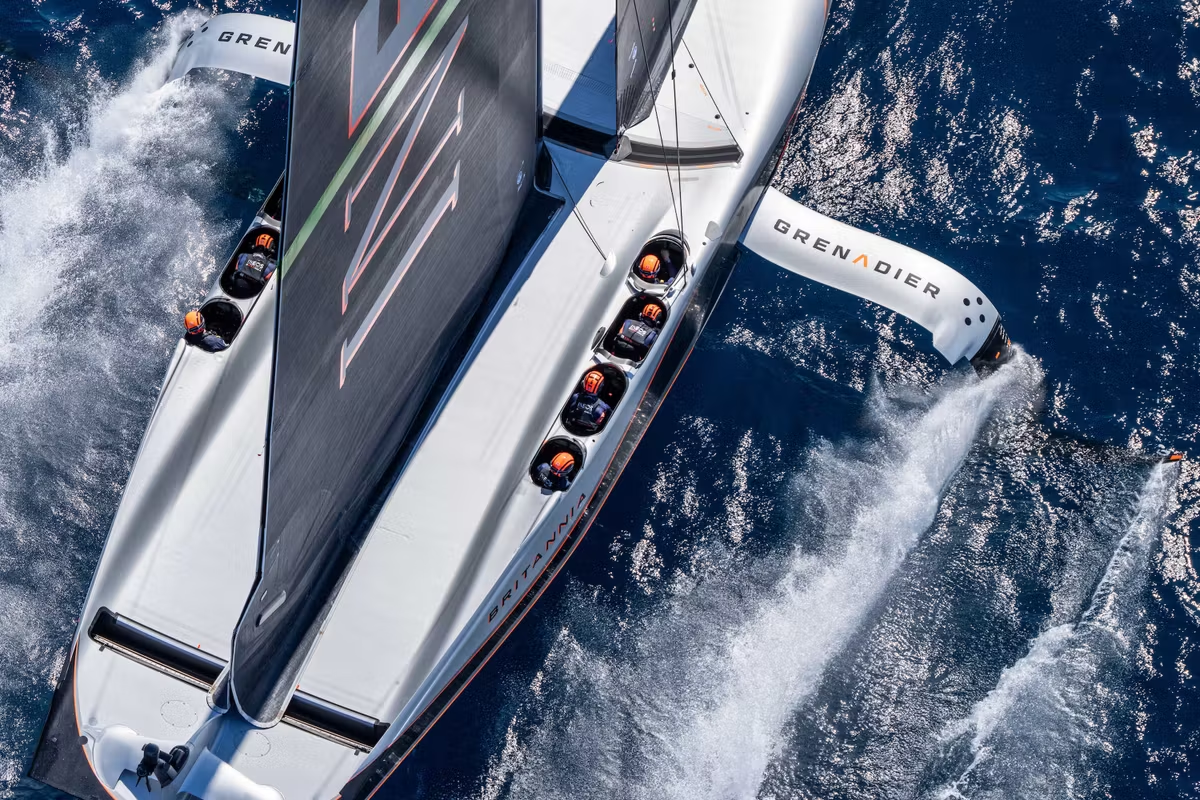
The introduction of battery power on the AC75 foiling monohull for the next Cup is one of the most significant rule changes in modern America’s Cup history. It fundamentally alters crew roles, boat systems and energy management compared with the cyclor-powered boats used in the 37th America’s Cup in Barcelona.
In fact, this will be the first America’s Cup in its 175-year history (Deed of Gift matches aside) where sails are not moved by human power. As someone who has been physically moving America’s Cup sails for the last quarter of a century, that is a difficult change to see. But I’ll reserve full judgement until I’ve seen the third generation AC75s on the water.
The AC75 will now run entirely on stored electrical energy. Human-powered grinding or cycling systems that previously generated hydraulic pressure have been removed. Instead, all control systems will be powered by a one-design onboard battery system designed to replicate the output of four cyclors – roughly equivalent to eight traditional grinders.
Think of a typical 20-minute race scenario:
• Average sustainable output of around 350–400 watts per cyclor
• A 10-second burst near 1000 watts
• Peak sprint power approaching 1500 watts
The battery system has been designed to mimic this human output profile.
Fatigue modelling is based on a simplified version of the ‘critical power model’ used in cycling science. A power-limiting algorithm simulates fatigue so teams cannot simply run maximum trimming loads for the entire race.
Without this fatigue model, teams could run constant aggressive sail trimming that would fundamentally change how the AC75 is sailed. Instead, the rule tries to keep the overall energy envelope similar to the last Cup so the design targets do not move too far.
As in Barcelona, the system will continue to power cant-arm rotation, rudder rake adjustment and foil flap control. Now added to the list are traveller movement, sheet trimming, Cunningham adjustments, mast rotation and outhaul control.
The 125-kilogram battery bank still feeds a hydraulic system which drives the rams responsible for moving these appendages. Those hydraulic systems ultimately allow the boat to stay on its performance targets nearly 100% of the time.
The supplied system is designed to mirror human cyclor output characteristics: average power, peak power and fatigue curves. In other words, the rule attempts to simulate what four elite athletes could generate during a race. Teams cannot simply dump unlimited power into the system whenever they want. Instead, they effectively operate with a fixed energy budget per race.
That means teams will have to make strategic decisions: when to deploy power for manoeuvres, how aggressively to trim and how to allocate hydraulic pressure across different functions.
The engineering challenge
Packaging a 125kg battery pack into a highly optimised AC75 structure is no small task. Structural engineers now have to find space in a boat that was originally designed around human power systems.
Thermal management and cooling will also be high on the list of design priorities.
Where that battery pack is positioned will influence centre of gravity, pitching inertia and trim balance. Get it right and you could see subtle gains in take-off speed, stability in waves and pitch control.
Tactical implications
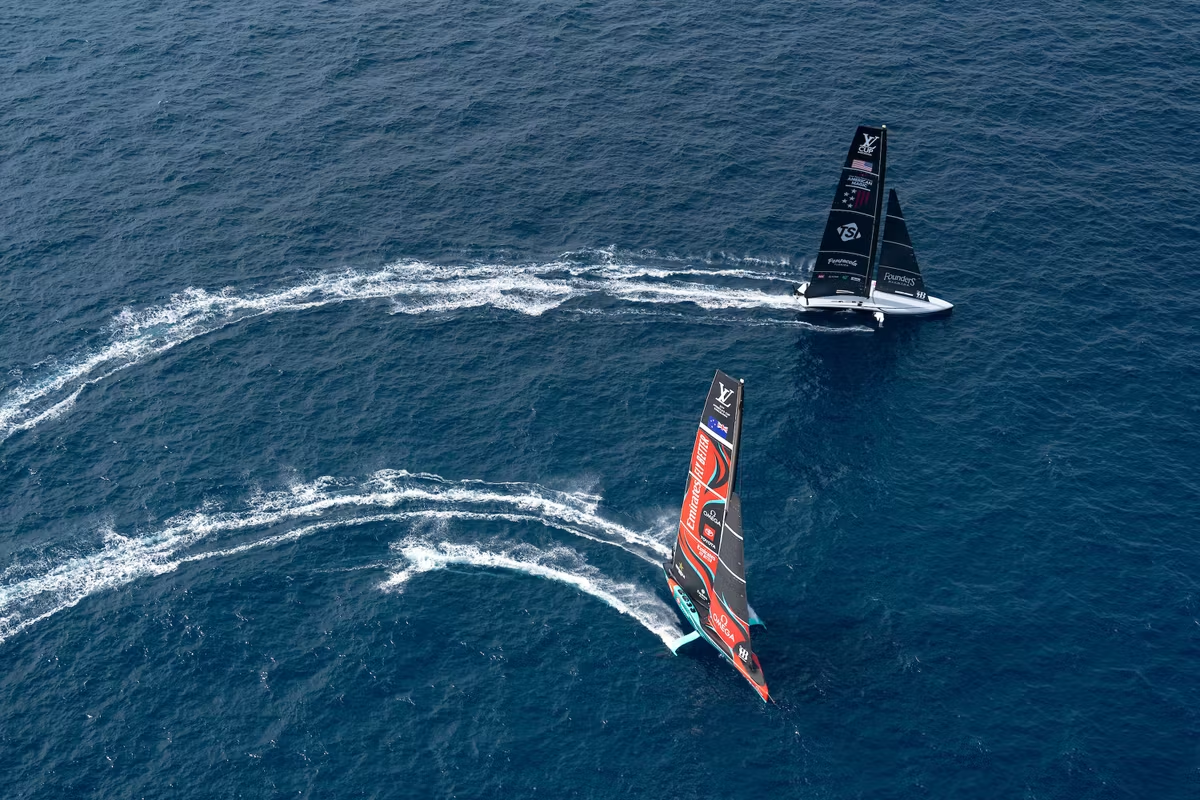
With a fixed energy budget per race, could we now see teams conserving power during straight-line sailing in order to deploy larger bursts during manoeuvres — particularly at the start or at the top and bottom gates?
And if a team mismanages its energy usage, could it end up executing a compromised manoeuvre due to a lack of trimming power on exit?
In the last Cup, Dylan Fletcher and Ben Ainslie would often gauge the cyclors’ condition by watching accumulator pressures across the boat. High accumulator pressure meant the cyclors were in good shape and manoeuvres could be called whenever needed.
Coming into the top or bottom gates – where large mainsheet adjustments were required on exit – the crew would often deliberately harvest accumulator pressure, giving the cyclors a brief breather before the next major effort.
The helms of the next Cup may end up thinking about energy in a very similar way – only now the fatigue belongs to a battery rather than a group of athletes.
The human element
What will be missed is the feedback loop between the afterguard and the grinders.
When the helmsman or trimmers sensed a big racing moment coming – a start line fight, a key tack, a hoist (old school!) – the call would go down the boat and everyone would brace themselves. Heart rates would spike, teeth would clench and the crew would go beyond sustainable output to try to out-manoeuvre the opposition.
That visceral element of the sport is, for now at least, gone.
I’m trying not to be nostalgic until I’ve seen these boats racing with battery power – but it was undeniably a beautiful part of the game.
Could manoeuvres change?
Another unknown is whether manoeuvres become slower or less frequent because of power limits. We saw something similar during the 2017 America’s Cup in Bermuda with the AC50 foiling catamaran. The physical demands were so high that tactical options were sometimes limited simply because there wasn’t enough accumulator pressure to lift and drop the daggerboards.
Could we return to something like that? Unlikely, you would hope. That would be a step backwards.
Where teams can still gain
Although the batteries themselves are one-design, teams can still optimise several key areas:
• Hydraulic pump efficiency
• Actuator efficiency
• Control software
• Energy recovery systems
The number of pumps, accumulator volume and hydraulic pressure are all tightly controlled – but within those limits there is still room for innovation.
This is precisely where Emirates Team New Zealand were miles ahead in Barcelona.
Their hydraulic architecture allowed significantly more sail movement for the same human input. Those of us on the pedals for Ineos Britannia knew exactly how hard we had to work just to keep up with what looked like far less effort on the New Zealand boat.
A perfect example came at the final top mark before the last down wind to the finish. Their cyclors would often sprint simply to post big wattage numbers for television – while the British cyclors were hanging on by their fingernails at that point.
The takeaway is simple: if a team can build a hydraulic system that is 20-30% more efficient, they effectively gain more usable power per race.
If I were running an America’s Cup team, I would have spent serious money trying to extract the systems architect behind that design out of Emirates Team New Zealand. That individual has been a huge contributor to their last three Cup victories.
Now that the boats are battery-powered, that kind of systems integration – flight control software, hydraulic efficiency and control algorithms – may matter even more.
The rules restrict the power source. They do not restrict the intelligence controlling it.
Software will play a massive role
How teams manage pump usage, accumulator pressure, and power allocation across systems – especially during manoeuvres versus straight-line sailing – will be fascinating to watch.
The jury is still out on hybrid battery systems in Formula 1. But you could argue the shift in power philosophy in the America’s Cup is even bigger. I can’t wait to see the new AC75s hit the water in the coming months and find out whether the sailing style changes – or whether, beneath all the technology, the essence of the sport remains the same.
Note to self: don’t be too nostalgic.
Articles You Might Be Interested in
Recon from the Hauraki Gulf: Unpacking ETNZ's first week back with Taihoro
GB1 back on the water and wasting no time in Cagliari
France reveals stacked AC38 crew as K-Challenge becomes La Roche-Posay Racing Team
Freddie Carr: The spectacle I can’t wait for in AC38
The Foil Weekly Wrap - 16 March ’26
Trouble in the Strait of Hormuz points to sailing's future
Tom ‘Mozzy’ Morris: The AC75’s dramatic diet – and why it gives ETNZ an early edge
AC38 crew line-ups slowly coming into focus