The long shadow of Sassnitz – and the split-fleet future

The problems at the SailGP weekend in Auckland date back to the problems at SailGP in Sassnitz last August, in more ways than one.
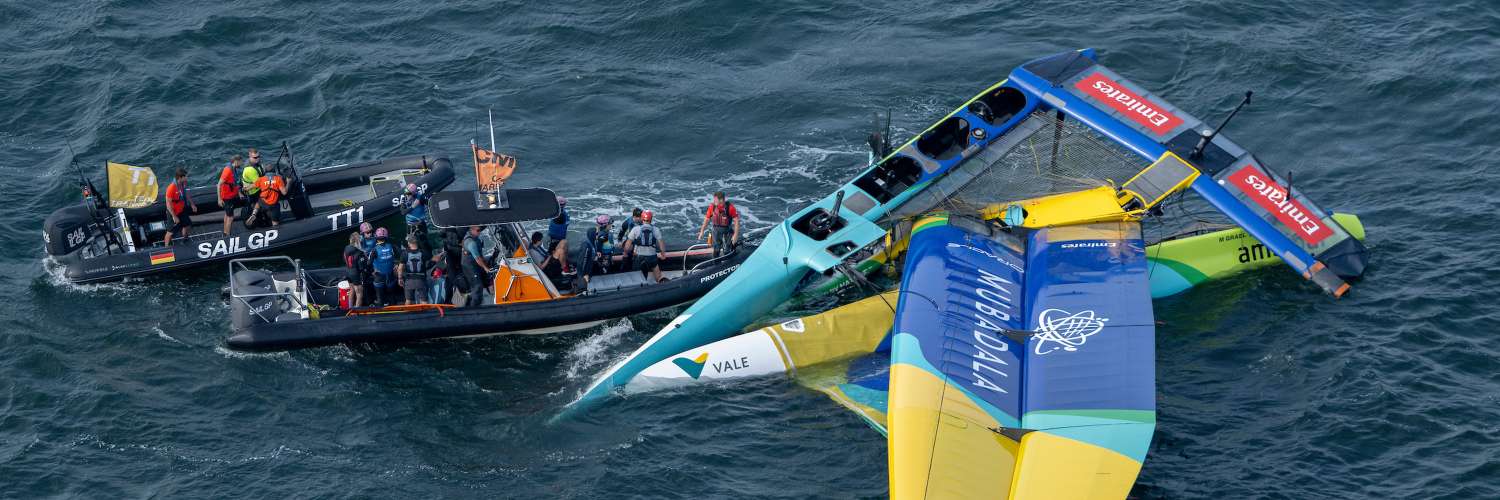
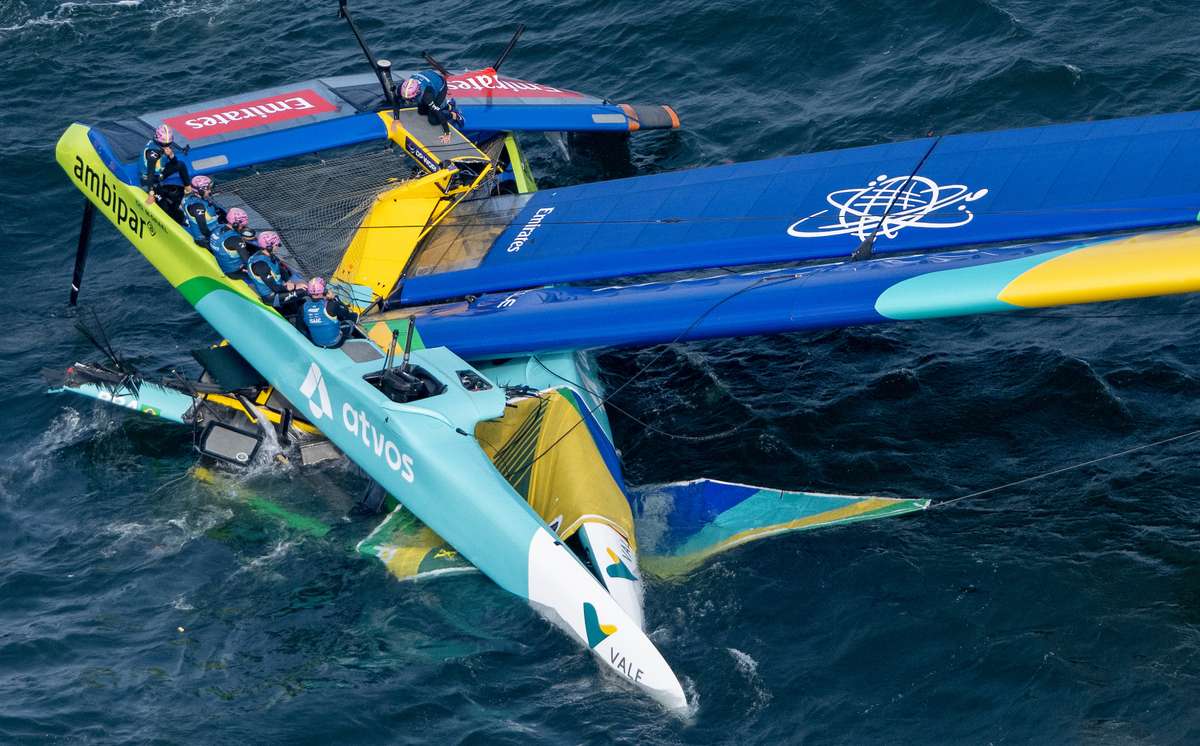
1. The disintegration of the Brazilian F50 on the practice day in Germany, caused by a rare combination of operator errors all at once, prompted the programming of some system limits to prevent sailors from over-stressing the boat and the rig.
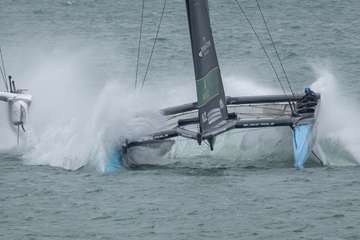
Unfortunately that has led to some unforeseen consequences, delicately described by Pete Burling in his statement this morning: “We ended up high on the foil and sliding sideways, and then we hit a system limit which drastically escalated that situation.”
2. The amount of broken boat in Sassnitz - both the Brazilian F50 and the damage caused by the US team whacking into the British on that port/starboard incident - meant that Boat #14 had to cannibalised for repairs to existing F50s, and for Team #14 to be pulled from the 2026 Season. With an odd number of boats - unlucky 13 - on the grid, the split-fleet option into two unequal groups is a lot less attractive.
Without Sassnitz, the Auckland catastrophe might never have happened.
In a statement from SailGP to The Foil, the organisation said:
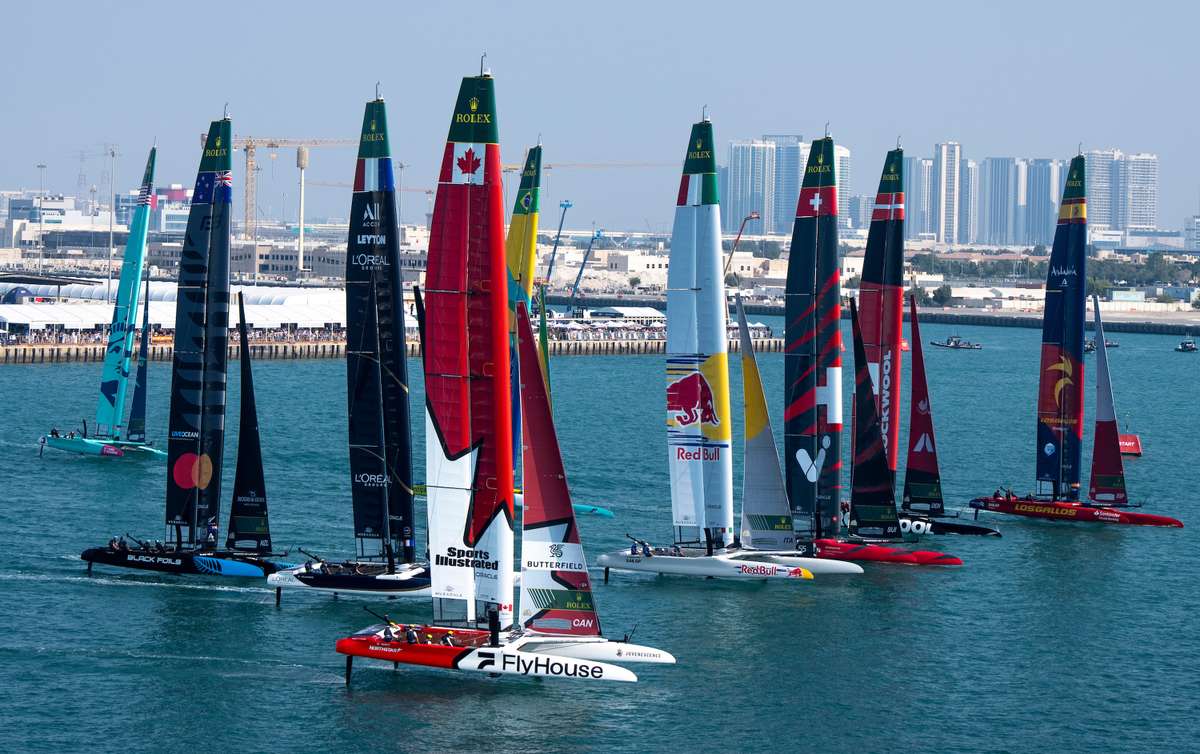
Split-fleet racing is one of several race management configurations available to SailGP as the championship grows. From 2026, this will remain an option that can be deployed event by event, depending on course dimensions, wind stability, wind strength and sea state.
From 2027, when the fleet expands further, split fleets will become the standard format across all events. As always, the objective is to deliver safe, competitive racing while maintaining SailGP’s high-performance standards and broadcast product.
“From 2027, when the fleet expands further, split fleets will become the standard format across all events.” This seems to confirm that if we’d have had 14 boats in the current season, split fleets would already be the default option. That said, I do hope it only continues to be “an option that can be deployed event by event, depending on course dimensions, wind stability, wind strength and sea state”.
In light-airs venues like Geneva, Dubai and Abu Dhabi, for example, where it would be unusual to see the fleet consistently flying on foils. When the boat is in H1 (one hull flying) or the dreaded H2 (both hulls in the water) mode, there’s very little risk of serious damage to the equipment and extremely low risk of injury to the sailors. So I hope there is always going to be sufficient flexibility to look at split-fleet or full-fleet on a case-by-case basis.
SailGP also commented to The Foil on its safety review of the incident:
SailGP is conducting a full review of the collision between New Zealand and France, including analysis of performance data and onboard systems, to understand exactly what happened and identify any learnings.
SailGP is a high-performance racing sport, but there is no trade-off between speed and safety. Athlete welfare remains our top priority, and we will act on any findings from the review, in line with our usual practice.
It’s the right sentiment, but despite the statement, there is of course a direct trade-off between speed and safety. The higher the speed, the more inherent the risk becomes. That’s just the nature of the beast in any high-speed activity. The question for SailGP, not just now but for any time in the future, is how to mitigate the risk to the sailors without excessively diluting the jeopardy – an important part of the entertainment factor – for the spectators.
Split-fleet is absolutely the right approach for high-wind days. The spin-out of the Italians on Sunday was all the proof we needed that race officer Iain Murray’s decision was the right one for the right occasion. But when it’s light winds and the commentators need all the help they can get to build the excitement, a full-fleet start is – to my eyes – much more engaging.
Articles You Might Be Interested in
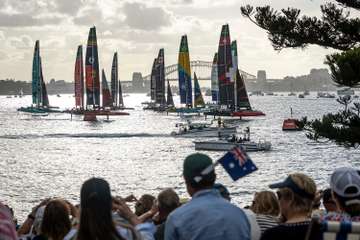
Spain’s Los Gallos head the fleet after day one in Sydney
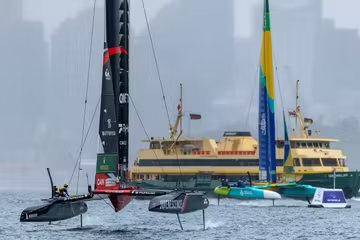
Sydney SailGP preview: Could twilight racing around Shark Island shake things up?
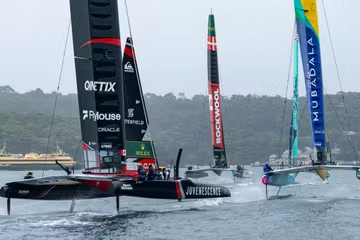
Lightning threat calls off SailGP practice – again
Tom 'Mozzy' Morris: SailGP's Auckland safety review doesn't add up
'The safest is when you're pushing hard' - Billy Gooderham explains flight control
Jury verdict: Black Foils pushed too hard before Auckland crash
Podcast Ep. 8 - Sydney SailGP preview + Quentin Delapierre on safety
SailGP fixes split-fleet scoring mess