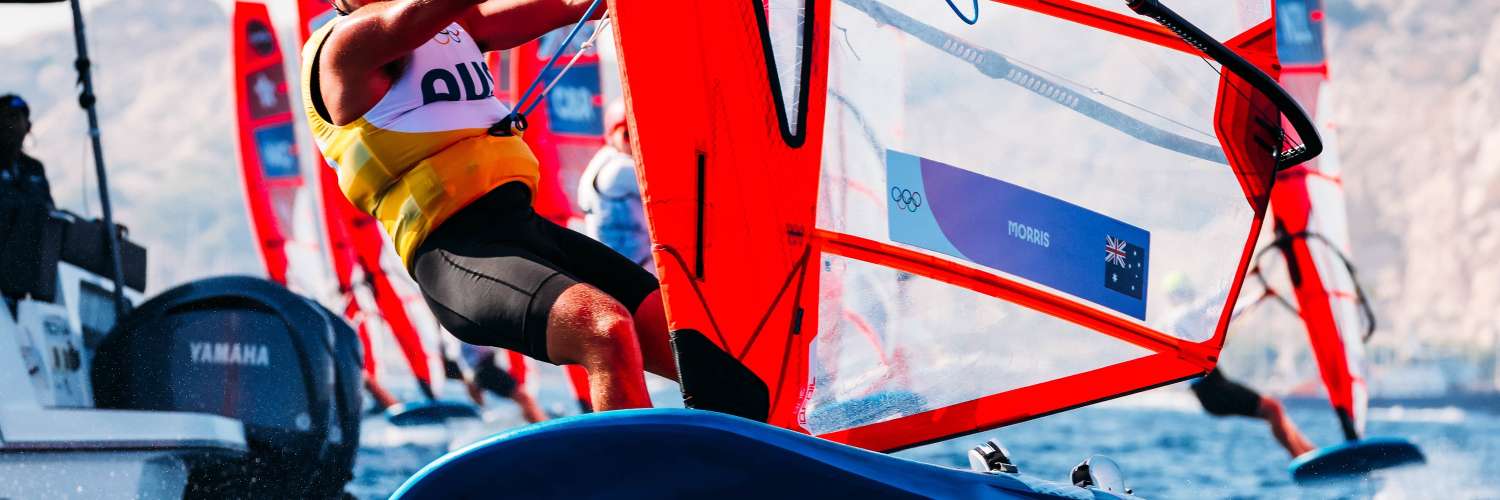
The Olympian windsurfer with a golden future far beyond LA 2028

Having worn the yellow bib going into the winner-takes-all medal race final at Paris 2024, Grae Morris might be forgiven for harbouring a few regrets at missing out on Olympic gold.
But the young Australian windsurfer is not built that way. Aged only 20 when he took Olympic silver on the iQFOiL board at Paris 2024, Morris displays a maturity way beyond his years. A man mountain and a big character in every sense, he’s sharp, quick-witted and funny. Morris appears to wear life very lightly, yet he rarely drinks alcohol and takes his professional career very seriously.
While Morris is working hard towards Olympic gold at the Los Angeles 2028 Games, the Sydney sailor has been taking an unorthodox approach to his campaign since the end of the Paris cycle.
“It's been a great time since Paris,” Morris tells The Foil. “I mean, my life has definitely changed a lot. I've been able to travel around, go to different schools across Australia. And I think the best part for me was just showing off an Olympic medal to a lot of aspiring athletes, inspiring kids.
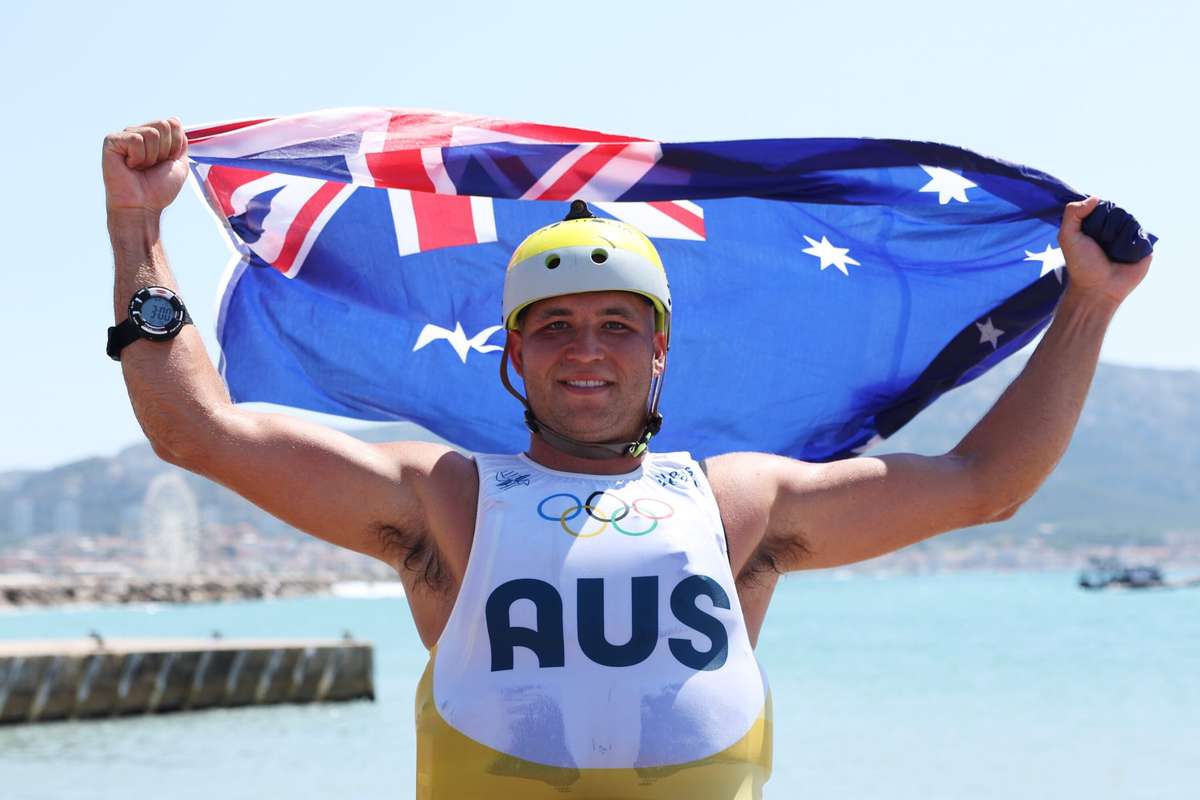
All-round waterman
“I had an absolutely great time after the Games, and then I've also made myself a bit more flexible with how I want to approach my next campaign. So I've started doing a few different sports and trying new things. Last year I finished off my IQ racing and then decided to travel around and do a winging event and then a SUP downwind foiling event. It was an awesome experience, opened my eyes to some different racing, different learnings. And I get to bring it all forward into my next year of the campaign.”
Whereas most Olympic athletes stay in their lane and focus on getting as good as possible at their specialist interest, Morris is actively opting for a more diversified approach of cross-training and cross-learning. So why does he think this unorthodox approach is going to work for him?
“I'm not sure if it will necessarily work, but I'm very much taking advantage of the fact that I'm quite young. And while I'm young, I have a great body that can do a lot of different things. And I kind of just want to explore and make sure I don't leave anything behind.
Fear of failure… but doing it anyway
“Being able to have the flexibility to travel around and do these different sports is... sure, it's scary. I might end up in a different area of the fleet than what I'm used to or where I want to be. But it's also things I can learn and take back into my Olympic campaign, which is overall the most important; winning a gold medal is still the main goal. And so yeah, I think you gotta go through some downs to appreciate the highs.
“And it's the same in sailing. I've got to explore different crafts, explore different results to appreciate the high results and how to learn how to stay with the high results in every craft by just trying it all, and not leaving anything on the table.”
Morris embraces the pressure of performing in the iQFOiL, and rather than rising above the fray and solidifying his position at the top of the pecking order, seems to enjoy putting himself in jeopardy. One way of doing that is hurling himself into new challenges, such as taking part in his first wingfoil racing event last October when Morris competed in the Formula Wing World Championships in Sardinia.
“It’s nice that the iQFOiL is so tough and that we've got such a great fleet that you’re never guaranteed a good result,” he says. “No matter how confident or how good you actually are, it's never actually guaranteed. I work very, very hard to maintain a top 10 or a top 20 result in any event that I do on the IQ.
Putting himself on the back foot
“Being able to go to a winging event where I don't have expectations of a top 20, I don't have expectations of winning, it’s just a bit more freeing and I can explore a different kind of mental state and how I approach it mentally.”
Morris wanted to see how he would cope in the middle to back of the fleet. “I went into the Wing Worlds with no expectations of myself. I knew I had the racing and the tactical skills but board handling and [lack of] speed were potentially my downfall. So how I was gonna turn tactics and turn a tactical race into giving me a result rather than trying to compete against the other guys on speed, which was just gonna be impossible. I just had to use what I knew I was good at to help me get a good result and then over time I got a little faster, a little more board handling and that opened up my boundaries.
“Those [improvements] helped me have a little bit more fun on the race course. So yeah, just constant learning really.” For all of his low expectations at the Formula Wing Worlds, Morris ended up sixth overall, beating many full-time professionals at their own game.
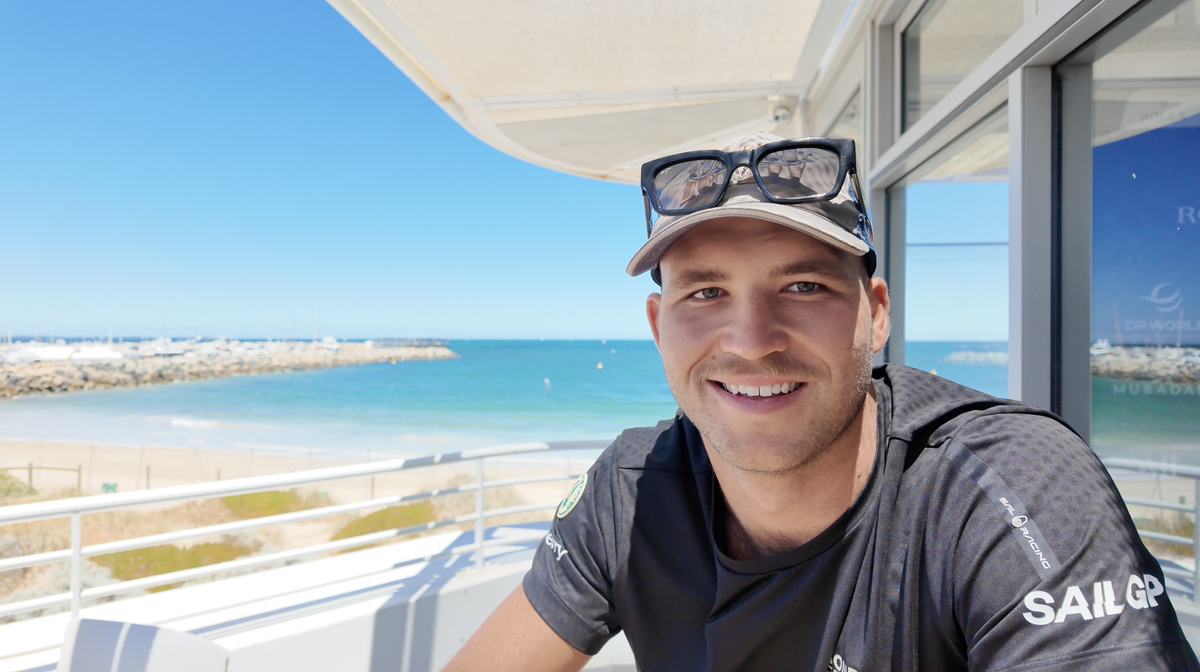
Aiming for SailGP, but not yet
The Foil caught up with Morris during the SailGP Grand Prix in Perth. Having just completed a block of training with his Perth-based coach Arthur Brett, Morris was given access-all-areas as a guest of the Bonds Flying Roos team. His association with the Aussie SailGP team actually goes deeper still.
“Tom Slingsby is a member of my sailing club, Woollahra, in Sydney. I remember as a kid going down to sail on my Bic Techno [youth windsurfing board] and he would be there fiddling with his Moth. I've been around him for a long time, just got to watch him for the past 10 years or so and learn from him.
“At SailGP I was fortunate enough to just come [to the team base] and hang out and learn a little bit more. Mainly it's just an opportunity for me to learn as much as possible from not only Tom, but Tash [Bryant, the strategist] and everybody in the crew and all the coaches and just kind of see what I can put towards my campaign and see what I can learn to help myself out.”
Head first into the pressure cooker
While Morris sees his eventual future in SailGP, being just 22 years old there’s no immediate rush to bust his way into the scene. He loves the high-stakes atmosphere of the league, and wants to experience it for himself once he’s got his Olympic career done and dusted. He’s targeting LA2028 and then a home Games at Brisbane 2032.
Although a lot of sailors from a more conventional racing background struggle to get their heads around the sudden-death environment of competing in SailGP, for Morris it’s a continuation of what he already knows. “My whole life, all the racing I ever did was short, sharp, high-pressure - and every race matters,” he says.
“I actually find that SailGP racing is quite relatable to what I’ve known. I've never done the hour-long slow hit-outs where you do two races a day. I'm always doing six, sometimes seven races a day, super-short, sharp, and everything really matters. And so when I watch this racing, I actually can quite familiarise myself with everything going on.
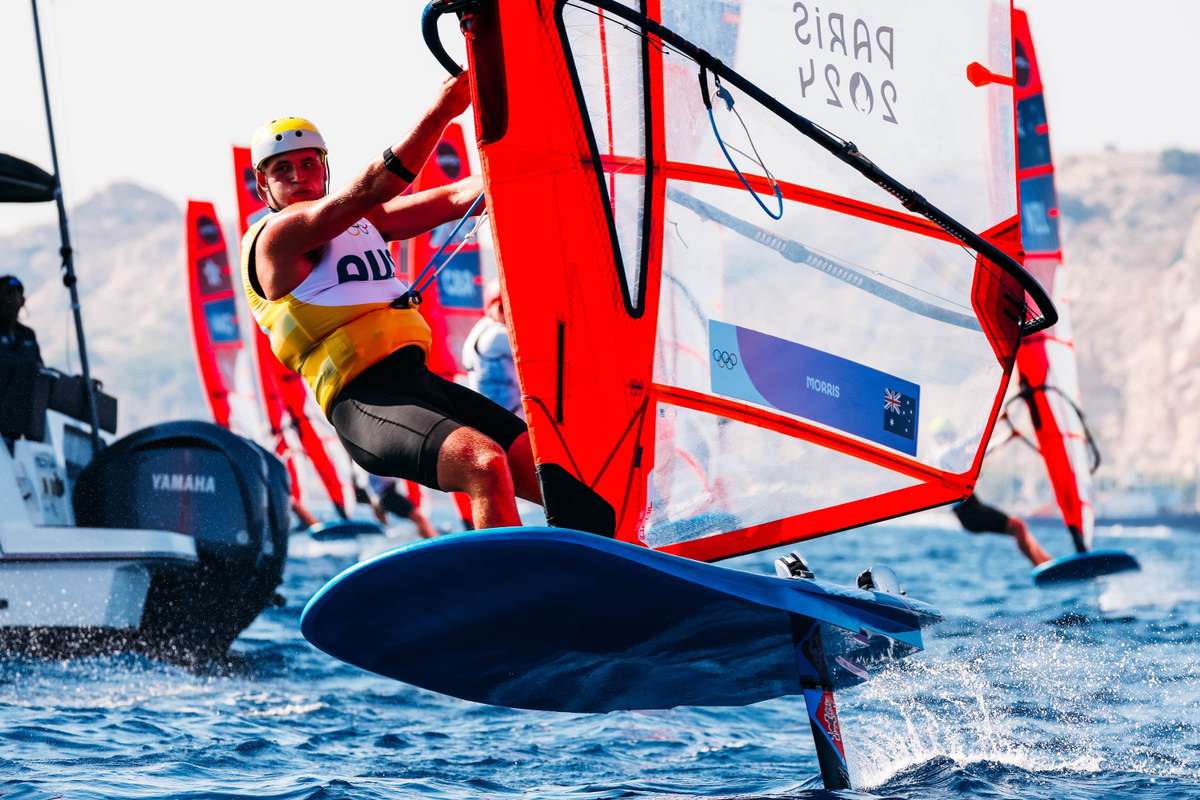
High stakes
“All I know how to do is get good at this format. It's high pressure, high stakes. No matter how good you were throughout the week, it's all about this end format. And that's honestly all I know and all I know how to make work. I've just learned to kind of be accustomed to it, to desensitise it and to make sure I'm the best I can be at executing the format.”
Where a lot of iQFOiL sailors - particularly those who competed in the previous, more conservative Olympic windsurfing formats - reluctantly and grudgingly accept the brutal medal finals as a necessary evil of modern competition, Morris embraces the jeopardy. “I think these SailGP athletes are super lucky because they get to perform the format about once a month, maybe sometimes more.
“They're under the kind of pressure that I'm hunting. They're under it a lot more than I am. I only get the opportunity to go through this maybe four times a year. For the SailGP athletes to go through it once a month, it's awesome. I just want to keep my head inside it and try to learn and experience that pressure more and more, so I can desensitise the pressure for when that time really comes, whether it's in the Worlds or in the next Olympics.”
It's an interesting philosophy. Most athletes spend their careers trying to avoid pressure. Morris is actively seeking it out, trying to make himself comfortable with discomfort. Whether it works or not, we'll find out in Los Angeles. And perhaps for a long time after that.
Topics
Articles You Might Be Interested in

Which winning style will Rio reward this weekend?
Trofeo Sofía 2026: Updates from Palma
Podcast Ep. 13 - Olympic dreams, TP52 action and America's Cup secrets
The Foil Weekly Wrap - 30 March '26
Dash for (not very much) Cash
Luca Rizzotti bought a Moth in 2007 and accidentally started a movement
The Foil Weekly Wrap - 16 March ’26
The Foil Weekly Wrap - 9 March '26