'The safest is when you're pushing hard' - Billy Gooderham explains flight control

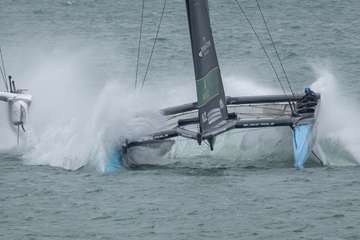
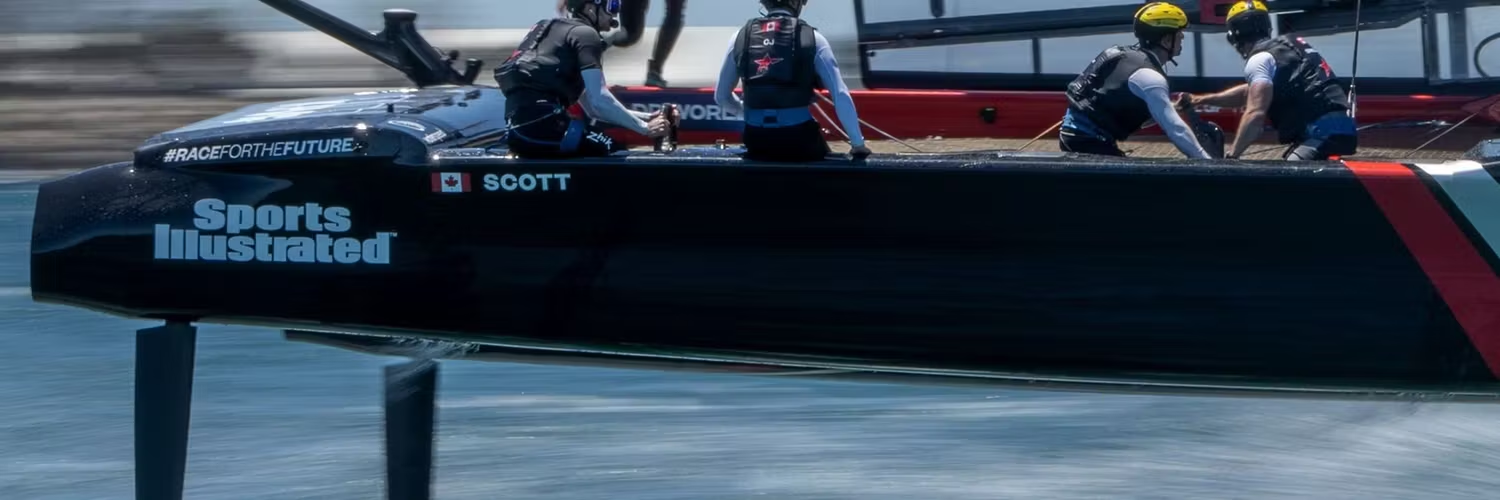
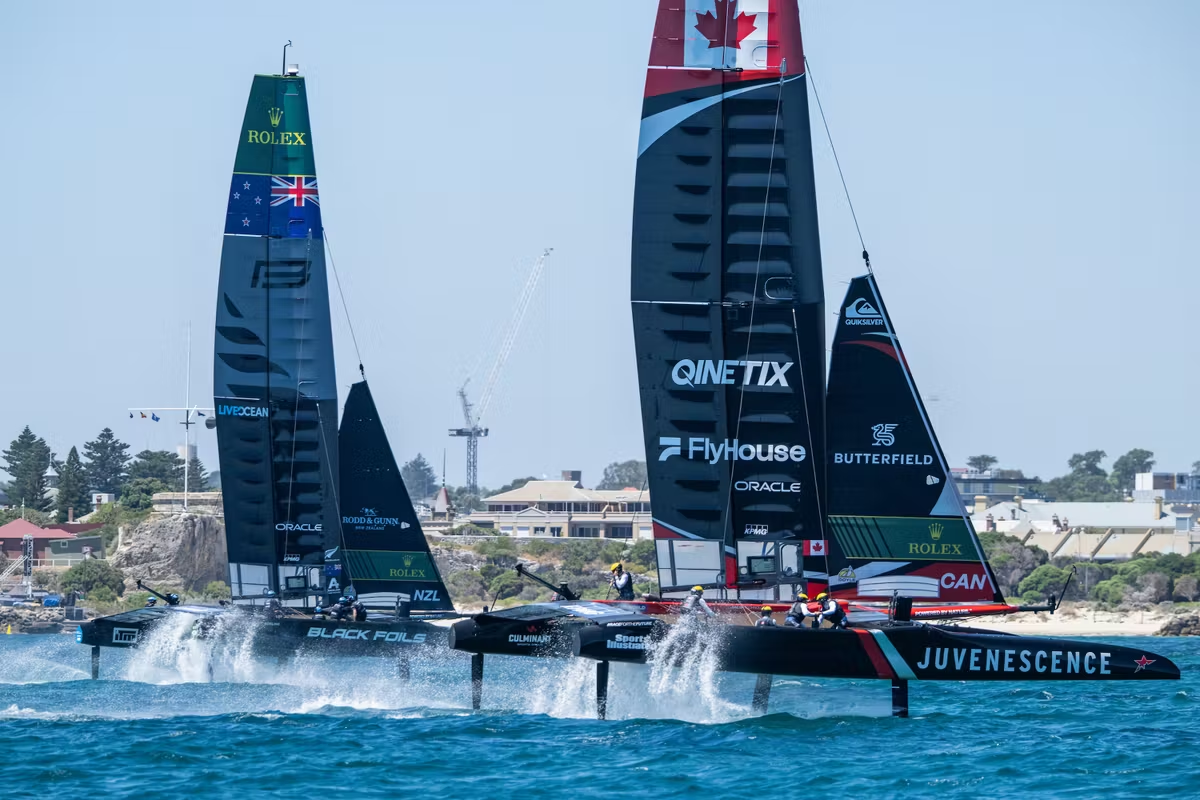
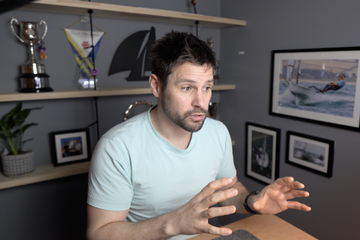
Last season, NorthStar SailGP Team’s flight controller Billy Gooderham spent most of his race time focused on a piece of PVC tape on the bow of the F50. “It is now painted on the boat for us with a new paint job this year, so that is a huge upgrade,” laughs Gooderham, who admits he has little clue what’s going on in the race around him. He can’t afford to look away from the magic mark on the bow. “As a flight controller, I have no idea what is going on in the racing. I don’t know how we are doing; I don’t know if we are doing well or poorly. I know if we are going upwind or downwind, and I know if we are about to manoeuvre. That’s about it.
“To be a flight controller and do your job well, you have to be so intensely focused on what you are doing that you don’t really have knowledge of the external surroundings. You just tune out the external noise.”
A harsh call?
The tricky job of flight control has been in the news lately since that Auckland crunch between New Zealand and France. As The Foil reported yesterday, a jury hearing found that the Black Foils could have sailed differently. The statement said: “Since all the teams, including NZL, were aware of the consequences of reaching the board protection limit, it was possible for NZL to have avoided passing that threshold by choosing a lower ride height and with less foil cant angle. The choice of ride height and foil cant angle is under the control of a boat and so it was reasonably possible for NZL to avoid the loss of control.”
Asked what he thought about that finding, Gooderham commented: “It sounds a bit harsh. When we are sailing along a reach like that, you have so much going on and you are doing damn close to a hundred kilometres an hour. At the end of the day, you are trying to push as hard as you can, but you are also trying to make sure the five other people on the boat are safe.
“There are so many variables. If the boat accelerates five kilometres an hour all of a sudden, the amount of lift you get out of a daggerboard is significantly more. That acceleration and deceleration can happen so quickly. To me, it sounds a bit harsh, but at the end of the day, it is on us to perform.
“Every once in a while, somebody gets it wrong. They have to try and point a finger somewhere, and I guess that is where they have come to with that conclusion. You hate to see it, but unfortunately, it is part of the sport.”
An ever-changing machine
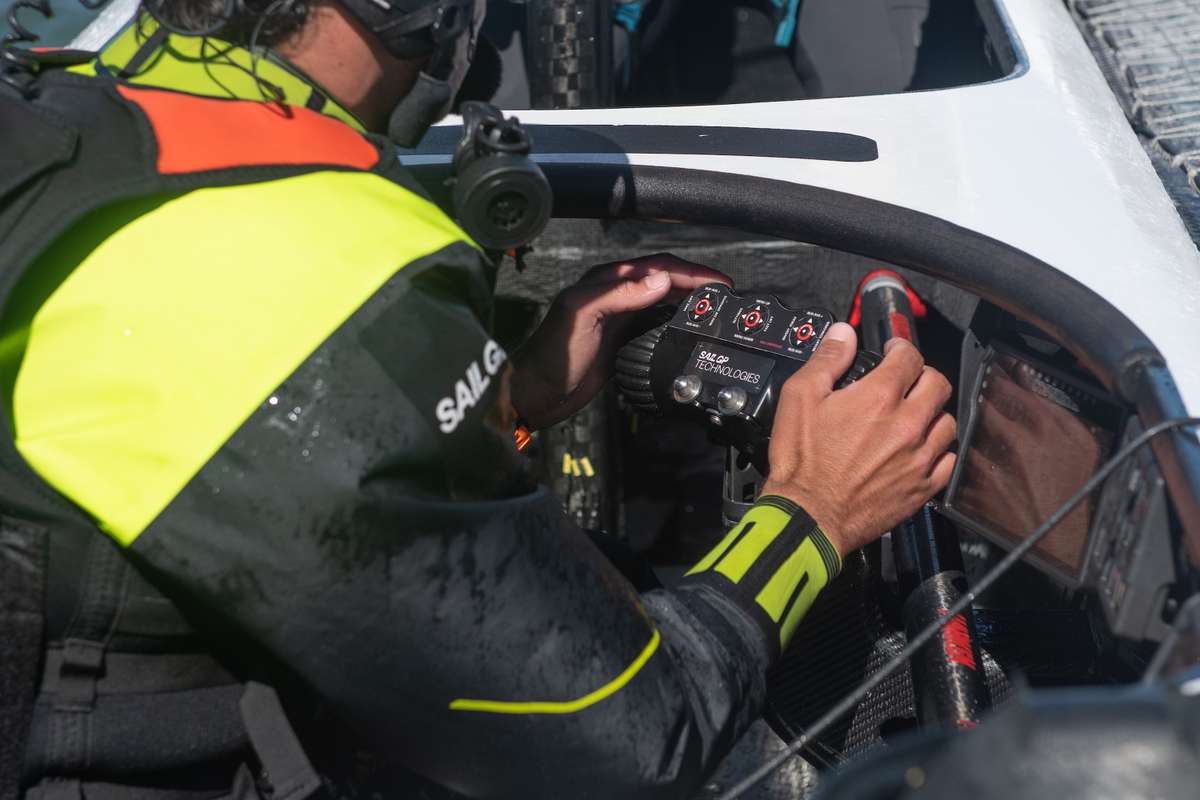
Gooderham says that while the fundamental controls remain the same, he and his fellow flight controllers are always having to adapt to changes with the software, and occasionally when there are big hardware upgrades. “From a control perspective, we have the major controls: daggerboard rake, rudder rake, and daggerboard cant. At any given time, you are adjusting all of those. But then there is also software in the boat, which is called the daggerboard protection software, but it is really more platform load protection to make it so that we don’t have issues with platform structure.
“With the old HSB [High Speed Board] J-foil setup, there was a daggerboard load protection system. There was basically only so much negative rake you could get on the daggerboard to protect it from negative loading and snapping. That software basically carried over into the new HSB2 T-foil setup, but it is more of a platform load protection software to make sure we don’t break components in the platform.
“With the boards changing, that software is almost a live piece of software. Every time we go out on the water, the data team takes a look at it to see where the pitfalls are and where it is actually working properly. We adjust that from day to day or event to event. When we have an issue like we had in Auckland, we step back and take a huge look at it. We make adjustments to make sure it is doing what it needs to do to protect the structure of the boat, but also allowing the athletes to have control of the boat.”
F1 parallels
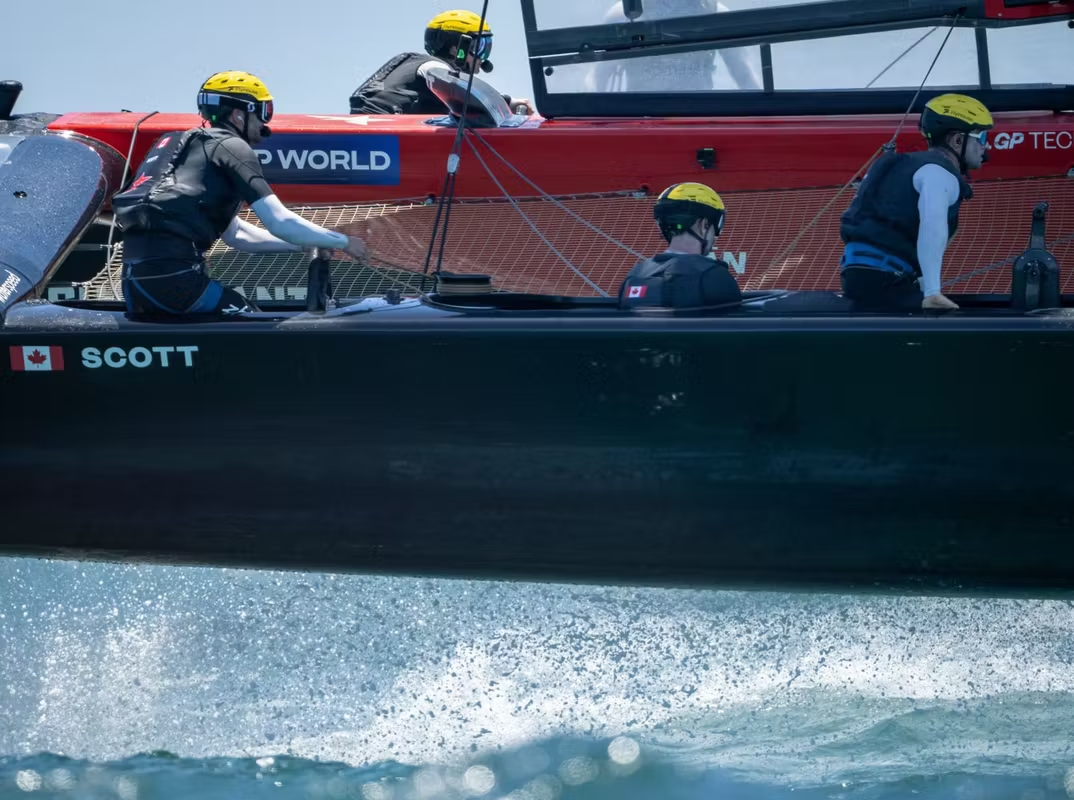
While the sailors are having to adapt to an ever-changing platform, Gooderham accepts this as being part of a fast-developing technical sport. “If you look at any top-end racing sport, that is usually the key. You look at Formula One and they are putting different setups in the car every day. It is nothing new for high-end racing, but you do have a little bit of a different piece of machinery every day you go out.
“The boats are quite identical, but we do have quite a lot of settings that we can change for personal preferences. We can change the gain rates with respect to how quickly the rake will move back and forth given the human input. We can change a whole host of settings. When you go through the data and look at the settings that each flight controller and each driver puts into their boat, they are different. The boats are one-design, but we have a ton of things we can change the same way that car one and car two in F1 might not be set up the same.”
Last season in Saint-Tropez, some teams including the Canadians experienced a loss of control that caused some concern at the time. “After the events in Saint-Tropez, they [SailGP] had gotten quite concerned with the structural loads in the boat, so they dialled up this structural load limiter. On two occasions, we ran into the rake limiters. When the system calculates that the load in the platform is too much, it basically adds positive rake onto the daggerboard and takes control out of the flight controller's hands.
“We ran into it twice on the Saturday in Saint-Tropez. Every day when we have an incident, we go back and study it, and then the software gets changed. We have had a number of iterations of the load protection software since that happened, but obviously, we found a new case in Auckland where it was going to kick in.”
Foot on the pedal
So does that mean there inevitably has to be a compromise between protecting the boat versus providing the sailor with enough range of control? “It is a delicate balance because the boat being in one piece is pretty critical to the safety of the sailors,” says Gooderham. “I understand a lot about how these boats work, but I don’t have the knowledge that the designers and engineers have. It is really hard for me to say where that fine line is on the edge. As an athlete, I want to have as much control as humanly possible; the word ‘control’ is in the job description. But you have to weigh the engineering of the boat as well.”
Meanwhile, Gooderham knows he has to keep his head down and stay focused on that painted ‘piece of tape’. But surely that big crash must have some effect on mindset? “For me personally, I don't think it changed at all. You don't bear away and hit 102 kmh around the top mark [as Canada did during Auckland] if you are throttling back. The way these boats are, the safest you are is when you are pushing the boat hard. When you try and dial it back, that is when you really see yourself getting into trouble a lot of the time. My mentality is always foot on the gas pedal.”
Articles You Might Be Interested in
Spain’s Los Gallos head the fleet after day one in Sydney
Sydney SailGP preview: Could twilight racing around Shark Island shake things up?
Lightning threat calls off SailGP practice – again
Tom 'Mozzy' Morris: SailGP's Auckland safety review doesn't add up
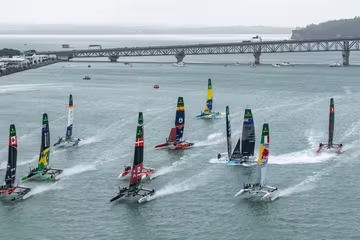
Jury verdict: Black Foils pushed too hard before Auckland crash
Podcast Ep. 8 - Sydney SailGP preview + Quentin Delapierre on safety
SailGP fixes split-fleet scoring mess