Time to meddle with the medal race format

Good riddance to the Medal Race. It was an awful fudge of a format for deciding Olympic medals. It really didn’t achieve much compared with a standard low-points scoring system that the majority of us recreational sailors use for regular racing.
This year, 2026, we get to see how the new medal format for the boat classes works out. The foiling board classes – the iQFOiL windsurfers and the Formula Kiteboarders – have led the way with far more exciting (some would say too exciting) final-day-jeopardy formats. Whereas the boat classes have been mired in the tedium of the Medal Race, which has been hanging around like a bad smell since Beijing 2008.
After a few months of diplomatic tug-of-war between World Sailing’s administrators and committees on one side, and the actively campaigning Olympic sailors on the other, a new format was finally thrashed out at the World Sailing Annual Conference in Dublin back in November.
I’m not aware of the new format having a proper name yet, but I’m going to refer to it as the ‘Robin Hood System’, which is the term one prominent Olympian used to describe it when he explained the new concept to me. He doesn’t want to be the centre of attention, so I’ll call him Sailor X here.
It’s unusual to be introducing a new format halfway through an Olympic cycle. We’re just two and a half years away from the Los Angeles 2028 Games, so there’s not much time for testing and proving the new format. Actually, there’s a good deal less than that, because the International Olympic Committee has said that all formats need to be locked in and agreed by mid-2026.
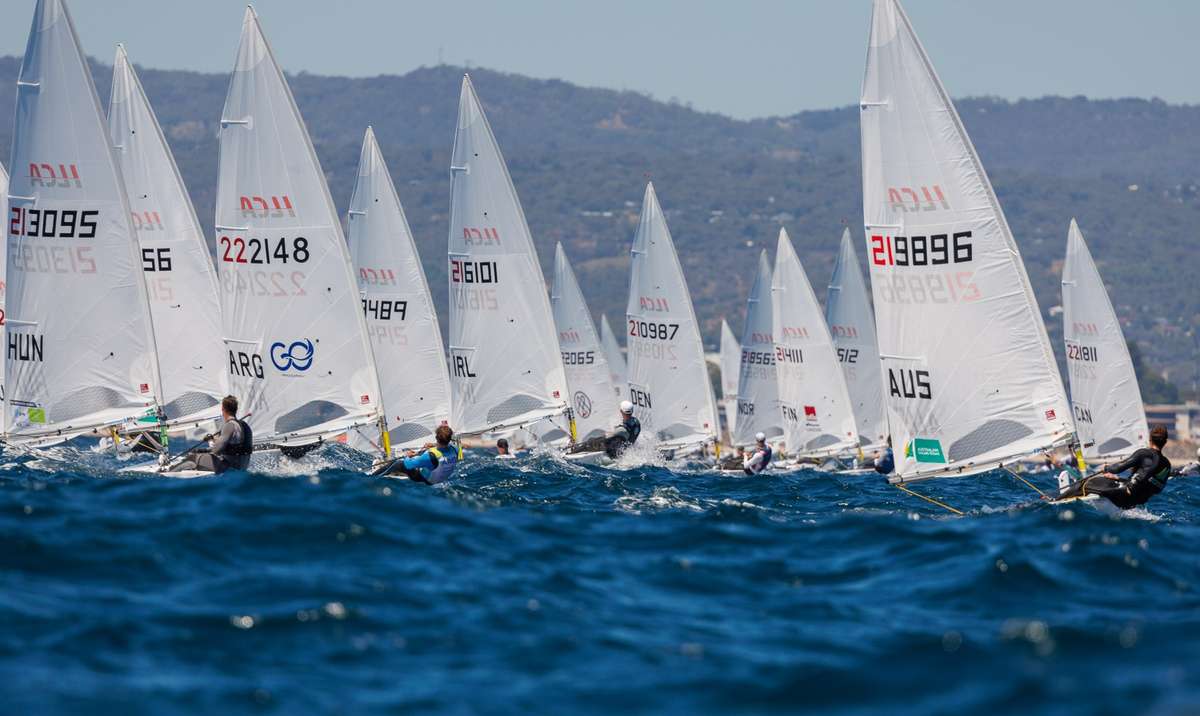
All the boat classes – the ILCA men’s and women’s singlehanders, the 49er and 49erFX men’s and women’s skiffs, and the mixed classes, 470 and Nacra 17 – are being encouraged to stress-test the ‘Robin Hood System’ as much as possible between now and sign-off later this year.
The only two big opportunities to test the system at grand scale come in April, with the Trofeo Princesa Sofia in Palma at the start of the month and the Semaine Olympique Francaise in Hyères at the end of the month.
Fingers crossed that the Robin Hood System delivers, because I’m not aware of a Plan B if it doesn’t. Formats that have been designed in windowless rooms in a cold November meeting don’t fill me with confidence, although Sailor X (who, unlike me, would have preferred to keep the status quo of the old Medal Race) seems reasonably sure that the new format will deliver the desired compromise.
That compromise, by the way, is between two impossible bedfellows:
1. What the sailors want – for the winners of the medals to be the most consistent performers across the whole regatta.
2. What the IOC, TV and spectators want – final-day jeopardy. For the outcome of the medals to be hanging in the balance until the very end, with all decided on the final race. A bit like the iQFOiLs in Paris 2024, then.
The trick is to find the right balance between those two extremes. The initial proposal from World Sailing’s format working party was far too much final jeopardy for the sailors to stomach.
So much so that two British sailors who normally keep themselves to themselves, chose to stick their heads above the parapet and voice their concerns about the proposed format change. With ILCA 7 sailor Micky Beckett and Nacra 17 World Champion John Gimson gathering support from the wider athlete community, a compromise was reached.
So what is the Robin Hood System?
Structure: The final day will feature two non-discardable fleet races for the top 10 boats.
Points System: The night before the final day, the points standings are adjusted. Any lead greater than nine points is reduced to a maximum of nine points, effectively "robbing from the rich and giving to the poor." (ah – I see what you did there, Andy! - ed) This ensures the series leader doesn't win the medal before the final day.
Sailor X notes that with a nine-point lead, a sailor would have to get two top-five finishes if the second-place boat wins both final races. With that in mind, Sailor X seems pretty sure this will deliver the right combination of final-day jeopardy whilst still rewarding the best sailors.
Let’s see. I’m not super-excited by the format but we won’t really know until it’s played out a few times.
That there are so few opportunities to test the Robin Hood Format before it gets cemented into Olympic sailing is a worry, especially if it means nothing changes for the best part of another 20 years, like we saw with the muddled old Medal Race.
Format experimentation should be an ongoing process, not a one-and-done. It’s highly unlikely that ‘Robin Hood’ is the best possible format available, but fingers crossed that it helps move Olympic sailing in the right direction.
There are, of course, many other factors to think about when designing an Olympic Regatta for the modern era, but The Foil will look at those in the coming months.
Topics
Articles You Might Be Interested in
Hawkins and Wilson take double British victory at iQFOiL Games opener
The Olympian windsurfer with a golden future far beyond LA 2028
Lanzarote crowns its 2026 champions as Olympic cycle gathers pace

Russell Coutts wants Olympic sailing to think bigger
How SailGP decides who's right at 50 knots
The Foil Weekly Wrap - 26 Jan '26
Freddie Carr: What I can’t wait to see in 2026