Tom ‘Mozzy’ Morris: The AC75’s dramatic diet – and why it gives ETNZ an early edge

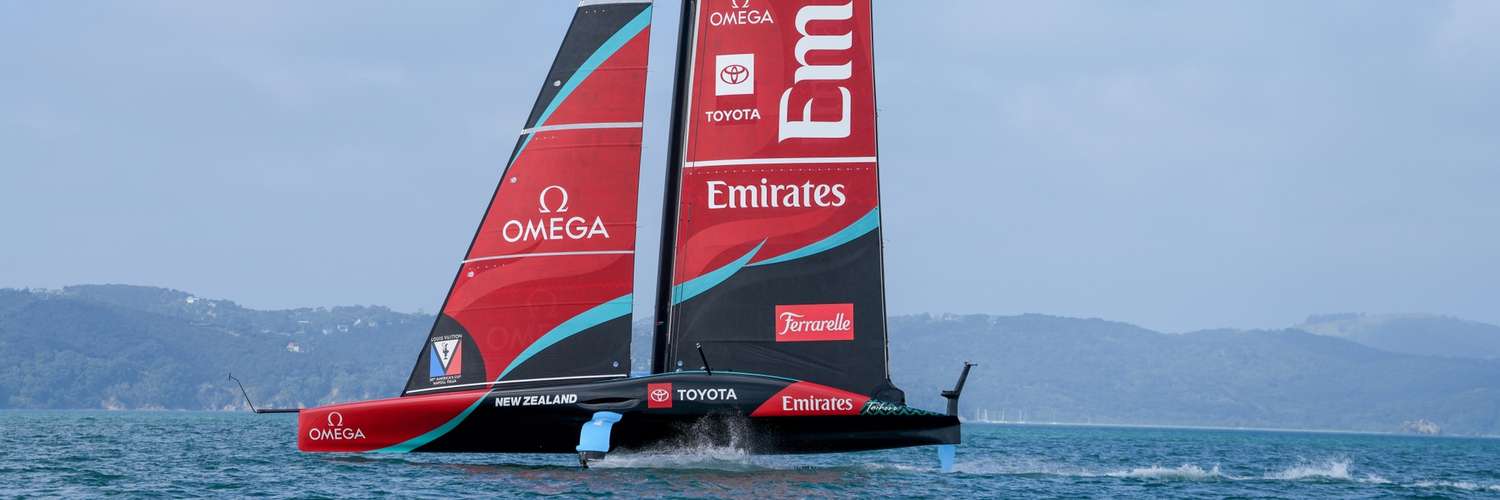
The return of Taihoro has revealed the AC38 rule change where Emirates Team New Zealand hold a clear advantage. It’s not the introduction of battery power. It’s not the politics of the Cup partnership. The change to watch in this early testing phase is the substantial reduction in mass for the AC75 – and for reasons that will become clear, it presents an opportunity for the defenders to get a head start on their opposition.
The incredible shrinking AC75
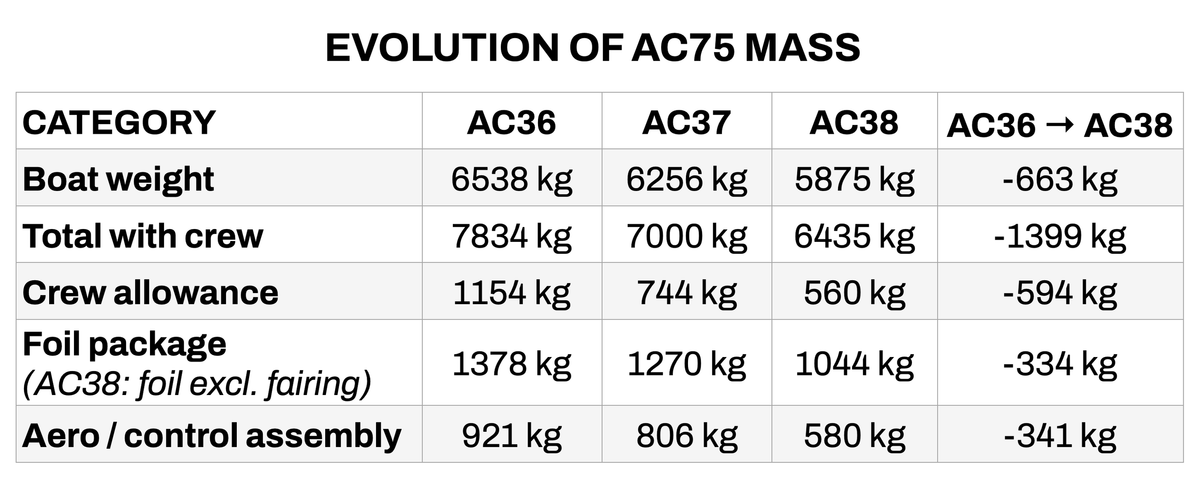
Let’s talk kilos. For AC36 in Auckland, the class made its debut at 7834kg with eleven crew plus an optional guest. Those boats carried code zeros, bowsprits, backstays and the ideal of being self-righting with heavily weighted canting foils.
For Barcelona, after some disappointing displacement racing in Auckland and with lighter winds expected in the Med, the class went on a diet – down to 7000kg. It was pretty clear where the reduction had come from: four people (three crew and one guest) had been thrown overboard. Backstays, code zeros and bowsprits were stripped off, plus a modest reduction in wing weight.
For AC38 in Naples we see another reduction of over 500kg, bringing total displacement to 6435kg – 18% lighter than the Auckland debut, or 1399kg shed in total. But despite losing four more crew, when you factor in a 125kg battery and a generous allowance for a guest racer, only around 60kg of reduction comes from personnel.
The significance for this Cup is that the biggest mass reduction comes from the AC75’s most critical component: the foil wing. Down from 921kg in Auckland to 806kg in Barcelona, and now just 580kg for Naples. It’s worth noting that any weight in the foil arm fairing is now excluded from this figure – but even so, that’s a 37% reduction across three cycles in the part of the boat that matters most.
Why go light when Naples might have more wind?
Here’s the puzzle. Reducing weight was publicised for Barcelona as a way to adapt the AC75 for the expected lighter winds of the Med – earlier take-off, better light-air performance. Fair enough. But reports suggest Naples may actually offer better chances of more wind than Barcelona did. So why keep reducing mass?
Three reasons.
1. Underpowered by design
These boats may simply need less mass to perform. A lot of onboard communications talk about using the sail for roll control – the AC75 needs to produce enough heeling moment to lever the hull out of the water by pivoting over the leeward foil. It seems the boats sometimes had to be oversheeted to keep the hull flying and reduce hydrodynamic drag, even though this created more aerodynamic drag. Reducing mass reduces the need to oversheet the sails to maintain roll. Less weight also means earlier take-off, since the foils need to generate less lift to get airborne.
2. Self-righting: a feature that never was
The foils were initially specified with enough mass not only for righting moment when sailing, but also so the yachts could right themselves if capsized. In practice, this has never been seen – and it was dropped as a requirement for AC37. After all, the heavy foil bulbs were never really used for self-righting on their own; the majority of righting moment comes from the overall platform mass, not just the canting foil bulbs. With less mass in the foils, you also reduce the loads on the foil arms and the foil cant system.
3. The rise (and fall) of the foil spike
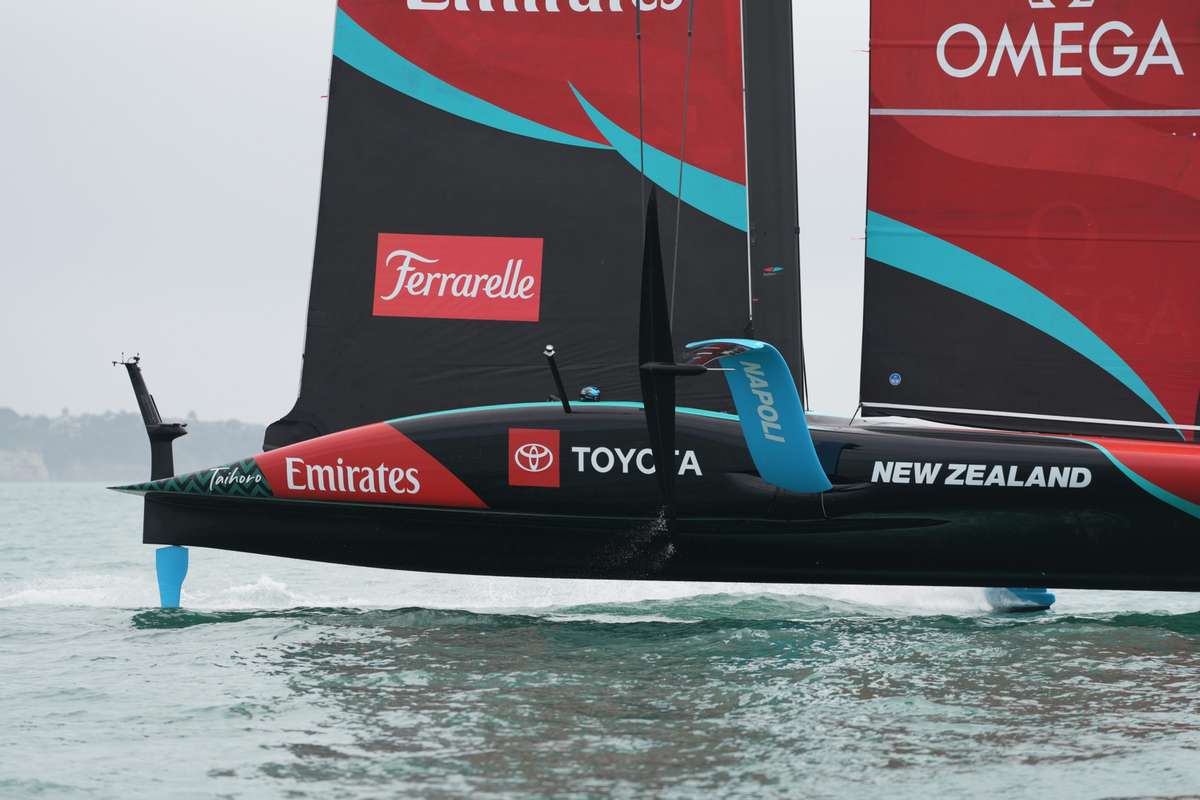
And then there’s the ugly stuff. All teams experimented with moving foil mass from the wing bulb up higher within the wing box, near the connection with the foil arm – a solution that became known as the ‘foil spike’. Some teams also added mass in the foil arm fairings. For AC37, both Luna Rossa and ETNZ had distinct spikes at the top of the foil box to hold mass out of the water. There’s a slight righting moment penalty for doing this, plus a hydrodynamic penalty in big waves where these additions catch wave crests. But reducing mass in the wing and bulb helps create slender shapes in the water, where drag counts most.
To me, this was always an eyesore. When engineers are strapping lead to something wherever it’s least likely to get in the way, I think we can all recognise a dead end is being approached in a rule. So I fully support the reduction in wing mass – hopefully we’ll see much less of these ugly spikes on the wings and arms for AC38.
But all of this is the same for every team. You want to know where the advantage lies for Team New Zealand.
ETNZ’s head start
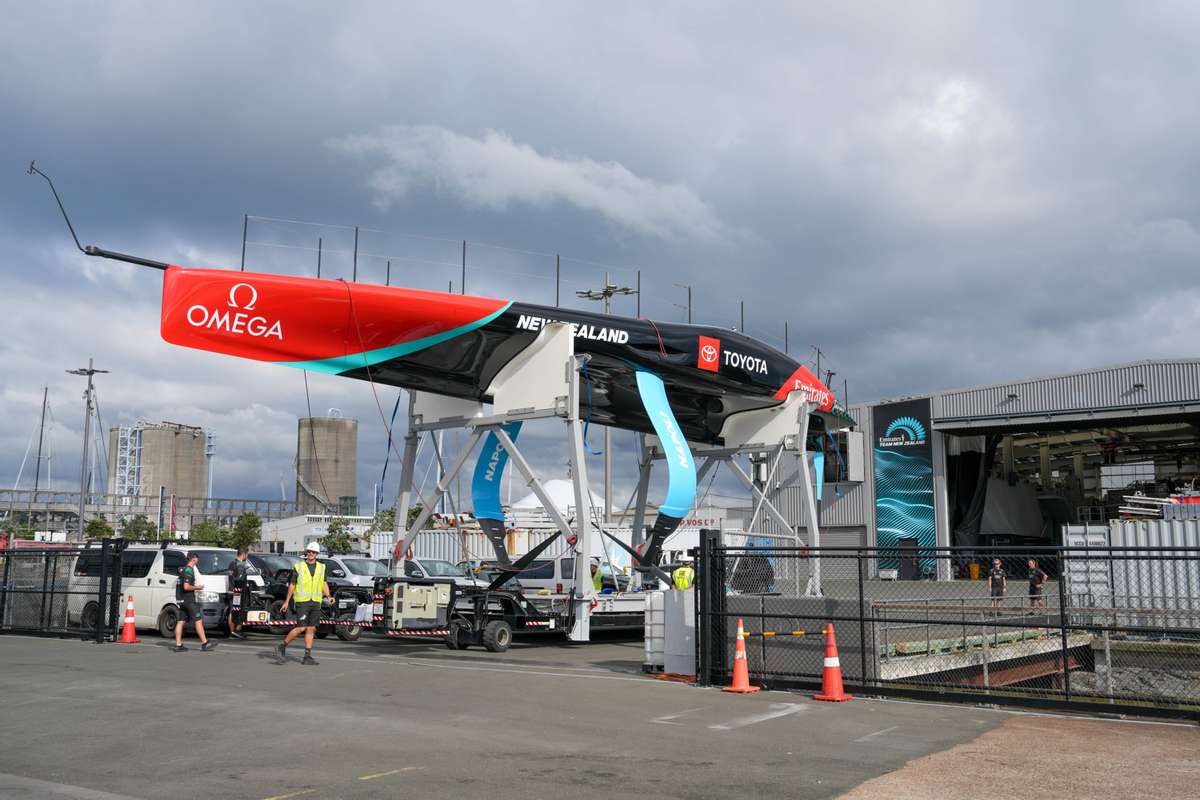
Unlike AC37, where legacy wings had to be used unaltered, this time round teams only have to keep 60% of their old wing original. That means they can remove all the horrible old lead and sail their boat in the exact mass configuration for the new rule.
Looking at photos of the relaunched Taihoro, the vastly reduced spike indicates this is exactly Team New Zealand’s plan. Being able to capture data at full scale with the correct mass and no hydrodynamic alterations gives them a perfect test bed to inform the next iteration of race foils.
Time is tight. The lead time on a wing design is around a year, and that’s all the time they have until they launch in Europe in race configuration. New Zealand have a critical window with Taihoro to capture data that could prove decisive.
Can anyone keep up?
Possibly only Luna Rossa can follow the same development strategy. With their similar foil spike configuration and the resources to match, they have the legacy setup to strip out mass and test in the correct configuration. Other teams, where more mass was integrated into a blended bulb, will require more invasive work to reconfigure those wings to the new rule.
The question is: when will the Red Moon launch? Or is this Cup already a one-horse race?
Is this testing as significant as it appears, or will the new batteries and improved automation prove to be the key battleground? Perhaps both. But right now, while the challengers wait in the wings, the Kiwis will be out on the water collecting data in the configuration that matters – and that head start could prove very hard to claw back.
We’ll be tracking all of this closely on The Foil in the coming months – including the updated New Zealand crew configuration, as speculation gathers about how these boats will actually be sailed come 2027.
Articles You Might Be Interested in
Recon from the Hauraki Gulf: Unpacking ETNZ's first week back with Taihoro
GB1 back on the water and wasting no time in Cagliari
France reveals stacked AC38 crew as K-Challenge becomes La Roche-Posay Racing Team
Freddie Carr: The spectacle I can’t wait for in AC38
The Foil Weekly Wrap - 16 March ’26
Trouble in the Strait of Hormuz points to sailing's future
AC38 crew line-ups slowly coming into focus