WASZP Games: How a boat designed to stop young sailors quitting became an elite feeder class

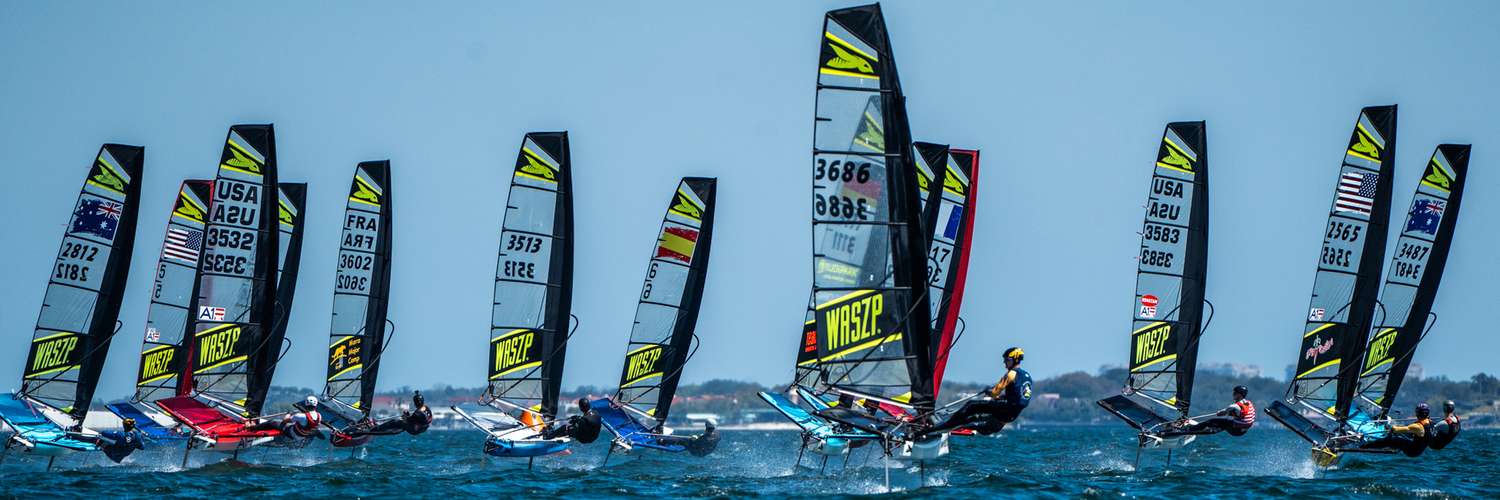
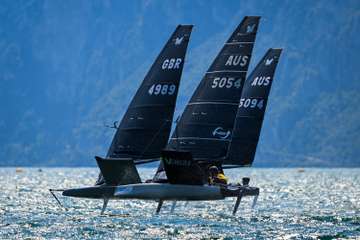
72 boats from 12 nations are foiling on Pensacola Bay this week for the 2026 WASZP Games, and while that number is a fraction of the record 247 who showed up to last year's championship in Weymouth, the drop owes more to logistics than to interest.
It is the first time the event has been held in the Americas, and the North American fleet is still maturing compared to the more established European and Australian circuits. Factor in around €1,500 each way to ship a boat across the Atlantic – along with everything else going on in the world right now – and a smaller entry is no surprise.
Still, it’s the largest one-design foiling event ever staged in North America, and the depth of talent is undeniable. Almost ten years into a mission to make foiling accessible, affordable and fun, the fact that the Games are happening on American water gives a good sign of where the class wants to grow next.
The notebook that started it all
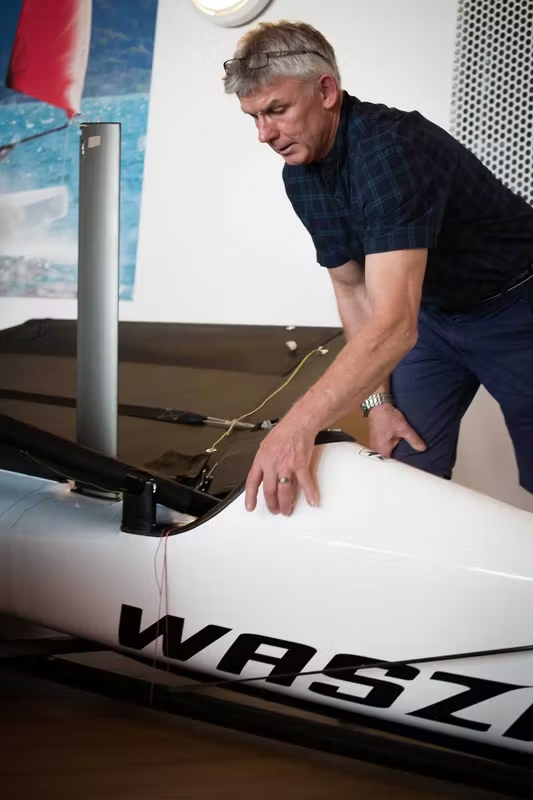
The WASZP exists because Andrew McDougall got tired of watching people fall out of sailing. The Australian designer – responsible for the MACH2 foiling Moth that won seven consecutive world championships – understood better than most what made foiling thrilling. He also understood what made it exclusive. The Moth was too expensive, too fragile, and too unforgiving for anyone who wasn't already deeply committed. Talented sailors were drifting away from the sport at exactly the point where it should have been getting exciting for them.
McDougall's response, scribbled in a notebook around 2010, was a single line: create a boat that keeps young people in sailing.
The design philosophy was built on subtraction. What doesn't the boat need? What isn't making a meaningful difference to performance? Strip away the carbon foils and replace them with aluminium. Lose the unnecessary complexity. Make the thing blunt enough that a teenager won't slice themselves open, tough enough that it survives being pushed hard week after week, and simple enough to rig in 20 minutes. Then price it at roughly half a Moth – typically between €10,000 and €13,000 – and make it a strict one-design so results come down to skill, not budget.
Production began at McConaghy Boats in 2016. The first US regatta followed in January 2017 with just eight boats in the Florida Keys. By 2019, there were 750 boats on the water. By 2020, the class had crossed 1,000 boats. The most recent figures put the fleet at over 1,700 boats across 45 nations, with more than 120 events globally each year. The WASZP is actively pursuing World Sailing International Class status, and CEO David Graham has described the class as providing "a brilliant entry point for sailors around the world."
READ MORE: Luca Rizzotti bought a Moth in 2007 and accidentally started a movement
From accessible foiler to elite pipeline
If the first half of the WASZP story is about making foiling accessible to more sailors, the second half is about what happens when those sailors get very, very good.
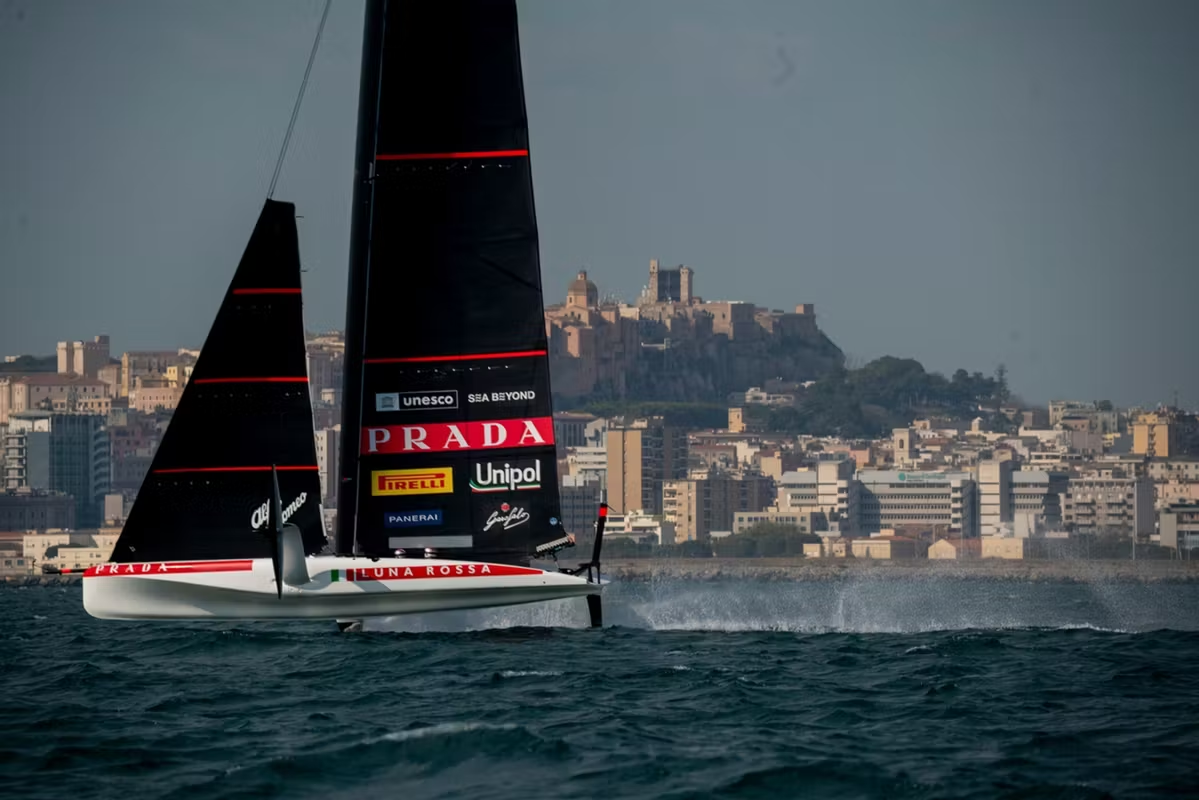
The class has quietly become one of the most effective feeder systems in high-performance sailing. Hattie Rogers won a Waszp championship before joining Hannah Mills's Athena Pathway team for the 38th America's Cup. Jack Ferguson came through SailGP Inspire and ended up driving for the Aussie Youth America's Cup team. Margherita Porro, who helmed Luna Rossa to the Women's America's Cup title, came up in the same foiling generation and is looking likely for the female spot on the Italian AC75. Magnus Overbeck took the 2024 WASZP Games title in Norway and stepped straight into the Rockwool Denmark talent programme. The Danish reserve athlete just a few weeks ago earned his F50 super licence.
In January this year, America One Racing announced a strategic partnership with the North American WASZP Class, bringing professional coaching into the pathway. And here in Pensacola, the opening ceremony was held at American Magic's performance centre. The team’s SailGP training facility is set to come online in September upon delivery of their first F50… will we see WASZPs as part of that programme, too?
All-Stars and Pre-Games set the stage
The build-up to this week's championship has already delivered sharp, high-quality racing. The All-Stars Invitational last week brought together 15 of the best WASZP sailors in the world for sprint slalom-style racing over two days with a US$10,000 prize pool. Australia's Louis Tilly, the reigning Asia-Pacific champion, won the men's title after surging through the field with back-to-back wins on the final day. Gavin Ball led after day one but couldn't hold off Tilly's late charge.
Pearl Lattanzi took the women's title with a dominant performance that surprised nobody. The American is the reigning 2025 WASZP Games champion, a US Rolex Yachtswoman of the Year finalist, and the clear favourite heading into this week. She built an unassailable lead on day one and never looked troubled.
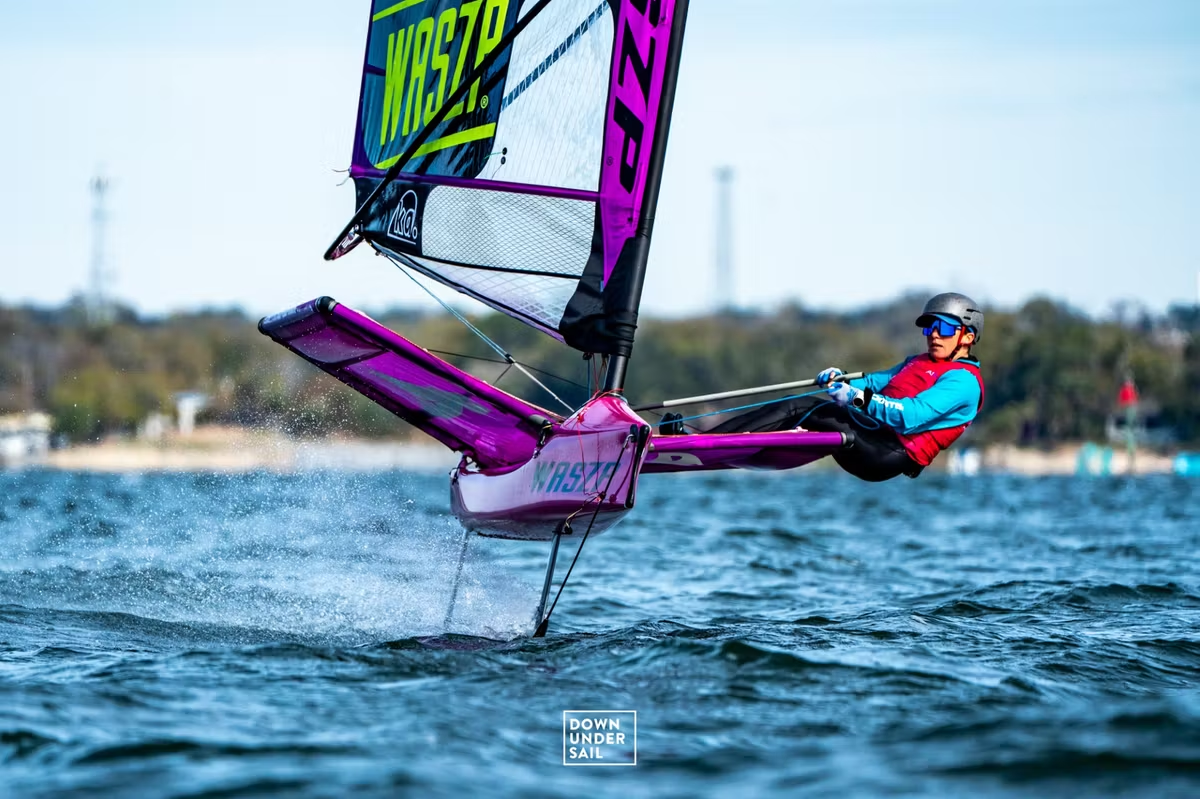
The Pre-Games regatta from 19–21 March offered a broader test across 10 races and shifting conditions. Light air and flat water on the opening days gave way to 18-plus knots on the final afternoon, and it was in the breeze that the contenders showed their hand. Antonio Gasperini – Italian-born, Spanish-flagged – surged through the 8.2m fleet with a commanding last day to win overall, with Pablo Astiazaran second and Matteo Chaboud third. In the 7.5m division, Norway's Martinius Melleby-Hopstock got the better of Lattanzi across the series to take the win, with Canada's Callum Ruch in third.
So who to look out for this week? In the 8.2m fleet, Tilly and Gasperini arrive with momentum. Astiazaran, one of the most consistent performers on the circuit, has last year's silver medal to improve on, and Ball, ranked third in the world, carries the weight of home-water expectations. In the 7.5m fleet – where the Women's Games are now raced after moving from a split-rig format into one dedicated fleet – Lattanzi remains the one to beat, but Melleby-Hopstock just proved he can do exactly that. Sweden's Liv Häggström, who topped the 2025 Women's Global Rankings, is another very credible contender for the title.
Games under way
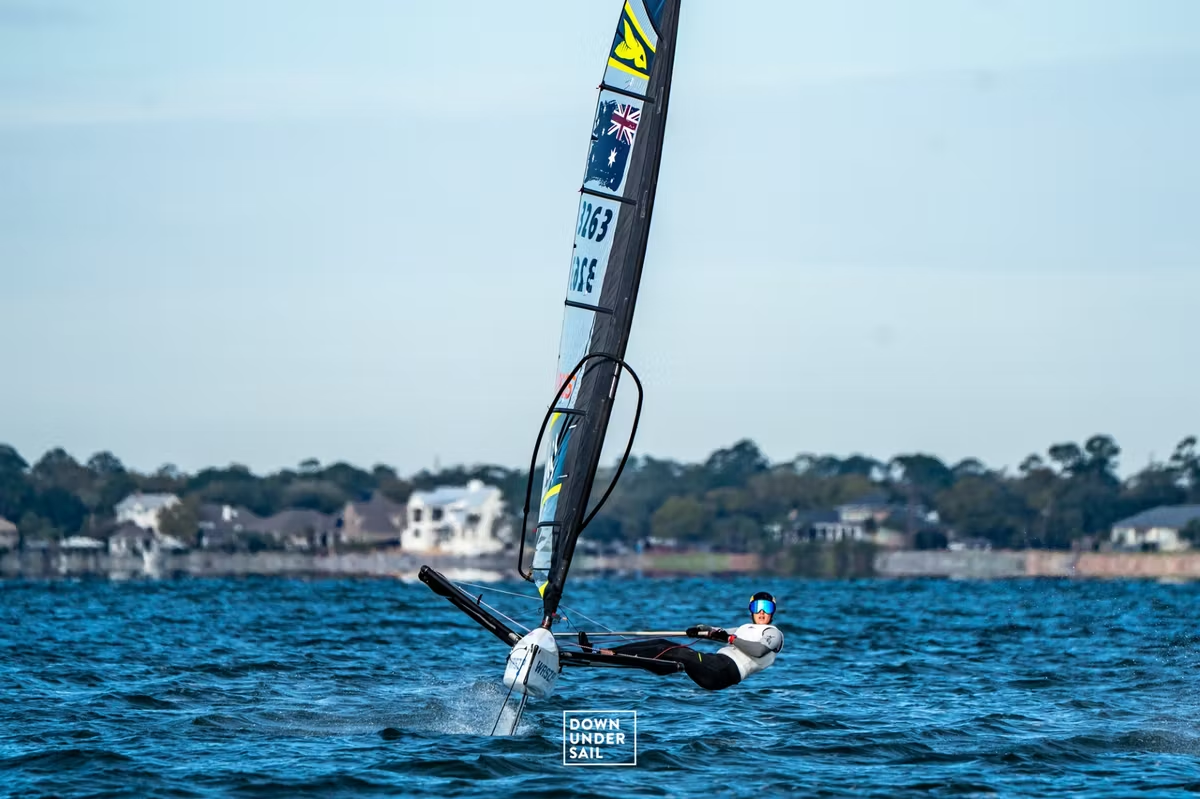
Championship racing kicked off at midday local time today, 24th March, and runs through to Saturday the 28th.
The SailGP-style reaching start format debuts in full this week after its Pre-Games trial, adding a new layer of tactical pressure – the charge to the line at 20-plus knots turns the opening seconds of each race into a high-speed positioning battle. Pensacola's flat water and reliable afternoon thermals should provide close to ideal foiling conditions, and given what previous WASZP fleets have produced, we could see some of these sailors in AC40 cockpits or on F50s in the next few years.
Follow the racing on the WASZP TV YouTube channel and Instagram, with full results posted on the official WASZP race hub.
Articles You Might Be Interested in
Podcast Ep. 13 - Olympic dreams, TP52 action and America's Cup secrets
Freddie Carr: The authentic grand prix class I just can't get enough of
The Foil Weekly Wrap - 30 March '26
WASZP Games: Ball and Lattanzi deliver USA's first-ever double
Dash for (not very much) Cash
The Foil Weekly Wrap - 23 March '26
Luca Rizzotti bought a Moth in 2007 and accidentally started a movement