
Which winning style will Rio reward this weekend?

For the first time in nearly a decade, the sailing world’s focus shifts back to Rio de Janeiro for the fourth event of the SailGP 2026 season. The venue still carries a certain weight. The memory of the Rio 2016 Olympic Games medal races remains close, not just for the racing itself but for the calibre of sailors involved, several of whom line up again this weekend in a very different format.
There is a clear sense of familiarity around the names, but one in particular stands out. Martine Grael sits at the centre of that story, just as she did then. Her gold medal, secured in the final race on home waters, remains one of those moments that stays with you – where pressure, occasion, and execution all come together.
Returning to Rio, it is difficult not to view this event through that lens. The setting, the history, and the athletes themselves give the weekend a continuity that links the Olympic cycle to the present SailGP era.
Grael's gamble
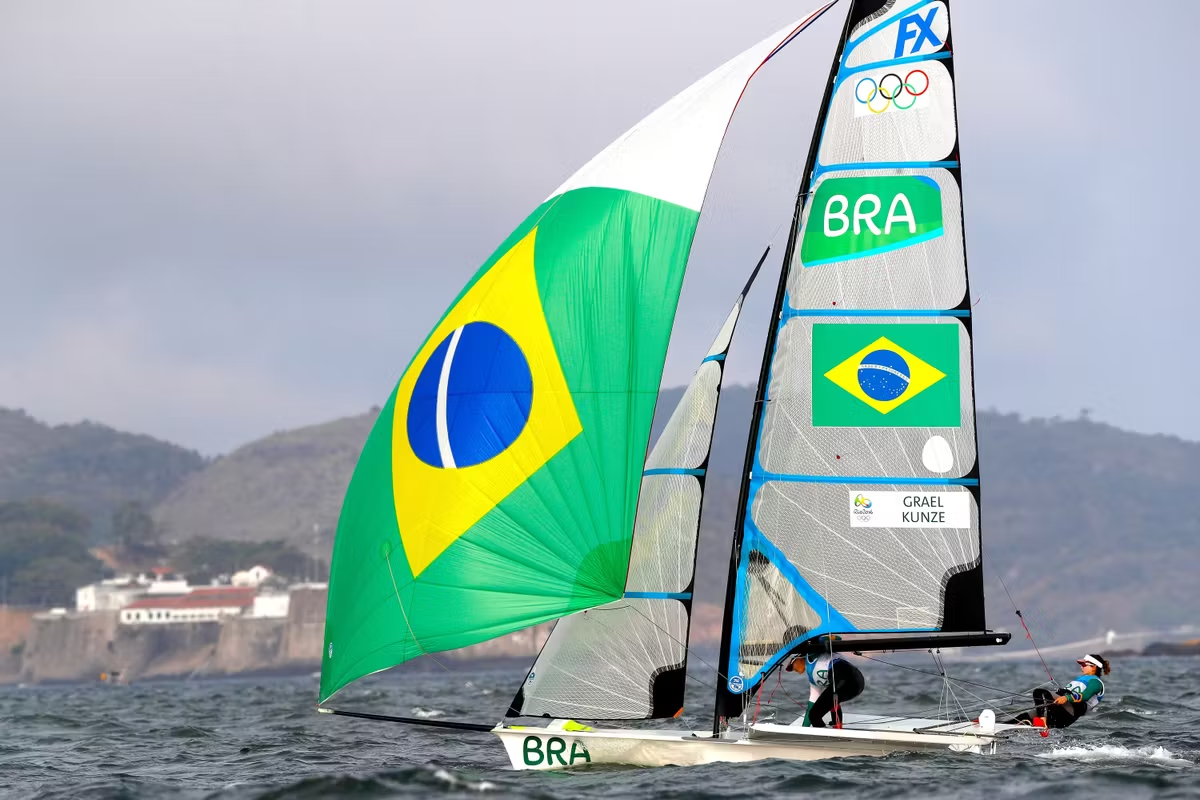
The Olympic Games drew to a close with the women’s skiff, and it provided a fittingly high-quality finale. Four crews went into the medal race in a clear fight for gold: Tamara Echegoyen and Berta Betanzos, Martine Grael and Kahena Kunze, Jena Hansen and Katja Salskov-Iversen, and Alex Maloney with Molly Meech. With no complicated scenarios in play, it was a straightforward, three-lap race to decide the medals.
Maloney and Meech made the strongest start and led through the first lap, building a useful margin. By the halfway stage, that advantage had been reduced to just 13 seconds over the Brazilian pair. At the bottom gate, the Kiwis opted for the right-hand side of the course, while Grael and Kunze split to the left, committing to a different phase. When the two boats came back together at the top mark, the Brazilians had managed to turn that decision into a ten-second lead.
The final run became a controlled but intense closing exchange. The New Zealand crew applied steady pressure, making small gains and closing the gap, but Grael and Kunze sailed a composed final leg, protected their position, and managed the fleet around them. They crossed the line just two seconds ahead to secure the gold medal.
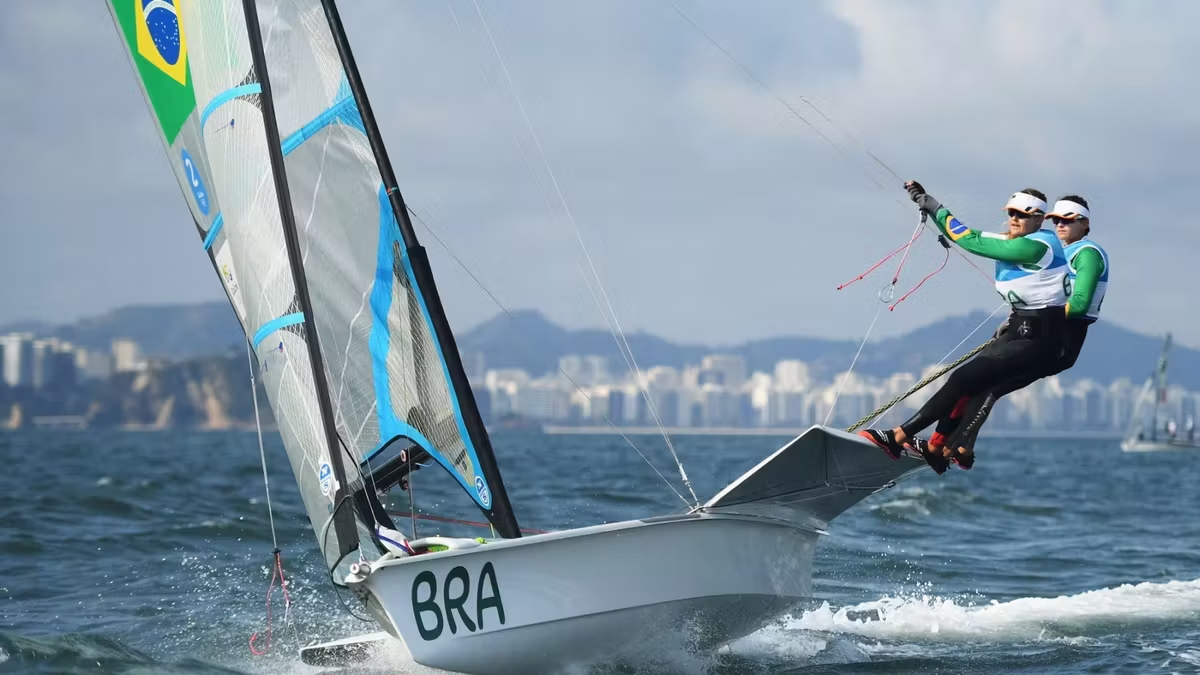
The reaction on Flamengo Beach reflected both the quality of the racing and the significance of the result for the host nation. Grael’s win also continued a notable family legacy, following the achievements of her father, Torben Grael, one of Brazil’s most decorated Olympic sailors.
As the fleet returned ashore, the atmosphere became increasingly celebratory, with spectators gathering in the water to welcome the medalists back in. Grael and Kunze were lifted ashore in their 49erFX, marking the end of the regatta with a moment that felt both personal and national in its significance.
If Grael can put together a string of strong finishes this weekend – cracking the top half of the fleet, or quietly sneaking into the final – we could be in for one of the most electric and raucous displays of fan excitement in SailGP’s short but thrilling history.
Scott’s control
NorthStar driver Giles Scott will also carry particularly strong memories of his first Olympic Games in Rio de Janeiro, where he delivered one of the most controlled performances of the regatta to secure gold in the Finn class. It was a week defined by clarity and consistency, where he managed the fleet rather than reacting to it.
At the time, I was sailing alongside him within the Land Rover BAR Americas Cup setup, and there was a quiet certainty around his campaign. As he left for Rio, it felt less like a question of if, and more a matter of how. His confidence was evident, but it was grounded in preparation. His work on that Olympic racecourse was thorough, and it showed in the way he approached each race with a clear plan and the discipline to execute it.
Where others had moments of brilliance mixed with risk, Scott’s series was defined by control. He built his week through consistent top-end results, rarely putting himself in a compromised position and steadily extending his lead.
By the time the medal race came around, the gold medal was effectively decided. That didn’t make the final race irrelevant, but it did change its nature. Giles approached it in the same way he had sailed the rest of the regatta – measured, aware, and entirely in control of what was required. There was no need for unnecessary engagement; instead, he managed the fleet, protected his overall position, and avoided the kind of situations that can unravel a series.
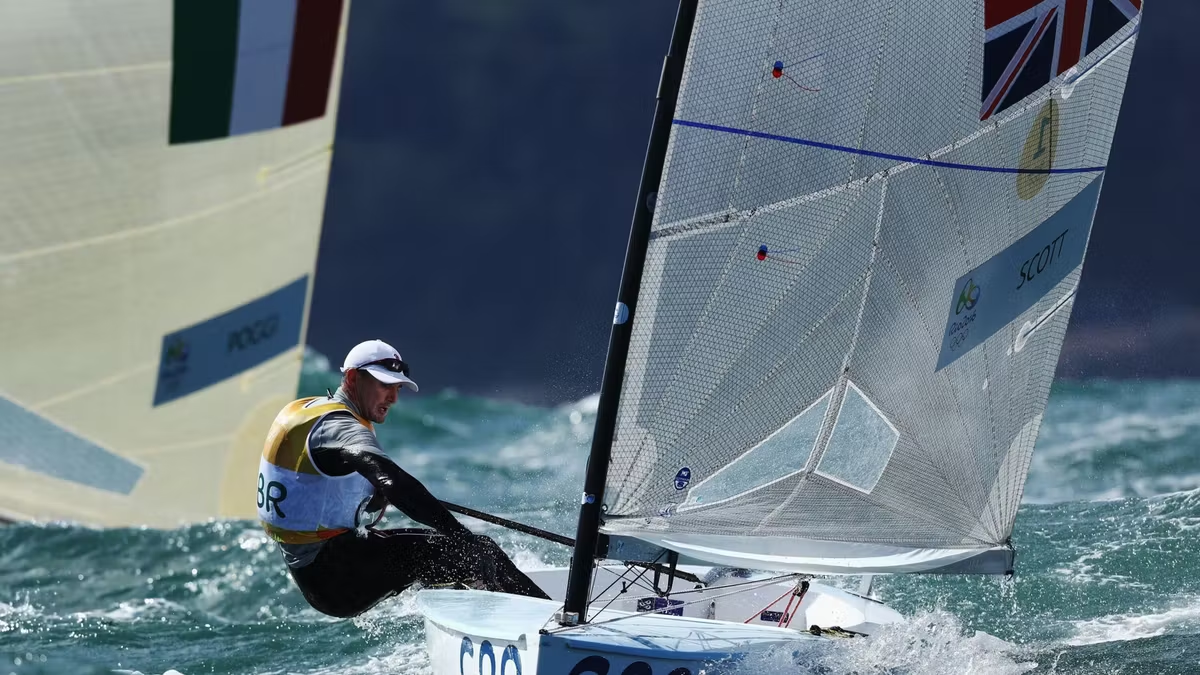
What stood out across the week was how complete his performance felt. In a class that demands physical endurance, technical precision, and sharp tactical awareness, Scott looked comfortable across all three. He was able to control starts without overreaching, make clear decisions upwind, and minimise losses when the race became unstable. It was less about standout moments and more about the absence of errors.
That same mindset will be relevant again as he returns to South America with NorthStar Canada SailGP Team for the SailGP 2026 season. Replicating that level of composure and mental resilience will be key as he looks to build momentum and shape their season after a poor start.
Reading the racecourse
Martine Grael took gold with a bold split on the final upwind – high risk, high reward – while Giles Scott stood atop the podium by sticking to a more measured, percentage play regatta. Two very different styles, both brutally effective. So which approach pays in SailGP this weekend?
With the racecourse set just off Rio’s iconic Flamingo Beach, the answer is likely: both – at different moments.
In a seabreeze, there’s often compression near Santos Dumont Airport, with pressure stacking on that side of the track. It can reward a decisive move if you time it right. But equally, Rio punishes overcommitment. Like in Sydney, an island off Sugarloaf can throw a wind shadow into play, creating a cone of disruption that’s easy to sail into and hard to escape.
Beyond New York’s skyscrapers, this is probably the most topographically complex venue SailGP has seen. The hills and mountains surrounding Rio bend the breeze, delivering some of the biggest shifts and pressure swings of the season. It’s a place where instincts matter – but discipline keeps you in the game.

One thing we don’t often talk about in SailGP is current. The boats are usually moving so fast it becomes secondary, but in lighter conditions, it creeps back into relevance. In Rio, the tide can snake its way down the course, and those tidelines – where clean ocean water meets the outflow from the city – can become critical visual cues. They’re often visible from above, so keep an eye on the helicopter shots. That contrast can tell a sharp strategist exactly where the pressure and flow are working in their favour.
Bottom line: expect a blend. The winners will be the ones who know when to roll the dice, and when to keep it simple.
Articles You Might Be Interested in
The Foil Weekly Wrap - 6 April '26
Trofeo Sofía 2026: Updates from Palma
Podcast Ep. 13 - Olympic dreams, TP52 action and America's Cup secrets
The Foil Weekly Wrap - 30 March '26
Dash for (not very much) Cash
Ineos vs Athena: What happens when you make Ben Ainslie angry
The Foil Weekly Wrap - 16 March ’26