

All change in Halifax: the new rules that reframed the Canadian SailGP

Los Gallos finally got their hands on silverware in Halifax after a terrible run of luck. In SailGP’s first-ever four-boat final, the Spanish denied Artemis and put a stop to Australia's clean sweep of the Americas.
But for all the drama of Diego Botin's breakthrough, the lasting story of the Canadian Sail Grand Prix was change.
Split fleets, a new-look final, two sailors mandated in the back of the boat and technical nuances under the hood.
Split fleets: seeding decides the groups
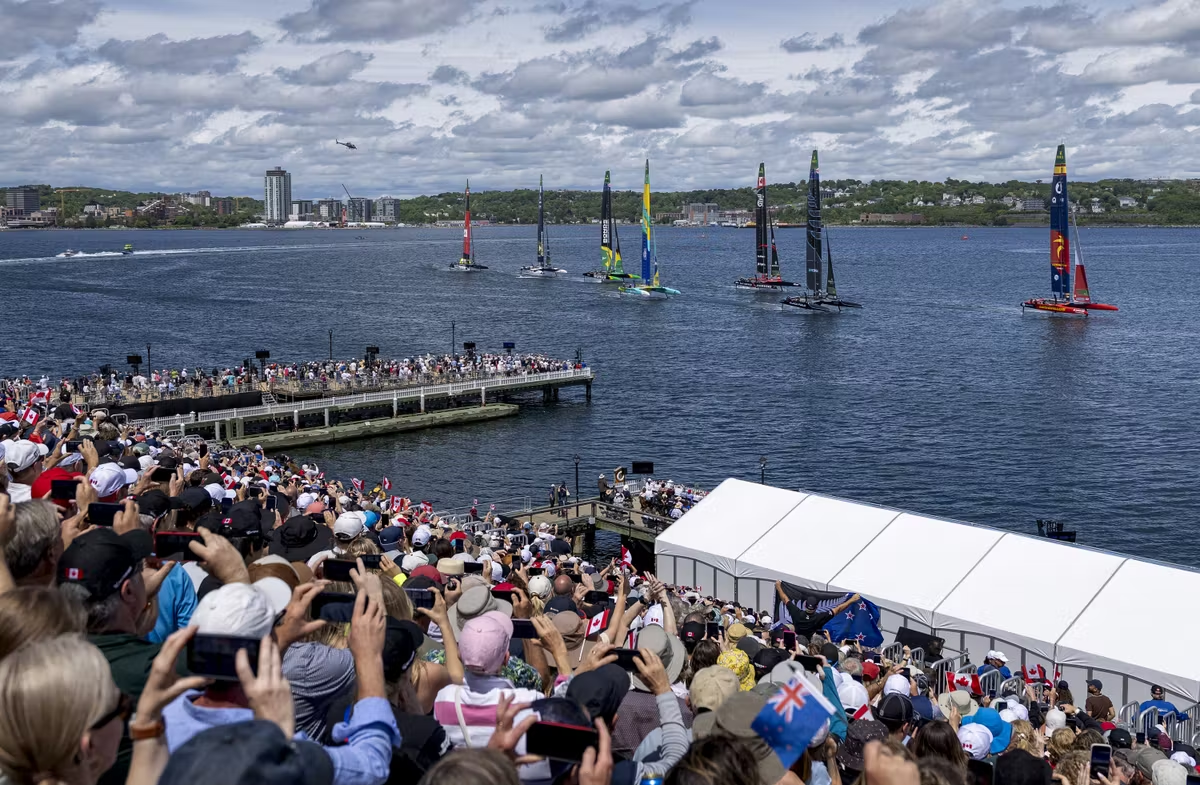
With a challenging forecast and a tight course area, SailGP decided to run split-fleet racing. The first time it’s been used across a full weekend - the only other times being practice racing and the Sunday of Auckland this season.
The return of the Black Foils meant the fleet of 13 was split into groups of six and seven, and it threw up a quirk.
The way the seeding fell, one half ended up far heavier than the other. Peter Burling's Black Foils, returning for the first time since their Auckland wreck, dropped into the bottom seed because of their last-place position in the season standings.
The Kiwis joined an already strong group alongside Australia, Spain and France.
The fairness of the split was arguably made worse with the early exit of Great Britain on Sunday. GBR’s nose-dive during practice meant the season’s second-placed sitters at the time would reduce the already easier group of six to five.
I wonder if SailGP would consider putting a process in place to allow them to recompile the groups during the race-window if this were to happen again? Or is it best just left to Lady Luck?
A four-boat final with a sting in the tail
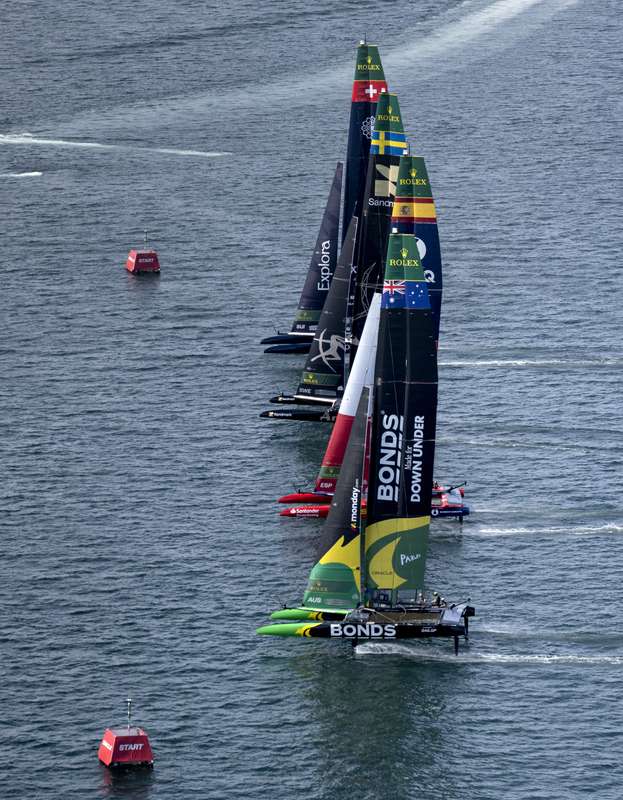
The change with the most bite was the expansion to a four-boat final. For the first time, four teams lined up for the final deciding race rather than three.
The twist? The prize money did not stretch to fourth. The top three were paid out as usual, and fourth place went home with nothing but points.
It was Australia, of all teams, who got stung. Tom Slingsby's Flying Roos, overnight leaders, three event wins to their name this season and the form boat of 2026, finished fourth in the final and left Halifax without a cent.
A brutal but interesting portion of jeopardy that the old three-boat format never offered. I personally really enjoyed it, I felt it added an exciting extra dimension to the action of the final race.
Going with the wind
Another refreshing change was SailGP’s alteration of Sunday’s racing window. The wind was good on the morning of the final, but was forecast to spin 180 degrees and drop just as racing got underway at the original scheduled start time.
The league saw this coming and decided to shift the window forward two hours, allowing for a full complement of races to be completed. Five races in one window, something we’ve not seen so far.
An extra set of eyes in the back
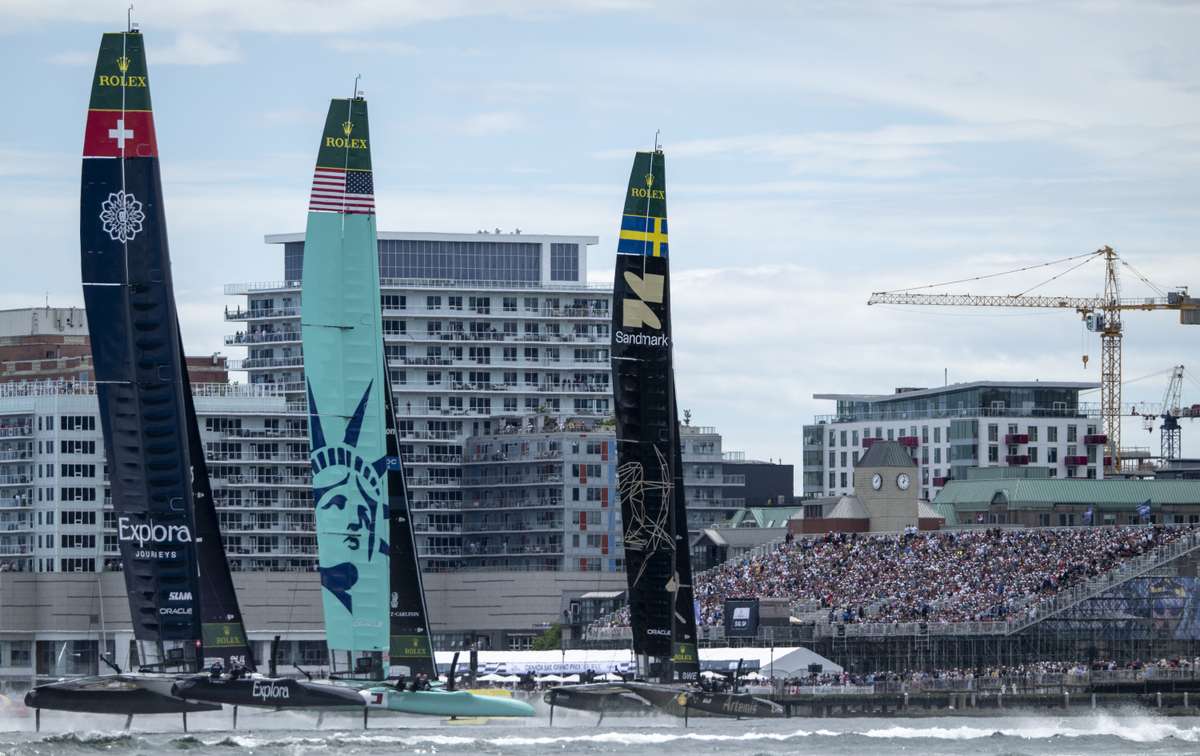
Among the format changes was a quieter change to crew positioning, one with a significant backstory. SailGP now mandates two sailors in the aft-most cockpit at all times.
The reason traces back to the three-boat pile-up in New York, which the league is understood to have put down to boats failing to keep a suitable lookout.
The fix: to ensure each team has two athletes tethered behind the wheel, no matter the crew numbers.
When SailGP mandates reduced crew numbers to five onboard, we often see teams remove one grinder and maintain their strategist, which wouldn’t be affected by this change.
However, USA, with Anna Weis on the handles, usually remove their strategist and retains both grinders – meaning only the driver remains in the aft-most cockpit. So this weekend, Anna Weis had to take up a new role behind Taylor Canfield, a complete role reversal.
There’s no doubt that this new ruling hits them hardest. What was once a key point of difference for the US team in how they fill crew roles, now brings them in line with the rest of the fleet.
When mandated to four on board, most teams used to allocate their strategist in the forward-most pod with the grinding pedestal.
That’s no longer possible. As a result, we saw some of the flight controllers even leaning over into the pod in front of them to grind the handles through the manoeuvres. An awkward-looking task that most definitely makes those manoeuvres that little bit harder.
Under the F50 hood
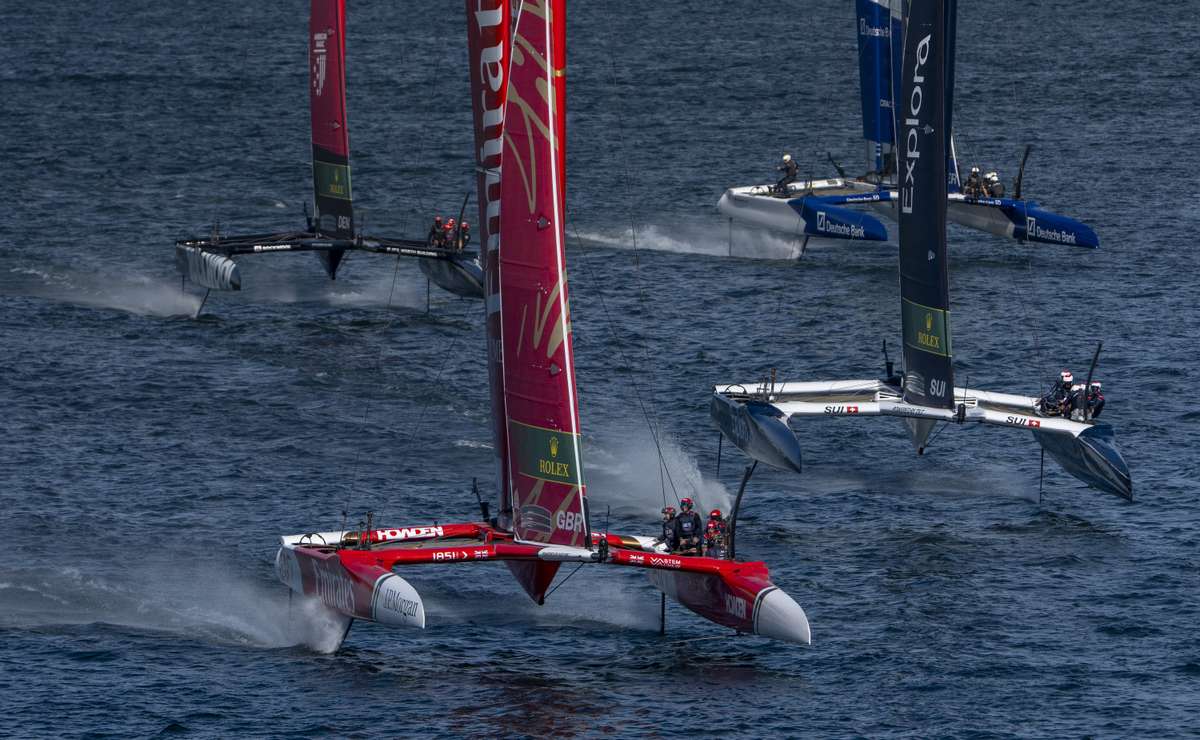
Not every change made the broadcast. SailGP Technologies also tweaked the cant speed, how quickly the foils move outboard and inboard, a fiddly, unglamorous piece of work that barely registered on the water but is worth a nod for the effort involved.
More intriguing was the speed limit attributed to the 27.5m wing and large light wind foil configuration. As far as we are aware, from talk in the paddock, the rudder differential is cut to zero once boat speed nudges past 45km/h. There is also a hard speed limit of 75km/h beyond which, in effect, you go at your own risk.
It is hard not to connect that to Britain's nose-dive during Sunday practice, which put Dylan Fletcher's team on the sidelines for Sunday's racing.
Ultimately, they flew too high, which caused the issue.
However, if they were sailing faster than 45km/h, they would have had a rudder differential of zero. That means no downforce pulling the port side down, making it much easier for the boat to heel over, which is what happened.
Too high, the boat heeled and overloaded the starboard rudder and sent the F50 into a vicious nose-dive that broke the team’s wing.
There is no doubt these limits are in place for good reason; if anything, the incident highlights just how much the teams need to respect them.
A weekend that moved the furniture
Halifax was a real mixed bag, but one that will most likely be remembered for the good bits. Los Gallos are back to winning ways, two impressive second places from the home team that went largely unnoticed and a string of changes from the league that defined the Canadian SailGP.
Next stop is Portsmouth on 25-26 July. Plenty of time to work out which of these changes stick, and which quietly disappear before the fleet reaches Europe.
Articles You Might Be Interested in
Freddie Carr: Why Pensacola could change SailGP for good
Emirates GBR and Team 14 claim first slots on SailGP’s Pensacola training F50

SailGP’s year-round training base is about to open for business
American Express secures title rights to SailGP's Hong Kong opener
The RC44: how Russell Coutts hit a winning formula

The Foil Debrief: Five more knots and Geneva would be the best event on the circuit
Los Gallos snatch Geneva from the Flying Roos
Five races, five winners on day one of SailGP's Geneva drift



Member Discussion