
Freddie Carr: What a 90-year-old yacht still has to teach us


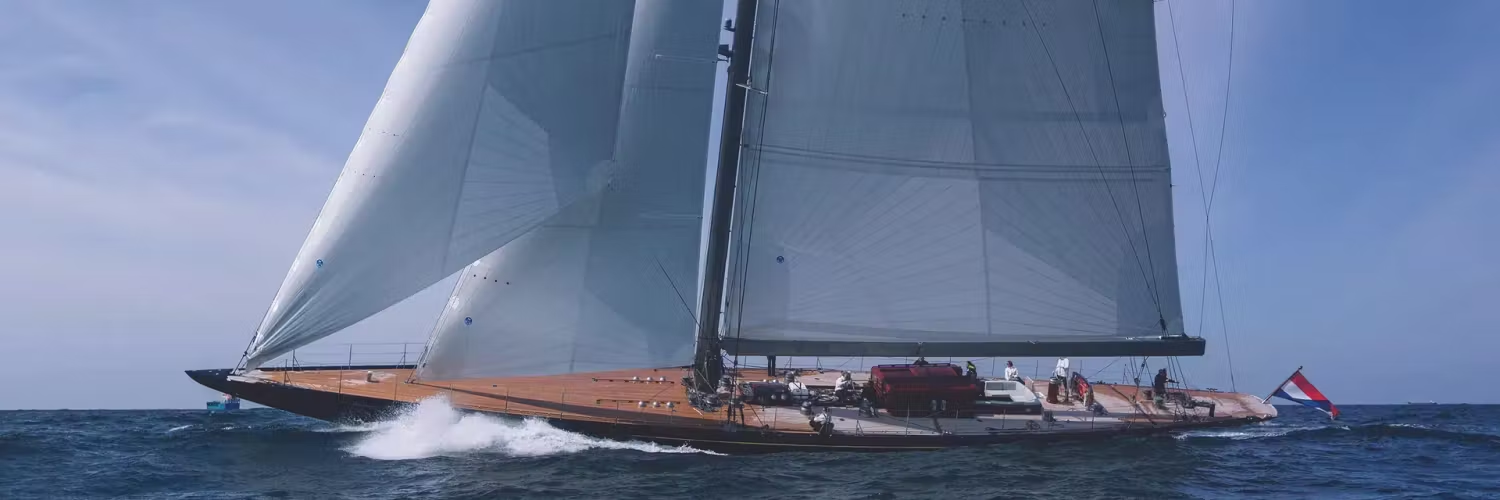
I’m packing my bags for a trip I’m genuinely excited about – heading out to train on the J-Class yacht Rainbow. These aren’t just race boats; they’re some of the most demanding machines you’ll ever sail. There’s so much going on – miles of rope, systems you simply don’t see on modern boats – and stepping on board feels like entering a different era of the sport. To race on these giants of the ocean is a real privilege, and it demands a style of sailing that belongs to a bygone age.
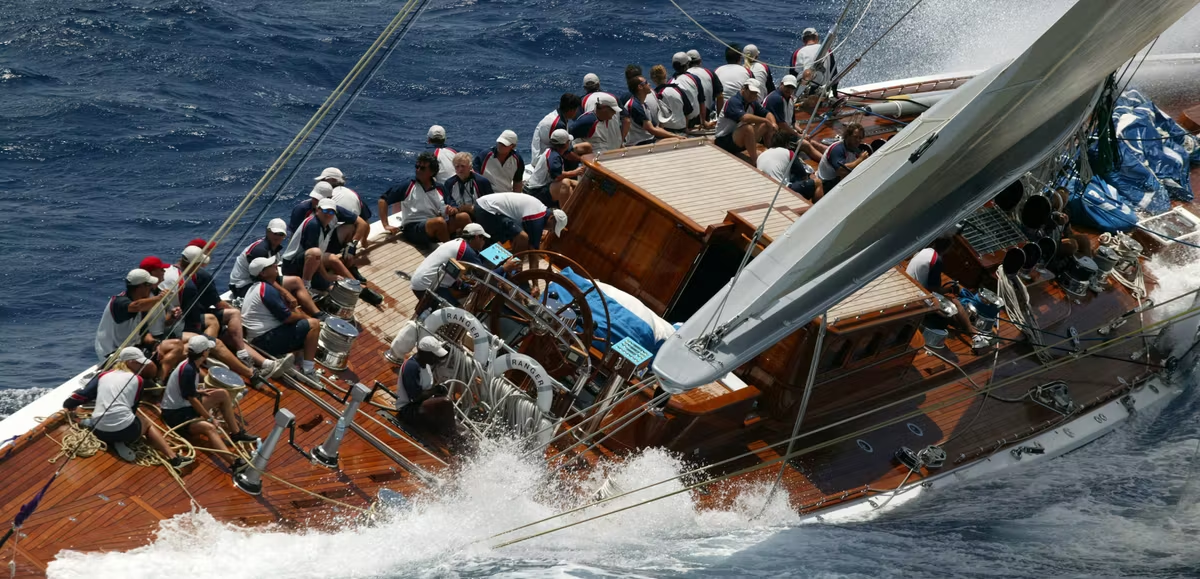
Having previously raced on Velsheda and Ranger, I know exactly what’s coming. A season on Rainbow is a fantastic test of sailing skill and crew coordination. Even the basics are on another level – moving a headsail across the foredeck can take eight people, and dropping the spinnaker down the deck chute is about as chaotic as it sounds. It’s physical, it’s mentally hard as the loads are so high you can’t make a mistake, and it’s unlike anything else in sailing.
Despite their size, these boats move with a slow, deliberate grace – but that doesn’t make life easier. You have to stay sharp at all times, working in sync with up to 40 crew, where timing and communication are everything. There’s no hiding place on a J-Class boat.
Win or lose, a day sailing one of these yachts stays with you. It’s a challenge, a spectacle, and above all, a privilege that never really leaves you.
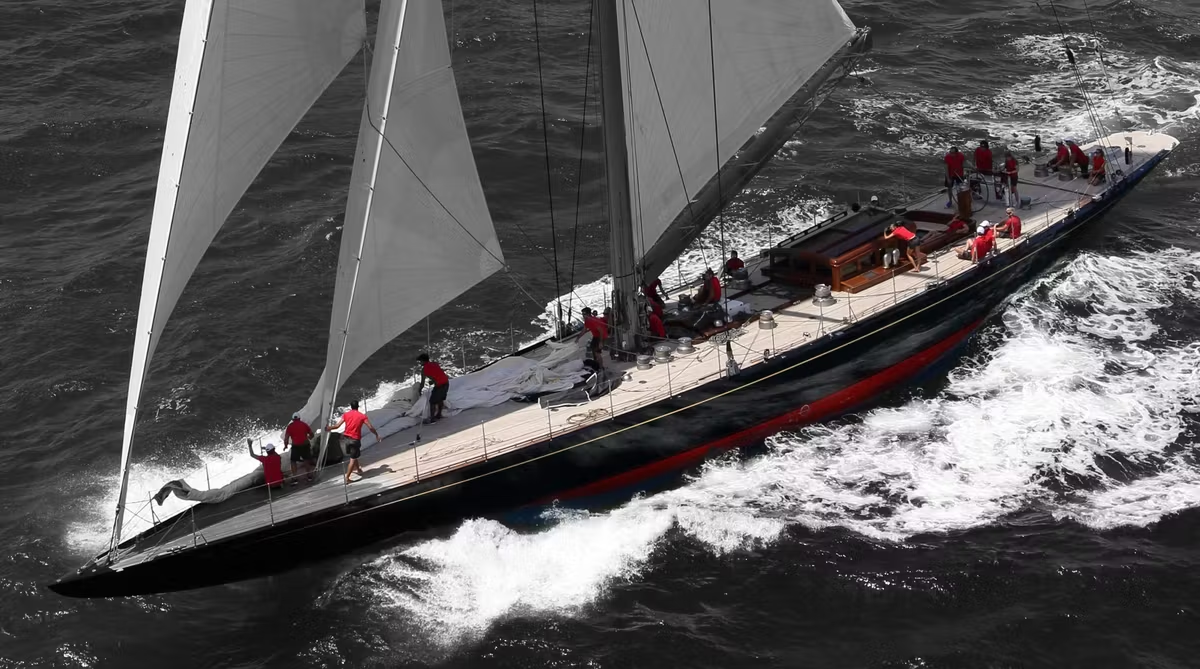
The J-Class yacht Rainbow stands as one of the most iconic racing yachts ever built, her story stretching from pre-war dominance through destruction and into a modern-day revival. Few boats capture the full arc of sailing history quite like she does.
Designed by the legendary William Starling Burgess and built in 1934 at the Herreshoff Manufacturing Company in Rhode Island, Rainbow was commissioned by Harold S. Vanderbilt – one of the most successful figures in America's Cup history. Built to the J-Class rule, these yachts were vast, elegant machines, typically stretching between 120 and 140 feet. Rainbow wasn’t designed to be the most extreme of them, but rather to strike a balance – combining speed with control in a way that allowed her to be sailed consistently at a high level.
That philosophy came to life in 1934, in what would become her defining moment. Facing the British challenger Endeavour in the Americas Cup Match, owned by Thomas Sopwith, Rainbow entered a series that was far tighter than the final scoreline suggests. Although Rainbow ultimately won 4–2, many of the races were incredibly close. Endeavour often showed superior pace, particularly in the early stages of races, but struggled with sail handling and consistency under pressure. Vanderbilt’s tactical discipline proved decisive, ensuring Rainbow capitalised on small gains and avoided costly mistakes. The victory cemented her status as one of the great defenders of the J-Class era.
At the heart of Rainbow’s success was control, not outright speed. Harold S. Vanderbilt took on the tactical role himself – long before it became standard practice – and, more importantly, he kept things simple. There was no chasing splits for the sake of it, no overreaching in search of a silver bullet. Instead, the focus was on positioning: staying between Endeavour and the next mark, dictating the race rather than reacting to it. It’s the oldest playbook in sailing, and still one of the hardest to execute under pressure. Rainbow didn’t need to be faster; she just needed to be in the right place, more often. He was the first tactician to cover the opposition and take the sport to match racing combat that is common place today.
That approach was reinforced by how well the boat was sailed through the transitions. Endeavour’s sail plan and systems were advanced, but with that came complexity – and complexity inevitably introduces risk. Over the course of the series, the British challenger lost small but crucial metres in manoeuvres: tacks, hoists, drops. Nothing dramatic, just a steady drip of inefficiencies that added up across a racecourse. Rainbow, by contrast, was slick. Her crew executed cleanly and consistently, without drama or hesitation. At this level, that’s everything. Races are rarely lost in the big moments; they slip away in the quiet ones.
The conditions off Newport demanded patience, and Rainbow leaned into that. Wind shifts came, but not always predictably, rewarding a measured approach over bold gambles. Vanderbilt and his team focused on minimising losses and capitalising when the odds were clearer, rather than rolling the dice for big gains. Endeavour, often sailing from ahead or trying to break cover, had to take on more risk. Sometimes it paid off, sometimes it didn’t – but over the course of a series, that difference in philosophy adds up.
Underlying it all was a design you could trust. William Starling Burgess produced a yacht that wasn’t the outright fastest in a straight line, but was easier to sail well across a wider range of conditions. That translated into fewer compromises and fewer moments where the crew were fighting the boat rather than racing it. Endeavour, designed by Charles Ernest Nicholson, arguably had a higher ceiling – but also a narrower operating window. Across a six-race series, that’s a risky balance.
As the series progressed, pressure began to tell. Once Rainbow edged ahead, Vanderbilt tightened the screws, covering aggressively and forcing Endeavour into increasingly uncomfortable positions. The dynamic flipped: the faster boat was no longer dictating, but reacting. And when you’re reacting, you take risks. Endeavour was pushed into harder calls, more splits, and forced opportunities that weren’t always there. That’s when mistakes creep in – not through lack of skill, but because the situation demands more than the race is offering.
In the end, Rainbow’s victory was about far more than lifting the America's Cup. It was a case study in how races are actually won – not through outright dominance, but through better decisions, cleaner execution, and relentless consistency. It’s a lesson that carries straight through to modern foiling fleets. The technology is unrecognisable, the speeds may have quadrupled but the fundamentals remain exactly the same.
Like many of her contemporaries, however, Rainbow’s time at the top was short-lived. The financial realities of the Great Depression made maintaining such yachts increasingly unsustainable, and by the late 1930s interest in J-Class racing had faded. In 1940, Rainbow was scrapped to help the war effort, disappearing along with much of the fleet. For decades, she existed only in archival drawings, photographs, and the collective memory of the sport.
Her story might have ended there, but the 21st century had other ideas. In 2012, Rainbow was reborn as a faithful modern replica, constructed by Holland Jachtbouw in the Netherlands. Built using aluminium rather than steel and equipped with modern sail systems and safety standards, the new Rainbow stays true to the original design while benefiting from contemporary engineering. Today, she competes once again on the revived J-Class circuit, lining up against recreated legends such as Velsheda and Endeavour.
Rainbow’s legacy is defined by three distinct chapters: dominance in the golden age of the America’s Cup, the abrupt loss of the J-Class fleet before the Second World War, and the modern resurrection of these extraordinary yachts. Through it all, she has remained a benchmark for balance in yacht design – less extreme than some of her rivals, but ultimately more effective where it counts: on the racecourse.
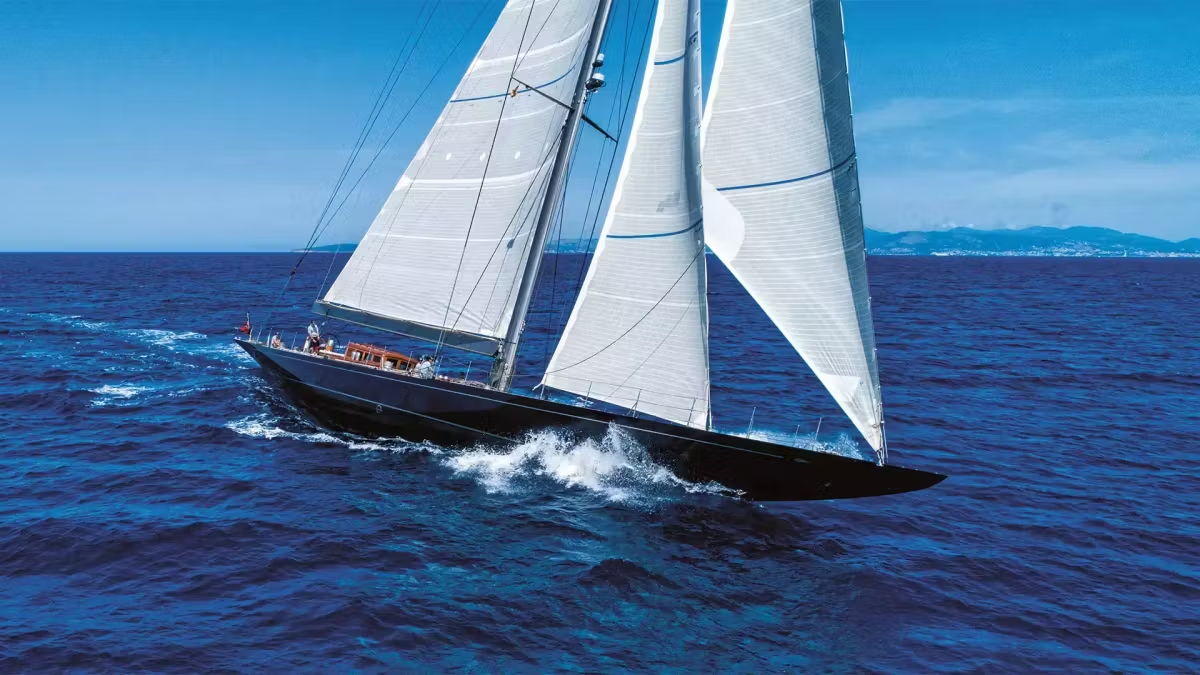
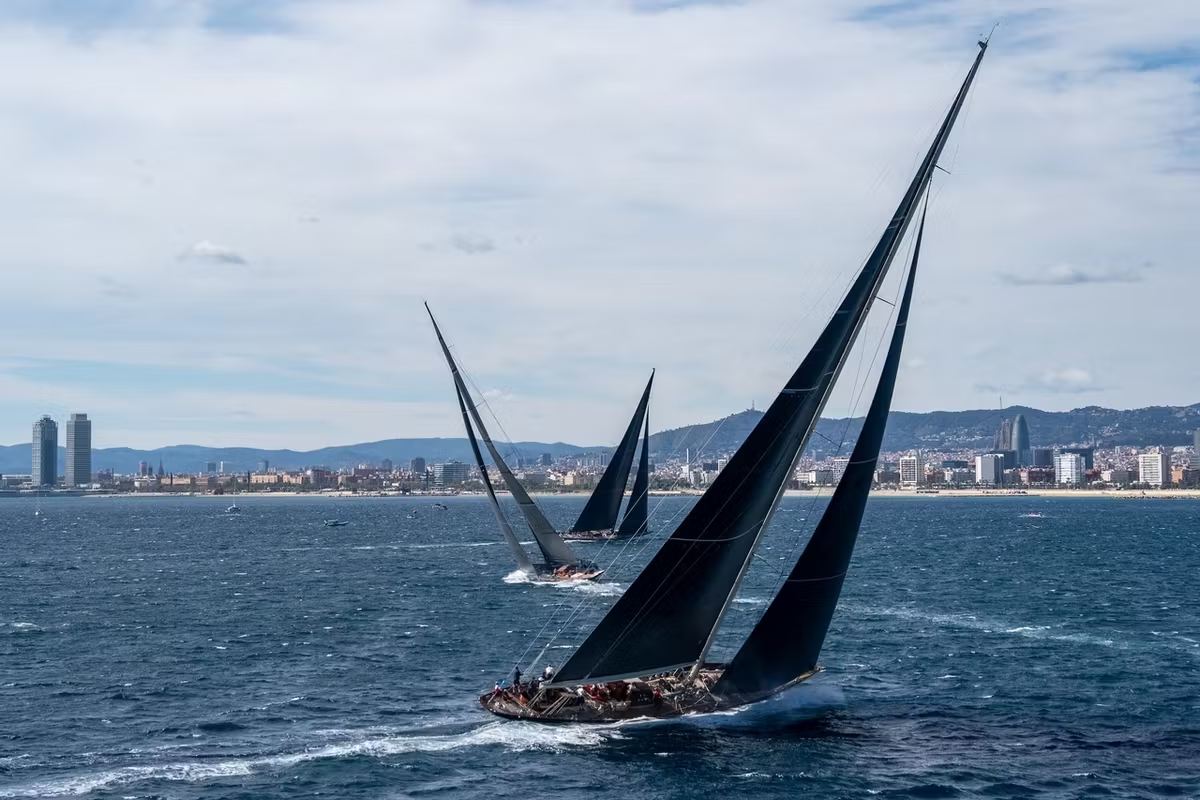
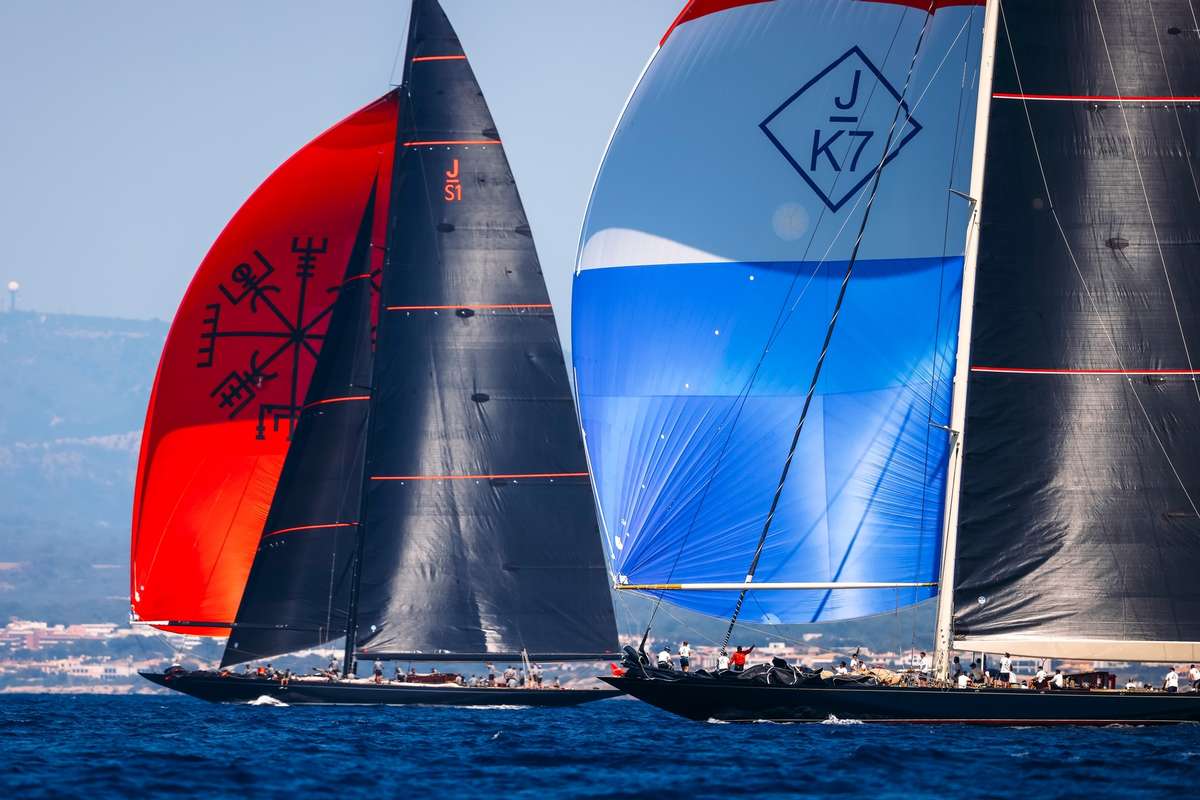
I’m hearing strong rumours that the J-Class fleet is firing up again in 2026 – nine years on from a standout 2017 season where these yachts arguably stole the show at the 35th America's Cup before heading to Newport for a superb World Championship.
In a sailing landscape now dominated by high-speed foiling, boundary racing, and data-driven performance – where software is telling you how to trim the sails – the return of the J-Class offers something very different. These boats don’t just race; they put on a spectacle. Slow, powerful, and intensely physical, they demand instinct, teamwork, and feel in a way that modern racing sometimes moves away from.
That contrast might be exactly what the sport needs. In an era defined by speed and precision, the J-Class feels like a reset – a reminder of sailing’s roots. For fans and sailors alike, a strong return with a big fleet could provide a welcome tonic to the pace of the modern game.
I'll keep you updated on the season from the aft-deck of Rainbow doing the runners. Dealing with hundreds of metres of rope and loads through the winch that make me crap myself.
Articles You Might Be Interested in
Ratcliffe isn't backing down – what the latest INEOS vs Athena court filing tells us
Freddie Carr: Oceanpact-Viking holds its nerve to win J/70 World Championship
Two drivers down: Who steers the US at Geneva SailGP?
Freddie Carr: Leopard 3 and North Star III crown a Maxi Yacht Rolex Cup for the ages
The week in racing - 14 Sep ‘26
Freddie Carr: The America’s Cup’s founding document is now central to the fight over its future
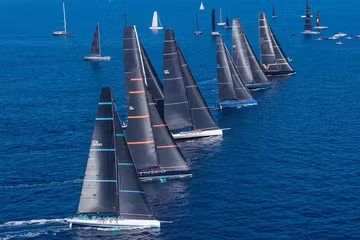
Freddie Carr: Raw speed vs the clock – the Maxi Yacht Rolex Cup has never been harder to call
The week in racing - 7 Sep ‘26



Member Discussion