
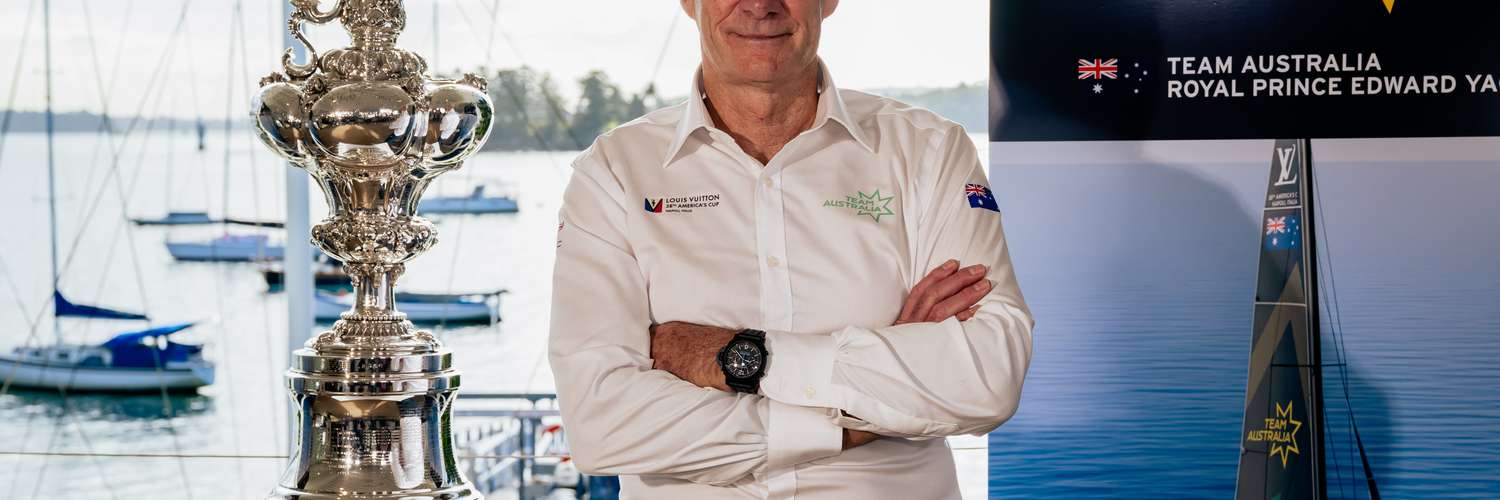
‘Full steam ahead and scrambling to keep our heads above water’: Grant Simmer on Australia's Cup comeback

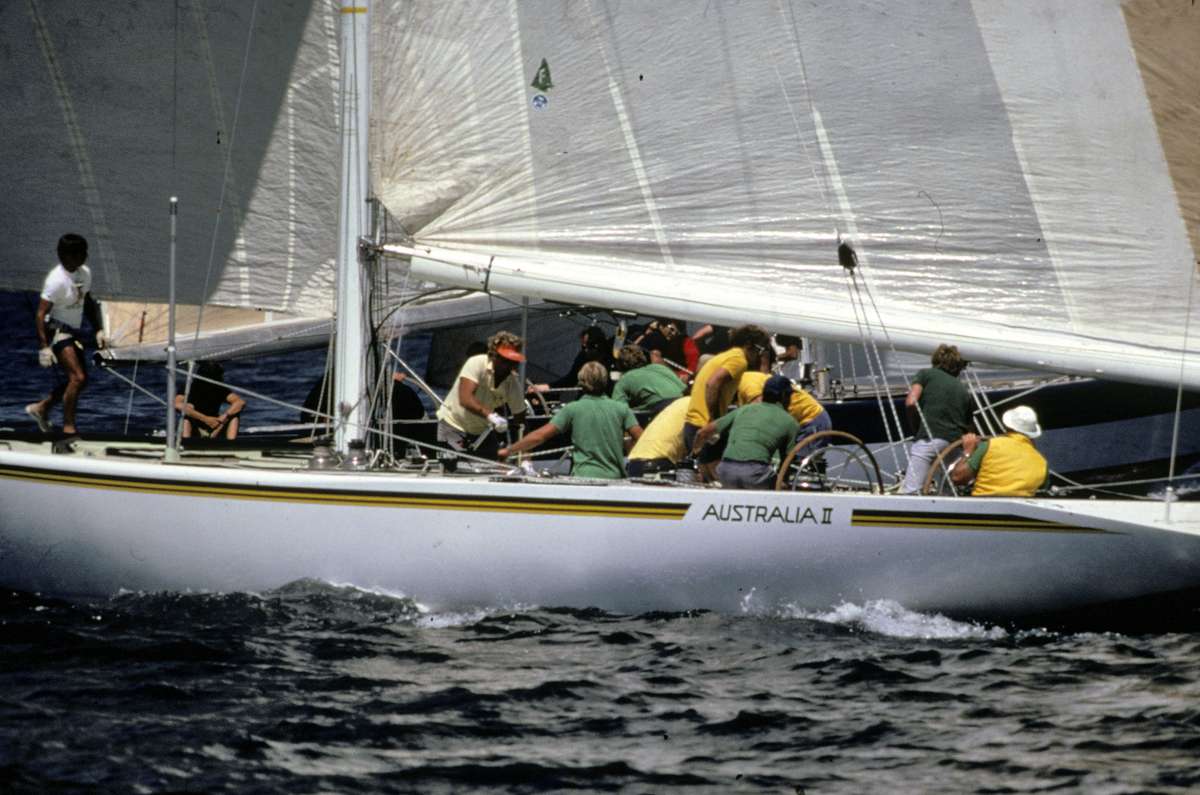
Few people are more bound up in Australia's America's Cup story than Grant Simmer. He was the young navigator aboard Australia II in 1983 – the boat with the wing keel that ended the New York Yacht Club's stranglehold and lodged itself permanently in the national memory. Skipper John Bertrand and backer Alan Bond pushed for him despite his inexperience, and he's been at it ever since: by his own count, thirteen campaigns, a number he reckons might be a record.
So you'd assume Australia's first challenge since 2000, with Simmer in place as CEO, was the product of years of quiet plotting. Not quite.
“I didn't really dream about it, it just happened and happened pretty quickly,” Simmer tells The Foil. “Actually, Glenny asked me would I like to get involved, and obviously I knew all the players, so it was a pretty simple answer. Yes.”
Glenny is Glenn Ashby, the three-time Cup winner and Emirates Team New Zealand mainstay now signed on as Team Australia's head of performance and design – and the link man who made a short-notice challenge possible. Simmer plays it down with a grin. “We don't want to make too much of a fuss about that!” he says. “But he was important. He is important. He remains very important.” Jokes aside, he adds, Ashby is “very, very much” one of the people who got this thing off the ground.
Bringing the green and gold home
For Simmer, the pull of this one is obvious. He's a four-time Cup winner, and three of those came in other people's colours: managing director and design coordinator for the Swiss-flagged Alinghi when they took the Cup in 2003, returning for their 2007 defence, then general manager at Oracle Team USA for the 2013 win. This time the challenge is lodged through the Royal Prince Edward Yacht Club, backed by the Winning family.
“As a country, we're really good at sailing, and we have people spread through all these America's Cup teams that are Australian sailors steering the Kiwi boat, steering the Italian boat, steering the American boat. Now we've got an opportunity, really thanks to the Winning family, to pull all these people back and put them all on a boat.”
That scattering of Australian talent across rival camps has been the story of Australian sailing for two decades. Getting the band back together, towards the end of his own career, clearly means a lot. “It's about time!” as he put it at the team's launch in May.
Late, lean and leaning on the Kiwis
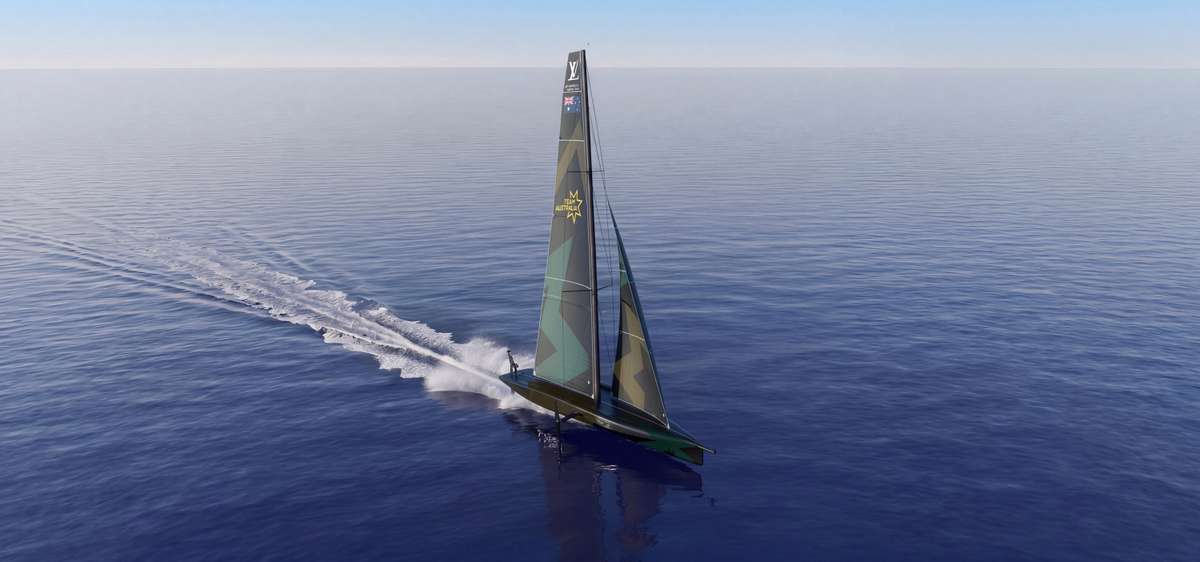
There's no getting around the timeline: Australia are late. The Louis Vuitton Cup starts on 21 May 2027 in Naples, and they won't have a boat in the water until around the beginning of March. With the Kiwis and Italians having already rolled out their AC75s, it’s clear the Aussies have a big task ahead of them. Will they even use their full allocation of sailing days? “Probably not.”
It leaves no doubt about the team’s biggest constraint. “Time,” he says. “We've got a reasonable budget, but time normally gets you in the Cup anyway.” He refuses to see the short runway as a handicap, however.
“The nice thing about starting late and being short on time is we can discard any science project, anything that doesn't look like it's going to deliver performance. We're really quite focused on just doing the important things right, efficiently, and that's a nice tight program, so I like that aspect of it.”
That ruthlessness rules out any temptation to swing for the fences. “In the Cup world you always need to be innovative, but are we going to try and hit it out of the park by doing something radical? No, definitely not,” he says. “We're going to try and win a lot of races, and we're going to do that by having a fast boat, a good crew and reliability.”
The fast boat comes courtesy of the Kiwis. The deal Ashby brokered with Emirates Team New Zealand hands Australia design resources and the Kiwi boat from the 2021 Cup – a second-iteration hull to be fitted with a new rig, new sails and new foils – which raises the small matter of the constructed-in-country rule, since the Cup doesn’t typically allow you to turn up in someone else's boat. But as the Hall of Famer points out, in Bermuda, plenty of boats were built in New Zealand with the teams only obliged to build the bows themselves. “So we're building a bow at the moment for our boat,” he says. “That's a criterion under the protocol.” Box ticked.
What still wins the Cup
Pressed for his favourite campaign, unsurprisingly he goes straight back to the beginning. Australia II, he says, “because it changed the direction of the Cup.” That it did. Breaking the New York Yacht Club's 132-year grip – the longest winning streak in the history of sport – tipped Australia into national delirium, the moment Prime Minister Bob Hawke told the country that any boss who sacked a worker for not turning up that day was a bum. It remains one of the great days in Australian sport. Simmer was in the thick of it, part of a tight little group of thirty-odd who nearly threw it away at 3–1 down before hauling it back. Thirteen campaigns in, he's anything but misty-eyed about it: “It's a ridiculous record,” he says, “because it goes on for so long.”
Ask Simmer what actually decides the America's Cup, though, and the answer is much the one he'd have given forty years ago, even as the boats have gone from heavy-displacement 12 Metre monohulls to AC75s capable of more than 55 knots.
“The thing that I've always loved about the Cup is that it's a contest that has sport and technology. You've got to put your resources in the right spot to have a fast boat. You've got to get the technology right, and then the sailors have got to deliver on the day. That's the bit that hasn't changed. It was the same in 1983, and it'll be the same in 2027.”
With the AC75 now into its third generation and the class maturing, Simmer believes the boats are converging and the margins are shifting back to the crews. The sailing team is led by Tom Slingsby, who Simmer rates without hesitation as “at the top of his game.” He calls the wider squad “fantastic,” though for now Tash Bryant is the only other name confirmed. The 25-year-old has been Slingsby's strategist in SailGP since season 3, so the pair already know each other's instincts inside out.
As for Ashby, whose work spans other high-tech projects such as Ferrari's Hypersail, the design brief comes first. But Simmer isn't ruling out a run on the water: “I think we'll have a spare wetsuit for him now and then he'll go for a yacht. He's the head of our technology and design, and hopefully, he'll be focused on that. But for sure he'll spend some time sailing.”
A seat at the table, and the longer game
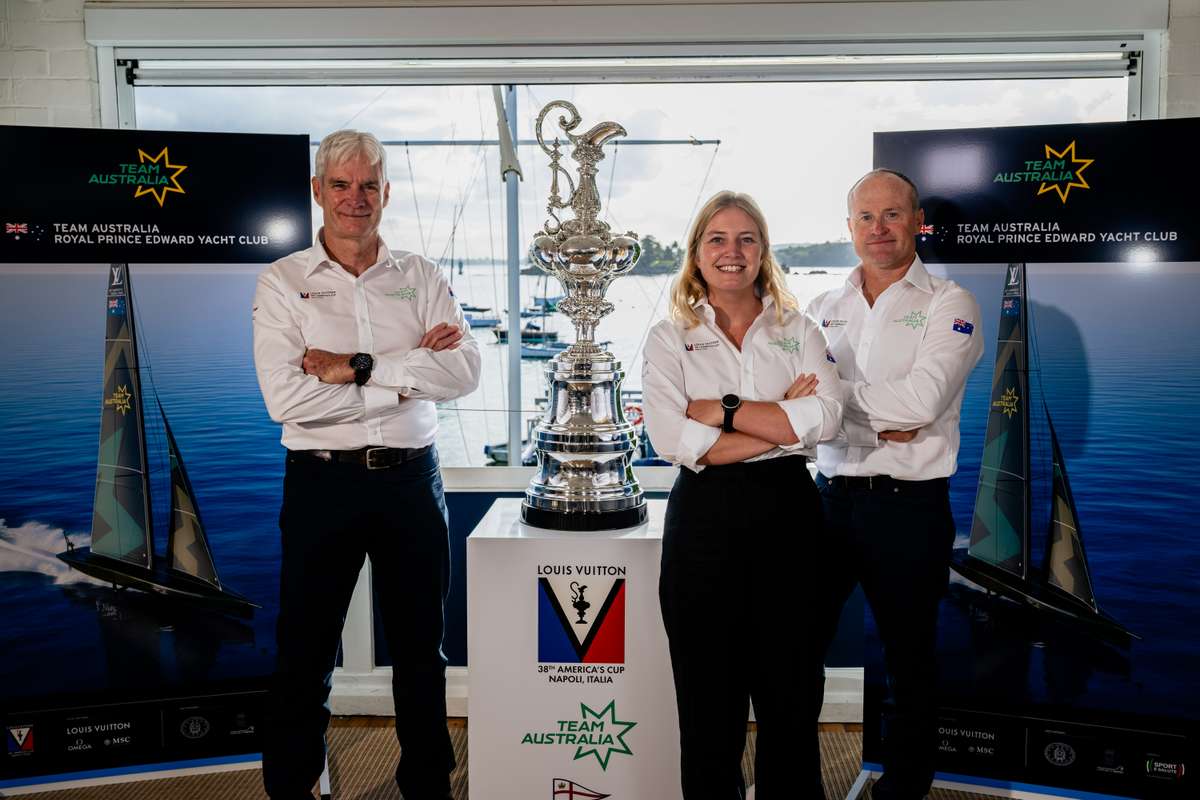
Under the new America's Cup Partnership model, Team Australia takes a seat on the ACP board, which makes them not just a challenger but a part-owner of the event's future.
“I think the Winning family are engaged in this new structure and having now a level of ownership in the Cup going forward. It really has engaged them for the future of the Cup, and they're part of the decision-making process going forward. For all participants, this model will keep people in the game longer, and that's the goal of the model.”
It feeds, too, into the team's biggest ambition this cycle. “It's important that we win races,” he says. “If you were a dud, your chances of doing the next Cup are low. But if we put in a really good, credible performance, i.e. win a lot of races, we're probably doing the next Cup as well.” He's already looking past Naples – there's a plan to do AC39, and he reckons Australia have a better shot at that one.
Getting the humans back in shot
A board seat also drags Simmer into a debate nagging at the whole sport: how do you make a flying monohull watchable? A helmet peeping out of a cockpit, after all, doesn’t give spectators a whole lot to latch onto.
“There's quite a heated discussion about the fact that sailors are hidden aerodynamically,” he says of the rule-writing already under way for AC39. “The spectators are really interested in who are the sailors, what are they doing, what are their skills, and can I see them doing their job on the boat?” The grinding and the muscle, he reckons, has had its day – “I don't think we're going to turn that wheel back in the Cup” – but there's scope to write rules that stop the crew being “so buried in the bowels of the boat.”
He's not pining for the chaos of the old days, even if he remembers the entertainment value. The last race of the 2007 series in Valencia, on the Version 5 monohulls, had “broken spinnaker poles and chutes going over the side. There was plenty of drama. That made good TV.” But the sport has moved on, and Simmer thinks the modern story has to be told from inside the boat: “The images taken from within the sailors' cockpits and explaining what the sailors are doing, that's the modern message about these boats.”
It all ties back to whether the Cup can finally become commercially viable. “That's why all the participants are talking about what the event format should look like,” he says. “What do the boats look like? How much automation do we have? How do we make the sailors more visible and more interesting to the spectators? We've got a reason to be engaged in that discussion because we’re all owners of the future of the Cup.”
For now, the goal is straightforward: build the boat, get it sailing, lean on the Kiwi package and point Slingsby's crew at the Naples start line trusting them to deliver on the day. “Full steam ahead,” he says of the day-to-day, “and scrambling to keep our heads above water, really.”
As for Simmer himself, he's got his eye on the guest racer's seat and reckons this one will be his last campaign. He's said that before, though.
Articles You Might Be Interested in
Two days, two headaches for Luna Rossa in Cagliari
Why a Formula One insider is betting on the America’s Cup

The Foil Debrief: What America's Cup warm-up events could count for
Podcast: Not everyone left Naples smiling
The week in racing - 28 Sep ‘26
Luna Rossa defeat the defenders at the AC38 venue
Can anyone stop Luna Rossa? The French give it a go on day 2 in Naples
Crispy, capsized and a case of the wrong jib: Day 1 in Naples



Member Discussion