How the Flying Roos swept the minefield of Guanabara Bay

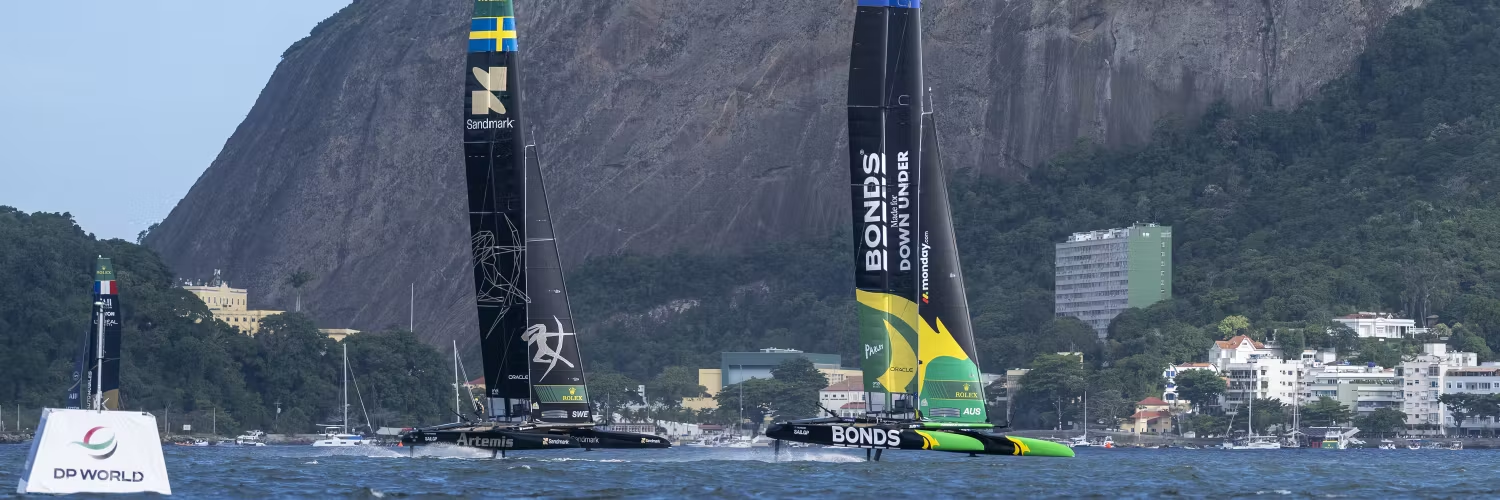
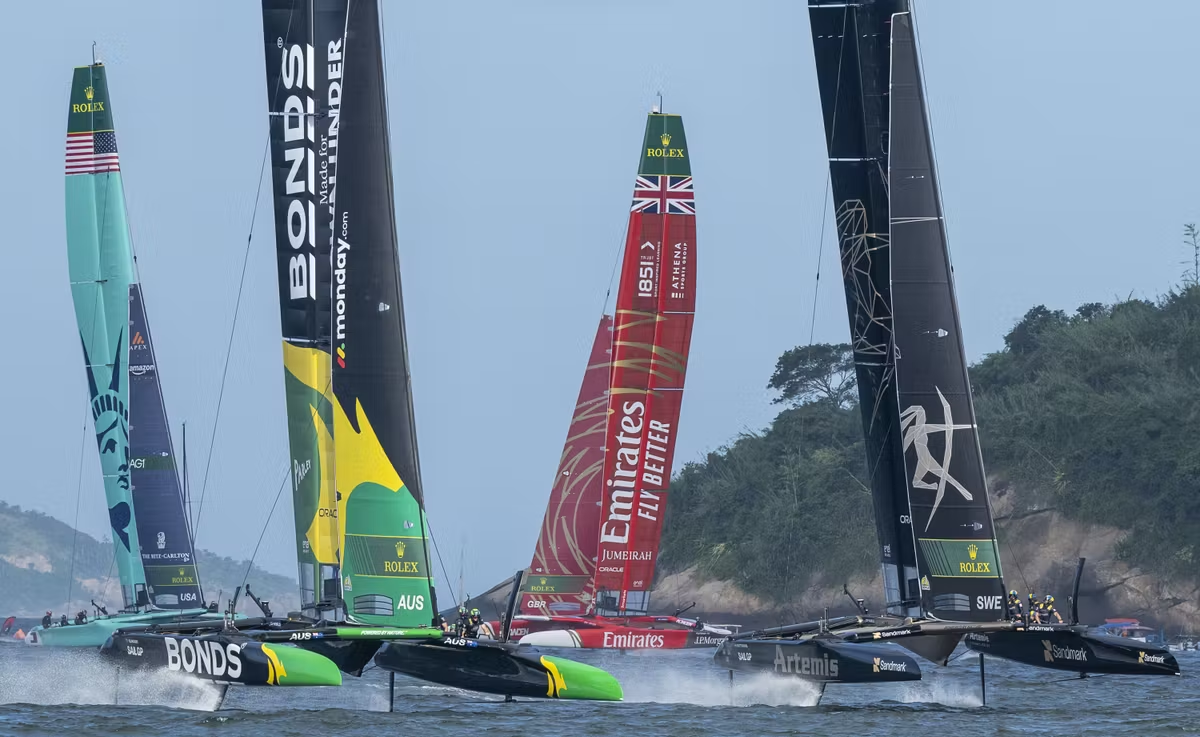
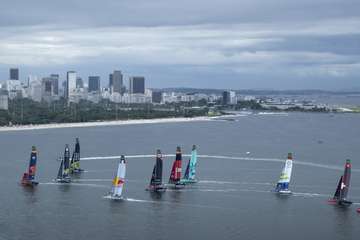
If you had told Tom Slingsby on Sunday morning that the Bonds Flying Roos would sweep every single race on the final day in Rio de Janeiro, he’d have laughed you off the beach. The Guanabara Bay conditions were a minefield. A forecast of light winds proved to be incorrect as a moderate breeze wafted in across the race course tucked in under Sugarloaf Mountain. This left the 12-boat fleet committed to the gargantuan 27.5-metre wings just as the breeze decided to pipe up beyond the predicted limits.
Yet, while the rest of the world’s best sailors were busy trying to work out how to tame the beast, Australia found a gear that shouldn’t have existed.
A Masterclass in ‘Flow State’
Australia’s Sunday was a statistical anomaly. In a 12-boat fleet, on a racecourse as fluky and variable as this, winning four races on the bounce is nearly impossible. "I don’t think it’s been done before," said Slingsby, still buzzing from the clean sweep. "The team just gelled. It feels amazing... you get in what we call flow state, where you’re not even having to talk to the guy next to you and they know exactly what you’re thinking."
That flow wasn’t just about intuition; it was about high-stakes courage. Aiming for the gap. In the opening race, the Australians executed a ‘win big or lose big’ slingshot from the back of the start box, screaming through the narrowest of gaps between the start mark and the other boats already on the line in go-slow mode. Strategist Tash Bryant admitted it was a "really high risk" call, but one the team had pre-discussed and were ready to bail on – if the hole closed. It didn't, and the Aussies shot through like a Bondi tram.
The ‘Horrible’ 27.5m Wing
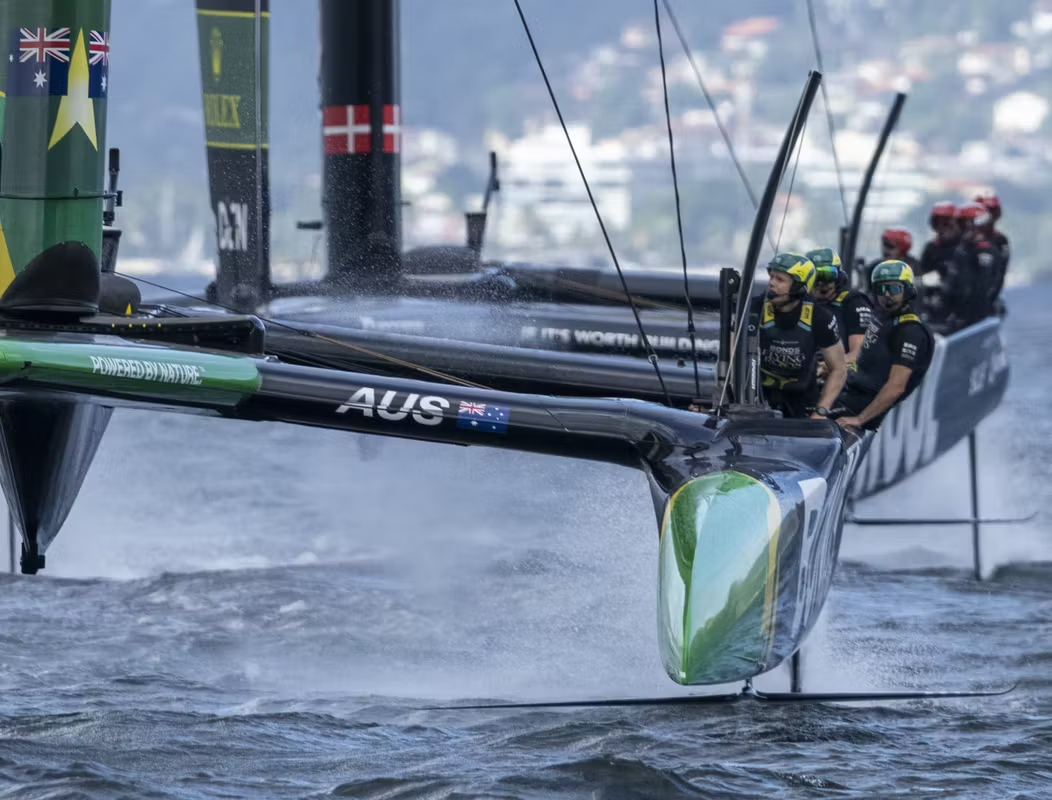
The context for Australia’s dominance becomes even more impressive when you listen to the rest of the paddock. The consensus on the 27.5-metre wing was one of universal dislike. Nathan Outteridge, steering the Swedish F50, was blunt: "To be honest, it’s pretty horrible. They’re so big and heavy and make the boats feel so laboured."
The primary issue was the balance. With the fleet restricted to five crew members to limit structural stress on the already overloaded F50 platform, there simply wasn't enough muscle to manage the towering wing rig and big jib whenever a gust hit. "The hardest thing today was you couldn't move the wing sheet because you had one lonesome grinder up there working as hard as they could," Outteridge explained.
Slingsby’s crew overcame this through ‘flow state’ choreography. When the wing sheet went slack because the boat was too overpowered to take any more load, wing trimmer Iain ‘Goobs’ Jensen would call for a jib-ease, and Sam Newton would instantly ‘burp’ the jib to help regain balance. It was a symphony of powering and depowering that kept the Aussies in the groove while others were ‘pushing rope’.
British Blues and American Muscle
While the Australians soared, the British challenge plumbed previously unknown depths. It was, by any measure, an absolute shocker for Dylan Fletcher’s impervious crew. Entering the event as season leaders, the Brits finished stone-cold last, logging four last-place finishes. "This weekend’s performance really was bad," a shell-shocked Fletcher admitted. To give you a measure of just how consistently good the British have been, this was the first three-boat final they have missed since Geneva last September.
Denmark’s Nikolai Sehested suggested that the technical, light-air scrap of Rio simply didn't suit the GBR DNA, which he said thrives in ‘proper’ foiling conditions. That said, the British weren’t too shabby when they took out the season championship on a light-airs weekend in Abu Dhabi last November. Whatever the reason, zero points from Rio sees them give up the overall lead in this season’s standings, trailing Australia by eight points.
Contrast that with the US team. Taylor Canfield’s squad narrowly missed the podium final, finishing fourth after being squeezed out by a late Spanish charge in Race 7. Despite the near-miss, the trajectory for the Americans is clear: they are no longer the journeyman team of 2025; they remain genuine season contenders.
Middle-Order Maestros and the Darling of Rio
The weekend was also a vital lifeline for the mid-fleet hunters. Germany, Denmark and Italy all enjoyed moments in the sun (and the variable gusts), keeping their championship aspirations alive in a season that is now a third of the way done. More than that perhaps, depending on whether the end-of-season events even take place this November in the Middle East. And that all depends on how the battle for the Strait of Hormuz plays out in the rapidly evolving new global order.
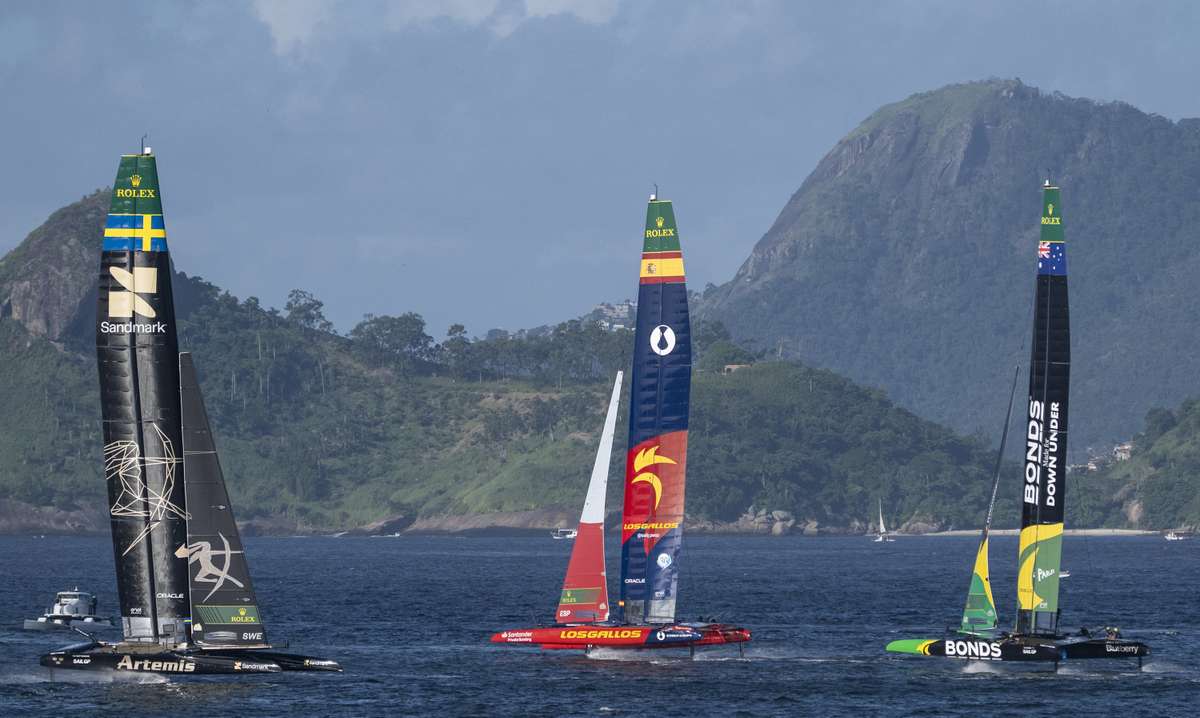
Spain, the Season 4 champions, once again proved their mettle by making their third final in four events, though Diego Botin admitted they are struggling to convert those finals into wins. Which is not a bad problem to have, noted Botin as they finished second behind Australia. “Until this season, it's been kind of the opposite,” he said. “We've been converting a lot of finals, and now we are struggling a bit in the finals. We need to do our analysis, see what has happened. I think it's just an approach thing, and also little details here and there that we need to find out and address.”
Sweden rounded out the podium in third, a bittersweet result for Outteridge after a down-speed tack and a penalty for fouling Spain saw them give up their short-lived lead over the Flying Roos. They’re lacking that final touch compared with the slightly slicker Aussies, but the Swedes are definitely going in the right direction.
Finally, while the local scoreboard might not have reflected it, Rio was a triumph for Brazil. Martine Grael and her team were greeted with the kind of roar usually reserved for Formula One stars. Despite the tough racing, the party atmosphere in Rio proved that SailGP has found a new spiritual home in South America.

Articles You Might Be Interested in
Rio debrief: Australia remind everyone who’s boss - The Foil Podcast - Ep 15
Freddie Carr: The realities of earning a living as a racer

The Foil Weekly Wrap - 13 April '26
Samba time for Flying Roos as Australia dominate in Rio
Four races, four different winners from day one in Rio

Rio Sail Grand Prix stat attack: What you need to know

Rio SailGP practice day leaves backmarkers still searching for clues