
Not just gremlins: how the Gulf’s GPS war reached SailGP’s racecourse

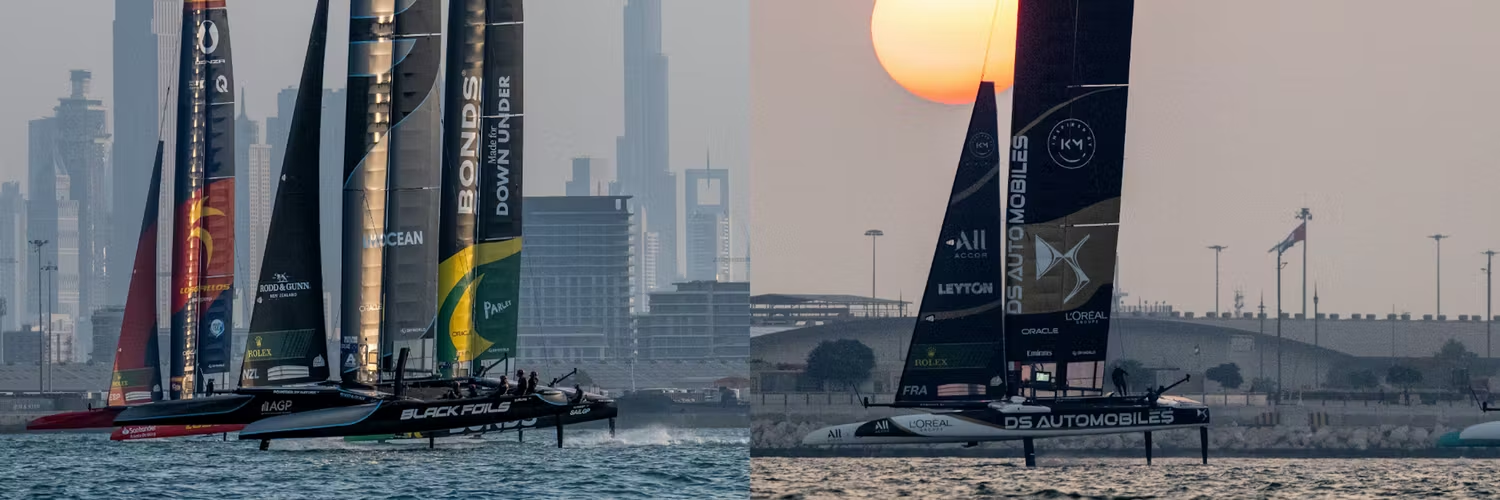
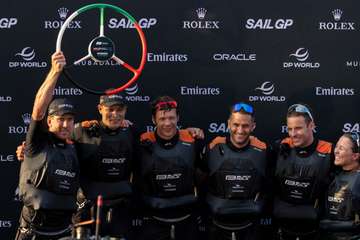
New Zealand’s Black Foils won the Emirates Dubai Sail Grand Prix on Sunday, their third straight win at Mina Rashid and a first event victory in a bruising season. But the bigger story was one nobody could see.
Satellite positioning dropped in and out all weekend. Start software vanished, screens put boats where they weren’t, and one race was abandoned. In our tech-zone debrief we called it GPS gremlins, but it was more than that – and it isn’t going away for Abu Dhabi.
Electronic fog
The war between the US, Israel and Iran began on 28 February. The F50 fleet was racing on Sydney Harbour that very day, at the third event of the season. The UAE says it took more than 260 missiles and 1,500 drones in the first fortnight alone. Ceasefires have come and gone, but a US naval blockade of Iran continues and ships were still being attacked in the Gulf this month.
Some of the defences are invisible. Satellite navigation signals arrive from orbit very weak, so a local transmitter can easily drown them out (jamming) or fake them (spoofing). Gulf states and US forces are widely understood to be doing both to throw GPS-guided drones and missiles off course, and Iran is suspected of the same. Nobody officially confirms who is doing what.
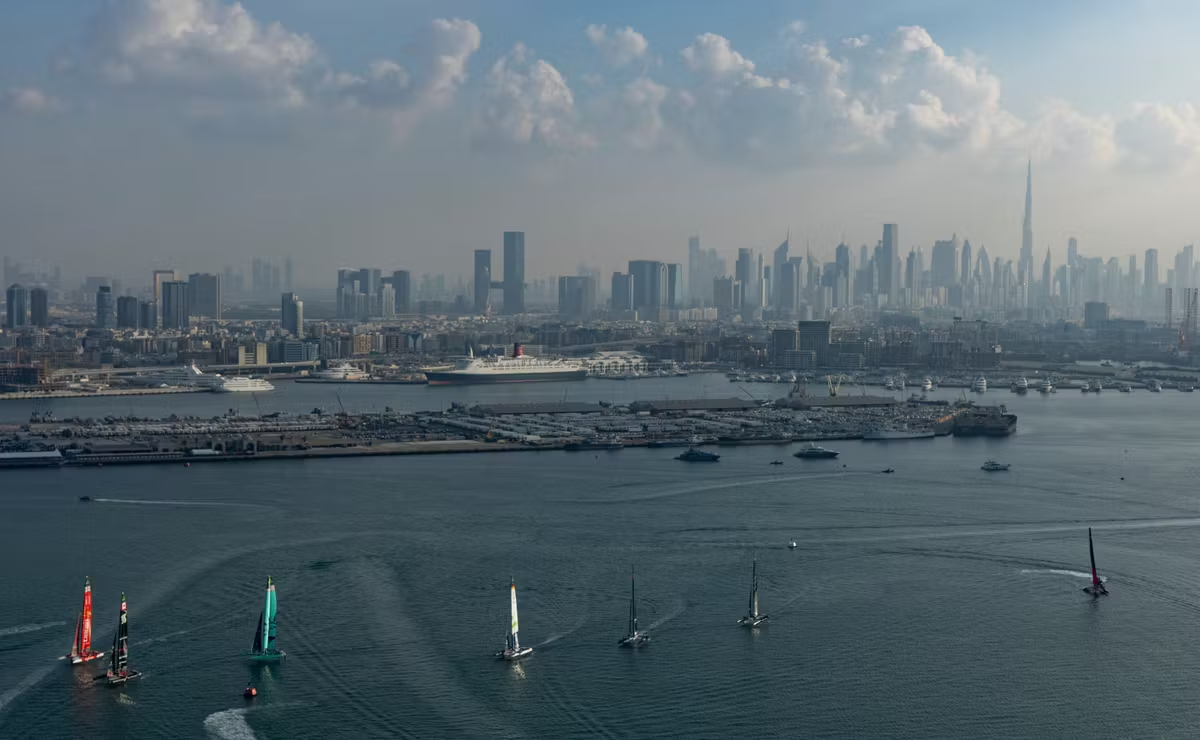
And everyone gets caught up in it. Within 24 hours of the war starting, maritime intelligence firm Windward counted more than 1,100 ships in the Gulf hit by GPS interference, some appearing to sit on land. Since March, Dubai residents have grown used to their phones placing them out at sea.
Blank screens and anchored marks
The trouble last weekend started before a race had been sailed. On Friday the F50s sat on their moorings for the best part of 90 minutes. Once out, one screen showed a boat doing 450 km/h, while others placed boats well to the right of where they really were.
On Saturday, a GPS and communications failure during leg three of Group A’s second race forced race management to abandon it and start again, and only two races per group were completed instead of three.
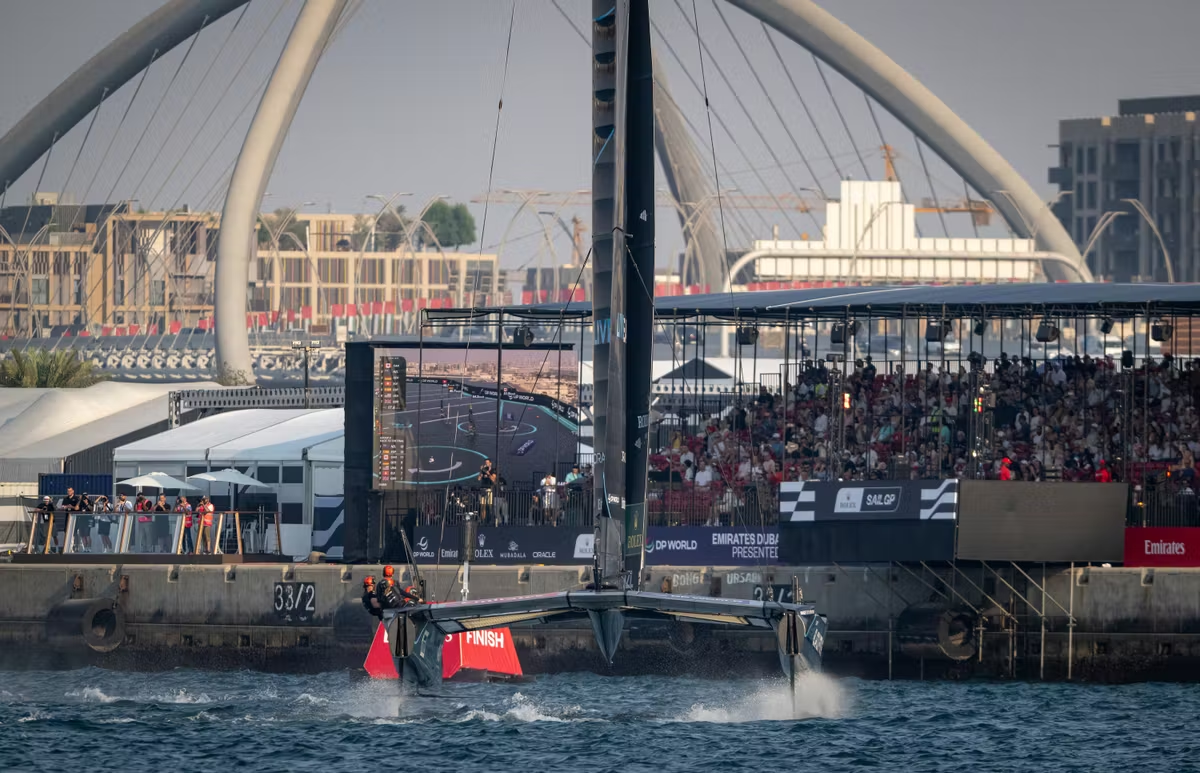
Then there were the marks. SailGP’s autonomous marks normally hold position by GPS, letting race management move the course as the wind shifts. As the problems mounted, more and more marks were anchored instead, even the finish marks. Fixed in place, the course couldn’t be squared up as the breeze clocked steadily right, so the right-hand side paid on both pressure and shift. The upwind legs became a drag race to that side rather than a tactical battle – a soldier’s course, and bad news for anyone playing catch-up.
For the on board tech, it was a lottery. Group A started Sunday’s opening race with no start software at all, and Germany had to be told the revised start time by their coaching booth. Denmark’s screen showed the wrong course, and the resulting boundary penalty dropped them from the front of the fleet to the back.
Then came the final, with less than four minutes to reset. The Australians’ GPS cut out seconds before the start, telling them they were late, so they judged the line by eye and held back. Spain lost their start software and, like Artemis, were over early. Peter Burling started the Black Foils off the leeward end by watching the marks and counting down on a clock, and held off the Australians to the finish.
Why SailGP can’t just race on
It’s tempting to say: if the GPS goes down, just race. But almost everything SailGP does runs on it. The umpires in London referee the fleet through tracking accurate to a couple of centimetres. The boundaries are virtual, the marks hold themselves in place, and the start line and clock live on the crews’ screens.
As Freddie Carr put it in our Dubai debrief, racing on regardless would mean old-school sailing with “lots of crashes, lots of arguments”, and no way to umpire it. “In this world that we live in, if something technical goes down like that, we do have to stop.”
Expect more of the same in Abu Dhabi
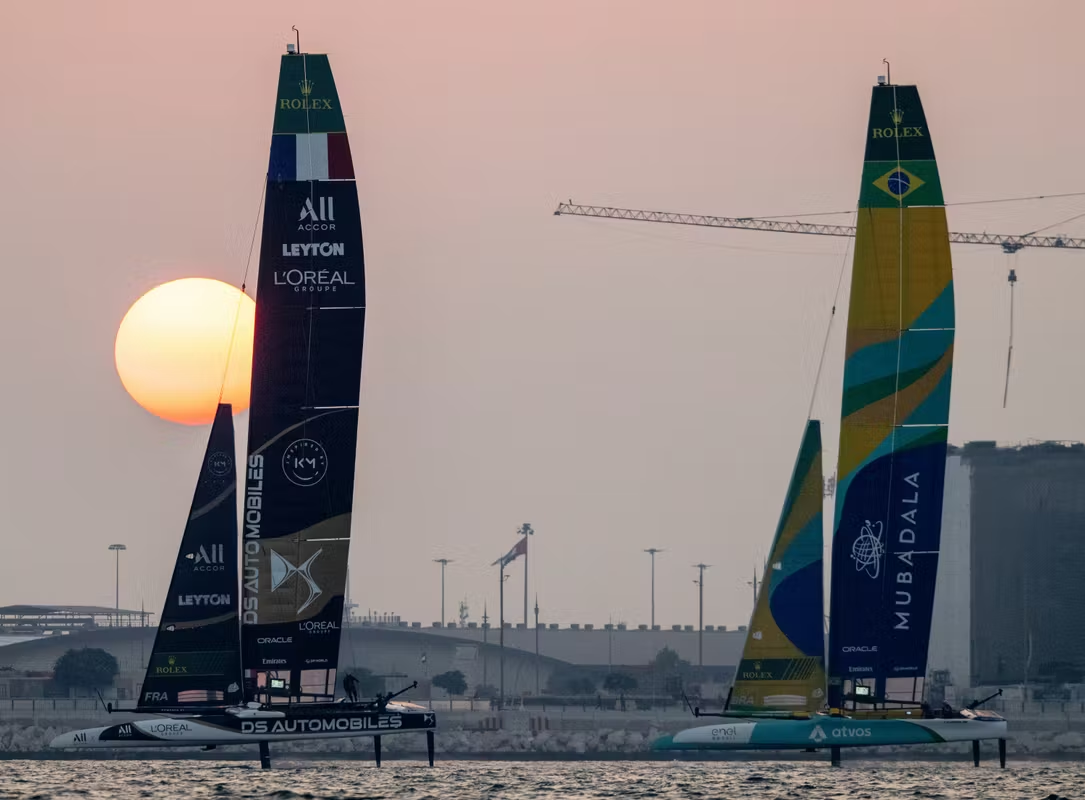
The problem is: results can turn on whose screen goes dark at the wrong moment – and this weekend the stakes are at their highest. Artemis go into the Season Six Grand Final at Emirates Palace with a seven-point lead over the US SailGP Team for the last place in the winner-takes-all final race. The two will race in the same group, which is exactly the kind of duel a blank start screen could settle.
Given the interference has dogged the region since February, there’s little reason to expect a cleaner signal this weekend. In the week before Dubai, the Joint Maritime Information Center reported GNSS interference rising across the Gulf, with the strongest signs shifting west towards Qatar, the western UAE and Abu Dhabi. In other words, brace for more of the same chaos, only now with $2 million riding on it.
While Dubai wasn’t perfect, it’s worth recognising what it took to get it done at all. SailGP’s tech teams, race management and shore crew spent the weekend rebuilding a racecourse around a signal they couldn’t trust, anchoring marks, reshuffling the schedule and keeping the fleet racing safely. They made the racing happen, so hats off to them. Here’s hoping the signal holds next weekend.
Articles You Might Be Interested in
5 things to watch at the Abu Dhabi SailGP Grand Final

Hannah Mills takes the wheel as UAE becomes SailGP’s 14th team
Nicolai Sehested: Pensacola is good, but not a magic bullet
US SailGP Team named Most Improved ahead of Abu Dhabi showdown
The week in racing - 23 Nov ’26
Dubai SailGP winners and losers: did Pensacola pay off?
How the SSL Gold Cup 1/32 Finals played out




Member Discussion
But Neptune forbid we ever drop these venues… 🙄