
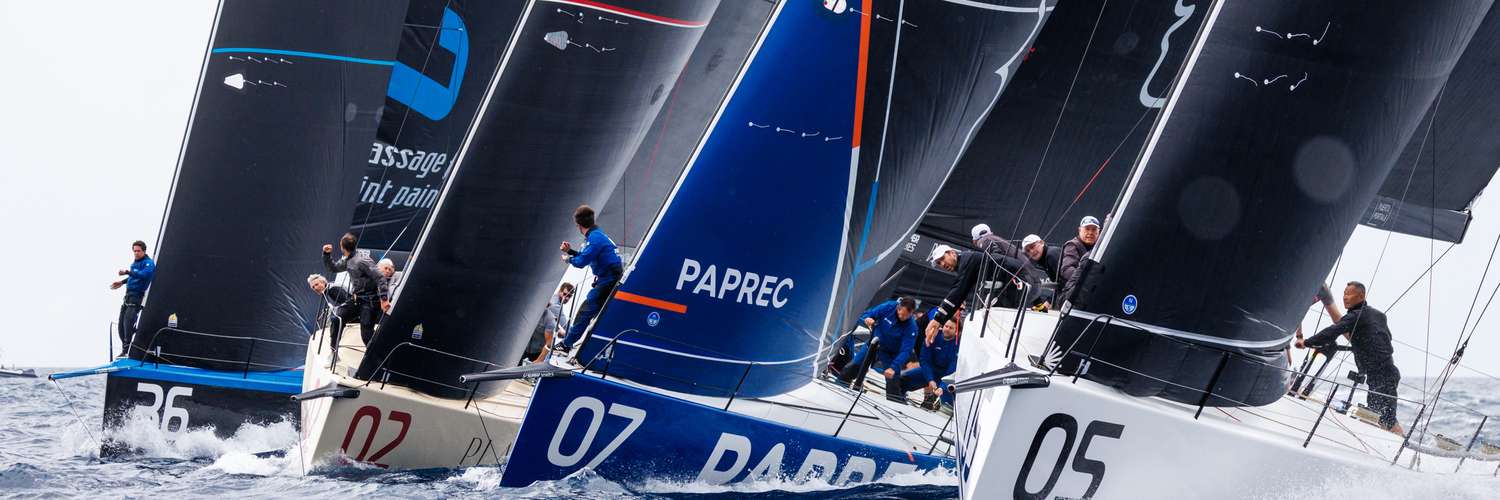
Sled survive mainsail drama to claim 52 Super Series glory

Quick thinking and a spot of improvisation to secure the mainsail ensured victory didn’t slip away from Takashi Okura’s Sled team in a dramatic climax to the 52 Super Series 2026 opener in Puerto Portals.
The series has built its reputation as the world’s leading Grand Prix monohull racing circuit, and after this first regatta of the season, it is difficult to make a case against that claim.
Now entering its 21st season of Mediterranean competition, the TP52 class continues to demonstrate exactly why the box rule has stood the test of time for more than two decades. The boats racing this season are some of the most advanced and highly refined racing monohulls ever built. Constantly developed within the confines of the rule, they remain spectacularly fast, physically demanding and tactically complex machines to race.
Just as impressive as the boats themselves is the calibre of the people sailing them. Across the 14-boat fleet are Olympic medallists, America’s Cup sailors, world champions and crews with an extraordinary combined depth of experience. For sailors operating outside of the foiling world, there remains no higher level of monohull competition.
For the owners, this is equally serious business. Campaign budgets are significant, the level of professionalism across all programmes is exceptionally high, and the prestige attached to winning at this level remains enormous. Success in the 52 Super Series is hard earned, and that is exactly what gives it its value.
The opening event in Mallorca brought together 14 boats from 11 nations, including three new programmes entering the circuit. Such is the standard across the fleet that there was a genuine sense before racing began that almost any team was capable of winning individual races, while perhaps eight programmes would realistically have believed they had the tools to win the regatta itself.
The winter had been a busy one for all teams. Across the fleet there had been refinements to foil packages, mast setups, deck layouts, sail inventories and countless smaller optimisation projects, all aimed at extracting the final few percent of performance. Spring testing had been equally intense as teams worked to arrive in Mallorca as prepared as possible, knowing that in a 50-race season with no discard system, every point collected in the opening event could prove significant later in the championship.
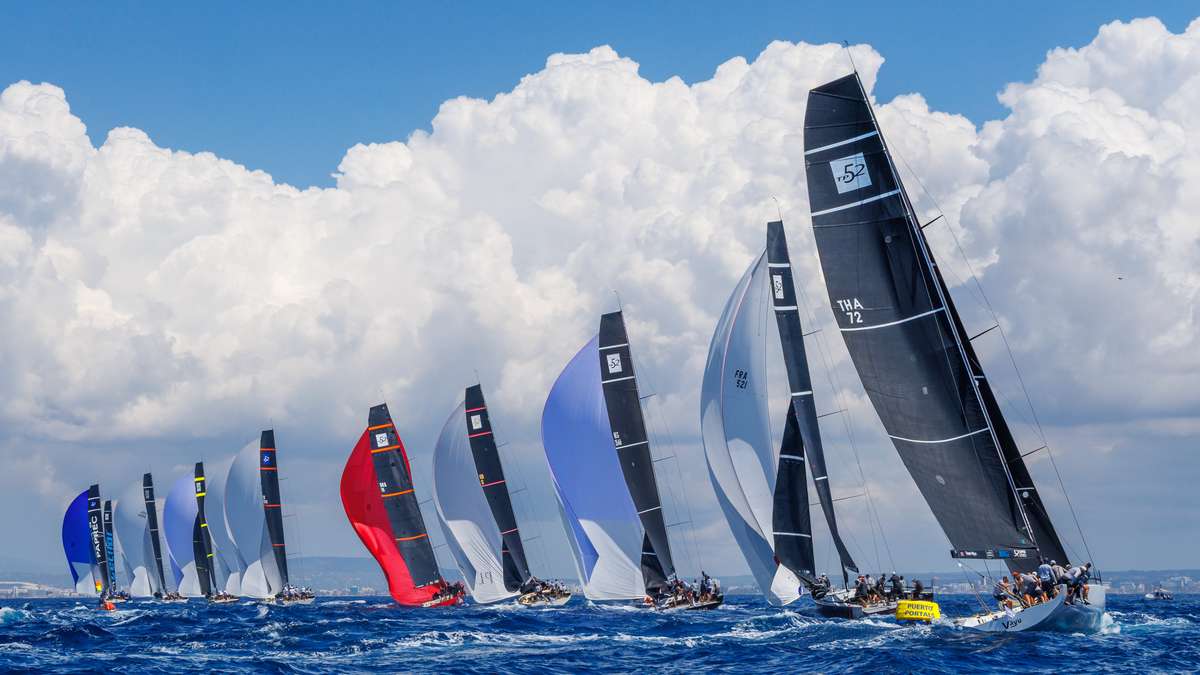
The opening day of racing immediately produced one of the talking points of the week. Swedish-flagged Trinity Racing, one of the three new teams entering the circuit and notably the only brand-new boat in the fleet, took victory in race two. For any new programme, adapting quickly to the standard of Super Series racing is notoriously difficult. The level of execution required across starts, manoeuvres, strategy and boat handling leaves little room for error, so for Trinity to take an early race win was an extremely impressive statement.
Conditions on the first day were light, generally below 10 knots, creating a very different style of racing to what the fleet would see later in the week. In these lighter conditions, clean lanes and freedom to execute long term strategy become particularly important, while congestion in the middle of the fleet can quickly become race-ending.
It was Thailand’s Vayu who produced the most consistent opening day performance, posting a first and a fourth to lead the standings overnight. Their approach was simple but highly effective – sailing fast, staying clear of heavy traffic and avoiding costly mid-fleet entanglements.
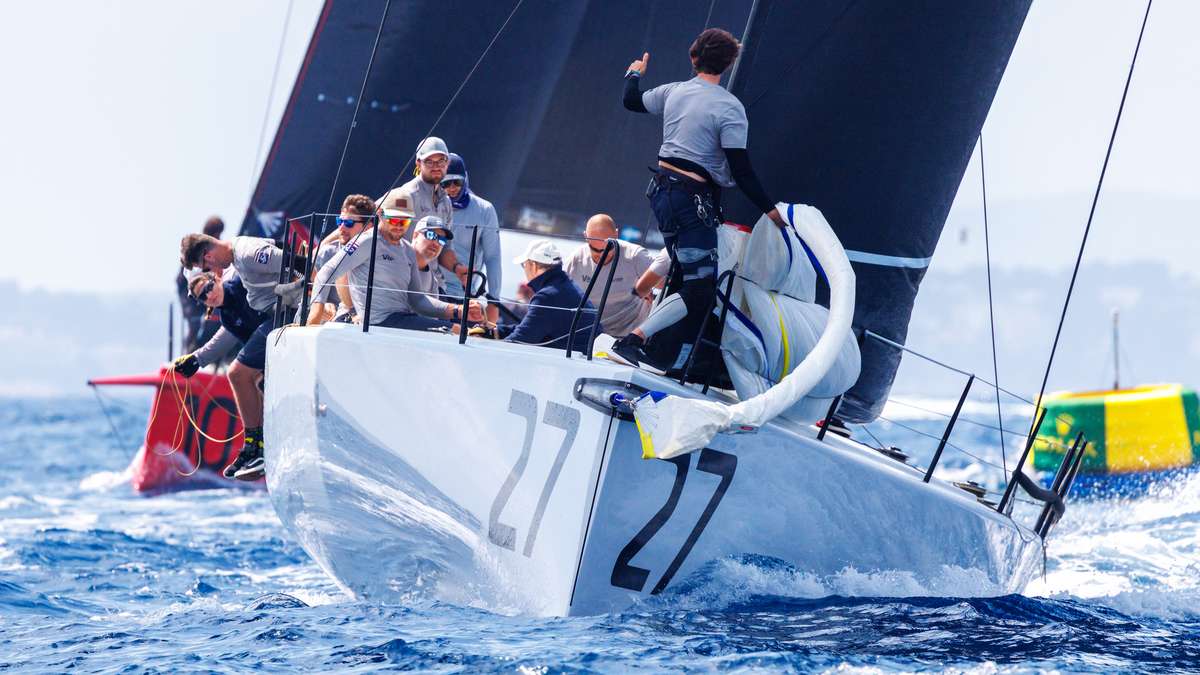
Day two featured a significant shift in conditions as the Palma sea breeze established itself, creating more stable but still tactically nuanced racing.
The standout performers were Andrea Lacorte’s Italian team Alkedo, who delivered the first perfect scoreline of the 2026 season with a double race win. Achieving a double bullet in the Super Series is always notable given the quality and depth of the fleet, but in a season that appears this competitive, such results may become even harder to produce.
Alkedo executed exceptionally well in conditions that often reward commitment to the left-hand side of the racecourse in Palma Bay. Strong starts near the pin end allowed them to establish early control, before converting pressure advantages and a favourable wind bend into commanding race wins.
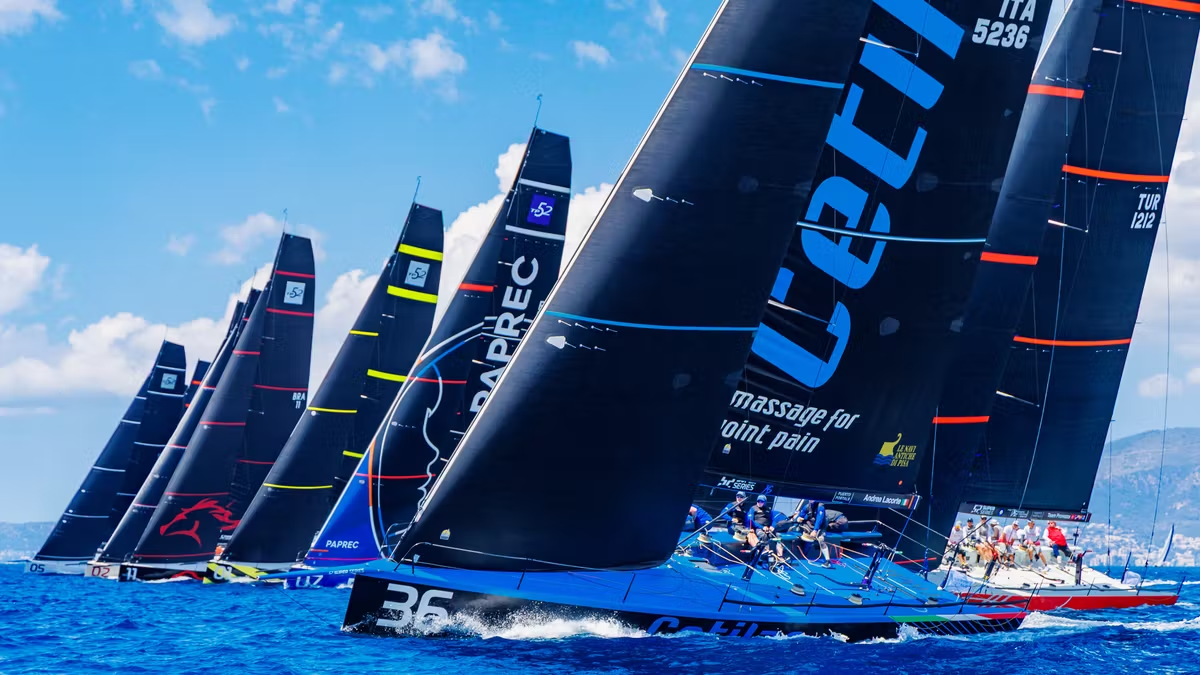
At the same time, Provezza quietly began building what looked like a serious championship campaign. Under the guidance of new tactician Cole Parada, the Turkish programme delivered a highly consistent day with finishes of third and fourth, leaving them without a result outside the top five and moving them to the top of the leaderboard.
By day three, the weather had changed completely. The breeze shifted offshore, creating a highly unstable and tactically demanding racecourse. Gusts rolled unpredictably across the track, pressure varied significantly, and wind shifts of 30 to 40 degrees created a very different challenge from the more structured sea breeze racing seen previously.
These were not conditions where simply choosing a side of the racecourse and committing early would guarantee success. Instead, teams had to remain dynamic, reading the shifts in real time, managing risk carefully, and recognising when patience in the middle of the racecourse was the correct play.
This style of racing suited Sled perfectly. The 2025 championship runners-up, guided by the hugely experienced afterguard pairing of Murray Jones and Francesco Bruni, are often particularly strong in conditions where tactical adaptability matters most. Their ability to read changing racecourses and identify overtaking opportunities was on full display as they posted a third and a second, moving into a commanding overall position.
After six races, Sled held a nine-point lead over Provezza. Yet despite that margin, the leaderboard beneath remained incredibly compressed, with second through seventh place separated by only six points — a clear reflection of how competitive the fleet has become.
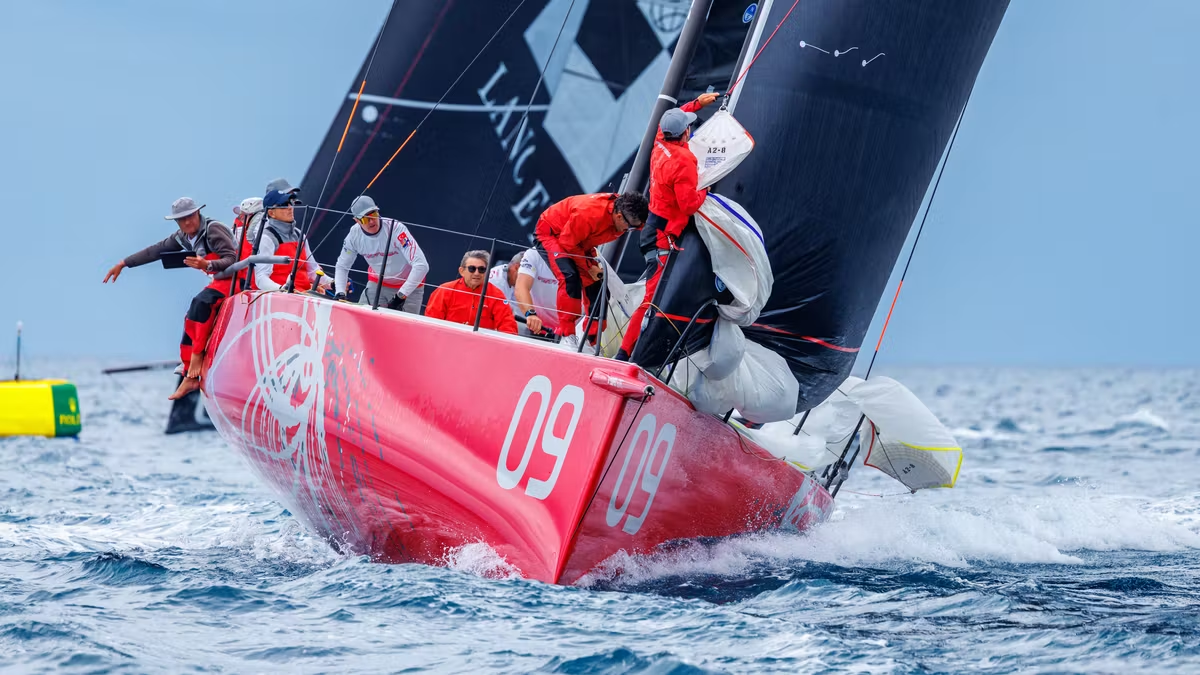
Day four brought fresh complications for both competitors and race management. Weather systems moving around Mallorca created unstable conditions and made it difficult for race officials to establish a course that would produce fair racing. In the end, only one race was completed.
That single race, however, proved important. Provezza delivered what may have been the pivotal performance of the regatta. Cole Parada made an aggressive call to commit left, a decision that carried risk but ultimately paid off decisively. The Turkish team led from start to finish, taking the race win in convincing fashion.
At the same time, Sled endured their most difficult result of the week, finishing 13th. The swing dramatically tightened the regatta heading into the final day.
Behind the leading pair, the leaderboard remained exceptionally close. No Way Back, the Dutch programme now operating with the former Quantum Racing package under new owner Pieter Heerema, sat tied for third with Gladiator, while Alkedo remained only a single point further back. For many long-time observers of the circuit, it felt like one of the tightest opening regattas in recent memory.
The final day brought a return to offshore conditions, once again producing the shifty, gusty racecourse that had already suited Sled earlier in the week. And immediately, they delivered. Winning the opening race of the day put Sled firmly back in control, but the most dramatic moment of the regatta came before the final race had even begun.
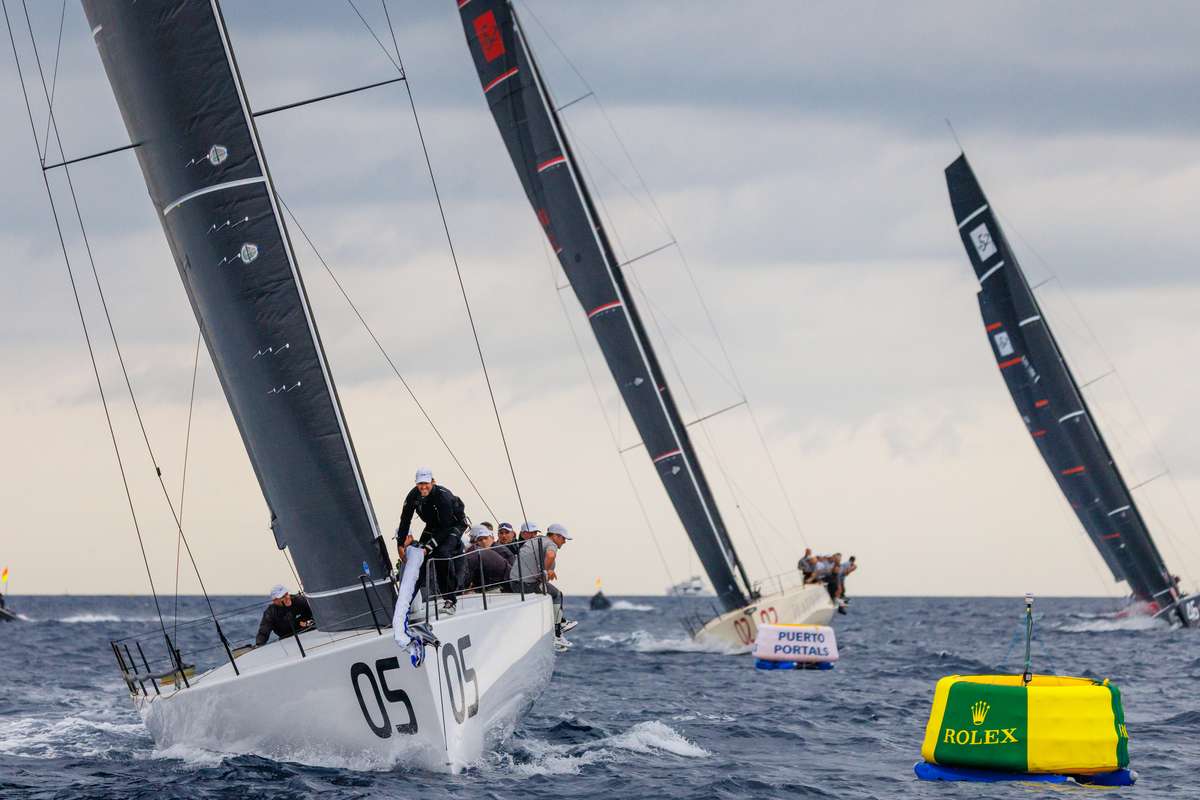
With just eight minutes remaining before the start, Sled still had no mainsail hoisted – a highly unusual and deeply concerning sight for anyone watching. Bowman Ivan Pete was at the top of the mast attempting to resolve what appeared to be a halyard issue. Had the team failed to solve the problem in time, the regatta result could easily have slipped from their hands.
With seconds to spare, a temporary solution was improvised. The mainsail was secured in a makeshift fashion, not at full hoist and certainly not in ideal racing condition, but enough to allow the boat to start.
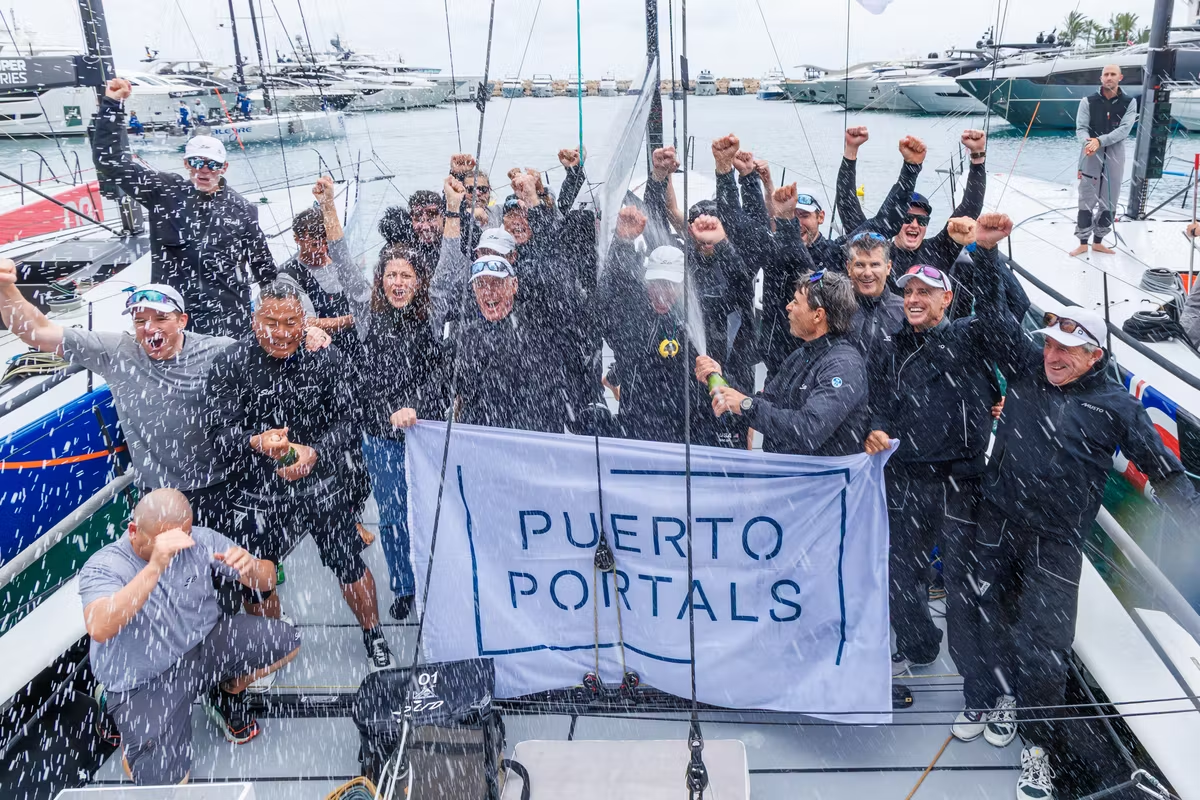
Even compromised, Sled remained clinical. Jones and Bruni once again judged the racecourse beautifully, navigating the shifting conditions with precision to secure third place — more than enough to confirm overall victory.
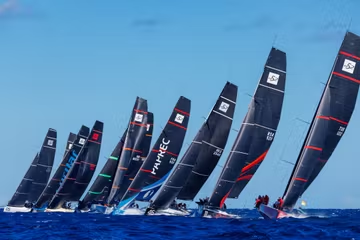
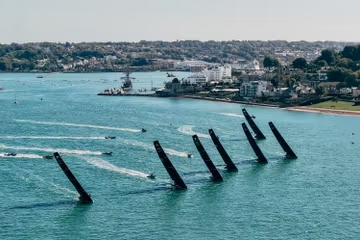
The closing stages of the race also provided one of the most spectacular visual moments of the regatta, as the offshore breeze built beyond 25 knots on the final downwind leg, allowing the full TP52 fleet to stretch their legs at speeds exceeding 20 knots.
For Provezza, the final day proved disappointing. Starting with a three-point overnight lead, they were unable to convert their position into overall victory. Strategic calls went against them in both races, and costly decisions on racecourse positioning ultimately saw them fall back to fourth overall.
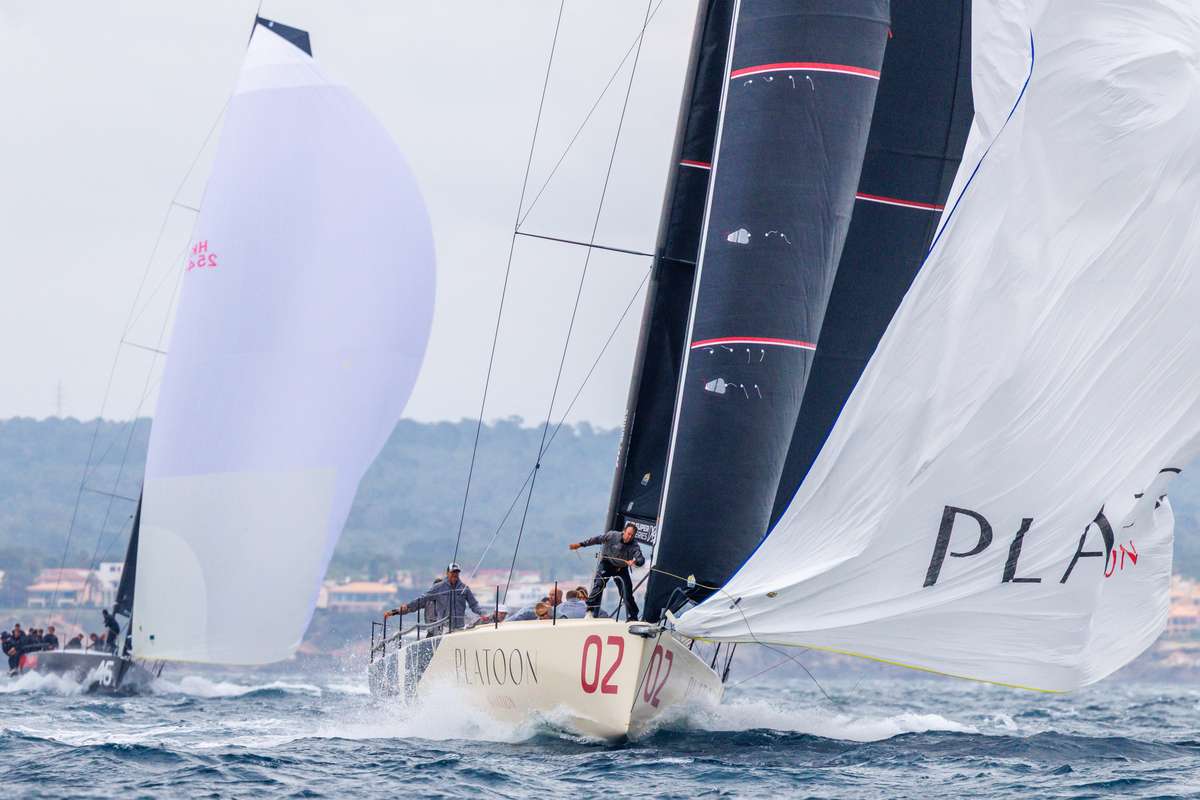
Platoon Aviation, meanwhile, delivered one of the strongest recoveries of the week. The experienced German team, led by owner-driver Harm Müller-Spreer, had endured an inconsistent regatta by their own standards but saved their best performance for when it mattered most. A third and a fourth on the final day elevated them into second overall.
No Way Back also finished strongly, with Terry Hutchinson calling tactics aboard the former Quantum Racing package. With proven equipment, experienced leadership, and a strong all-round programme, their rise onto the podium in third came as little surprise.
If Puerto Portals is any indication, the 2026 52 Super Series could develop into one of the most competitive seasons in recent memory. The standard across the fleet is extraordinarily high, margins are exceptionally tight, and positions are changing constantly throughout races. This is exactly what the TP52 class was built to produce.
Next up is the Rolex TP52 World Championship in Porto Cervo, beginning on June 15.
Topics
Articles You Might Be Interested in
The week in racing - 19 Oct ’26
Platoon Aviation’s consistency seals a classic 52 Super Series season
The week in racing - 12 Oct ’26
LIVE: 2026 Sardinia Kiteboard Grand Slam
LIVE: 52 Super Series Valencia Sailing Week – the title decider
Why Les Voiles de Saint-Tropez is so special
The week in racing - 5 Oct ’26
The RC44: how Russell Coutts hit a winning formula



Member Discussion