
An outsider’s perspective: What sailing looks like when you don’t know it

A little over six months since launch, The Foil is just starting to pick up at a rate of knots. We’re encouraged by how the world of professional sailing is responding to our carefully curated written articles and video output, but this is an all-new project. These are early days and there’s a long way to go.
You won’t know me. That’s because I’m new to sailing – an outsider in an alien world. Yet here I am, charged with managing a select, specialist team of hardened experts you do know, for whom this sporting life is more than a passion. It’s a way of life.
The world I come from is motor sport – on land, not water – in the wake of 30-plus years trawling paddocks and race circuits rather than boat-building yards and harbours.
So you may be asking, what the heck am I doing here? A fair question – and one I’ve asked myself more than once during these past months!
The short answer is, I’m here precisely because I’m not a sailor, to offer an outside view on an opaque sport that struggles – or perhaps doesn’t try hard enough – to tell its stories to a wider audience. What I do know is racing, and if I’ve learnt anything these past six months, it’s that the mentality, the sporting instinct and the sheers guts it takes to compete at the highest level in sailing are precisely the same as the sporting world I’m more familiar with. When it comes down to it, racing really is just racing.
By now, you know our team. They’re a great bunch who are completely immersed in this world. That’s why I mostly keep out of sight, shovelling the coal below decks (I know, wrong water-based analogy), to support them and hopefully give them what they need to give you what you’d like to read and watch.
But having just passed our half-year landmark, I thought I’d pop up on deck to offer a few observations on sailing from an outsider’s perspective. A glimpse, if you like, of how your sport looks through the eyes of an alien who has landed among you.
A wide world of sport
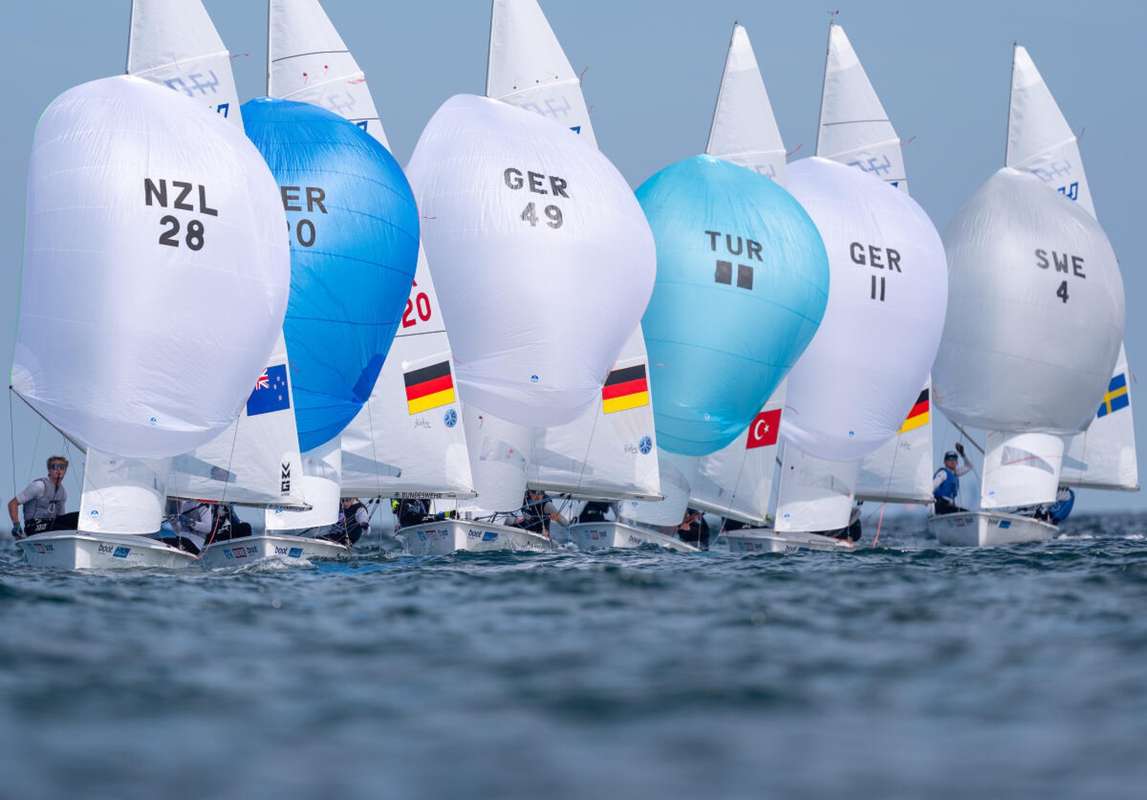
The first thing: wow, there’s an awful lot of sailing. And I thought motor racing was disparate and diverse across the globe.
The sheer volume of competition, across a mind-boggling array of classes, was brought home to me early on when I asked Andy Rice and Bene Donovan to write some ‘explainer’ content to help guide our new readership around the sport. A few hundred words here, a few hundred words there – that’s all I was after. Impossible, as it turned out. They wrote many thousands, poor chaps, all of which can be found within our sailing categories on the website.
What strikes me is that despite the breadth and depth of global competition, only a relatively small number even know what’s happening week in, week out. Is the outside world simply not interested or could promoters do more to spread the word? My first impression is sailing exists in a state of introspection – and that’s how some like it.

Diverse – and dangerous
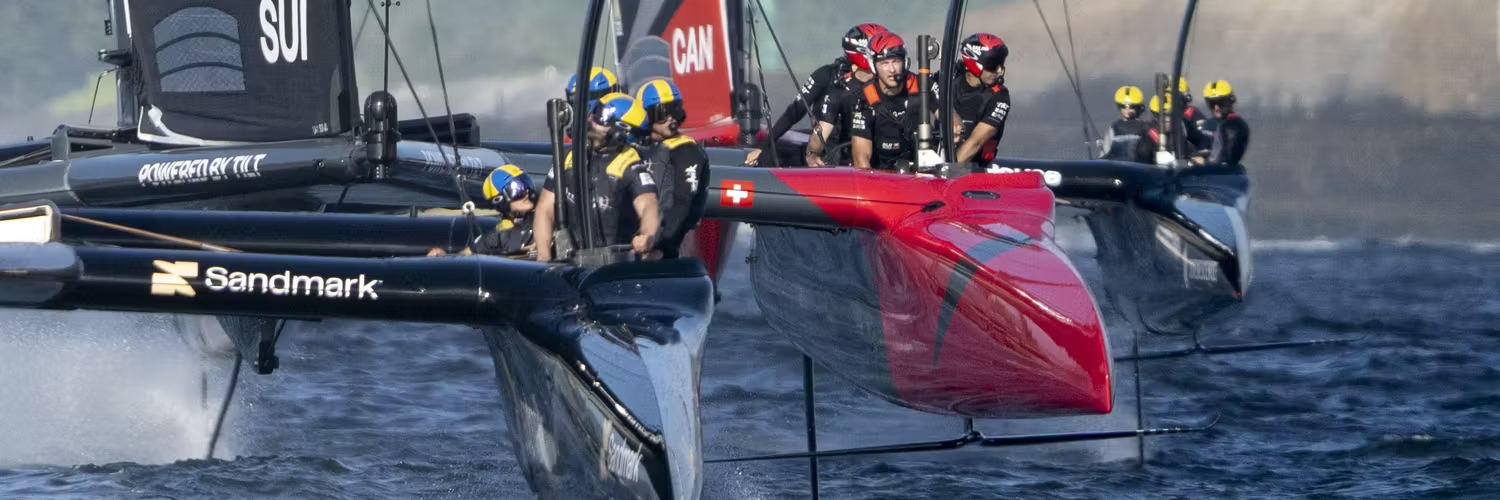
Another big lesson: sailors, athletes – call then what you will – are properly brave. From the hardy souls crossing oceans at record speeds, trusting blindly in electronic systems to guide them in the pitch black of night, to the SailGP elite leaping across their F50s jousting hull to hull on a remarkably small expanse of water… Wow.
Respect to every single one of you, whatever your choice of vessel or class.
It’s clearly dangerous too, particularly at the top level. I’m not easily shocked given what I’ve seen in motor racing, but the violence of the collision between the Black Foils and the French in Auckland’s SailGP round early in our life was alarming. The serious injuries sustained by Louis Sinclair on the Kiwi boat and Leigh McMillan and Manon Audinet on the French were bad enough, but they – and SailGP – escaped lightly. Since then, I’ve found myself feeling braced for the day when something worse happens. It feels inevitable.
The diversity topic is more encouraging. While I’d say sailing has lessons to learn from motor racing in regards to safety, it is way ahead when it comes to female athletes competing on equal terms with men at the top of the sport.
There’s still a way to go, of course. But it’s refreshing to find a sport where men and women compete together and without prejudice. Apart from, strangely, arguably the most extreme motor sport of straight-line drag racing, which boasts healthy numbers of women racing as equals in the US and Europe, my old world lags behind sailing in this regard.
Why can’t we all just get along?
What’s confusing – beyond the jargon, which I’m trying to catch up on – is how divided this sport is.
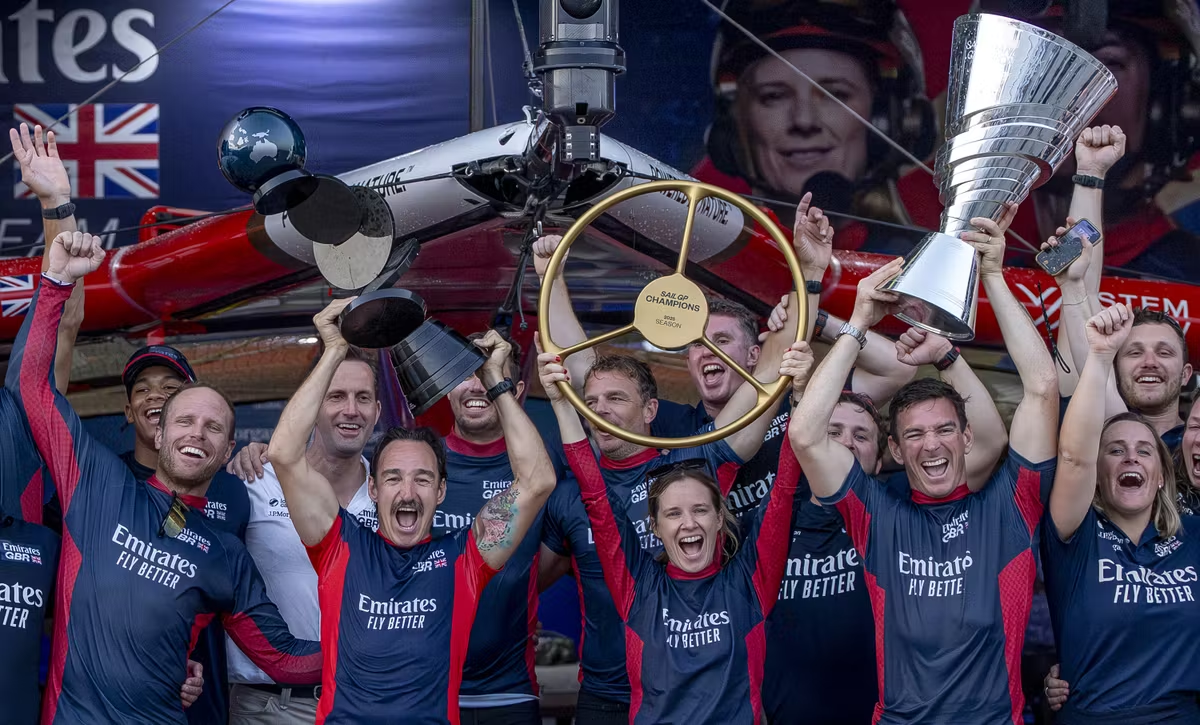
As our team discuss on The Foil podcast this week, next year there are calendar clashes that will force sailors to make tough choices on their priorities. For example, in January should one with Olympic ambitions be chasing a World Championship in Fortaleza, or focus on earning the big bucks at SailGP’s Hong Kong debut?
Next July, efforts have been made to avoid a clash between the league and the 38th America’s Cup, but from what we hear that won’t always be the case.
There’s no logical reason why SailGP and the Cup can’t rub along together and complement each other. But of course there’s deep history, agendas and the egos of the movers and shakers. I like Andy Rice’s Robert de Niro/Al Pacino Heat comparison, of Sir Russell Coutts and Grant Dalton facing off in a café to clear the air.
In motor racing, fans and the media love an all-rounder: someone who can switch between single-seaters, sports cars and even off-road. It used to be common back in the 1960s and ’70s, now it’s so rare. Max Verstappen’s recent adventures at the Nürburgring 24 Hours is the most obvious recent example. It was such a breath of fresh air and created a positive buzz that permeated through the whole sport.
Likewise, if the Slingsbys, Fletchers, Botins and Burlings want to switch from F50s to AC40s to AC75s, encourage them, don’t thwart them. Jumping from discipline to discipline is just the kind of ‘hero’ behaviour sports fans get hooked by.
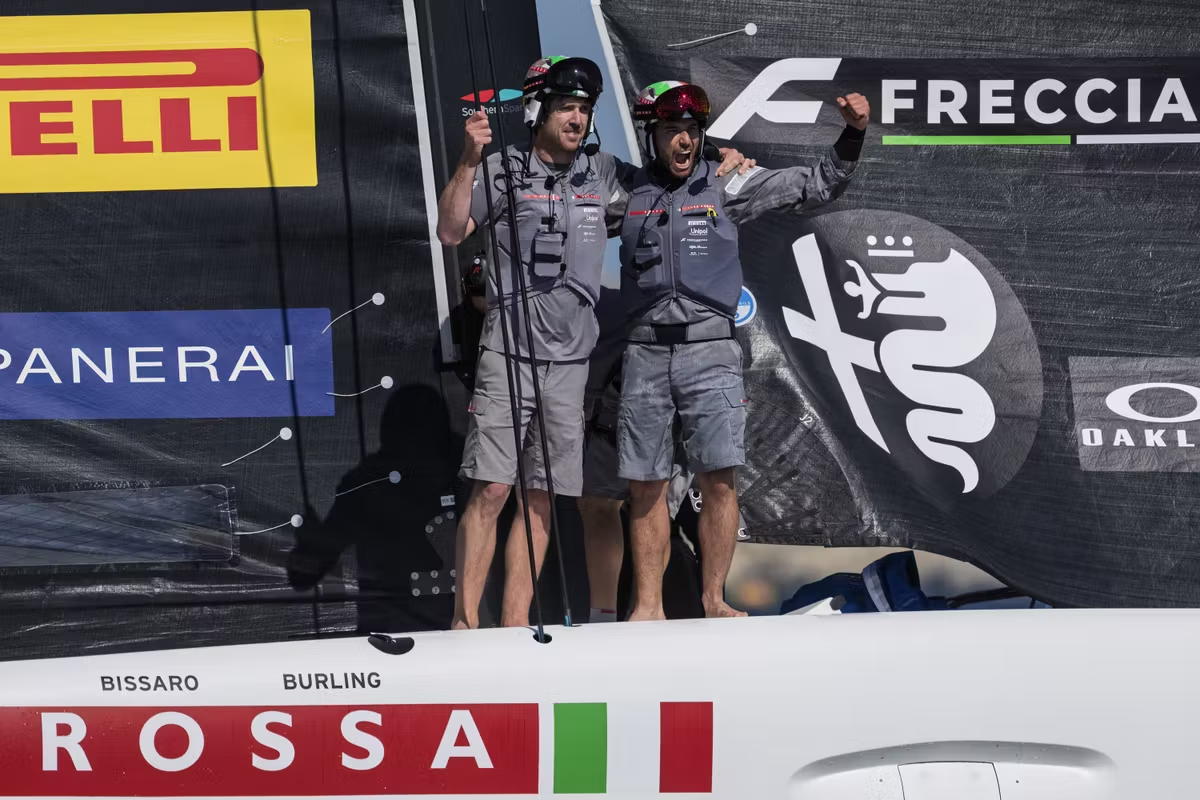
It’s usually the people and what they do that attracts an audience – not the technology. Pete Burling’s redemption arc at the AC38 Prelim in Cagliari, in the wake of his SailGP troubles, was a prime example. It was simply a great sporting story, for the mutual credit and benefit of both the Cup and SailGP.
An alternative to the F1 cliché
As for the latter, a lot is made of the parallel to Formula 1. Its influence on Sir Russell Coutts is obvious. But a closer comparison is actually the electric-powered Formula E single-seater series.
Both are package tours that overcome significant logistical challenges to travel the world balancing on a tight financial model. Both are based around a single-design racing proposition, too.
Formula E is like nothing else in motor racing, has somehow survived to make it to its 12thseason, but is only just starting to come of age. SailGP is half as old, yet I’d say has made far more progress and quicker.

The concept is simple, but ingenious, its schedule of regular races offering a continuous narrative in a manner that echoes motor sport. The Foil wouldn’t exist without SailGP – and we’re not shy about admitting that.
At the same time, like Formula E, SailGP is making all its mistakes in the public glare, and at times, it feels like Coutts and his team are making it up as they go along. But that’s OK. When you’re breaking new ground, a degree of shape-shifting and adapting on the hoof is essential.
The series walks a fine line though. As Coutts’s astonishing rant on social media a few weeks ago highlighted, he puts a high emphasis on entertainment because he’s determined to create a new form of sailing that is easier for a wider audience to understand.
That’s not easy within such a complex sport and I admire his candid ambition – as long as competitor safety always comes first. Motor racing learnt those hard lessons decades ago.
Finding a balance
A final thought: I get why some traditionalists turn their noses up at SailGP. It’s brash, contrived… different.
What’s probably most offensive, beyond the fundamental debate over whether foiling is true sailing, is how Coutts is unapologetically chasing a new audience. Such an attitude doesn’t sit well with hardcore fans, because it tends to make them feel neglected or taken for granted.
I’ve seen it in motor racing, when the so-called Netflix effect in F1 triggered an influx of new converts. For anyone who had been watching for more than the past five minutes, a sense of resentment brewed. And it’s awkward – because if the new converts then get distracted and find themselves pulled away by something else that’s bright and shiny, who’s left watching?
The Foil rides a similar line: we must and have to appeal to you, the sailing enthusiasts. At the same time, we’d love a wider sporting audience to dive in and become hooked. Finding that balance is the trick.
So as we embark on the second half of our first year, all these thoughts and much more are swirling on the breeze. Whatever next? Who knows? Even Coutts can’t be certain where his league will finish this season, given the continuing unrest in the Middle East.
Then again, who wants sport and life to be predictable? Stick with us and let’s see where the wind will take us.
Articles You Might Be Interested in
From partners to opponents: inside the North Sails–Team New Zealand patent battle
Team Australia finish Te Rehutai rebuild and set February target for Naples
Freddie Carr: Why Pensacola could change SailGP for good
The week in racing - 19 Oct ’26
GB2 and Alinghi Women & Youth name their squads for Naples 2027
Emirates GBR and Team 14 claim first slots on SailGP’s Pensacola training F50
La Roche-Posay Racing Team the first to launch their AC75 in Naples

SailGP’s year-round training base is about to open for business



Member Discussion