
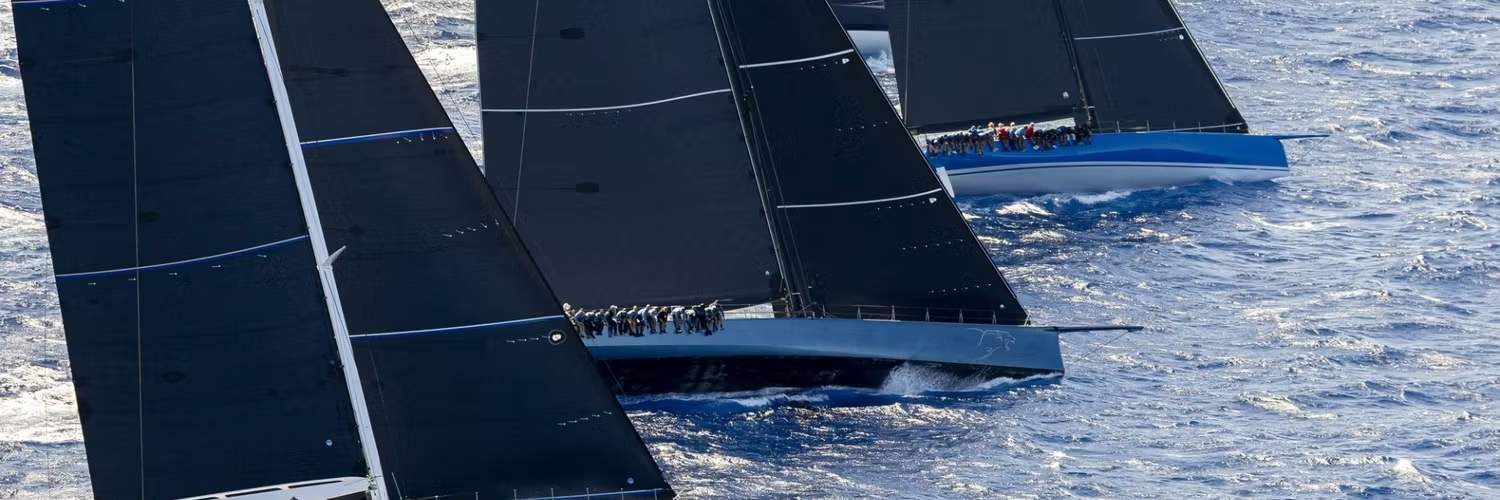
Freddie Carr: Leopard 3 and North Star III crown a Maxi Yacht Rolex Cup for the ages

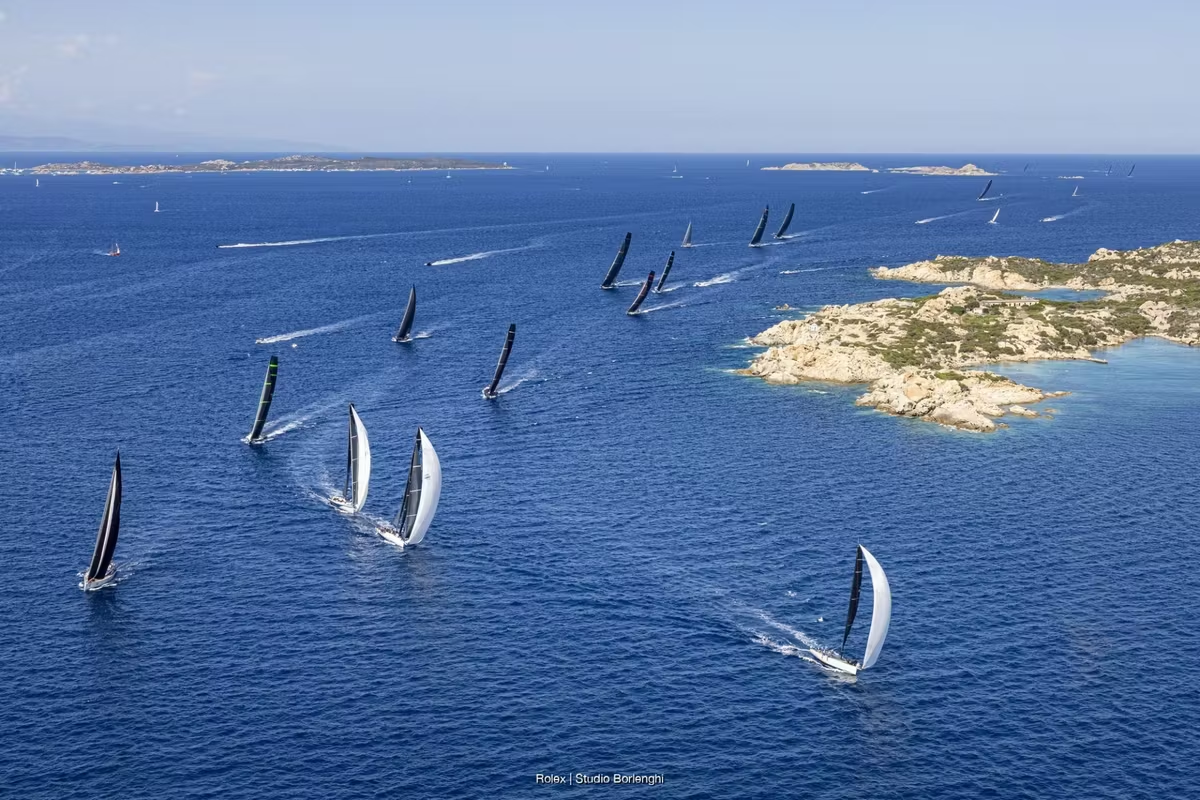
The 2026 Maxi Yacht Rolex Cup was one for the ages. After several editions disrupted by the Mistral – with lost race days and fleets sometimes unable to leave the dock – Porto Cervo finally delivered a complete examination of maxi racing.
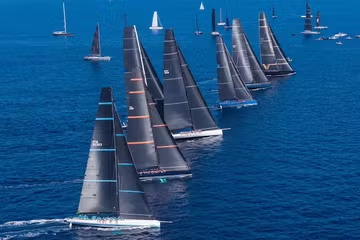
Across the week, the fleet raced in everything from five knots and a delicate sea breeze to 28 knots of full-blooded Mistral. There were coastal races through the La Maddalena archipelago, high-speed blasts through Bomb Alley and, for the Maxi 1 and Maxi Grand Prix fleets, intense windward-leeward racing off Porto Cervo.
Leopard leads the 100-footers
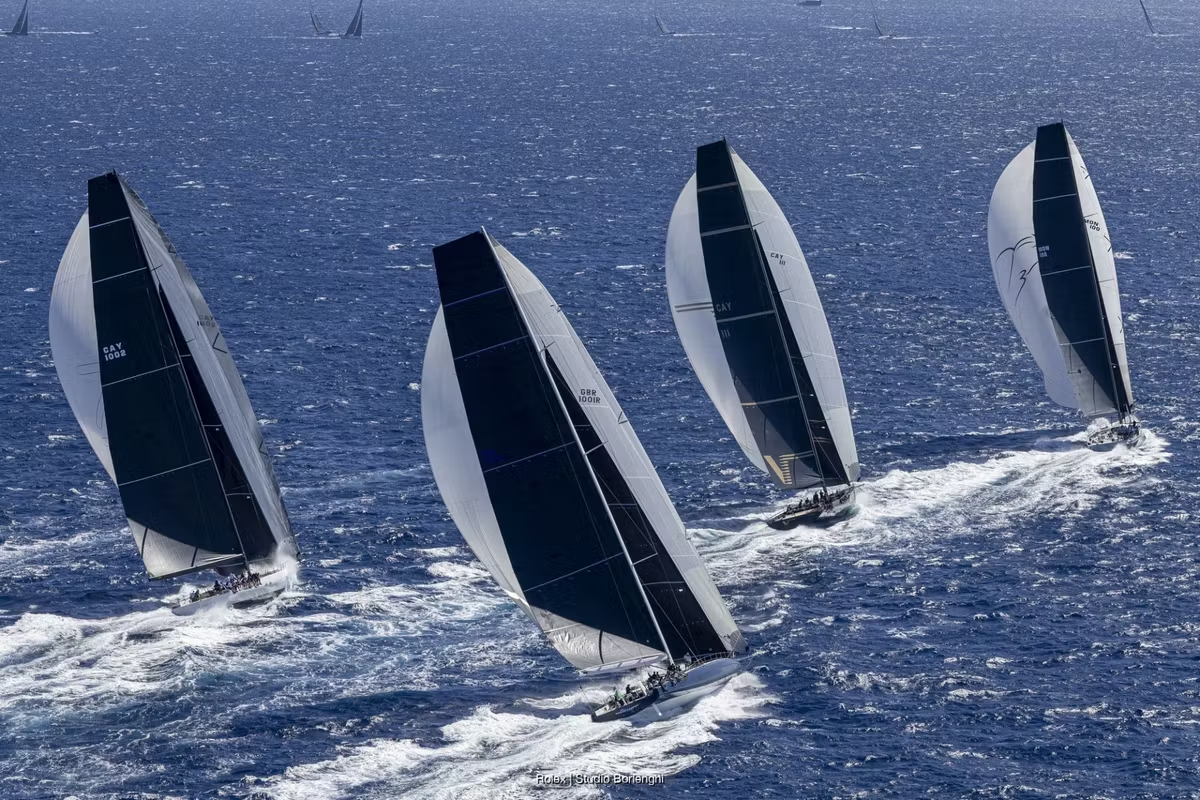
In Maxi 1, Leopard 3 produced the performance of the week. The 100-footer won five of the seven races, including the final four, to claim her second world title ahead of Wallycento V and defending champion Galateia. It was an outstanding display of consistency from a boat approaching her 20th birthday.
Leopard 3 has been part of the maxi-yacht landscape for nearly two decades. Launched in 2007 for Mike Slade, the Farr-designed 100-footer was built to achieve something very few yachts have successfully managed: combining the comfort of a genuine superyacht with the performance of an offshore record-breaker. With her canting keel, twin daggerboards and unmistakable black hull, she quickly became one of the most recognisable racing yachts in the world.
Her record speaks for itself. Within weeks of launching, Leopard took monohull line honours in the 2007 Fastnet Race and broke the existing course record by more than nine hours. A west-to-east transatlantic record followed in 2008, alongside the Round Ireland record, the original RORC Caribbean 600 monohull record and another Fastnet line-honours victory in 2009. For years, she was the boat everyone expected to see at the front of the fleet, eating up the offshore miles with Mike Slade and his long-standing professional crew.
A second life inshore
But perhaps her most impressive chapter has been this second life. After being acquired by Dutch owner Joost Schuijff, Leopard was carefully optimised for modern inshore maxi racing. Captain Chris Sherlock remained at the centre of the programme, while some of the sport’s best sailors – including Mike Sanderson – helped transform an offshore powerhouse into a highly refined windward-leeward machine.
This week, the afterguard included skiff legend Chris Nicholson, navigator Will Best and two-time Olympic ILCA gold medallist Matt Wearn. It was a serious collection of talent, but the real achievement was how completely the team unlocked the potential of a yacht designed for a very different era of maxi racing.
Nearly 20 years after her launch, Leopard was not being preserved as an iconic old maxi. She was beating the best modern boats in the world. The title was dedicated to Mike Slade, who sadly passed away in recent weeks, making it a fitting continuation of the programme he created – and a reminder that great boats, when surrounded by the right people, can enjoy more than one golden era.
North Star III arrives with a bang
From a boat almost 20 years old, we move to one that arrived in Porto Cervo with barely 20 days of sailing behind her.
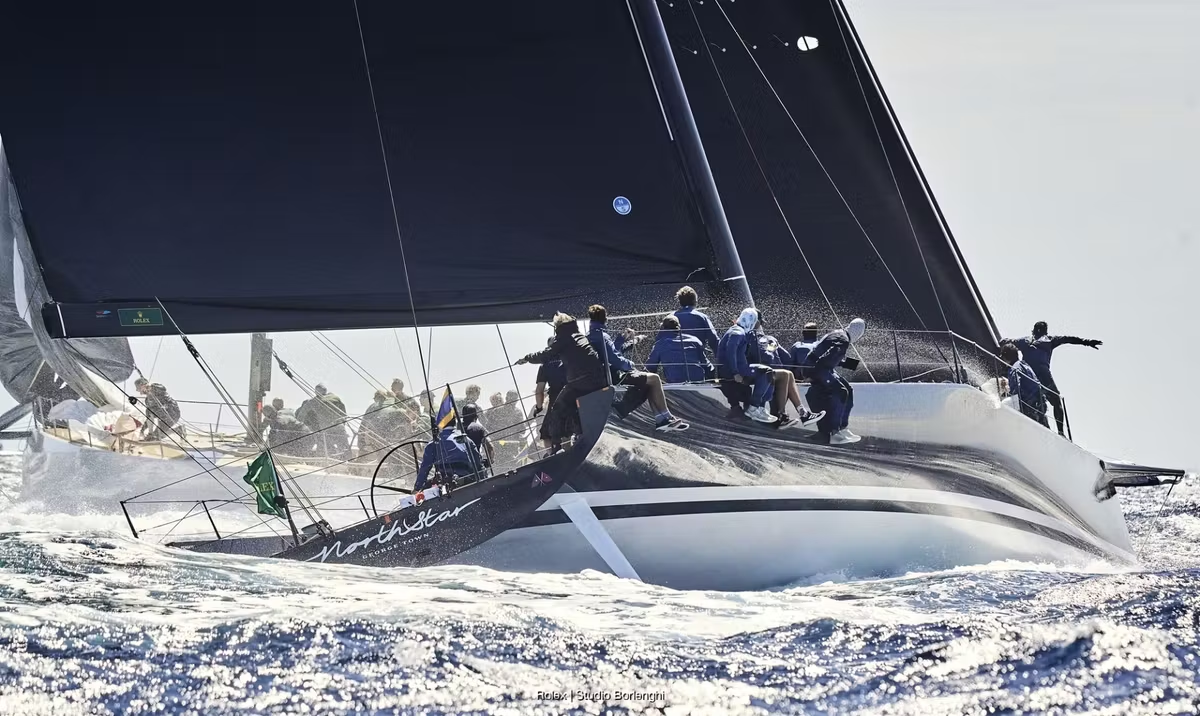
The big story in the Maxi Grand Prix fleet was North Star III. Racing in Porto Cervo for the first time, the radical 76-footer opened her campaign with four consecutive victories and secured the world championship with a race to spare. Balthasar finished second, while Jolt claimed third on countback after finding another gear in the stronger conditions.
If Leopard 3 represents the remarkable second life of an established maxi, North Star III sits at the opposite end of the spectrum. Peter Dubens’ brand-new Judel/Vrolijk design was created from a clean sheet of paper specifically for the Maxi Grand Prix division. She is a pure racing yacht, with every part of the package focused on reducing weight, generating righting moment and making a boat of this size behave more like an oversized TP52.
The keel that changes the game
The most interesting feature is her keel. While many of her rivals use fixed keels combined with large quantities of water ballast, North Star III can cant her keel by up to 12 degrees. It is far less extreme than the systems found on the offshore supermaxis, but it creates enough additional righting moment to remove the need for water ballast.
That matters because the crew no longer has to transfer tonnes of water around the boat through every manoeuvre. North Star can tack, gybe and accelerate away from mark roundings with fewer compromises. The boat carries the power required of a maxi but delivers it in a package designed for the rapid mode changes and repeated manoeuvres of modern windward-leeward racing.
At 76 feet, she is also the longest and highest-rated yacht in the Maxi Grand Prix fleet. That brings a significant handicap penalty, but it gives North Star the opportunity to start ahead, sail in relatively clean air and control the race on the water. The challenge is then to build enough distance to pay her time back to the smaller boats.
Above nine knots, she appears to have an enormous performance window. More importantly, she is not simply quick in a straight line. She can tack, accelerate and change gears with very little loss. That is where the limited-cant keel becomes so interesting: it sits halfway between a conventional fixed-keel grand-prix boat and a fully powered offshore maxi. Her immediate success suggests it could prove one of the defining developments in the next generation of maxi racing.
The birth of a grand-prix class
North Star III is also the latest step in the evolution of a fleet that began with the Mini Maxis.
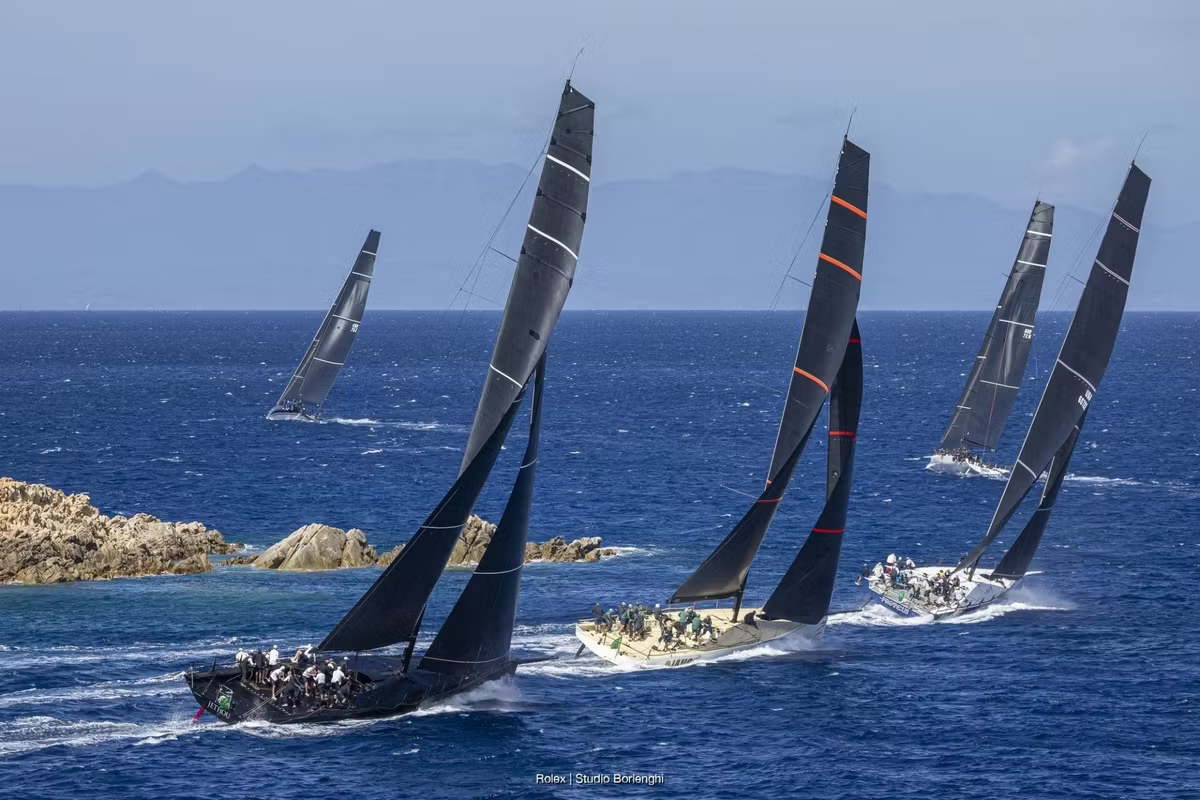
The Mini Maxi class emerged as the high-performance division for yachts sitting below the traditional 80-foot maxis. The name was always slightly misleading – there was nothing particularly “mini” about boats approaching 72 feet – but it created a natural home for a new generation of stripped-out carbon racers such as Rán, Bella Mente, Alegre and Jethou. The first Mini Maxi World Championship was held in Porto Cervo in 2010, with Niklas Zennström’s Rán taking the title.
As the racing became more competitive, the leading owners moved towards a formal box rule. The result was the Maxi 72 class, with yachts constructed within tightly controlled dimensions and performance limits. Designers retained freedom over areas including hull shape, appendages, structures and sail plans, but every boat had to fit inside the same basic box.
It was not a one-design class, and the boats still raced under IRC, but their performance was close enough to produce genuine grand-prix racing with relatively small time corrections. At its height, the Maxi 72 was arguably the most technically advanced owner-driven monohull class in the world, combining America’s Cup and Volvo Ocean Race technology with the intensity of TP52-style racing.
Victims of their own development
Development never stopped, however, and that became both the attraction and the problem. Each new boat arrived faster and more refined, while the existing yachts required increasingly expensive modifications to remain competitive. Numbers gradually declined, teams began racing outside the original rule, and the final Maxi 72 World Championship was held in 2018.
The boats did not disappear. The class simply evolved.
Former Maxi 72s were lengthened, lightened and fitted with new bows, sterns, rigs, appendages and water-ballast systems. They were then joined by purpose-built designs that no longer needed to fit inside the old box. This more open collection of highly optimised racing yachts became known first as Maxi 2 and now as Maxi Grand Prix, broadly covering pure racers between 71 and 77 feet.
The crucial difference is that Maxi Grand Prix is no longer a development box rule in the traditional sense. Very different concepts now compete under IRC: modified former Maxi 72s, newer fixed-keel yachts using water ballast and North Star III with her limited-cant keel. Designers have much greater freedom, but the rating system now carries considerably more responsibility for bringing those fundamentally different boats together.
In many ways, Maxi Grand Prix is less uniform than the old Maxi 72 class, but technically it is far more interesting. The fleet has become a rolling laboratory for big-boat development, allowing owners either to modernise established platforms or pursue entirely new solutions. The box may have disappeared, but the intensity of the racing has not.
I do, however, have one concern. The spread of IRC ratings across the Maxi Grand Prix fleet is now wider than ever, and the class has moved a long way from the tightly controlled parameters of the original box rule. That variety is technically fascinating, but it also makes it increasingly difficult to deliver close racing that keeps owners and teams across the fleet happy.
The IMA and IRC will need to work together to get that balance right: preserving the technical freedom that makes Maxi Grand Prix so compelling and encouraging ambitious new builds, while ensuring owners can enter the fleet with an older boat and still have a realistic chance of being competitive. Getting that right will be crucial to the class’s long-term future.
The other champions
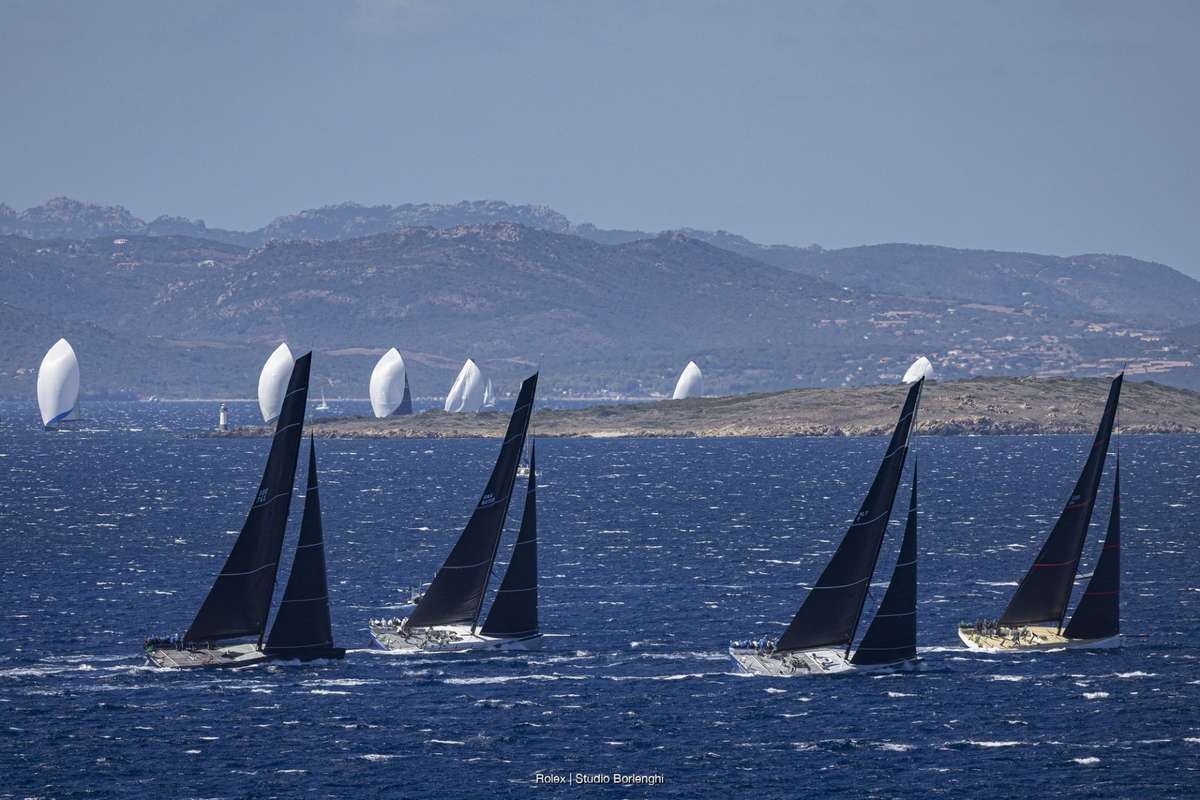
Elsewhere, Artemis Bleu completed the week with three consecutive victories to win Maxi 3, while Yoru held off Fra Diavolo by a single point in Maxi 4. H2O dominated Maxi 5 with four wins from five races, and the multihull contest went down to countback, with Highland Fling XVIII taking the title ahead of Allegra despite Allegra winning the final race.
But the biggest winner was the event itself.
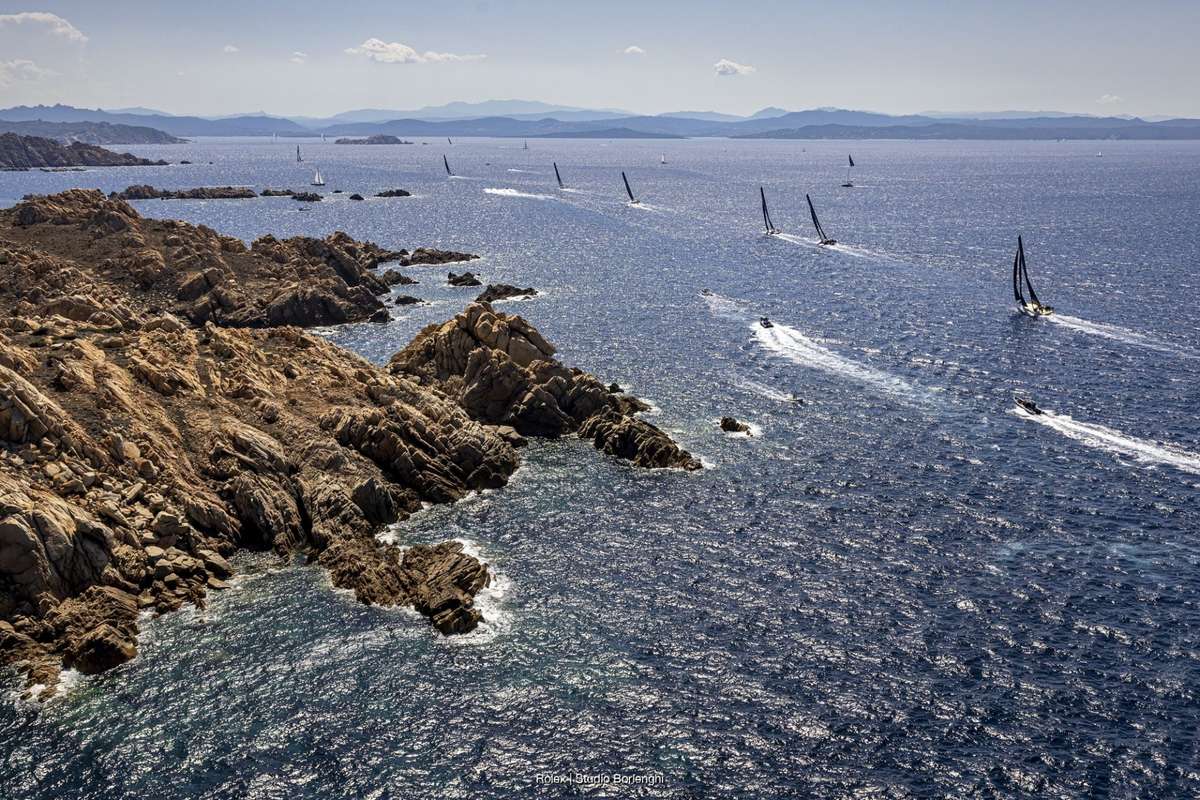
Porto Cervo gave us every possible test of a maxi yacht and its crew: light-air patience, big-breeze commitment, coastal navigation, short-course execution and the relentless challenge of racing these extraordinary boats through the islands.
After several disrupted editions, this was the Maxi Yacht Rolex Cup in all its glory.
Articles You Might Be Interested in
Freddie Carr: Oceanpact-Viking holds its nerve to win J/70 World Championship
Two drivers down: Who steers the US at Geneva SailGP?
The week in racing - 14 Sep ‘26
Freddie Carr: The America’s Cup’s founding document is now central to the fight over its future
Freddie Carr: Raw speed vs the clock – the Maxi Yacht Rolex Cup has never been harder to call
The week in racing - 7 Sep ‘26
Freddie Carr: Platoon take control in Lanzarote as the 52SS title race turns



Member Discussion