
Freddie Carr: My unpopular opinion on Halifax and SailGP 2026

Here's my unpopular opinion after Halifax, and it goes against the 75% of The Foil followers who voted in our poll.
If split fleets and four-boat finals are the future of SailGP, then I'm completely on board. In fact, I think it’s one of the best decisions the league has made in recent years. And this has very little to do with safety.
It’s about creating a better sporting contest, more storylines and racing that’s easier to follow – whether you’re a lifelong sailing fan or completely new to the sport.
We already know split fleets are expected to become the norm in Season 7 when the 14th team joins the league. Two fleets of seven are likely to debut in Perth next year. Since the idea was first floated, almost every discussion has centred around safety following the incidents in Auckland and New York.
Yes, reducing the number of boats charging towards Mark 1 will undoubtedly reduce risk, but for me that’s only a small part of the story. The biggest benefit is simply that the racing is better.
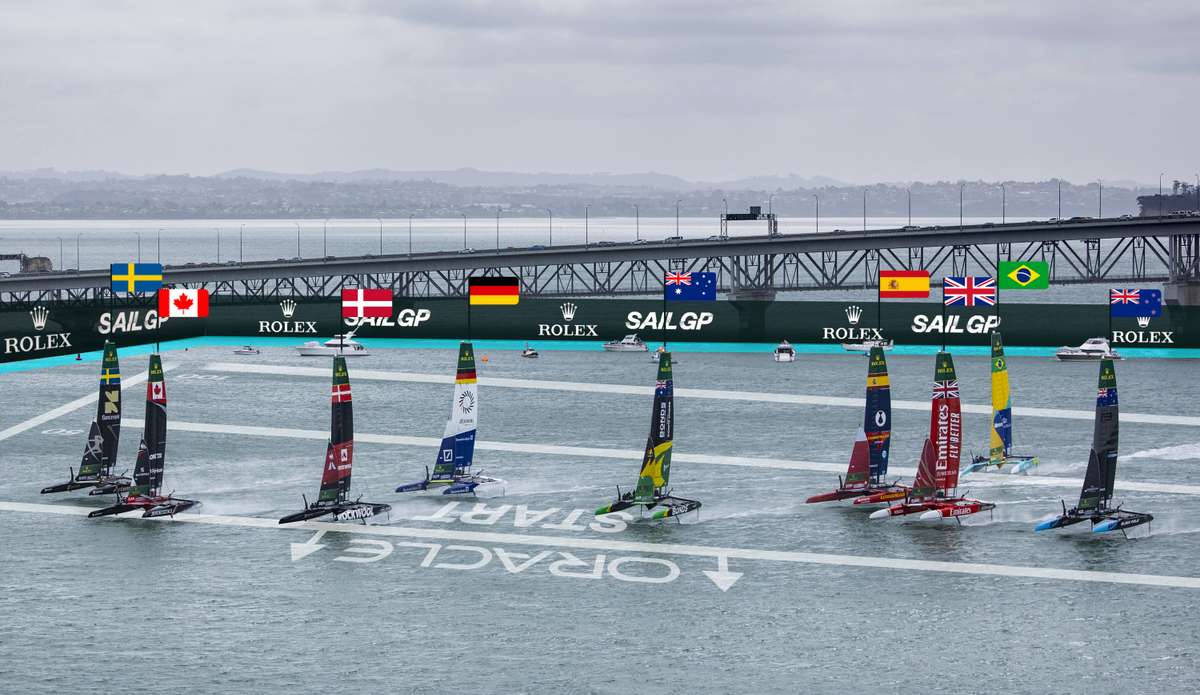
With 13 boats on the racecourse there are often five or six fascinating battles unfolding simultaneously. The problem is you can’t absorb them all. While you’re watching the leaders, you’re missing a crucial cross for seventh. Focus on a penalty and you’ve missed an overtake for third. Even as someone who analyses SailGP every weekend, it can become visual overload.
With seven boats, everything becomes easier to follow. You can still enjoy the battle for the lead while keeping a much better understanding of the tactical picture across the fleet. The key interactions become clearer, the strategy becomes easier to read and the racing simply makes more sense.
Ironically, I actually think split fleets make even more sense in light winds than they do in heavy air. When the F50s are sailing with the 27.5-metre wings, the amount of dirty air they generate can completely reshape the racecourse. Just look back at Rio. After the first gybe from Mark 1 there was almost no logic behind which boats stayed foiling and which ones dropped off. A split second of disturbed airflow and your race was effectively over.
With smaller fleets that blanket of dirty air becomes far more manageable. The leaders are less likely to disappear into the distance while the boats at the back spend half a lap trying to accelerate back onto the foils. Split fleets should improve the quality of racing in every wind range.
The other reason I love the format is that you effectively create two leagues running simultaneously. One of my favourite races of any SailGP weekend isn’t actually the Grand Final – it’s the final qualifying race where teams are desperately trying to sneak into it.
More often than not, first and second have already secured their place before the final fleet race. The real drama is usually third versus fourth. Now we'll get that battle twice.
Two qualifying groups. Two winner-takes-all races. Double the jeopardy. Double the storylines.
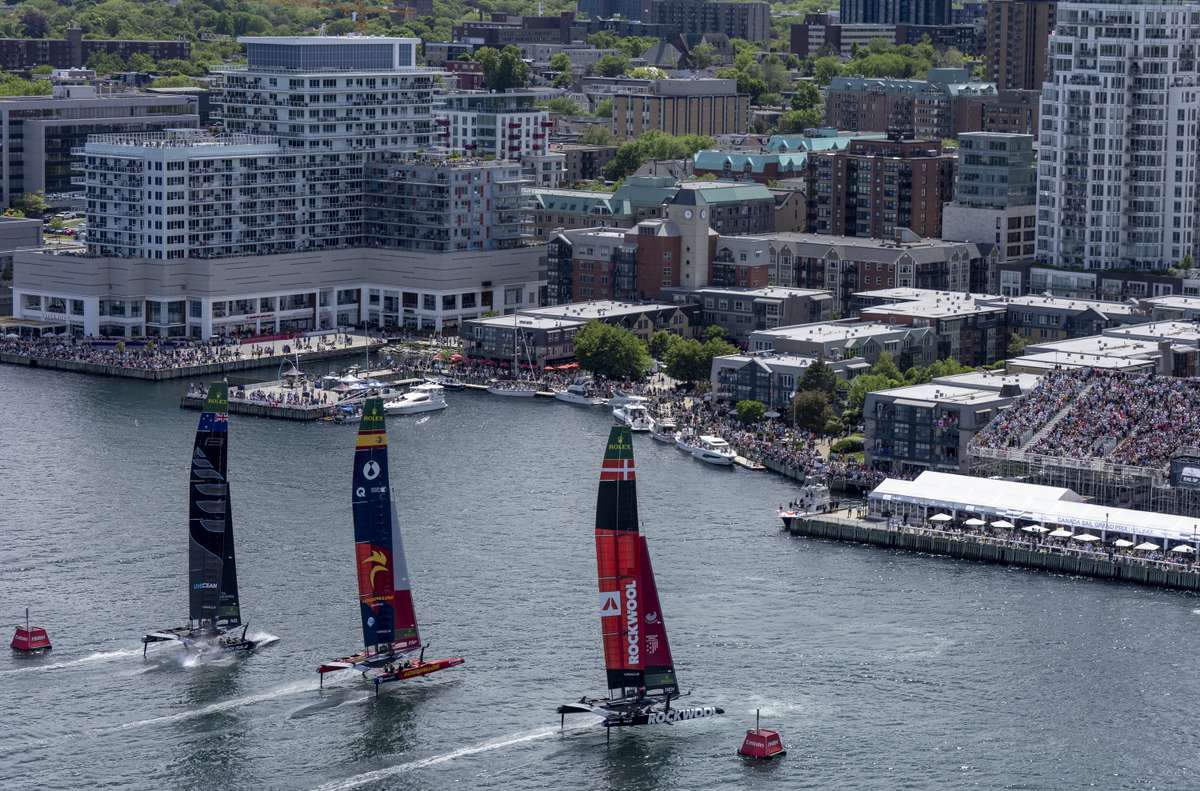
There was plenty of debate in Halifax about Group A being the “group of death”. Several teams were quick to point out on social media that one side of the draw looked significantly tougher than the other.
Personally, I'm not sure SailGP could have seeded it much differently. The New Zealand Black Foils sitting 13th in the championship inevitably distorted the rankings and made one group stronger than the other.
There is an interesting question though. Should SailGP reshuffle the groups overnight?
My colleague at The Foil, Lewis Smith, suggested seeding Saturday using the championship standings before reshuffling Sunday's groups based on the overnight event leaderboard. It’s an intriguing idea.
It would create different match-ups throughout the weekend and stop teams repeatedly racing the same opponents over the course of a season. My only concern is consistency. If groups change too frequently, it becomes harder for fans to follow the narrative.
The only genuine flaw we saw in Halifax came after Emirates GBR’s spectacular nosedive damaged their wing before Sunday's racing. One group suddenly had seven boats competing for points while the other only had five. Since sixth and seventh score nothing, that naturally made qualifying from the larger fleet considerably harder.
These things happen in sport!
The final issue SailGP needs to solve is tie-breaks between teams from different groups. Personally, I’d reward the team that qualified from the larger fleet. If both groups contain the same number of boats, I’d decide it based on the finishing position in the final qualifying race, then work backwards through the previous races if required. It’s a detail, but championship points matter enormously from top to bottom of the standings.
Despite those small issues, I’m delighted split fleets appear here to stay. I’d much rather follow two brilliant seven-boat races than spend half my time trying to work out what’s happening in a 13-boat free-for-all. I realise around 75% of you disagree with me.
Now for the four-boat final. For me, this is an even easier decision.
The Grand Final is the showcase race of the weekend. Occasionally we get an all-time classic like Great Britain versus Australia in New York. But more often than not the third boat gets dropped early and we end up watching a two-boat match race.
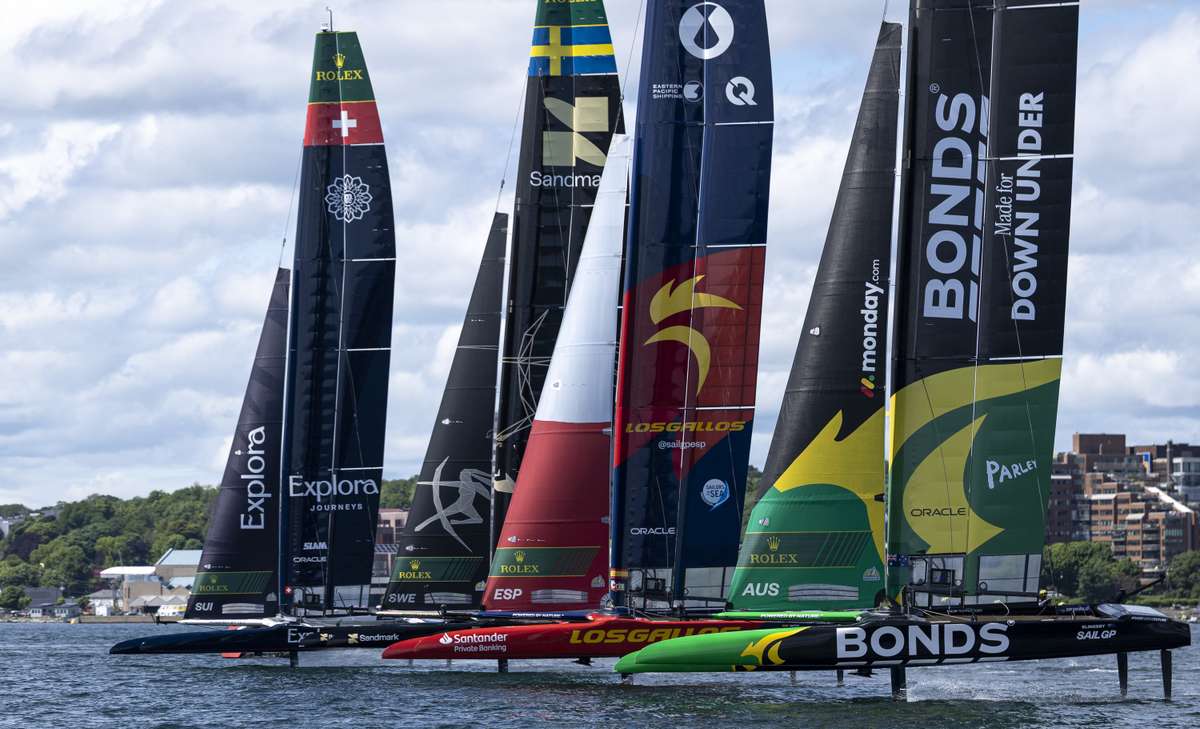
Adding a fourth boat completely changes the dynamic. The leader now has to defend against three opponents spread across the racecourse instead of two. Second place is already asking tactical questions of the leader. Add two more boats hunting leverage from opposite sides of the course and suddenly the strategic options multiply.
It also creates a fascinating secondary battle. Let's call it the trap door.
Finish third in a SailGP event and your team pockets around $140,000 in prize money. Finish fourth and you get nothing. At what point does the boat running third stop chasing victory and start defending the cheque?
Suddenly the fight for third becomes almost as compelling as the battle for first. More story lines that are easier to follow.
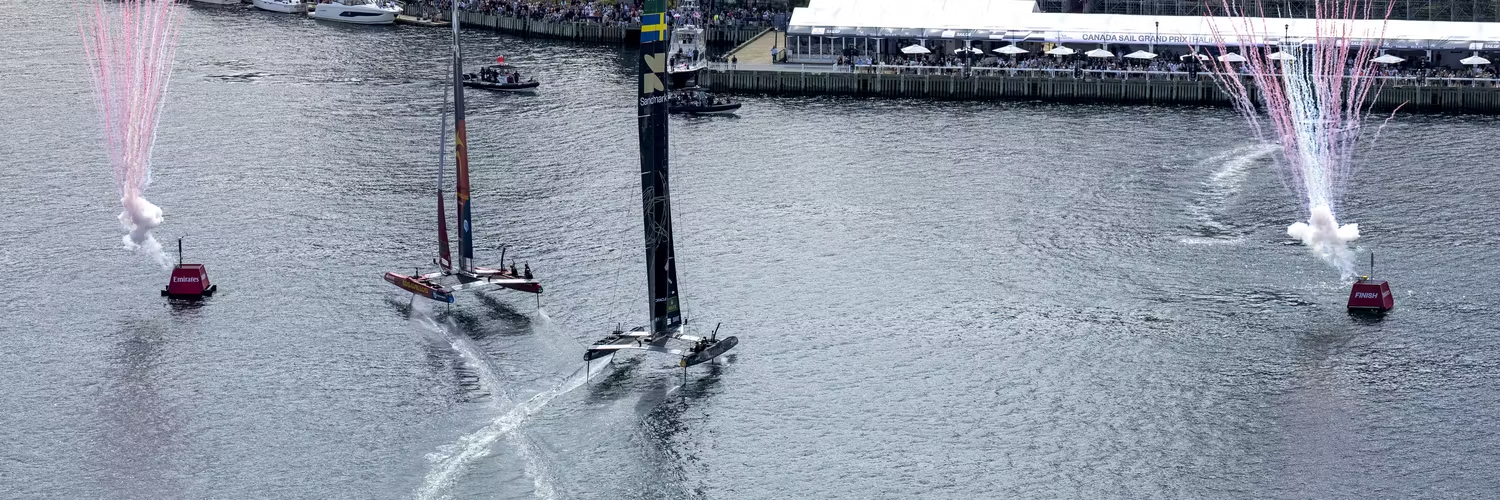
Australia dominated qualifying yet finished fourth in the first-ever four-boat final. Spain scraped into the final after an epic qualifying battle with New Zealand before taking the overall victory. Those are exactly the sort of storylines this format creates.
So if Season 7 gives us two fleets of seven, back-to-back racing, twice as many qualification battles and four-boat finals, then I genuinely think SailGP is moving in the right direction.
The format isn’t perfect yet. There are a few bugs to iron out. But from a fan’s perspective –and especially from someone who analyses every race – I think it’s going to make the sport more watchable, more understandable and ultimately far more entertaining.
Articles You Might Be Interested in

Freddie Carr: Why Pensacola could change SailGP for good
Emirates GBR and Team 14 claim first slots on SailGP’s Pensacola training F50

SailGP’s year-round training base is about to open for business
American Express secures title rights to SailGP's Hong Kong opener

The RC44: how Russell Coutts hit a winning formula

The Foil Debrief: Five more knots and Geneva would be the best event on the circuit
Los Gallos snatch Geneva from the Flying Roos
Five races, five winners on day one of SailGP's Geneva drift




Member Discussion