
Freddie Carr: Naples is not a neutral racecourse

The AC40 Preliminary Regatta will provide the first meaningful evidence of which teams understand the venue that will decide the 38th America’s Cup.
I first went to Naples with Luna Rossa for the America’s Cup World Series events in 2012 and 2013. The boats were completely different, the racing was different and the America’s Cup itself was heading in a very different direction, but the fundamentals of the venue have not changed.
Naples is not a simple open-water racecourse.
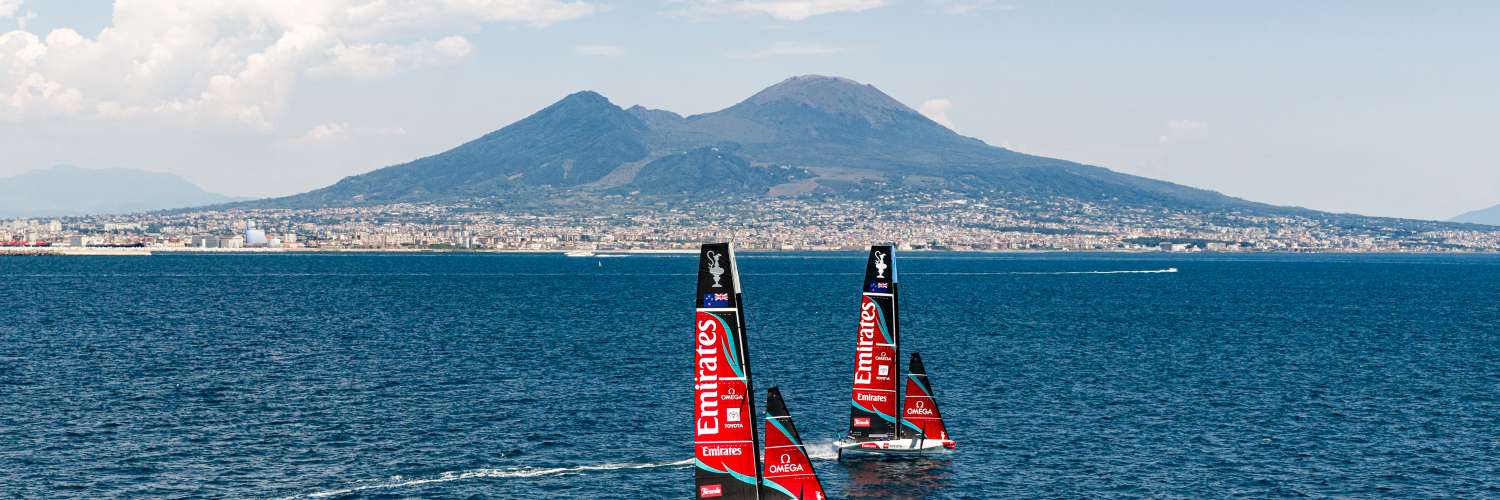
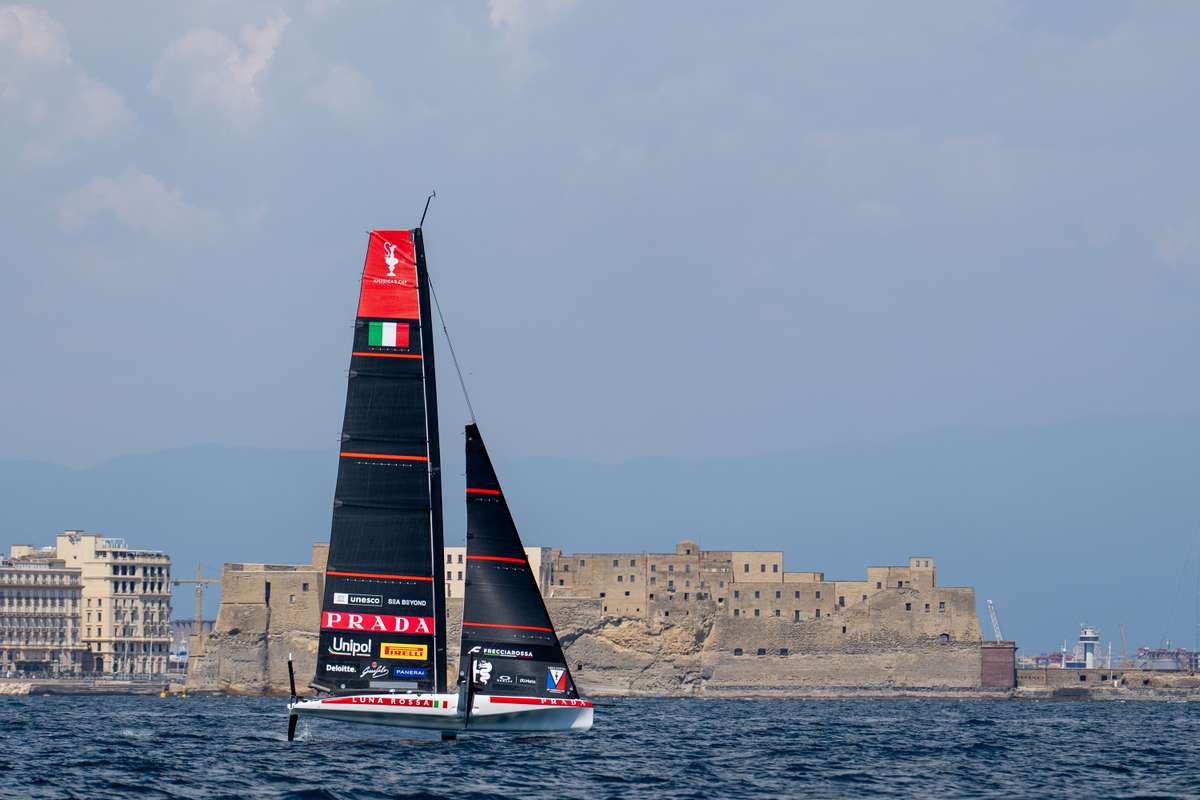
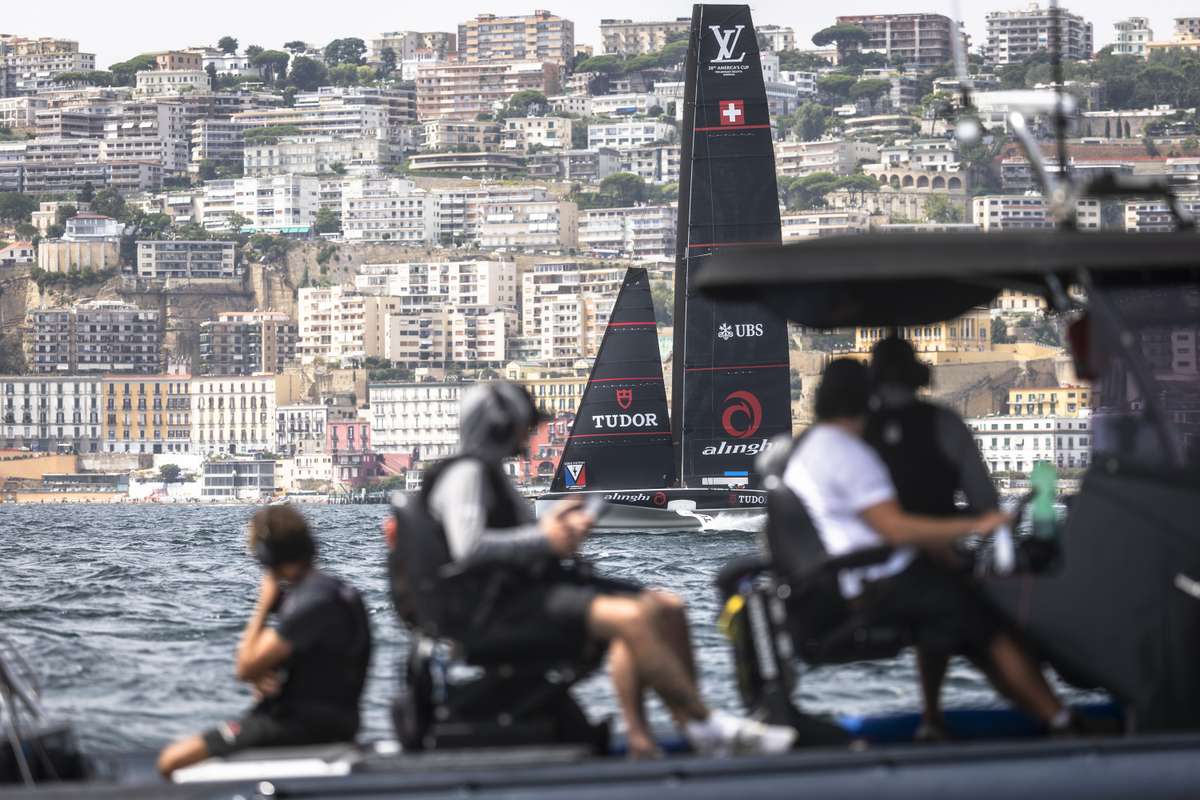
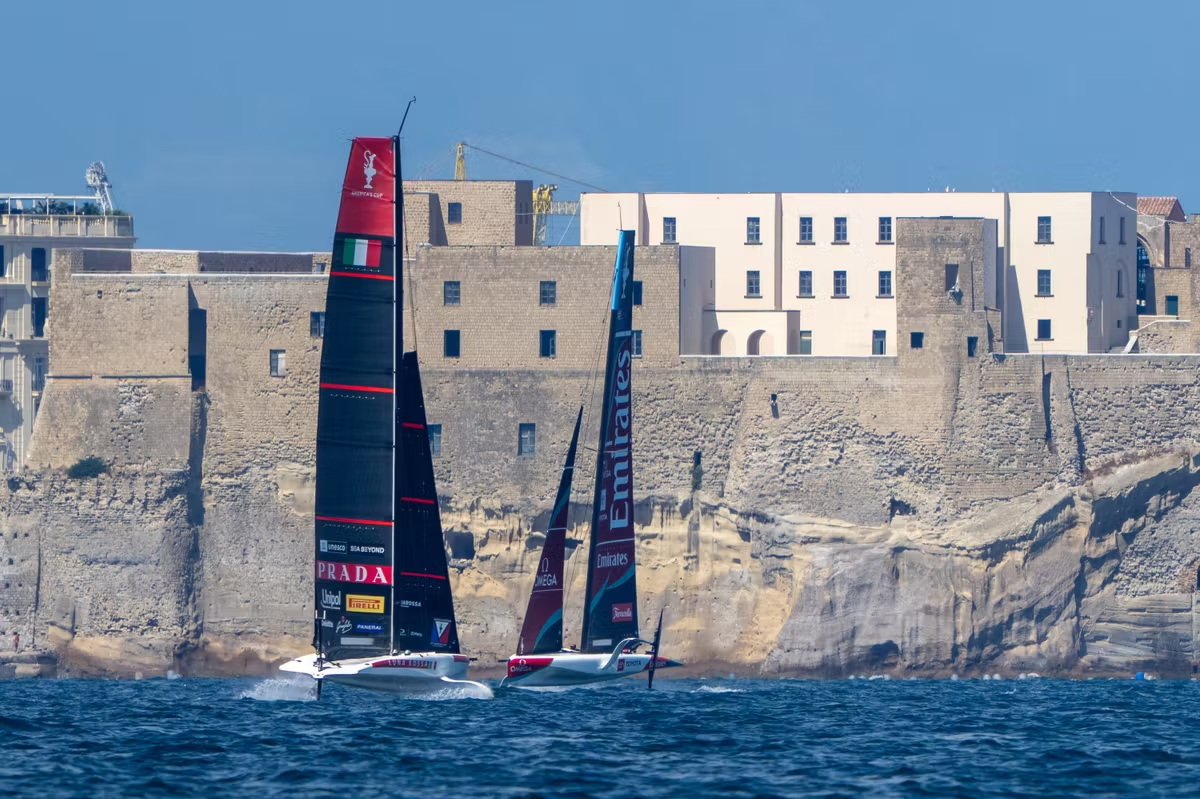
The racing sits directly off the city’s Lungomare waterfront, between Castel dell’Ovo to the east and the Posillipo coastline to the west. Behind the racecourse is a densely built-up city and rising terrain. In front of it is the open Bay of Naples.
That creates a fascinating mix of influences: the afternoon thermal breeze, the shape of the coastline, the heat coming off the city, the shelter beneath Posillipo and the sea state building across the bay.
I remember from my time there with Luna Rossa that Naples was never a venue where you could simply look at the wind direction, pick a side and expect that decision to remain correct for the whole afternoon.
The racecourse develops. The pressure changes, the breeze bends around the coastline and what works in the opening race may not work in the final one. You have to understand not only what the wind is doing now, but what stage of its development you are racing in.
That could prove decisive when nine AC40s line up for the second Preliminary Regatta of the 38th America’s Cup cycle.
The most recognisable Naples condition is an afternoon breeze arriving from somewhere in the southern or south-westerly sector. Racing is scheduled between 14:00 and 16:00, when the thermal influence should be at its strongest.
If the thermal establishes properly, the windward legs are likely to take the fleet away from the city and towards the more open part of the bay. The downwind legs would then bring the boats back towards the waterfront.
It should produce an extraordinary spectacle. But it will not necessarily produce straightforward racing.
At the beginning of the afternoon, the breeze could still be patchy and slightly unstable. As the city and surrounding land heat up, the thermal should become better connected across the bay. It may strengthen, change direction and become more consistent as the afternoon progresses.
The first race of the day could therefore be about finding pressure and keeping the AC40 on the foils. By the final race, it may become a more conventional tactical contest based around shifts, positioning and control.
For the sailors, the challenge is identifying exactly when that transition takes place.
The shoreside against the open bay
One of the defining decisions could be whether to work towards the Posillipo side of the racecourse or remain in the cleaner air of the open bay.
The Posillipo side may offer flatter water and the possibility of a geographical shift as the wind bends around the coastline. If that shift is reliable, a team could sail fewer metres and protect a consistent advantage.
But there is a risk.
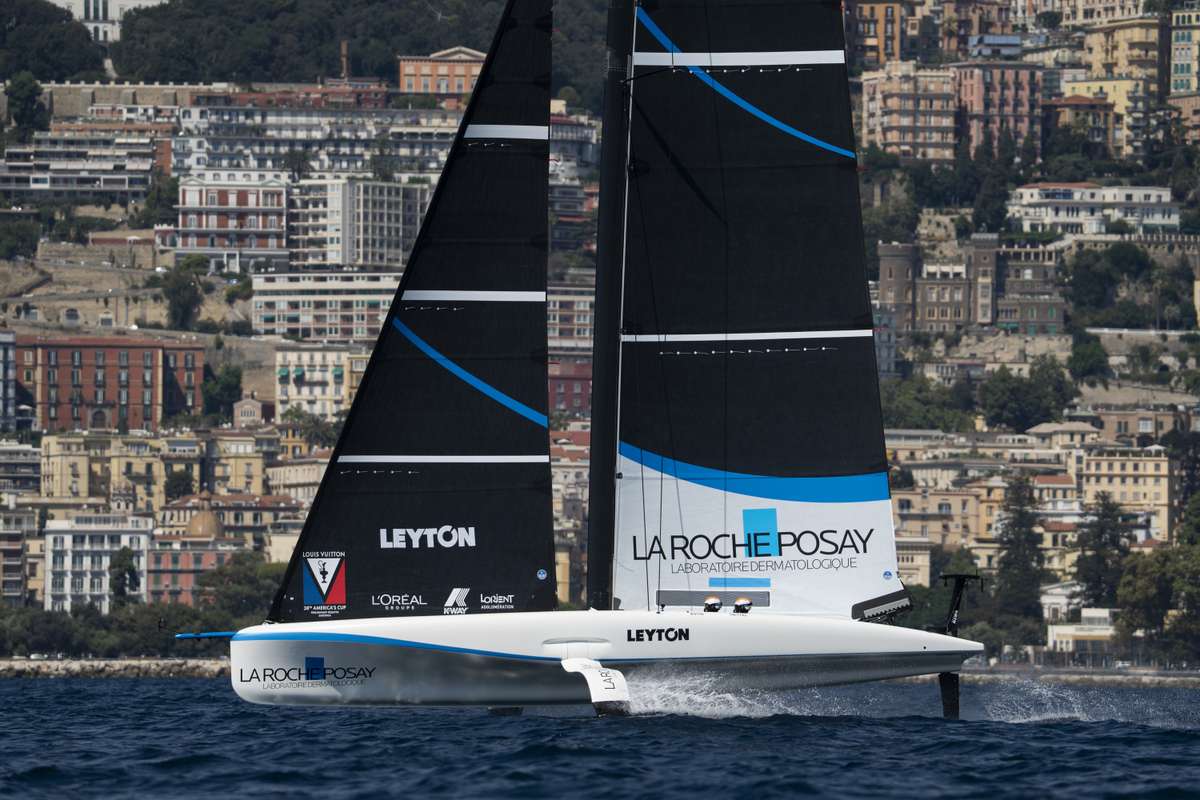
The pressure closer to the land may be softer or more disturbed. The terrain and buildings can interfere with the airflow, particularly if the breeze is not fully established. A boat committing to the shoreline could find itself in flatter water but with considerably less wind.
The open side should offer cleaner and potentially stronger pressure, with fewer obstructions affecting the breeze. It also provides more freedom to manoeuvre and play the shifts.
The compromise is a more exposed sea state and the possibility of sailing additional distance if the geographical shift closer to Posillipo proves stronger than expected. That relationship between pressure and water state is going to be critical.
In an AC40, the fastest route is not necessarily the shortest one. It is the route that allows the boat to remain on the foils. A team may find two knots more wind offshore, but if it has to complete a difficult tack through an awkward wave pattern, it could lose more during the manoeuvre than it gains from the additional pressure.
Likewise, a boat closer to the shore might be sailing in slightly less wind but operating on flatter water, completing cleaner manoeuvres and maintaining a more consistent flight.
That is the calculation the crews will be making on every leg.
The sea state could be the hidden factor
The sea state in Naples should not be underestimated.
A south-westerly breeze has enough water across which to build a difficult surface before it reaches the racing area. It does not need to be blowing 20 knots for the waves to start affecting the AC40s.
Flight height, ride control and the timing of manoeuvres will all matter. We should watch for boats delaying a tack or gybe to find a flatter section of water. We should also look at which crews can accelerate most quickly after a manoeuvre and which boats struggle to foil after a crash down.
A single mistake can become extremely expensive. The best crews will not necessarily complete the fewest number of manoeuvres. They will complete the right manoeuvres, in the right water, at the right moment.
Nine boats, one tight start line
The starts should be some of the most revealing moments of the regatta.
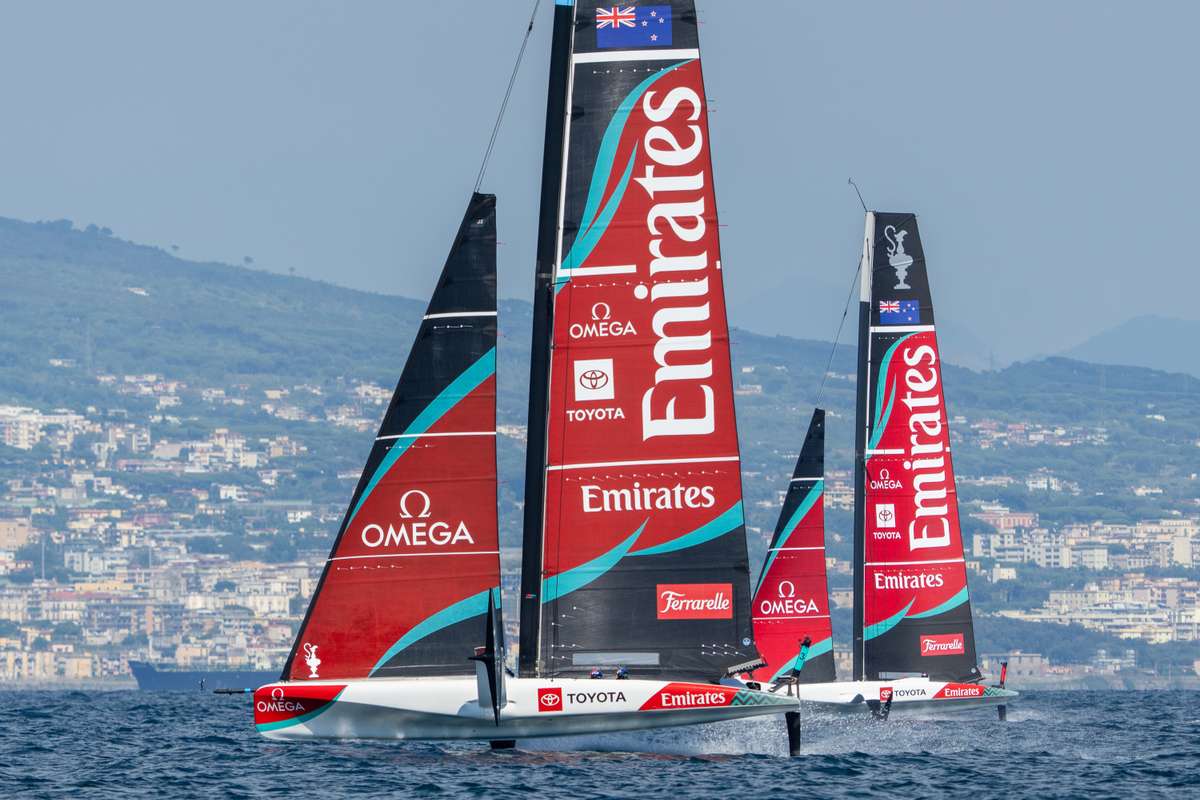
Nine AC40s accelerating towards an upwind start on a tight racecourse will leave very little room for error. These boats build speed rapidly, but they cannot slow down and reposition like a conventional displacement yacht.
Once a crew commits to its final approach, its options narrow very quickly. The sailors will be balancing time and distance, foil position, sail set up, clear air and the location of the course boundaries. The theoretically favoured end may not necessarily be the best place from which to start.
If six boats are fighting for one end of the line, a slightly less favourable starting position with room to accelerate could be far more valuable. The first 30 seconds may decide a large part of the race.
The boat that starts in clear air and secures the first crossing opportunity can begin to control the fleet. In a one-design class, where the speed differences should be relatively small, that positional advantage is enormous.
The first cross is therefore one of the key moments to watch. A boat crossing the fleet can select which side of the course it wants to protect, force its rivals to sail in disturbed air and dictate where the next tactical interaction takes place.
From that moment, the leader does not need to chase every shift. It can protect the strongest pressure, stay between the fleet and the mark and force the opposition to take greater risks.
The gates will not just be about distance
At both the windward and leeward gates, the shortest route may not be the fastest.
The crews will be assessing which mark offers the strongest exit pressure, the cleanest water and the best angle onto the next leg.
A congested rounding around the closest mark could leave a boat slow, low and trapped underneath another competitor. Sailing a few additional metres to the opposite mark may allow a crew to execute a clean turn and accelerate immediately.
That decision becomes particularly important in the middle of the fleet.
When nine boats arrive at a gate within seconds of one another, there is very little value in saving 20 metres on the approach if the boat then loses 100 metres trying to rebuild speed after the rounding.
The best teams will be thinking about the exit before they enter the gate.
Reading pressure at 40 knots
Downwind, small differences in pressure can create huge differences in boatspeed.
A boat sailing in 14 knots of wind may be travelling several knots faster than one sitting in 12 knots. At those speeds, the gaps open quickly.
The crews will not simply be looking for the shortest route towards the leeward gate. They will be trying to connect the next band of pressure while avoiding unnecessary manoeuvres.
Communication between the two sides of the AC40 will be vital. The sailors need to process information, make a call and complete the manoeuvre within seconds.
The first boat into a new pressure line could make an enormous gain.
What Naples will really tell us
We should be careful about using the AC40 results as any prediction of what will happen when the AC75s race here in 2027.
The AC75s will have different speeds, different manoeuvre costs and different tactical geometry. The development race will also play a far greater role.
But the knowledge of the venue is transferable.
The teams will start to understand where the afternoon breeze first appears, how it spreads across the bay and whether one side of the course consistently delivers better pressure.
They will gather information on how the wind bends around Posillipo, where the sea state becomes most difficult and how quickly the conditions change during the afternoon racing window.
That information can feed directly into weather modelling, simulator work and tactical preparation for the main event.
The boats will change. The geography will not.
Having been there with Luna Rossa in 2012 and 2013, I know how quickly Naples can reward a good read – and how severely it can punish a crew that commits to yesterday’s answer.
That is what makes this Preliminary Regatta so interesting. It’s not simply another opportunity to race the AC40s. It is the first proper examination of the water that will decide the 38th America’s Cup.
By the end of the week, we won’t know which team has the fastest AC75. But we should have a much better idea which team understands Naples.
Articles You Might Be Interested in
The week in racing - 21 Sep ‘26

The Foil Debrief: Five more knots and Geneva would be the best event on the circuit
Ratcliffe isn't backing down – what the latest INEOS vs Athena court filing tells us
Freddie Carr: Oceanpact-Viking holds its nerve to win J/70 World Championship
Two drivers down: Who steers the US at Geneva SailGP?
Freddie Carr: Leopard 3 and North Star III crown a Maxi Yacht Rolex Cup for the ages
Gradoni and Giubilei promoted as Luna Rossa reveal Naples squad



Member Discussion
Good insight Freddie, thanks.