
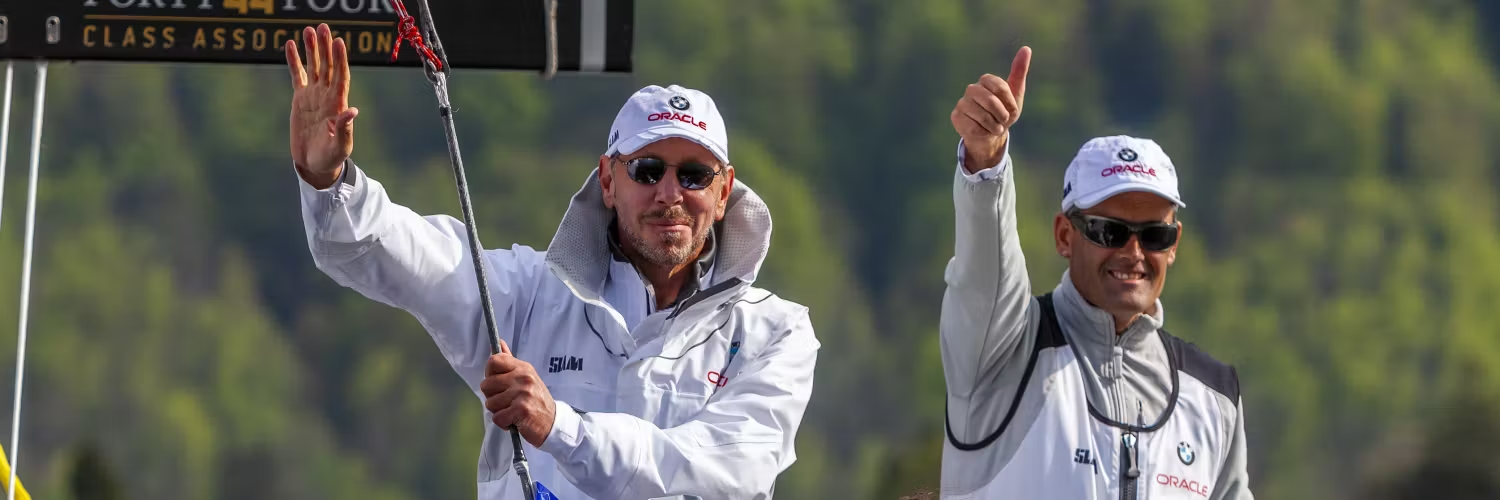
The RC44: how Russell Coutts hit a winning formula

Most grand prix sailing classes burn bright and fade fast. Owners arrive, spend heavily, win or lose, and move on to the next shiny thing within three or four seasons. The RC44 has defied that cycle for the best part of two decades. Now racing as the 44Cup, it still draws a hard core of owners back season after season, many of whom have been in the class almost since the first boats hit the water.
Worlds showdown at Cowes
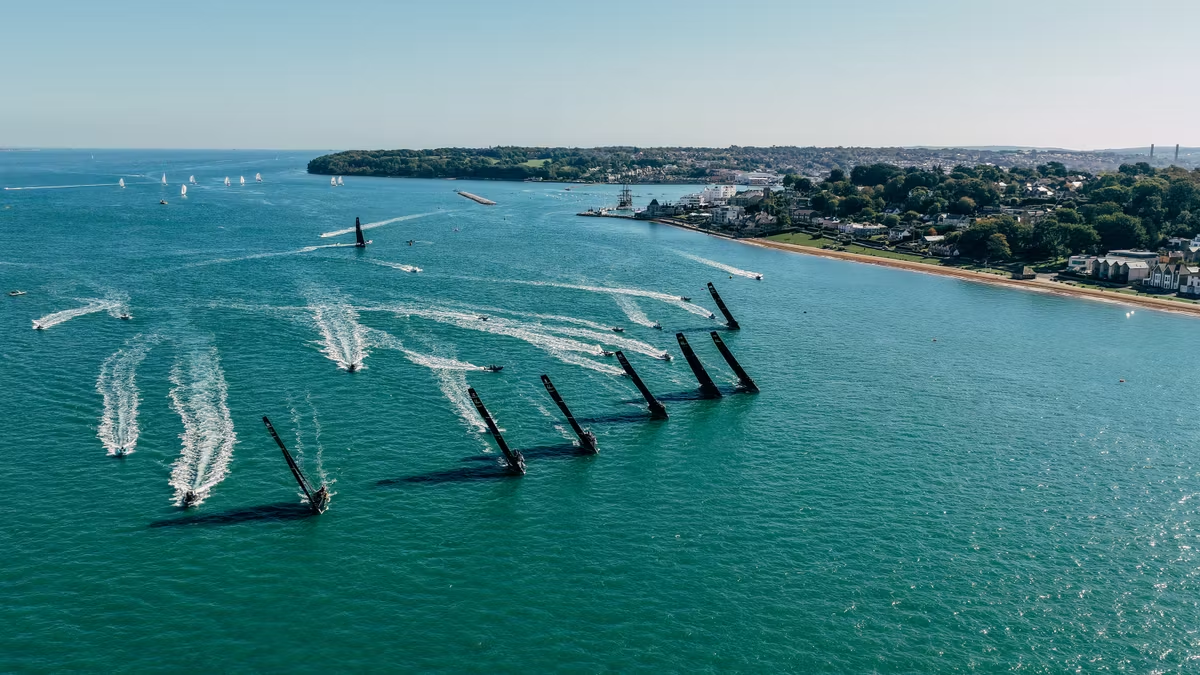
Events on the 44Cup circuit typically comprise one practice day and four days of racing. At Cowes, though, RC44 Class President Chris Bake also arranged for the host club, the Royal Yacht Squadron, to join forces with the RC44 teams to run the King's Cup. VIP guests, including Duran Duran lead singer Simon Le Bon and Sir Ben Ainslie, were invited to steer two races on the high-performance one-designs, raising money for 11 Isle of Wight-based sailing charities.
Over the final two days, the championship became a two-horse race between Aleph Racing, steered by Pietro Loro Piana, and Team Aqua, owned by event backer Chris Bake. Team Aqua led on Saturday after scoring two race wins, but Aleph Racing's consistency carried them into the final day with a one-point lead.
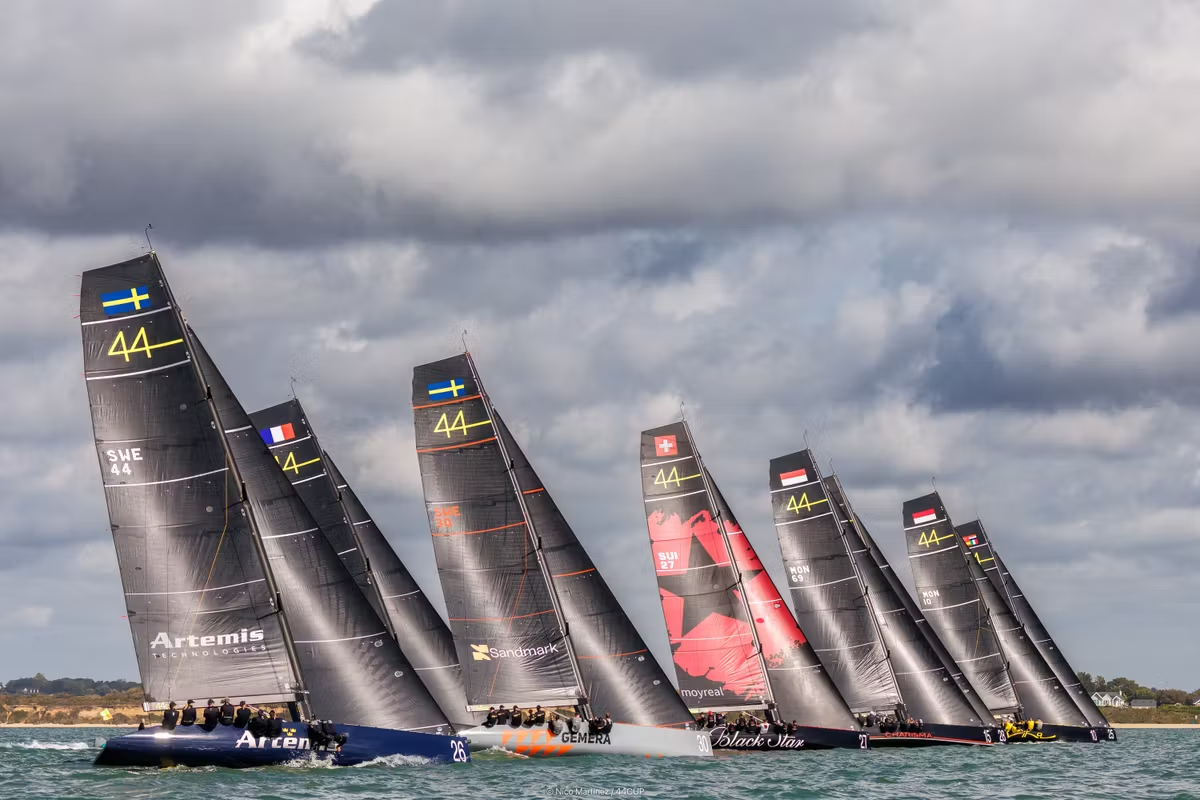
Going into the last race, first and second overall were settled, but the order was not, with Aleph Racing two points ahead. This time Aleph Racing engaged fully, got ahead and to leeward of Team Aqua, crossed in front and then sat on her for the rest of the race. It didn't matter that they finished eighth and ninth: Aleph Racing ended on 35 points to Team Aqua's 39, claiming their first World Championship title since joining the class.
For most of that time the team has been campaigned by Hugues Lepic, who in recent years shared the helm with Loro Piana before handing it to the young Italian full-time this season. Lepic phoned to congratulate his protégé soon after they crossed the line.
SailGP maestro's personal project
So what is it about this 44-footer that keeps billionaires and business leaders so loyal? The RC44 is unusual among one-designs in that it was conceived not by a naval architect or a boatbuilding firm, but by one of the most accomplished sailors in the sport.
Russell Coutts, between America's Cup campaigns after parting ways with Alinghi, set out in the mid-2000s to create the boat he himself wanted to race. He worked with the Slovenian naval architect Andrej Justin, who drew the lines, and the boats were built in carbon by Pauger Carbon Composites in Hungary.
Conceived in 2006, Coutts's brief was clear from the start: a super-light, racing-only day boat that would give an owner a genuine taste of what it feels like to steer a top-end race boat. It was not to be dumbed down. The result bears more than a passing resemblance to the America's Cup monohulls of that era, with a full carbon build, a square-top mainsail and a trim tab on the keel, a feature borrowed directly from Version 5 Cup boats and still unique among one-designs. At 13.35 metres long, it can hit around 24 knots downwind.
The owner on the wheel
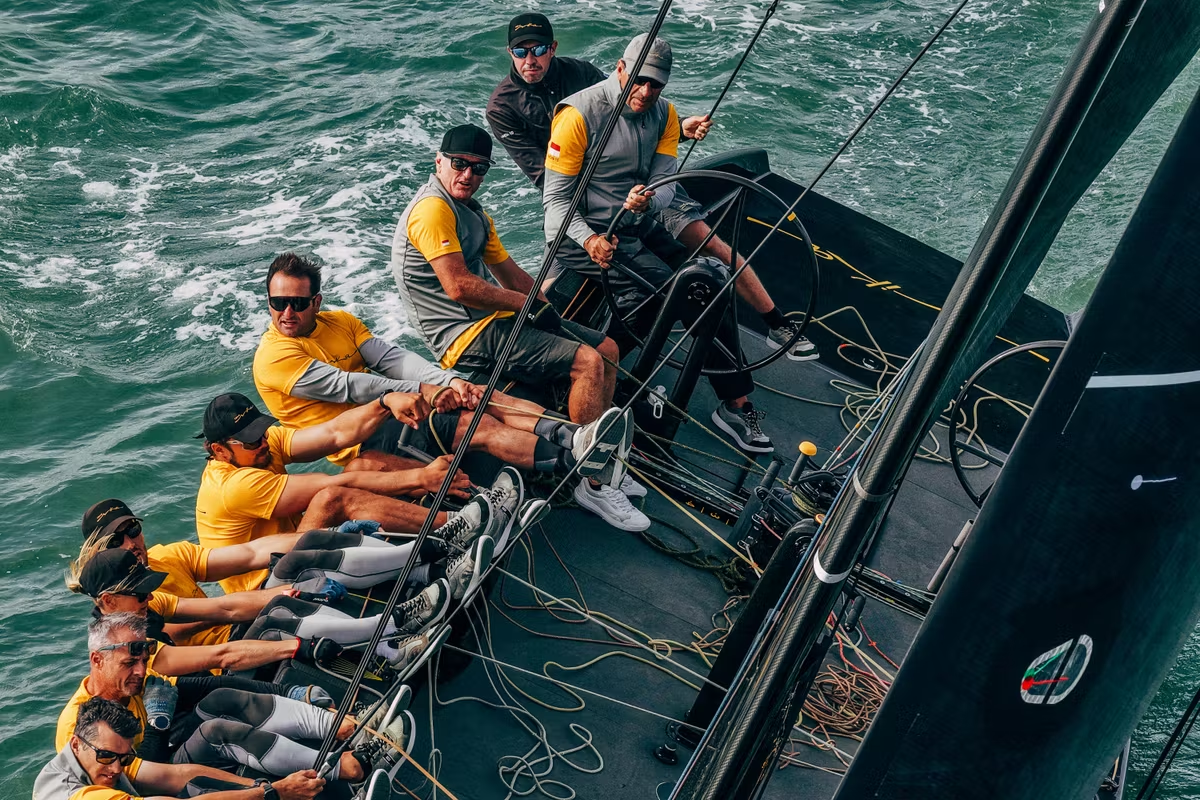
The single most important rule in the class is also the simplest: the owner steers. The RC44 was built from day one as an amateur owner-driver class, with strict limits on the number of professionals in each crew. That puts the person writing the cheques in the hottest seat on the boat, surrounded by some of the best sailors in the world.
And they are the best. Over the years, the tacticians' bench has included America's Cup and round-the-world winners. Cameron Appleton has called tactics for Chris Bake's Team Aqua since the class began, and has six RC44 titles to show for it. For an owner, being coached in real time by sailors of that calibre is a rare privilege, and it makes improvement measurable from one regatta to the next.
The boat demands it, too. It is technical and sensitive, rewarding good steering and punishing sloppy work. Every crew member has a job that matters throughout the race. Because the fleet is so evenly matched, places are decided by small margins, and one or two poor races can wreck a weekend's scoreline. That intensity is exactly what competitive owners crave.
Strict one-design, sensible costs
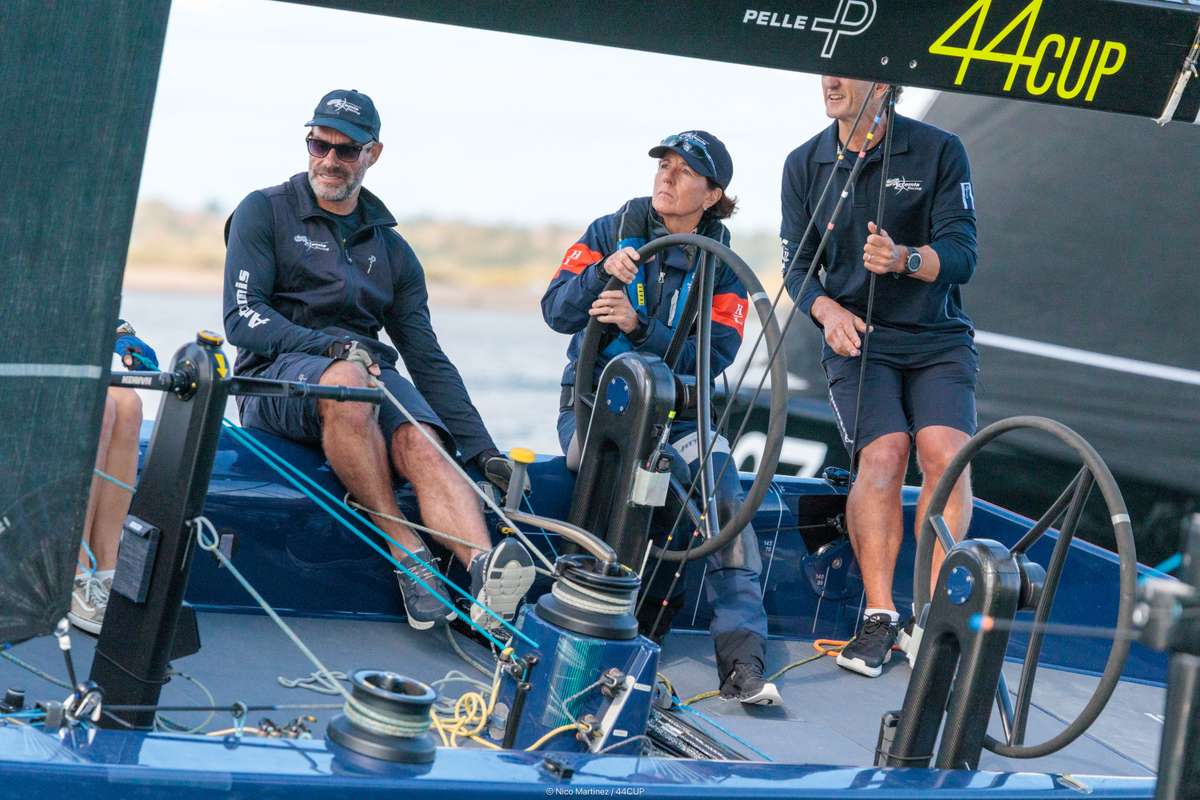
The owners who come to the RC44 have often tried the box-rule alternative, where the richest team with the newest boat tends to win. The RC44 offers the opposite. Hull shape, appendages, weight distribution, deck layout and sail plan are all tightly controlled, so the result comes down to crew work rather than chequebook. The sail inventory is limited and sail replacement is rationed, while subtle, class-wide updates have kept the equipment current without triggering an arms race. Twenty-year-old hulls remain competitive.
That makes the RC44 high-tech but, by grand prix standards, relatively affordable. Racing one costs a fraction of a custom box-rule campaign.
Logistics were part of the design brief from the start. Coutts and Justin made sure the whole boat fits inside a standard 40ft shipping container, so moving the fleet around the world is straightforward and cheap. Assembly takes about two days and breakdown about one. The class handles shipping centrally, using a single crane for the whole fleet rather than one per team. For an owner, that removes much of the headache that comes with campaigning a big race boat.
The circuit and the club
The final ingredient is the circuit. Each season the class visits around five carefully chosen venues across Europe and beyond, including a World Championship. Racing is run to a high standard, with direct on-water umpiring and short, punchy courses that the owners themselves asked for. While the class is managed professionally from Switzerland, it's the owners who set its direction.
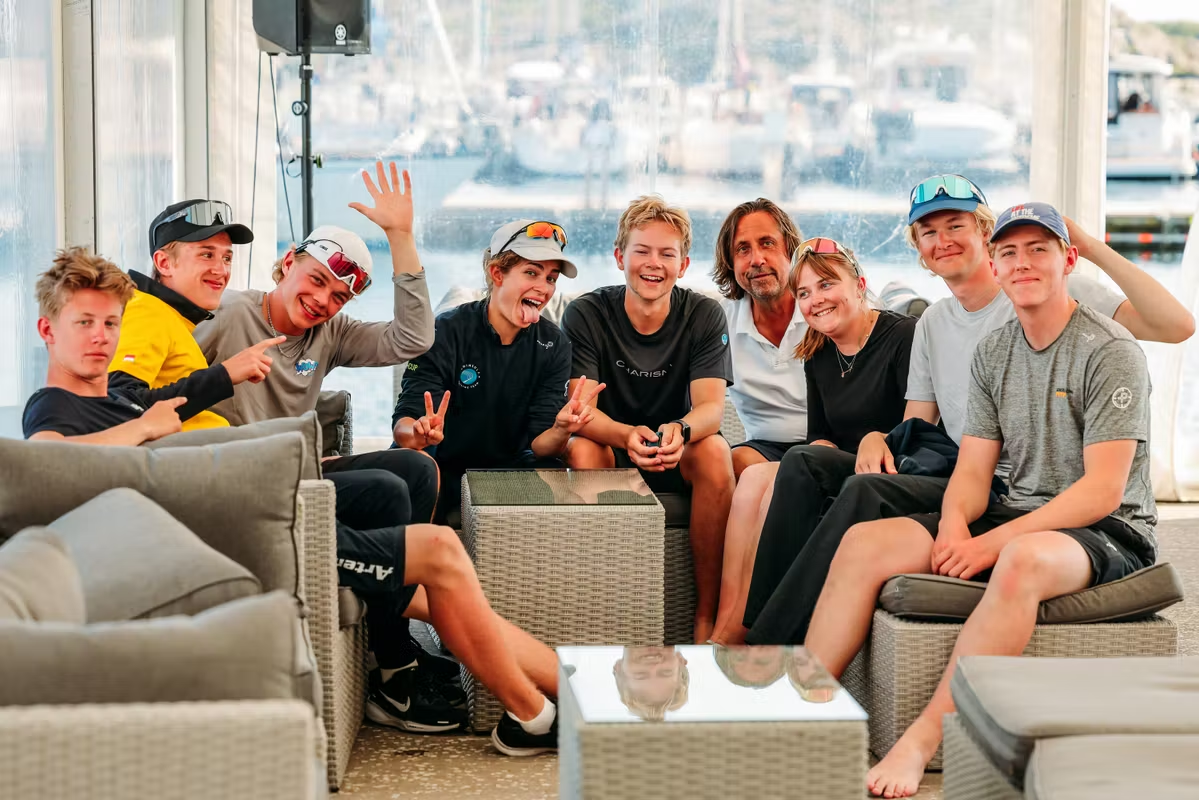
There is a strong social dimension as well. The class has long attracted a cluster of owners from the energy and commodities world, including Torbjörn Törnqvist and long-serving class president Chris Bake. Rivals on the water become friends ashore, and that camaraderie is a big reason owners stay.
Put it all together and the appeal is easy to understand. The RC44 offers a genuine grand prix experience with the owner on the helm, a level playing field, manageable costs and logistics, good venues and good company. Coutts set out to build the boat he wanted to sail. Nearly twenty years on, a dedicated fleet of owners clearly wants to sail it too.
With Coutts now fully immersed in the high-speed world of F50 foiling catamarans as founder and CEO of SailGP, it would be easy to assume the innovative Kiwi has left the RC44 far behind. Perhaps he can be convinced to come back and take on the teams that he helped establish when he conceived the boat. Funnily enough, some of the sailors who compete on SailGP and on the RC44 circuit tell me that it’s the 44 racing that they look forward to the most. This boat is a fan favourite not just with the owners but with the sailors themselves.
Articles You Might Be Interested in
The Tabarly Effect: how one quiet sailor built a nation of ocean racers
LIVE: 52 Super Series Valencia Sailing Week – the title decider
The week in racing - 5 Oct ’26
Why Les Voiles de Saint-Tropez is so special
The week in racing - 28 Sep ‘26
Freddie Carr: Naples is not a neutral racecourse
The week in racing - 21 Sep ‘26




Member Discussion