
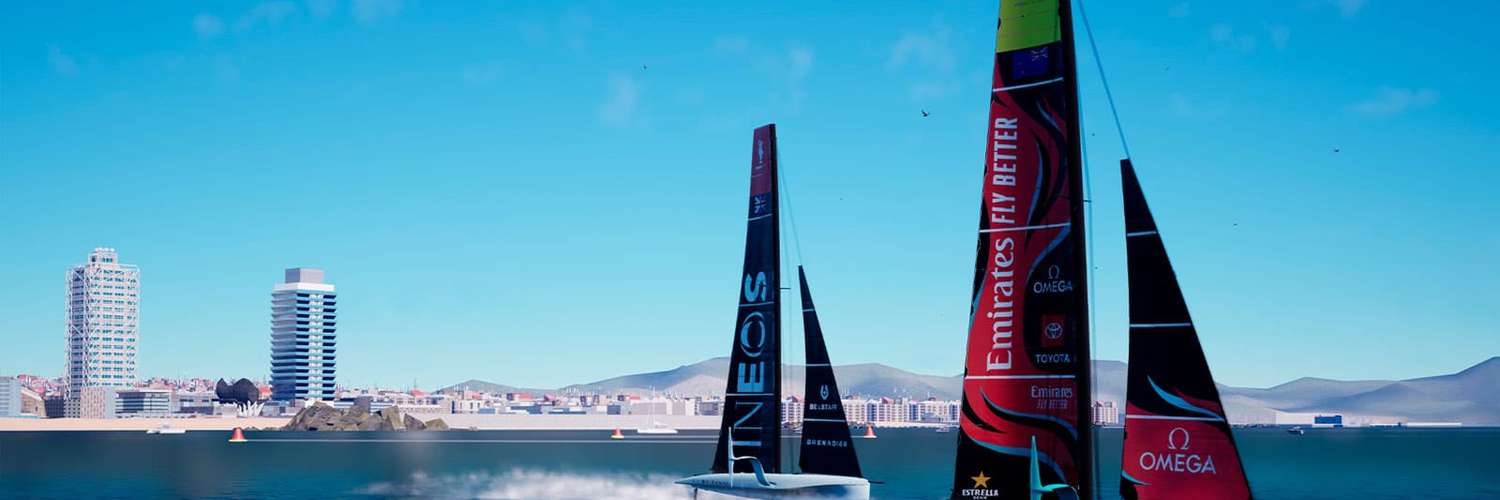
The simulator arms race: How the America's Cup moved indoors

The modern America’s Cup boat is designed in the simulator, validated on the water, and raced by sailors who first learned to fly it on land.
Walk into any modern Cup base and the most valuable boat isn’t in the shed; it’s in a dark room on hydraulics, wired into a CFD farm, sailed by a crew in socks. The foils change with a keystroke. The wind is perfectly repeatable. The crashes cost nothing. And the yacht you race on Saturday has already sailed a thousand races before it ever touches the water.
This is the simulator arms race.
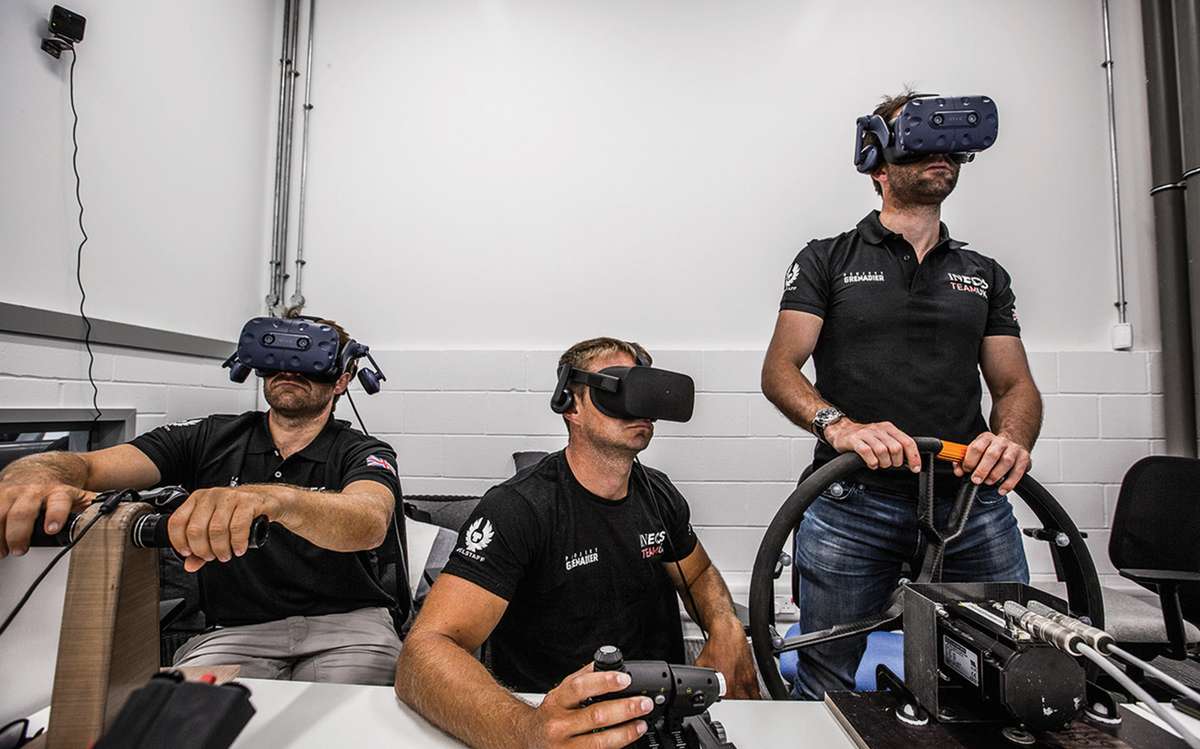
My first experience with a sim was horrific. It was 2014. We had just received our all-singing, all-dancing motion platform, complete with virtual-reality goggles, bolted to a full mock-up of our AC50. I was in the tuning phase as a wing trimmer, and after about five minutes the visual feed and the platform motion drifted two seconds out of sync. That was enough. I ended up curled on the simulator room floor, violently seasick on dry land. I’m not sure my relationship with simulation ever fully recovered from that afternoon.
The rise of the simulator happened quietly somewhere between San Francisco and Bermuda, but it became structural in Auckland. The AC75 rule removed wind-tunnel testing, limited sailing days, and gave teams one platform. It didn’t slow development – it moved it indoors.
The simulator stopped being a design aid and became the design loop. Computational Fluid Dynamics feeds the Velocity Prediction Program. The VPP drives the motion model. The sailors sail the result. Their feedback goes straight back to the designers, and by the afternoon a new foil concept exists. No build, no launch, no chase boat, no broken parts.
In previous Cups you tested an idea when the boat was ready. Now you test whether to build the boat at all.
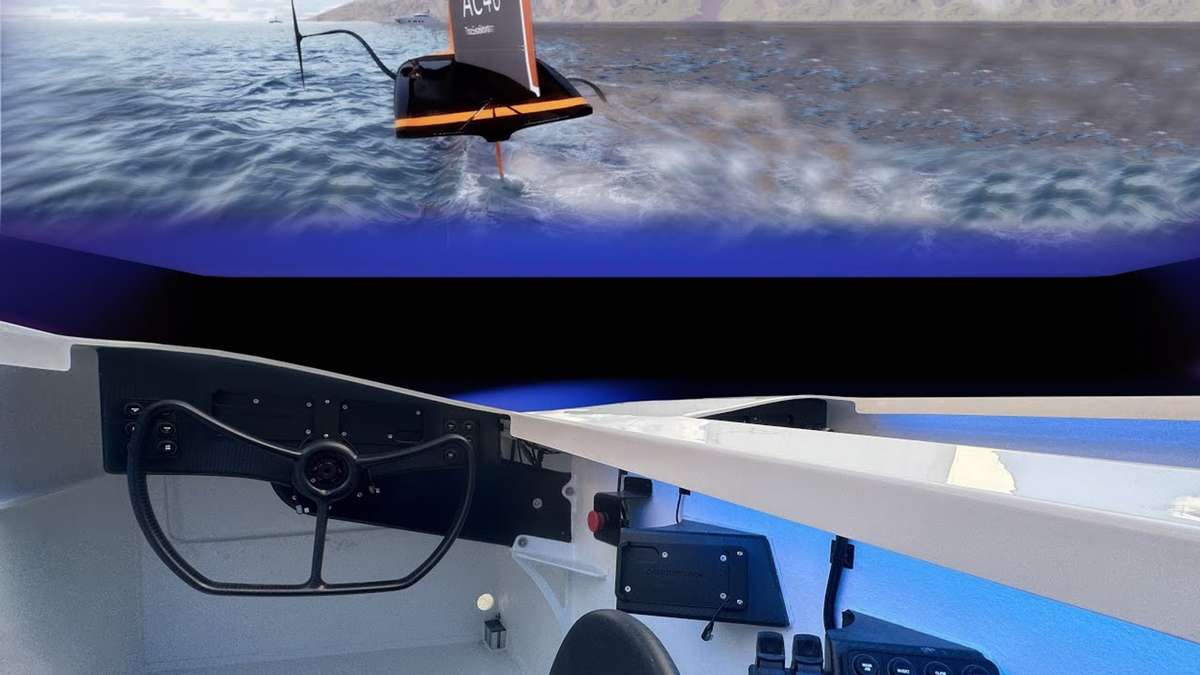
During the Covid lockdown in 2020, when all on-water sailing stopped, the one thing we could still do – socially distanced, of course – was log endless hours in the simulator. We designed, tested, and learned the AC75 miles from the ocean. With a sixty-strong shore crew stuck at home in quarantine, it was arguably one of the most intense sailing periods of the entire cycle, and none of us got our feet wet. A strange time.
When restrictions eased and we went to a full-court press on second-generation design, we would often keep our best sailors ashore while the rest of us were out sailing the first boat. Simulator learning was prioritised over water time. That was a genuine sign of the times. At that point the designers valued the data coming off the simulator more than the data coming off the real AC75 in the Solent.
That marked a cultural shift. The old separation between sailing team and design office collapsed. In the simulator they sit side by side, iterating in real time. A foil section is no longer a theoretical optimum; it is a felt behaviour. Does it tolerate a rushed tack? Does it hold flight in disturbed air? Does it buy you a lane off the start? Those questions are answered before carbon is cut.
This is motorsport thinking applied to sailing: human-in-the-loop simulation, rapid iteration, performance defined by system integration rather than individual component brilliance.
The Cup has always been an arms race, but the currency has changed. It used to be boats, masts, and sail inventories. Now it is computing power, model fidelity, and simulator hours. Water time is scarce and expensive. Simulator time, once the system exists, is effectively infinite. That flips the development economy. The team that learns fastest wins, not the team that builds the most.
You can see it in the pathway classes. AC40 sailors arrive having already flown the boat virtually. Their first real sail is not discovery – it’s validation.
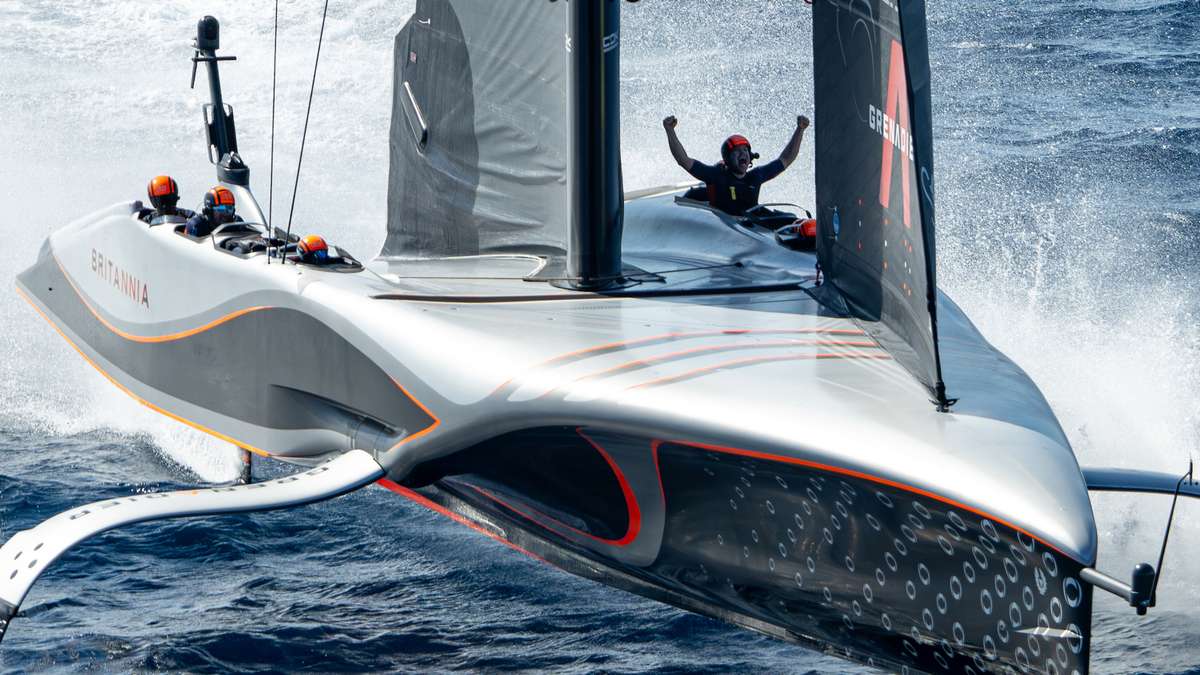
Look at Dylan Fletcher’s rise over the past two years. A huge part of that trajectory was hundreds of hours in the simulator. He learned the AC75 inside out before he ever helmed it in anger. By the time he stepped into Britannia in Barcelona, he had already sailed that cockpit for hundreds of virtual hours. He simply cashed in the time.
He had been sailing the digital twin – not a rough model, but a control-system-linked, foil-load-sensitive, manoeuvre-accurate twin. The helmsman feels rudder load. The flight controller chases ride height. The trimmers coordinate timing. Because the environment is controllable, learning is compressed. You can run the same bear-away in eleven knots twenty times. You can rehearse a port entry until the choreography is muscle memory. You can crash without consequence and find the limit deliberately rather than accidentally.
That changes the sailor.
The modern Cup helm is part pilot, part test engineer. He is not just reporting what the boat did; he is shaping what the next boat will be.
On the racecourse the effect is subtle but decisive. Manoeuvres are cleaner because they have been rehearsed hundreds of times. Starts are more structured because scenarios have been gamed out. Flight control is calmer because the responses are pre-learned. The racing looks more precise not because the sailors are more talented, but because they are less surprised.
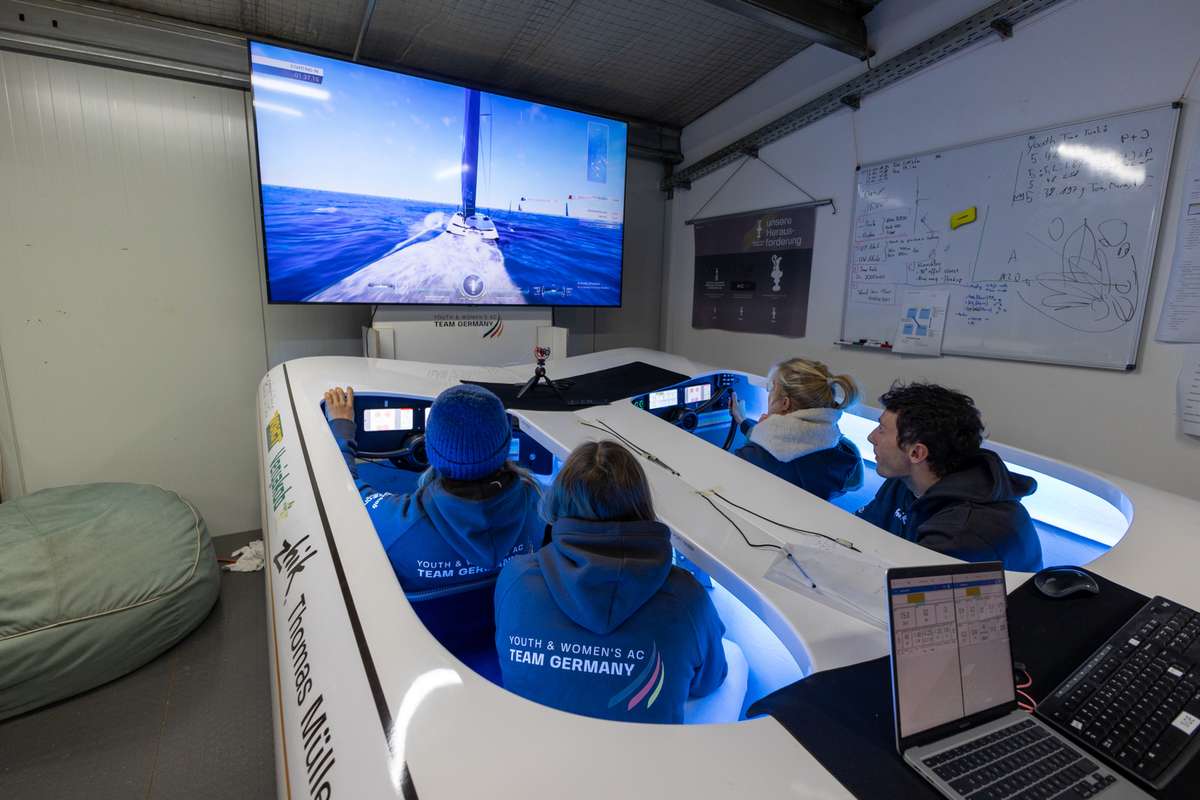
And then there's the next generation.
I’ve been advising some of Britain’s best youth sailors as they prepare for trials with the Athena pathway. Most of them have spent their entire lives on the water – thousands of miles away from anything resembling gaming culture. Knowing there would be a simulator component to the trials, I found myself giving advice I never thought I would: pack up the boats for a few days, pick up a PlayStation, and play racing games.
Hand-eye coordination. Fine finger control. Neural pathways for closed-loop response. All the things we used to associate with hours on a tiller are now, at least in part, trainable with a controller.
For decades we told young sailors to get off the sofa and away from screens. Now, to reach the top of high-performance foiling, you may have to strap on a VR headset and become world-class with your thumbs.
Funny times.
Articles You Might Be Interested in
From partners to opponents: inside the North Sails–Team New Zealand patent battle
Three legs and an electronic brain: how Ferrari Hypersail will fly (Pt. 2/7)
Team Australia finish Te Rehutai rebuild and set February target for Naples
The week in racing - 19 Oct ’26
GB2 and Alinghi Women & Youth name their squads for Naples 2027
La Roche-Posay Racing Team the first to launch their AC75 in Naples
Inside the Batmobile: a first look at Ferrari Hypersail
Batteries, foils and LiDAR: where does the sailor’s job end?



Member Discussion