
Freddie Carr: Why Paul Cayard is a contender for sailing’s GOAT

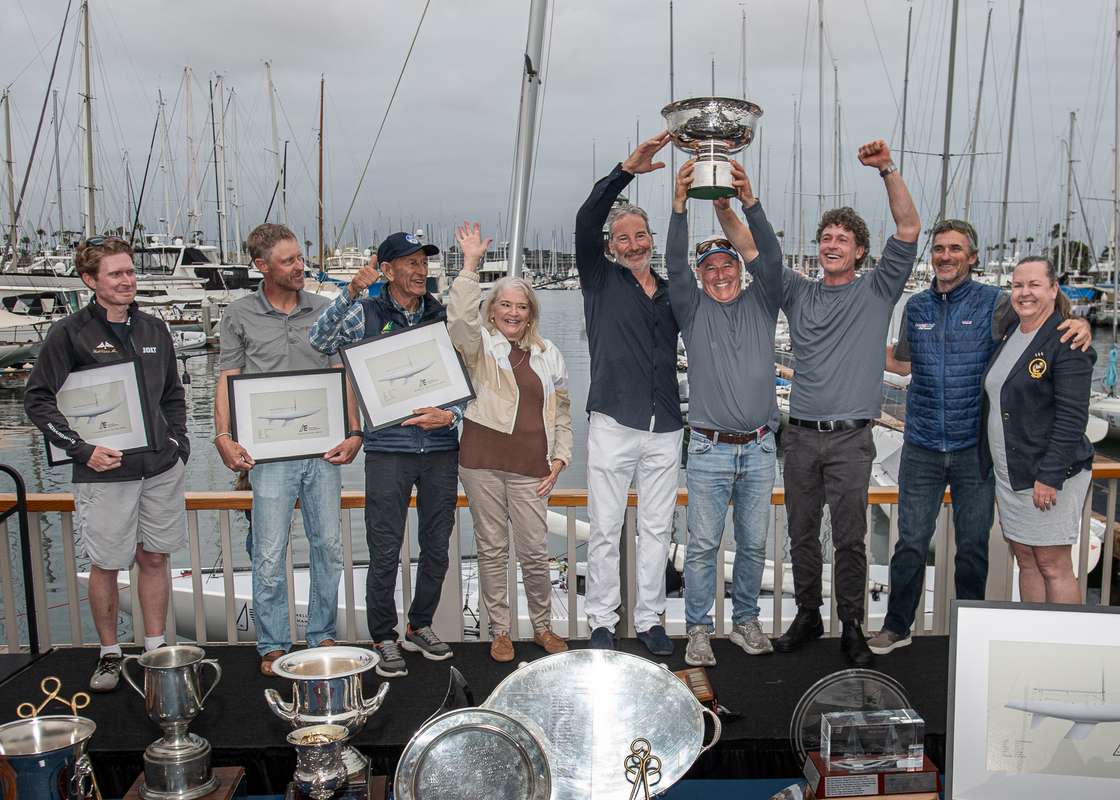
Watching Paul Cayard win the 2026 Etchells World Championship alongside team-mates James Mayo and Ben Lamb was one of those genuinely special moments in sailing – the sort that makes even the most hardened observers pause. And this was no isolated comeback story.
Just six months earlier, Cayard had won the fiercely competitive Star World Championship in Croatia with Frithjof Kleen, adding another remarkable chapter to one of the sport’s most complete careers.
At 67, this latest purple patch only strengthens the argument that Cayard belongs firmly in sailing’s GOAT conversation.
There is a compelling case that he is one of the finest small-keelboat helmsmen the sport has ever produced. But what makes Cayard’s legacy so extraordinary is its breadth.
Seven America’s Cup campaigns. A Louis Vuitton Cup victory with Il Moro di Venezia in 1992, followed by the America’s Cup Match in 1992. Victory in the 1997–98 Whitbread Round the World Race with EF Language. Success offshore, in grand prix keelboats, match racing, and some of the most technically demanding one-design fleets in the sport.
Very few sailors in history can claim to have won at the very highest level across so many different disciplines. And perhaps the most extraordinary statistic of all? His two Star World Championship titles came 38 years apart.
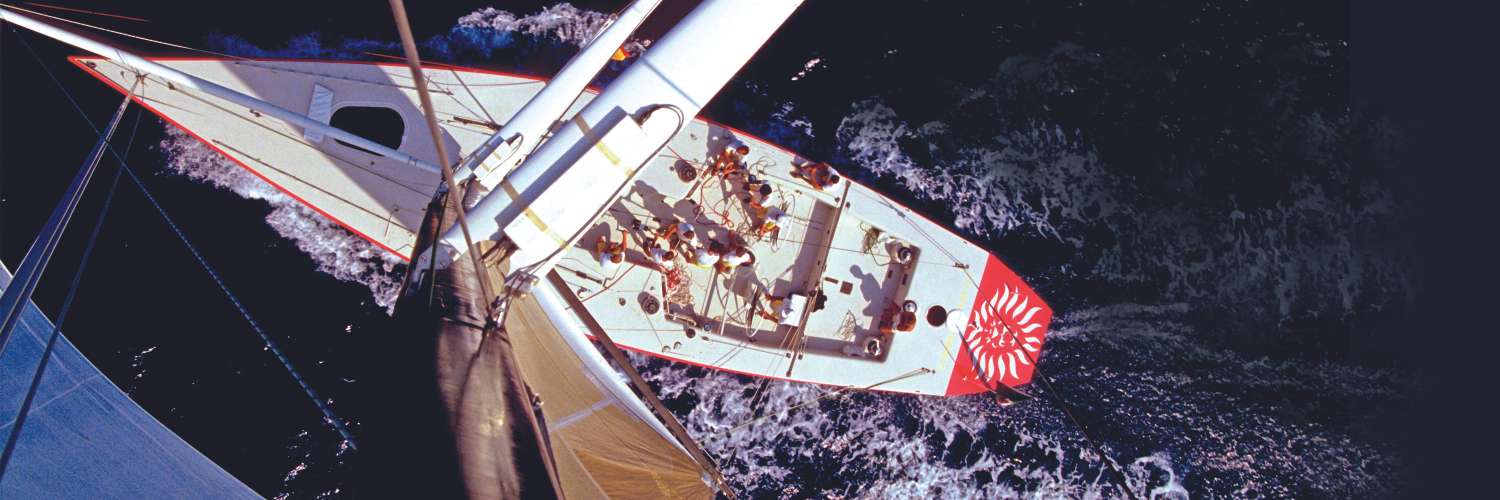
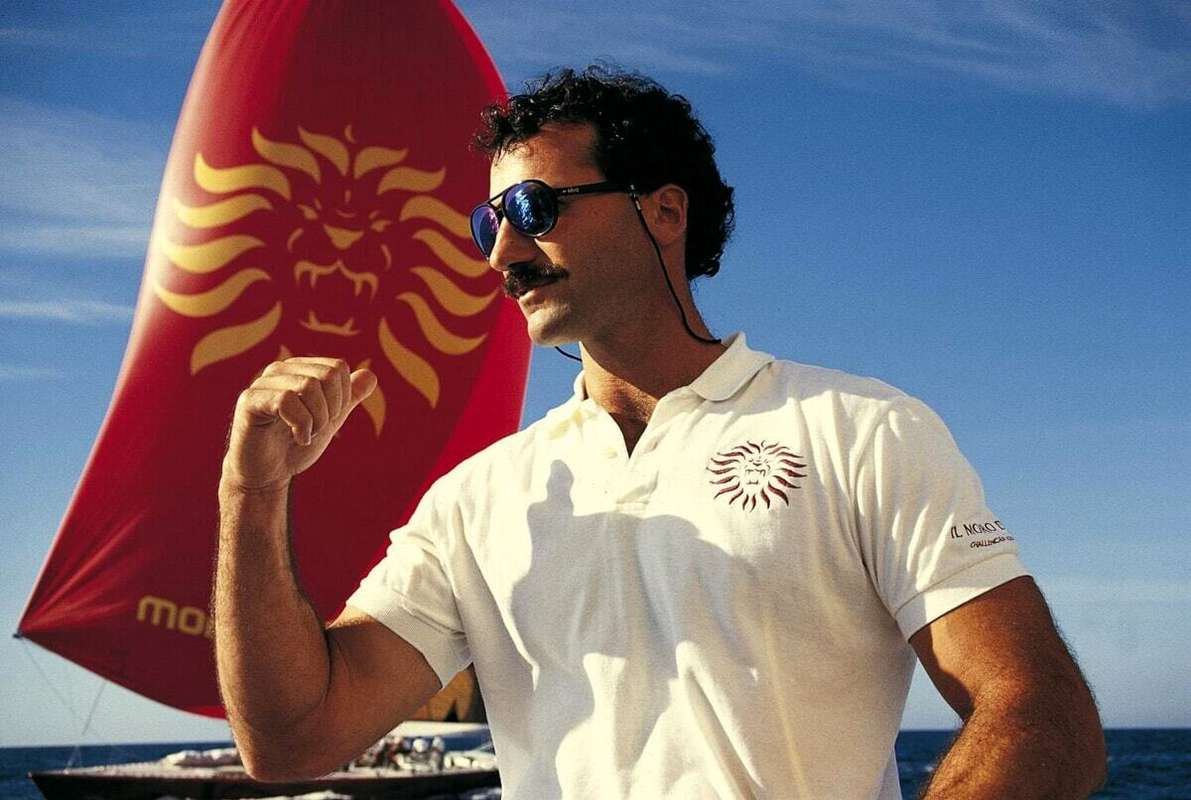
Cayard landed on the world stage with the Italian Challenge for the AC in 1992. Il Moro di Venezia was one of the defining America’s Cup campaigns of the modern era and a landmark moment for Italian sailing. Backed by Italian industrialist Raul Gardini, it was an ambitious and lavishly resourced challenge built to win the 1992 America’s Cup. Helmed by Cayard, the team became the first Italian challenger – and the first from a non-English-speaking nation – to reach the America’s Cup Match, overcoming the heavily fancied New Zealand challenge in the Louis Vuitton Cup before eventually losing 4–1 to Bill Koch’s America³ in San Diego.
More than just a sailing campaign, Il Moro felt like a national sporting movement, blending Italian design flair, industrial ambition and enormous public passion. The striking red boats became instantly recognisable and, for many, marked the moment Italy established itself as a genuine force in the America’s Cup. It was also the campaign that firmly introduced Cayard as one of the sport’s leading figures, combining tactical intelligence with an unmistakable competitive intensity that would define the rest of his career.
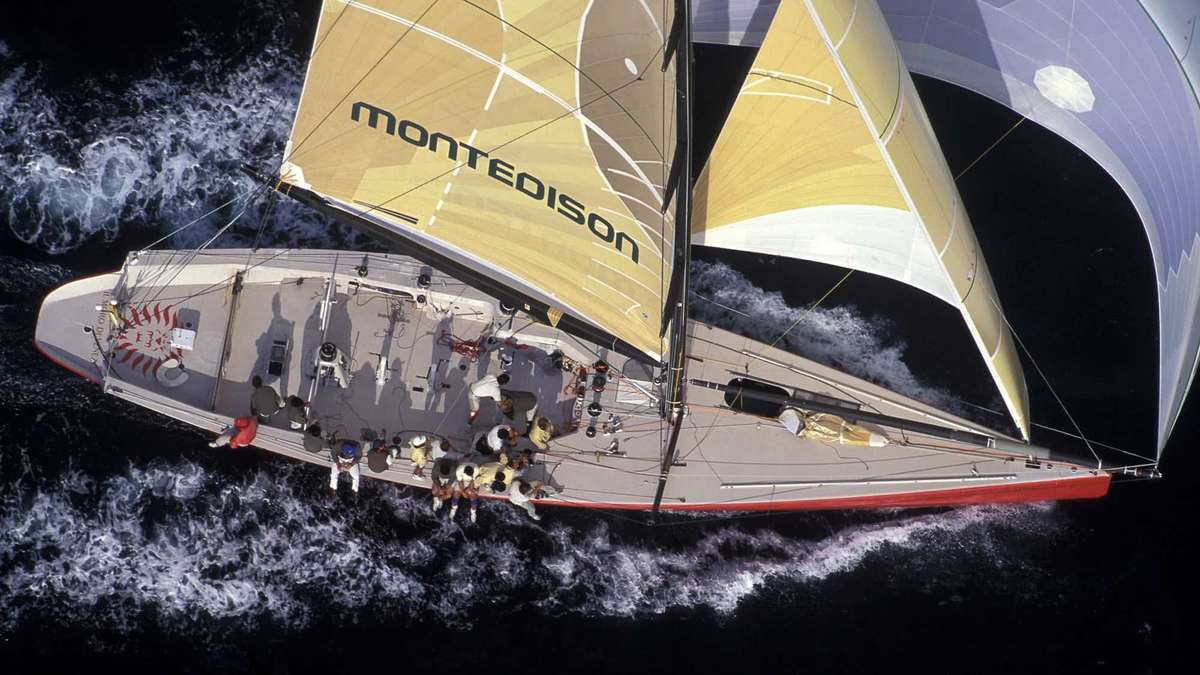
Off the back of that incredible success he next appeared in the offshore scene. As a 15-year-oldand a huge Paul Cayard fan, I followed EF Language out of Southampton at the start of the Whitbread Round the World Race alongside thousands of other sailing fans. Nine months later, I found myself chasing him through the Solent in a RIB as he returned having become the first American to win this legendary offshore race.
The 1997–98 Whitbread Round the World Race remains one of the defining achievements of Cayard’s career. As skipper of EF Language, he led a highly polished campaign to overall victory against some of the strongest offshore teams of the era, winning four of the nine legs along the way. At the time, the Whitbread was widely regarded as the toughest test in professional sailing – a true examination of leadership, endurance, navigation and boat speed over months of racing in some of the harshest conditions on the planet. For a sailor whose reputation had largely been built through America’s Cup and grand prix keelboat racing, Cayard’s success offshore underlined the breadth of his skill set and his ability to win at the very highest level in an entirely different discipline.
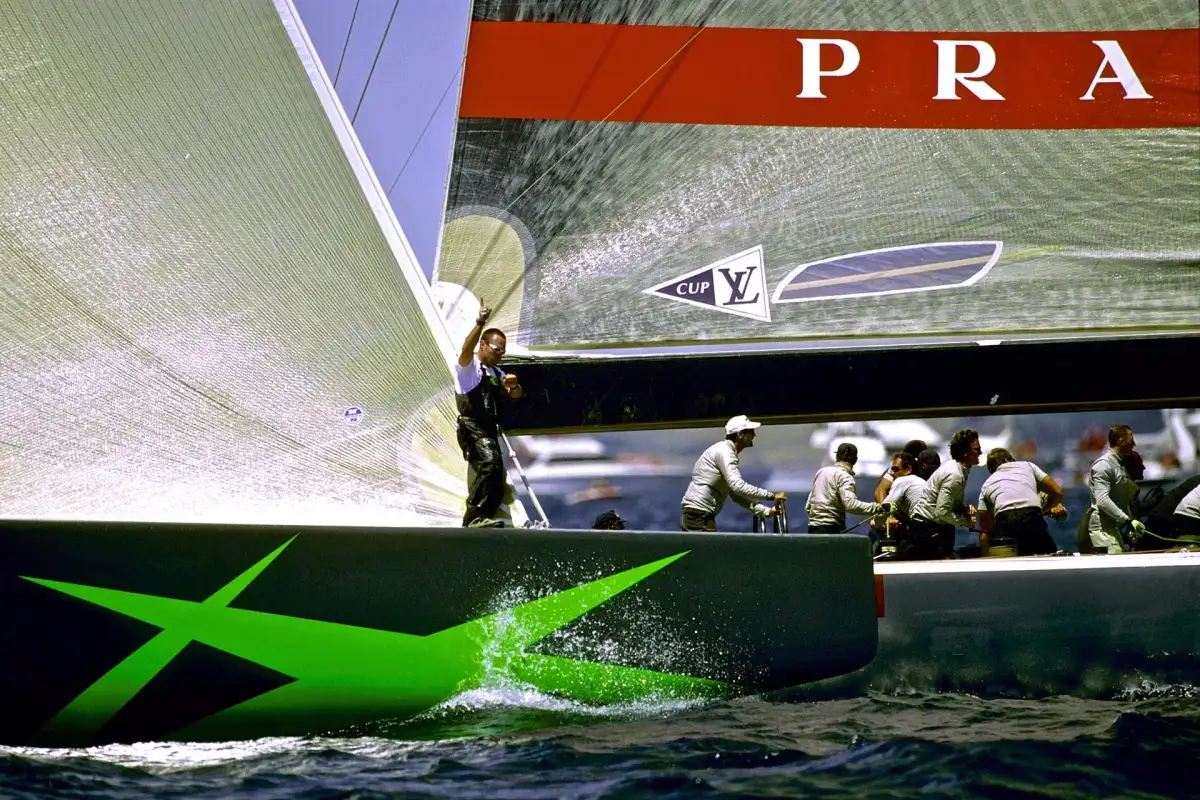
Two years later, I found myself chasing him in a RIB once again, this time in Auckland as he skippered AmericaOne in that unforgettable Louis Vuitton Cup final against Luna Rossa. I was there representing Great Britain at the Youth Match Racing World Championships, and our coach, Bill Edgerton, was umpiring the series, which gave us extraordinary access to the racing. To be within touching distance of those IACC boats charging downwind was something else entirely. I can still remember hearing Paul calling the shots on board, demanding a little more from his trimmers, totally immersed in the fight, while barking at Luna Rossa to sail their proper course in the heat of a tight match-racing exchange. For a young sailor, it was an extraordinary front-row seat to one of the defining contests of a golden era in the America’s Cup.
The 2000 Louis Vuitton Cup final remains one of the standout challenger series in America’s Cup history and a strong reflection of Paul Cayard’s qualities as a sailor and leader. Skippering AmericaOne, Cayard led his team through a closely fought nine-race series against Prada that was decided by the finest of margins. After falling 3–1 behind, AmericaOne steadily worked its way back into contention to take a 4–3 lead, a testament to the team’s resilience and Cayard’scalm, determined leadership under pressure.
Although Prada ultimately won the final two races to take the series 5–4, Cayard’s performance reinforced his reputation as one of the leading match racers of his generation. In defeat, it was still a campaign that highlighted his tactical intelligence, competitiveness and ability to keep a team performing at the highest level when the pressure was greatest.
But despite his legendary achievements in the sport’s greatest offshore races and America’s Cup arenas, it is Cayard’s enduring hunger to win in small keelboats that perhaps elevates him even further. Most sailors, at 67, having been named World Sailor of the Year and inducted into both the America’s Cup Hall of Fame and the US Sailing Hall of Fame, would be more than content to step back and reflect on an extraordinary career. Cayard, however, continues to push off the dock driven by the same competitive fire that defined his prime. He still races for the sheer love of the sport, and more often than not, returns to the dock having won.
Having won the 99th edition of the Bacardi Cup in the Star in March, Paul Cayard got the call when reigning Etchells world champion James Mayo and Ben Lamb were looking for a helmsman to help defend their title in San Diego. It proved a fitting setup for a championship that once again underlined just how demanding top-level one-design racing remains.
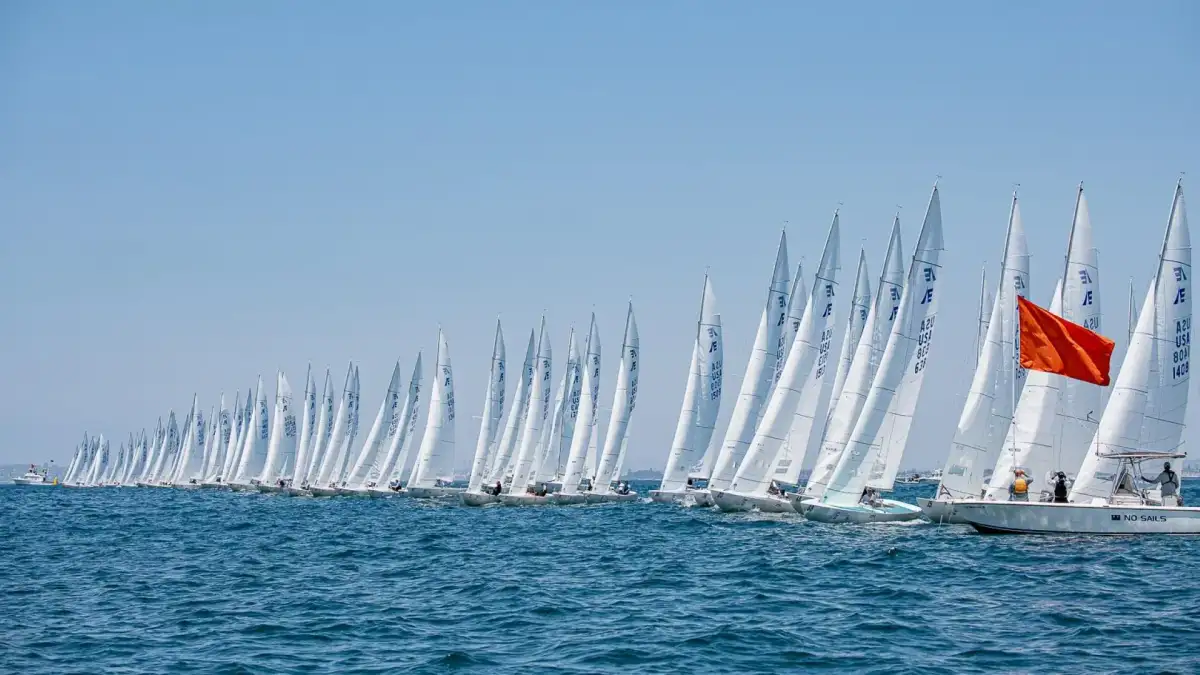
The 2026 Etchells World Championship was a timely reminder that some of the hardest racing in our sport still happens at displacement speeds. In an era increasingly defined by technology, data and outright pace, the Etchells continues to offer one of sailing’s purest competitive tests. A 76-boat fleet packed with world champions, Olympians, America’s Cup sailors and elite owner-drivers delivered a week where the margins were relentlessly tight and mistakes were punished immediately. The conditions provided a proper San Diego examination, with unstable early racing rewarding sharp tactical decisions before the more established seabreeze later in the week shifted the emphasis towards execution, boat handling and consistency.
There are few places left in sailing where the equipment offers so few excuses, and where success still comes down to starting well, making clear decisions and delivering under pressure over a full week of racing.
This is the environment where Cayard sets the standard and has done for close to half a century.
Articles You Might Be Interested in
From partners to opponents: inside the North Sails–Team New Zealand patent battle
Three legs and an electronic brain: how Ferrari Hypersail will fly (Pt. 2/7)
Team Australia finish Te Rehutai rebuild and set February target for Naples
The week in racing - 19 Oct ’26
GB2 and Alinghi Women & Youth name their squads for Naples 2027
La Roche-Posay Racing Team the first to launch their AC75 in Naples
Inside the Batmobile: a first look at Ferrari Hypersail
Batteries, foils and LiDAR: where does the sailor’s job end?



Member Discussion