
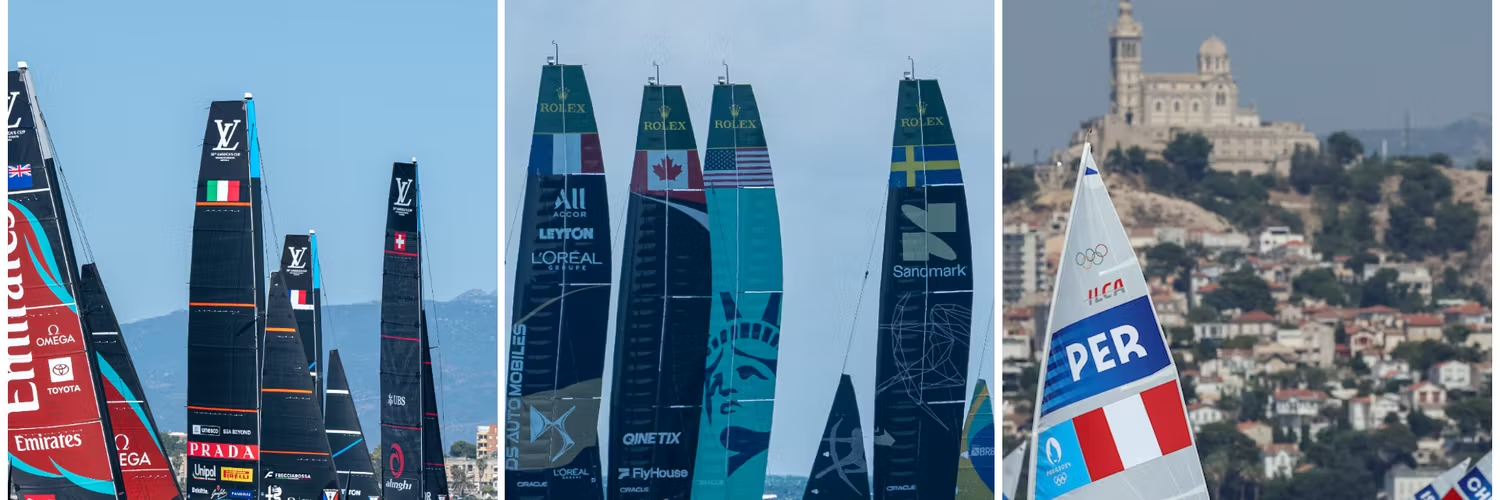
Calendar clash or golden opportunity? The Foil community have their say

On last week's podcast, the team sat down to wrestle with a question that keeps hanging over the sport just as it's booming: with SailGP, the America's Cup and the Olympics all pulling hard at once, can they actually share a calendar – or are they about to start eating each other alive?
The 2027 summer is the pinch point, with nine SailGP weekends, new AC75s hitting the water, a Cup to be won and an Olympic qualifying cycle all scrapping over the same few months. We asked what the audience made of it, and they didn’t hold back.
A problem sailors would have killed for
"Who would have ever thought that the number of sailing opportunities would grow to the point of scheduling conflicts for top-level sailors? A problem the sailors 30 years ago would have loved to have had. How will it work out? No one knows!" – @DriverDad58
Plenty looked at the pile-up and saw opportunity, not crisis. If the America’s Cup and SailGP don’t find a way to get along, the sailors will simply have to pick a lane, and suddenly there's room at the top for the next generation of talent.
"Surely calendar clashes between SailGP & the AC are a positive - it creates more opportunities for more sailors to compete at the top level, rather than having the same few sailors monopolising all the spots. Why should the same few people dominate across the two competitions, thereby reducing opportunities for others? It's up to the sailors to prioritise what's most important to them. The AC & SailGP, despite all the talk of being complementary, are actually competitors in a global market place for competitive sailing. Competition is healthy - there's no need for them to cooperate at all. What's more important is that the AC & SailGP respect the Olympic calendar." – @Penguinracer
"Overlapping SailGP and the AC may be a problem for the athletes active in both, but it's a great opportunity for new talent to get time on the water." – @fromaflafl2198
"Open the door to new heroes. A few get the money and the glory, with a big gap to the rest of us humans." – @CanuckBeaver
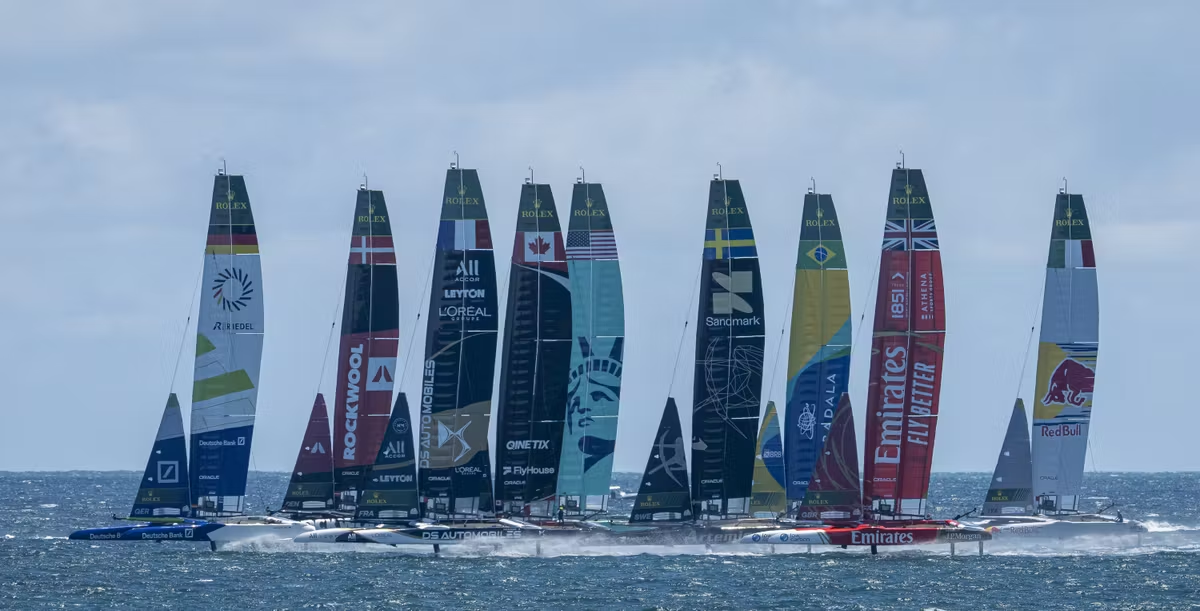
Who's footing the bill?
Not everyone bought the "more the merrier" line – especially once you follow the money. As SailGP keep adding teams and home events, the windows left for a Cup only get smaller.
"I think for sailors it's good training and a lot of fun. For the people putting up the money it's a one way street and all downhill. A very poor return for the investment (unless you own the Australian SailGP team)." – Bill Clemett
Then there's the crowd who'd happily see one format or the other walk the plank. Some find SailGP's short-course sprints impossible to love, while others reckon the Cup has lost the plot entirely. But there’s at least one person who rather likes that the whole thing is faintly mad…
"Why do the sailors (athletes?) have to do both? There's tons of other sailing in all sorts of boats all of the time, all fascinating. It's not as if SGP or the AC would suddenly collapse if any given sailor wasn't in it. I like that the AC costs money rather than generates it. All part of the messianic lunacy of it. SGP is like toy boats on duck ponds that hospitalise you if you get too close." – @jameslittlewood7663
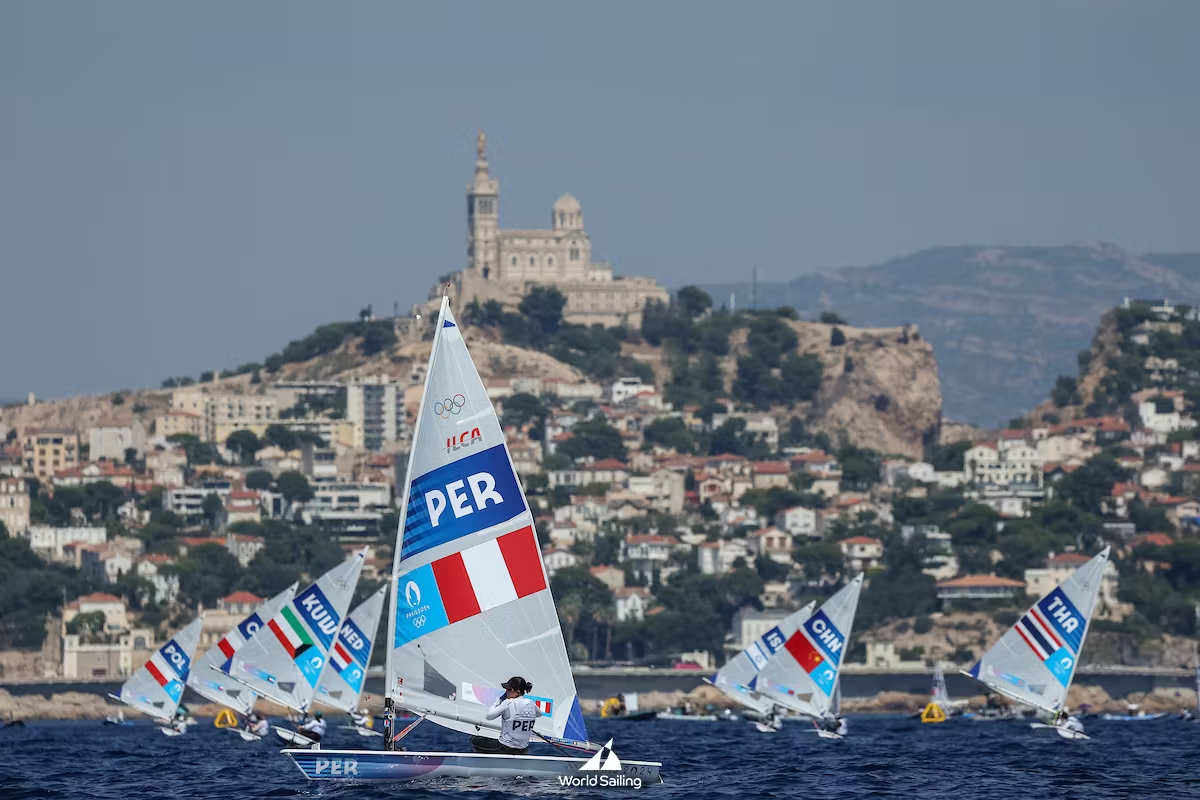
Spare a thought for the Olympics
Amid all the SailGP-versus-Cup slugging, a good number kept circling back to the same likely casualty. SailGP has no youth or women's pathway to speak of, and the Olympics remains the place where the next generation and the smaller nations actually get a look-in. Lose that, several warned, and you risk the grassroots withering away, leaving the sport top-heavy and living on borrowed time.
Freddie's on-air suggestion of trimming Olympic qualifying to the top ten drew fire too, on the grounds that it would sort the fleet by bank balance rather than talent.
"No Freddie, don't make the Olympics just the cream - totally not what the Olympics are. SailGP grabs eyeballs because it is over quickly, and has an adrenaline factor the viewers can get. AC is unique and has and will evolve over time. One day, Great Britain may even win it. The Olympics have a global audience because lesser nations do get involved, and the attention gives aspiring athletes from any country a motivation to develop their skills. There must be a question about whether taking elite athletes off into a lucrative top level circuit is good for a sport. If club cricketers never get to see top level competitors at a club because they are off at the IPL or other event that they cannot even see, does that harm the sport in the long term?" – @alexisbono24
"Freddie, not keen on your idea for the Olympics, because then you are talking about the best (richest) sailors that could afford to participate. You would end up with a sport like motor racing where you don't necessarily have the best drivers - just the best funded ones. Hmmm" – @mikevv4850
To which came the reply that this ship has already sailed.
"Unfortunately, that is already the case unless you come from a country that supports sailing very well, which very few do." – @daheinz27
Rather than relying on Olympic glory as your only way into pro sailing, one person sees the calendar clash as a way of breaking that stranglehold – and possibly forcing the circuits into introducing their own pathways.
"There is a horrible side to Olympic campaigns, where sailors dedicate four, eight, 12 years of their life. Some discarded by National Authorities, some getting there and not [making the] podium. A very few go to compete professionally in sailing, most others head into the workplace. Because of this, most sailors don't go on from Youth. Having a route to SailGP or AC without having to medal at the Olympics would be a way to open up the field and keep more sailors at the top level. The current crop have a monopoly." – @adrianward8556
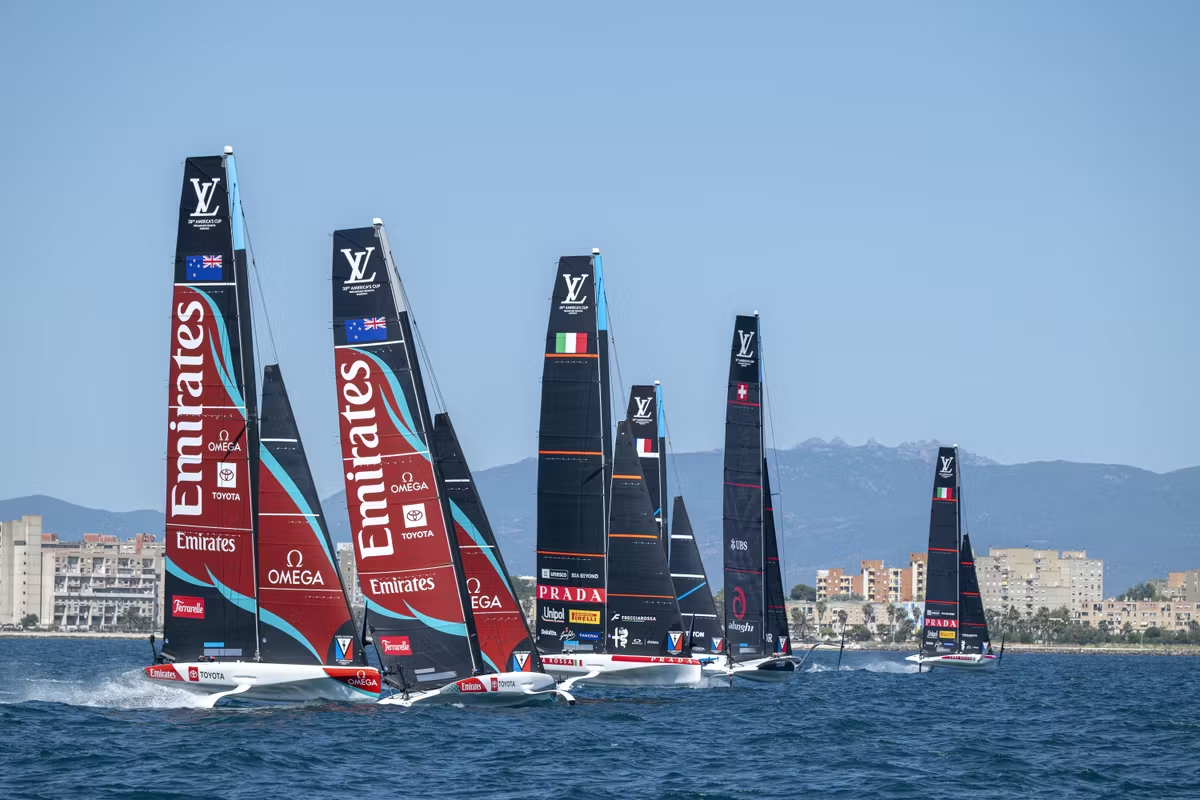
So who knocks their heads together?
Which brings us to the question The Foil team couldn't figure out either – whether anyone has the clout to make these worlds cooperate. This whole situation can be traced back to the Dalton–Coutts history and the framework Dalton never signed. While neither side openly picks a fight, the two camps pretend like the other doesn’t exist.
"Ainslie and the other high-profile skippers active in both leagues certainly could make a case for these two league directors to set their personal conflicts aside and work together, but whether they will actually listen is another question. I hope that they do manage to coordinate and coexist. I would like all of the top events to be able to coordinate so that top sailors are able to pursue all of their goals instead of having to choose." – @zoepaulastrassfield2664
And that, in the end, is what the whole thing keeps circling back to – whether the people who love our sport get to follow their favourites across all of it, or whether the sport eventually splinters into separate worlds, each with its own heroes and none of the shared stories that once tied them together.
Articles You Might Be Interested in
From partners to opponents: inside the North Sails–Team New Zealand patent battle
Team Australia finish Te Rehutai rebuild and set February target for Naples
Freddie Carr: Why Pensacola could change SailGP for good
The week in racing - 19 Oct ’26
GB2 and Alinghi Women & Youth name their squads for Naples 2027

Emirates GBR and Team 14 claim first slots on SailGP’s Pensacola training F50
La Roche-Posay Racing Team the first to launch their AC75 in Naples

SailGP’s year-round training base is about to open for business




Member Discussion