
What La Roche-Posay’s Lorient capsize reveals about the lighter AC75

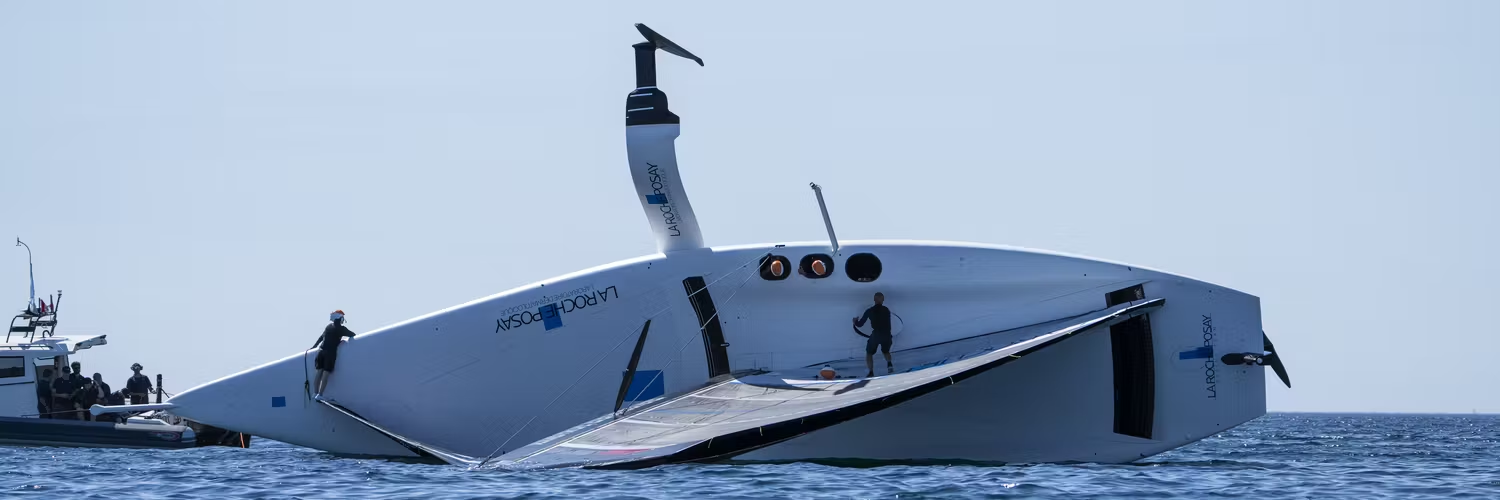
Last Tuesday, La Roche-Posay Racing Team's AC75 capsized during training off Lorient, the crew were unharmed, and the boat was towed back to base with a “systems issue” as the only official word. It was the team's fourth day on the water, and the preceding recon reports had already flagged difficulties with the foil-arm system. Now technical director Antoine Carraz has talked through how it unfolded.
“A systems failure caused a loss of control at low speed, resulting in the boat rolling onto its side,” Carraz says. “The team on the water immediately implemented the established safety procedures. The boat was then righted, secured and returned to our operational base.”
Learning the AC75 all over again
The intriguing bit is why an AC75 should tip over at low speed rather than mid-flight, and for that Carraz points straight to the rulebook.
“The Protocol for the 38th America's Cup requires the foils to be approximately 400 kilograms lighter. Their weight helps keep the boat upright when it is still travelling at low speed and the foils are not yet generating sufficient lift,” he explains. “With lighter foils, there is less resistance to the boat rolling. The AC75 is therefore more sensitive to instability during acceleration, deceleration and transitional phases. In such situations, its behaviour can be closer to that of an AC40, which is lighter and more responsive. The sailors must therefore establish a new set of reference points. In that respect, Tuesday's incident provided them with a particularly tangible learning experience.”
The damage
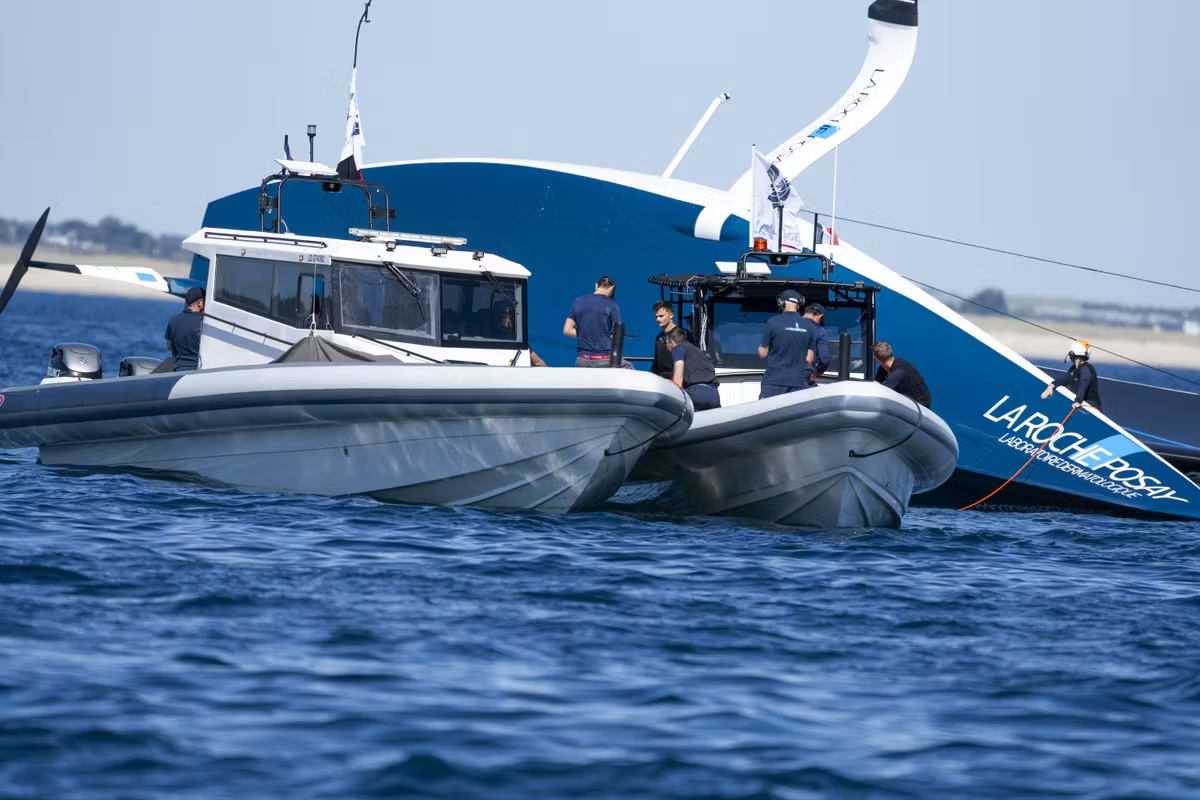
Back at base, the boat went straight into the hands of the technicians for a full series of checks.
“The structure is intact and no major damage has been identified,” Carraz says. “Water did, however, enter the boat, causing the batteries to heat up, although neither the structure nor the boat's interior was affected. A number of electrical components were also damaged as a result of the water ingress.”
Carraz didn't address the smoke seen coming from the boat in the on-water footage, though water getting into the electronics offers a plausible explanation. He's in no hurry to get the boat back on the water, either: “We want to take the necessary time to understand the precise sequence of events, inspect every system and implement any improvements that may be required. There would be no benefit in rushing the process.”
Back in the water in August
That patience comes at a price. Five sailing days were left in the July block, and they will now not be sailed until later in the year. And the run of dates ahead is relentless: the first Lorient training block was meant to run until 17 July, then again through early August, before the team heads to Naples for the AC40 Preliminary Regatta on 24–27 September. October then brings the French AC75's first sailing in the host city.
“We will make up those days either during the August session or later in the autumn, while remaining within the maximum allowance of 45 sailing days in 2026,” Carraz says. “In the meantime, the sailors will make productive use of their time ashore by working on the simulator and analysing the initial data gathered since sailing resumed.”
Carraz doesn't pretend Tuesday was simply bad luck. “Incidents of this nature are part of operating boats of such complexity. They may also become more frequent as a consequence of the lighter foils,” he says. “What matters is that we draw every possible lesson from the experience. Our safety procedures were tested in real conditions, and the team responded with great composure. Everyone understood their role and carried it out effectively. Ultimately, this experience has strengthened our confidence in the team and in our collective ability to deal with situations of this kind.”
We'll be watching closely when the AC75 next hits the water in early August.
La Roche-Posay Racing Team’s 2026 Programme
- 29 June – 17 July: Training in Lorient
- 1–14 August: Training in Lorient
- Mid-August to end of September: Move to Naples
- 24–27 September: Naples Preliminary Regatta in the AC40 class
- October: Start of sailing in Naples, host city of the 38th America’s Cup
Articles You Might Be Interested in
From partners to opponents: inside the North Sails–Team New Zealand patent battle
Team Australia finish Te Rehutai rebuild and set February target for Naples
The week in racing - 19 Oct ’26
GB2 and Alinghi Women & Youth name their squads for Naples 2027
La Roche-Posay Racing Team the first to launch their AC75 in Naples
Batteries, foils and LiDAR: where does the sailor’s job end?
Two days, two headaches for Luna Rossa in Cagliari

Why a Formula One insider is betting on the America’s Cup




Member Discussion