
Freddie Carr: Reliving the greatest America’s Cup race

Having just stepped off an extraordinary three days aboard Rainbow, it felt like being transported back to a different era of the sport – one where sailing was defined by feel, physicality and pure mechanics. The kind of sailing this historic J-Class demands. I had a shave and tucked my shirt in for this sailing.
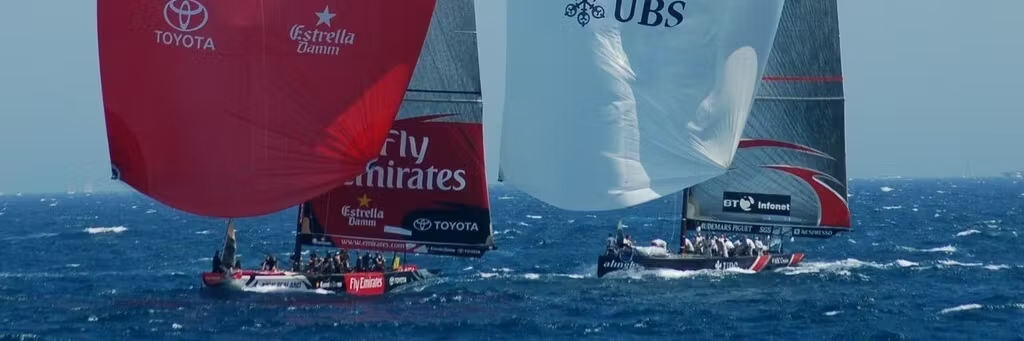
For many of us on board, it stirred memories of the summer of 2007 in Valencia – arguably the most magical chapter of America’s Cup racing. Those who’ve experienced multiple eras of the Cup often say that regatta stands alone. And I’d go further: it delivered the greatest race I’ve ever seen in the history of the event – Race 7 of the final, where Alinghi faced Emirates Team New Zealand to decide it all.
Last week, I had the privilege of sailing Rainbow alongside Alinghi helmsman Ed Baird. Over a couple of glasses of red at a crew dinner, the conversation drifted – as it always does – into proper sea stories. What followed was something special: a blow-by-blow retelling of that final race, straight from the man at the wheel. It was too good not to share.
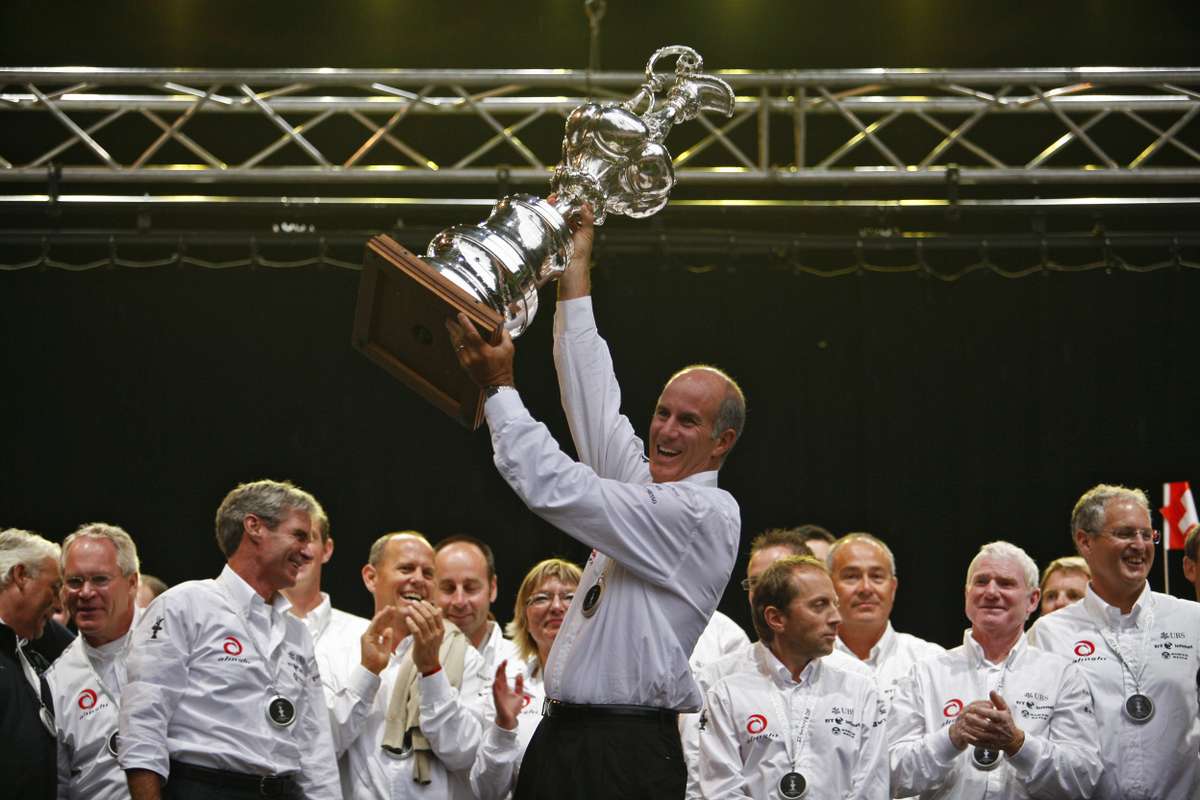
That showdown had been four years in the making. New Zealand came into Valencia with unfinished business, having lost the 2003 Cup on home waters in Auckland, beaten 5-0 by Alinghi. This time New Zealand powered through the challenger series – dispatching Desafío Español 5-2 in the semis before dominating Luna Rossa, helmed by Jimmy Spithill, 5-0 in the Louis Vuitton Cup final. They wanted The Cup back, taken by a team consisting of the Kiwi older generation that had transferred from TNZ to the Swiss outfit in a football style transfer, the likes of which sailing had never seen before.
And so the stage was set: a rematch between two giants. The sailing world held its breath as they prepared to meet once more for the oldest trophy in sport.
Both teams were stacked with world-class talent. Dean Barker steered the Kiwis, with Terry Hutchinson calling tactics. Across the line, Ed Baird helmed for Alinghi, with Brad Butterworth alongside him in the afterguard, chasing a fourth consecutive Cup victory.
This wasn’t just a race. It was a heavyweight title fight to end a golden era.
For the hardened sailor – and for the kind of spectator who rearranges their life around a start gun – this was the race that delivered everything.
We wanted a fight. What we got was something far more unruly.
If Steven Spielberg had written it, you’d have called it indulgent. Too many swings. Too much chaos. Too perfect an ending. But this wasn’t fiction. It was two teams, inseparable across a series, compressing everything into one race that refused to behave.
And from the first gun, it was on.
A clean starboard-tack start fires both boats into an immediate drag race toward the port layline. Alinghi hold the high ground by the smallest of margins – barely a metre – but it’s enough to dictate the early terms. They tack first, Emirates Team New Zealand follow, and from there it becomes a rhythm of pressure and response. Back together, split again, repeat. Alinghi right, ETNZ left, over and over, each engagement tightening the space between them.
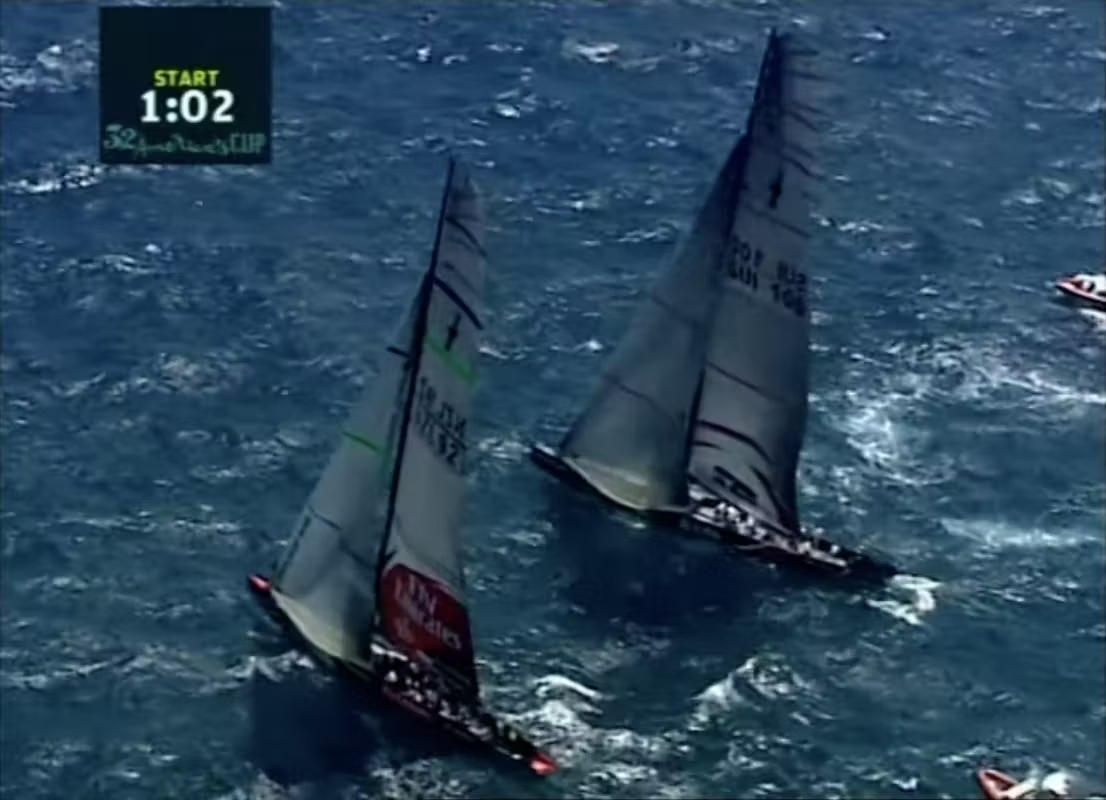
NZL-92 manage a small gain, enough to bounce the Swiss once, then twice. On the third exchange the Kiwis commit hard, a proper leebow that forces Alinghi out of their lane. It lands for a moment, but Alinghi don’t chase it. They reset, stay in phase and wait for their moment. The next cross brings it – just a subtle right shift, but enough. Approaching the top mark it compresses completely. ETNZ are marginally ahead but stuck, unable to tack cleanly. Alinghi turn first, ETNZ follow, and then comes the sting: a big Kiwi luff on port that looks almost decisive, but they stall just enough. Just long enough. Alinghi slip free and round ahead. Seven seconds. First blood.
Downwind, Alinghi stretch early to 57 metres, but the rhythm breaks quickly as ETNZ split and turn it into a proper fight. It’s not a run anymore – it’s a gybing duel, both boats throwing manoeuvres, hunting pressure, searching for anything that changes the picture. Then ETNZ find it. They slide into Alinghi’s wind, take control of the lane, and execute a clean, clinical pass. No drama, just speed and positioning. At the gate they split again – ETNZ left, Alinghi right – and this time the Kiwis come out on top. Fourteen seconds. Advantage black.
Upwind again, and the tone sharpens. Alinghi begin to chip away, metre by metre, shift by shift, until the geometry starts to look familiar. Starboard tack, near the layline, control building. ETNZ still lead – about 30 metres – but it feels fragile. Then Alinghi pull the trigger. A tight, confrontational dial-down that forces a decision. ETNZ hesitate, just for a fraction, but it’s enough. The yellow flag goes up. Penalty.
The race flips instantly. Alinghi roll forward into the lead, now 12 seconds up, while the Kiwis carry the penalty, the momentum shifted. By the final run it looks done. Alinghi are gone – 135 metres clear, composed, controlled, in full command of the race.
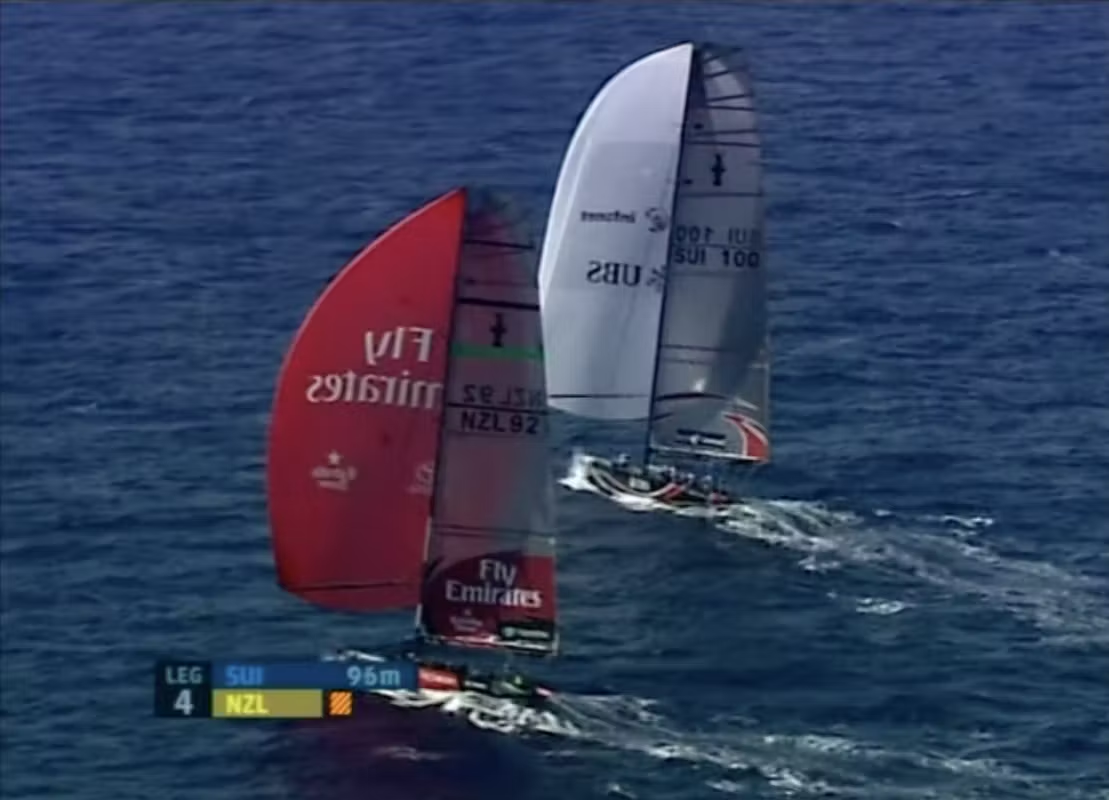
Then everything unravels. A wind shift tears across the course and the Alinghi spinnaker pole fails. Structure turns to chaos. The lead starts bleeding away immediately. ETNZ are still in it, still fighting and take the lead…
Everything that looked controlled just unravels in an instant. The Swiss lose their kite shape, the boat goes messy, and the lead that felt safe is gone before anyone can properly process it. ETNZ are still there – still alive to it – and they don’t hesitate. Into their penalty turn next to the finish line. Clean, committed, no drama.
They come out of it and launch for the line. For a moment it feels like it’s theirs.
But Alinghi find breeze again. Not clean, not pretty – but enough. The boat comes back to life, speed builds, and suddenly they’re hunting. Fast. Faster. Closing.
The two boats converge on the finish and it becomes impossible to read. Metres become feet, then nothing. They are bow to bow, just a blur of motion and spray, and even the sailors don’t know. No one does.
Across the line – nothing clear. No separation you could trust. Just chaos and adrenaline and silence waiting to break.
All eyes go to the Race Committee. Then the call comes.
Alinghi wins. Alinghi has defended the America’s Cup.
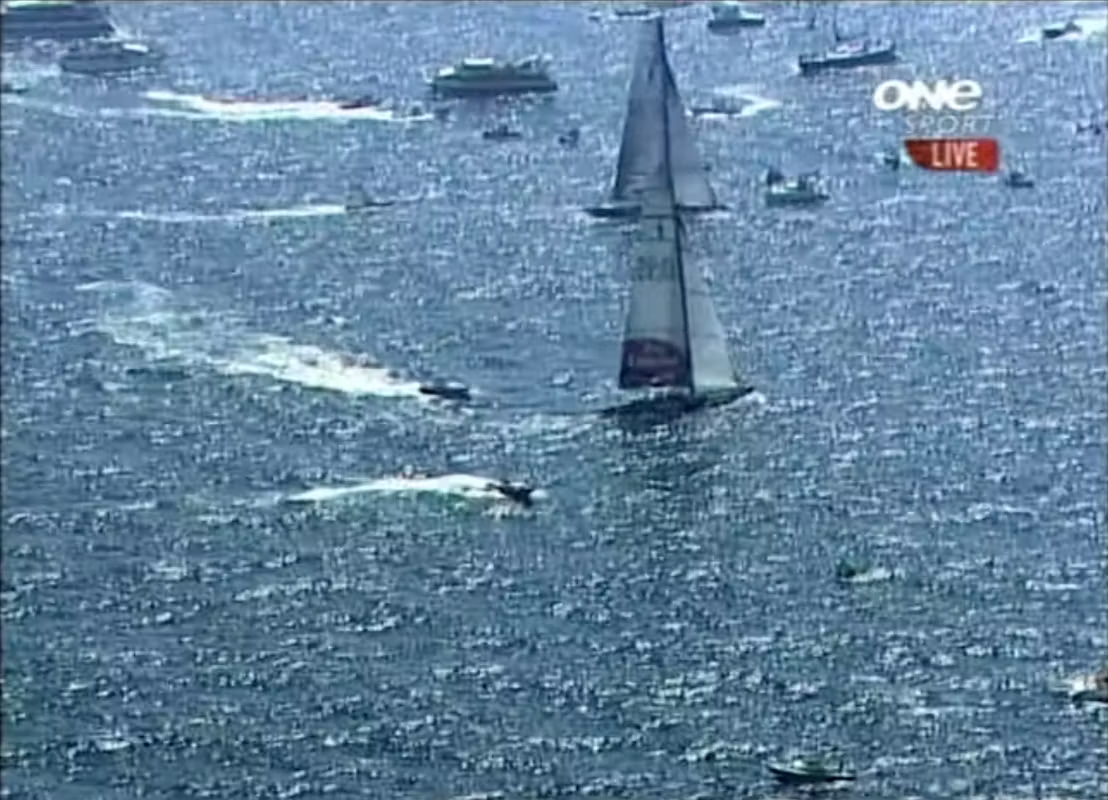
To hear Ed talk through that race was absolutely class. It had that rare effect of pulling a room completely still – cutlery down, conversation gone – and you could feel it, that same feeling from 19 years ago watching it live on the water, the hairs on the back of your neck standing up without you even noticing.
What really landed was how he described that dial-down at the second top mark. The moment that, in hindsight, decided the America’s Cup. A brutal piece of controlled sailing under maximum pressure.
A move they’d rehearsed hundreds of times. One of those high-risk, high-consequence manoeuvres that only works when everyone on board is perfectly aligned and completely committed. No hesitation, no drift. Just execution.
And hearing it framed like that – simple, deliberate, repeatable – made the whole thing even more extraordinary. Because in a race that ended in chaos, it was that one rehearsed, almost clinical moment that quietly tilted everything.
The greatest America’s Cup race ever.
Topics
Articles You Might Be Interested in
From partners to opponents: inside the North Sails–Team New Zealand patent battle
Three legs and an electronic brain: how Ferrari Hypersail will fly (Pt. 2/7)
Team Australia finish Te Rehutai rebuild and set February target for Naples
The week in racing - 19 Oct ’26
GB2 and Alinghi Women & Youth name their squads for Naples 2027
La Roche-Posay Racing Team the first to launch their AC75 in Naples
Inside the Batmobile: a first look at Ferrari Hypersail
Batteries, foils and LiDAR: where does the sailor’s job end?



Member Discussion