
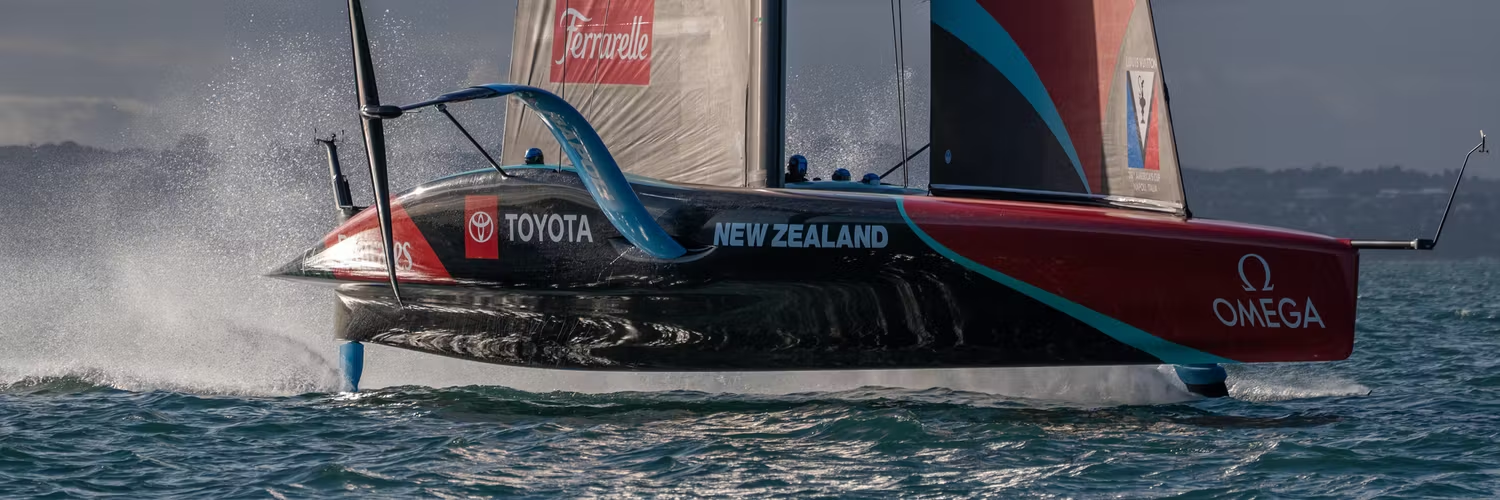
Freddie Carr: Why our AC38 Defender is pumped about Naples

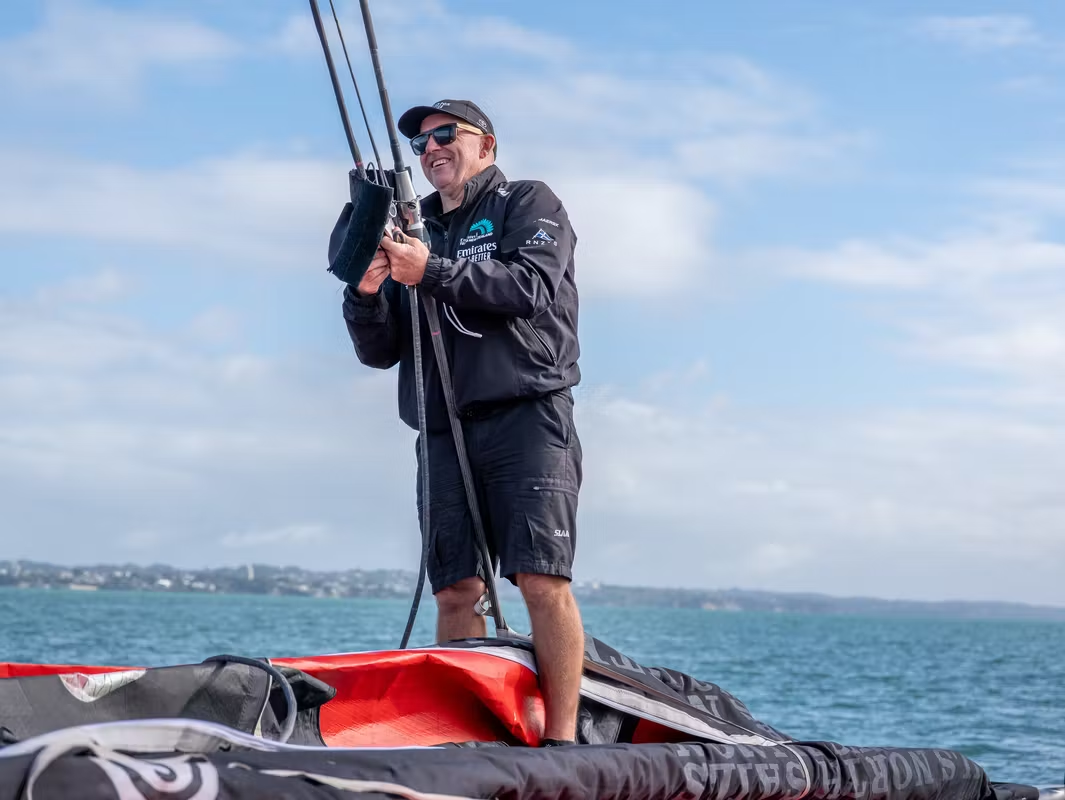
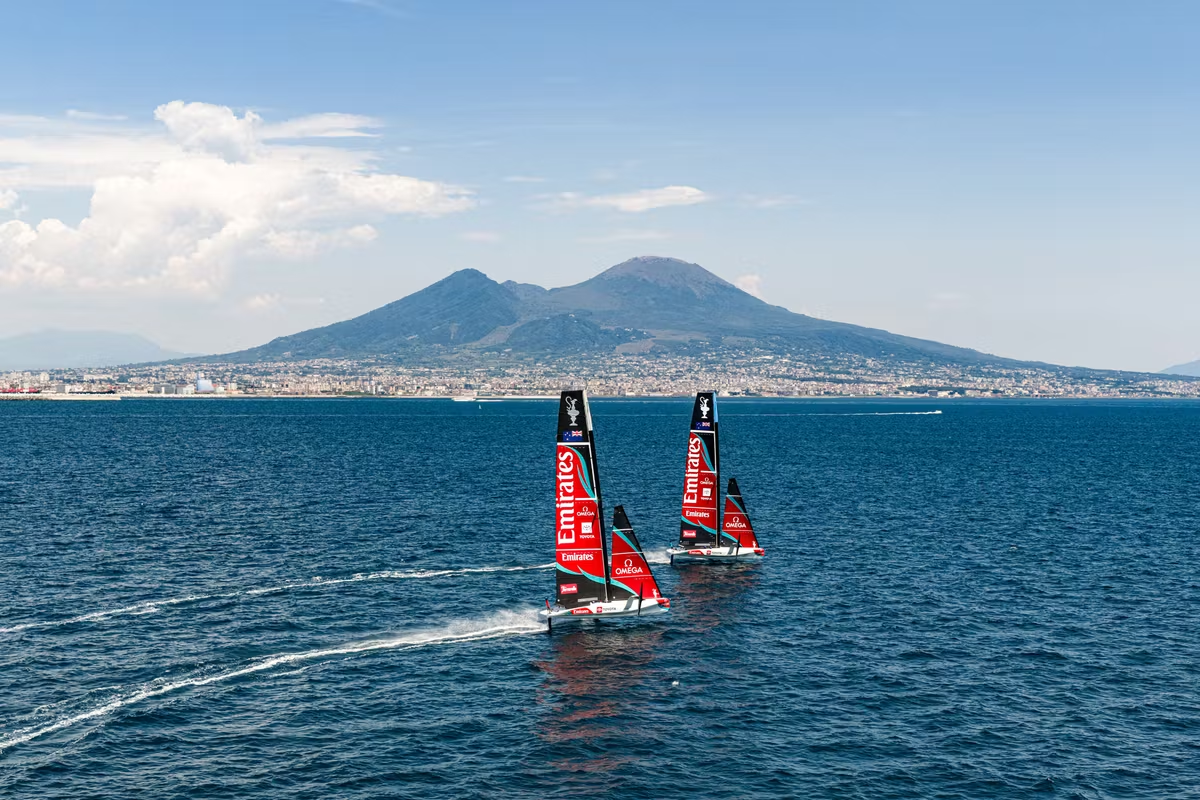
Emirates Team New Zealand coach Ray Davies believes Naples will deliver an America’s Cup atmosphere unlike anything the event has seen before, as the Defender begins learning the venue with two AC40s.
Ray Davies has been part of Emirates Team New Zealand for 25 years. During that time, he has experienced just about every version of the America’s Cup: the highs, the brutal lows, huge technical changes and the team’s transformation into the dominant force of the modern era.
Now one of the team’s senior coaches, Davies is in Naples as preparations accelerate for the 38th America’s Cup.
Emirates Team New Zealand has taken two AC40s to the venue, with its senior, women’s and youth sailors rotating through the boats. The purpose is partly to prepare for the next Road to Naples regatta in September, but it is also about beginning the long process of understanding the city and the racecourse. A year out from the first start gun, Davies can already feel the event building.
“It’s going to be quite mad,” he tells The Foil from the Savoia Yacht Club, which is supporting the Kiwi challenge in Naples. “The last time we were here, in 2012 and 2013, the city was incredible. We had a couple of hundred thousand people watching us. The America’s Cup has so much more exposure now, and Luna Rossa has done an incredible job of building a huge fanbase throughout Italy.
“The America’s Cup is going to be on a stage that we haven’t seen before. It’s going to be absolutely mind-blowing.”
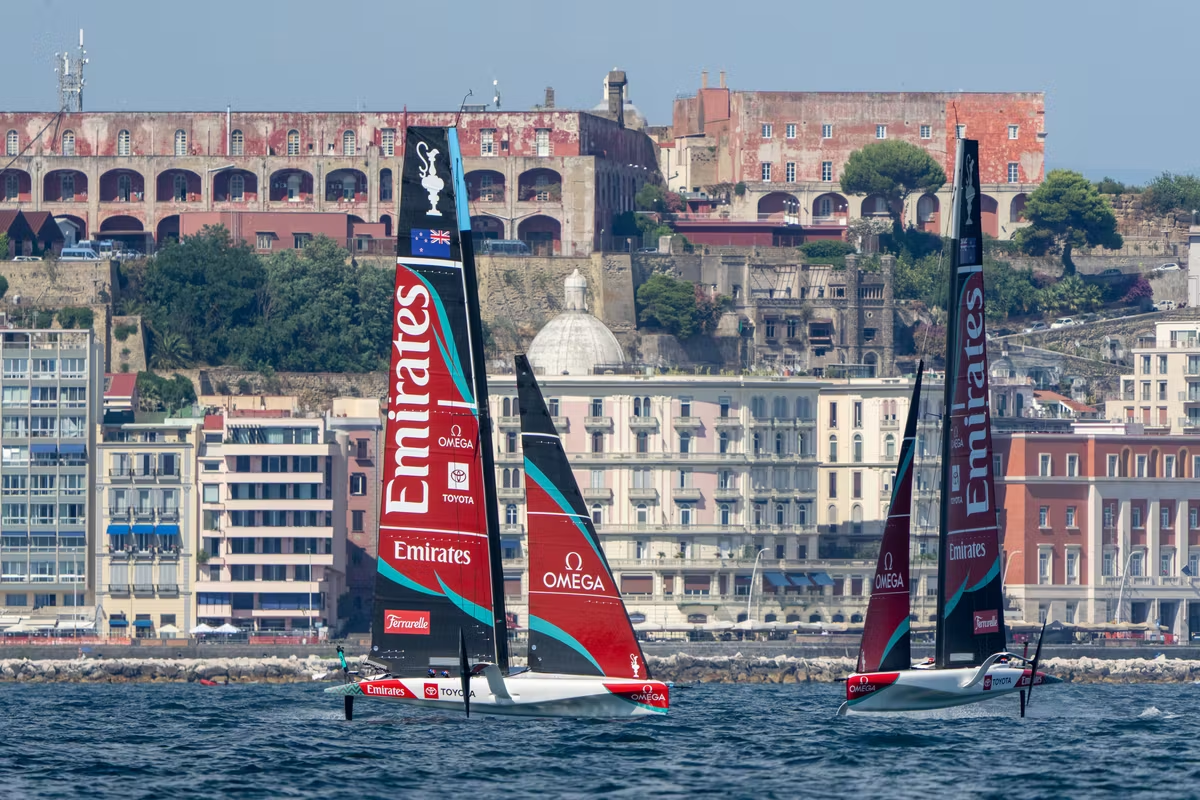
Learning about Naples
Emirates Team New Zealand’s early arrival is no coincidence. The team is gathering information about the racecourse, but it is also learning how to operate in one of Europe’s busiest and most chaotic cities. Moving sailors, equipment and support staff around Naples will present a very different logistical challenge from Barcelona.
“Barcelona was quite a dream as far as moving around the city,” Davies says. “This is going to bring a passion from the masses that we haven’t seen before. We get that in Auckland, but this could be on another scale again.”
The initial weather studies appear to be matching what the team is experiencing on the water. PredictWind, the official weather forecast supplier, has installed monitoring stations around the venue, giving the teams a growing bank of information.
But weather models only tell part of the story. The geography surrounding the Bay of Naples will bend and accelerate the wind in different areas of the course. Working out how that happens – and how consistently it happens – is now one of the Defender’s main priorities.
“We’ve done our weather studies and it is as we expected,” Davies explains. “But, as we all know, there are so many nuances out on the course. That’s what this has been about: figuring out how the wind wraps into the bay and understanding the huge geographical features around it.”
Unlike Barcelona, where sea state became a major design consideration, Davies does not expect significant waves to define the racing in Naples during the summer. The more likely pattern is a relatively calm morning followed by a building sea breeze, generally topping out around 15 or 16 knots. The local clubs neatly illustrate the daily cycle: rowing in the morning before switching to sailing when the breeze arrives.
There will still be disruption from ferries, superyachts and the heavy weekend traffic heading towards the islands, but a two-metre Barcelona-style sea state appears unlikely during the Cup itself.
Blooding the next generation
The AC40s have given Team New Zealand an opportunity to combine venue reconnaissance with sailor development.
The one-design rules limit how much technical development can be transferred directly to the AC75. Teams cannot arrive with experimental sails or foil packages, although there is some freedom within the control systems.
What the AC40 does provide is the closest available training platform for the sailors who will eventually step onto the big boat. “It is very good for giving you an understanding of the characteristics of a foiling monohull,” Davies says.
“For blooding new sailors, and giving our senior sailors the twitchiness of trying to control an AC40 manually, it is a great opportunity. There aren’t any other classes where we can get that sort of training.”
Some of the sailors currently in Naples are experiencing the AC40 for the first time. Team New Zealand is using the programme to test combinations, practise match racing and prepare for September, while simultaneously learning the venue.
Davies is particularly enthusiastic about seeing youth and women sailors racing on exactly the same course, in exactly the same equipment, as the established America’s Cup names. The first Road to Naples regatta in Cagliari demonstrated how quickly that traditional pecking order could begin to change.
“I love the fact that we’ve got the youth and women on the same racecourse as the best sailors in the world,” he says. “There’s no hiding behind the results. The boats are all one-design, and here is an opportunity for the youth and women to prove themselves.
“We nearly had the Italian youth team take it out. What a fantastic story that would have been. Give the kids a go, I reckon.”
The Youth and Women’s America’s Cups have created opportunities in previous cycles, but integrating those sailors into the wider team structure – and placing them directly against the senior sailors – feels like a significant step forward.
The next generation is no longer racing on the undercard. It is beginning to challenge the established order.
A lighter AC75
While the AC40 programme continues in Naples, Team New Zealand’s new AC75 remains in Auckland.
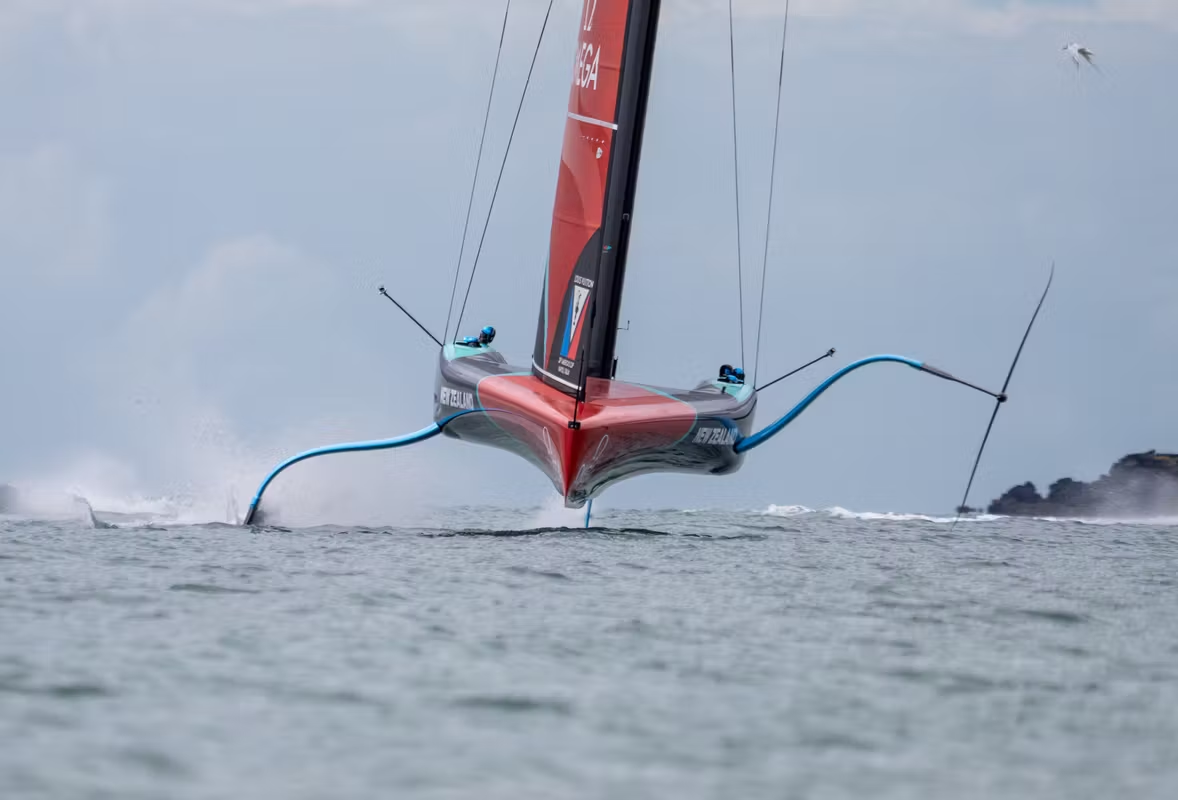
Davies describes the third-generation boat as an evolution rather than the enormous step changes seen between previous Cup cycles. The reduction in weight has improved its ability to take off, manoeuvre and remain foiling in lighter conditions – all crucial characteristics for the expected conditions in Naples.
There is, however, a trade-off. The lighter boat may not produce quite the same top-end speeds seen in Barcelona, leaving designers to decide where across the wind range they want their AC75 to be strongest.
“It is a different boat, for sure, but it’s not a step change like we’ve seen in the past,” Davies says. “The boat is a lot lighter now, so it takes off in less wind, manoeuvres in less wind and keeps foiling in less wind. That is important for coming here because we will have some very light days as well.
“Arguably, the top-end speed could be a little less than what we saw in Barcelona. It is a very difficult trade-off to decide where you want your boat performing at its best.”
The fifth sailor and new guest cockpit are two further changes for AC38. The guest position should offer a rare, unobstructed look at what an AC75 is really like, with the passenger able to experience the boat without having to contribute to its operation.
One absence Davies still feels is that of the cyclors. Team New Zealand would have preferred to retain a physical power-generating element onboard, but the decision went to a majority vote under the new partnership structure.
“The cyclors were so good to have on the boat and around the base,” he says. “They brought a huge amount of athleticism, grit and determination. It’s a shame not to have them.”
When will an AC75 sail in Naples?
Before the AC75s can arrive, the new team compound at Bagnoli must be completed.
The scale of the construction is enormous. An 800-metre breakwater has been built using around 10,000 large concrete blocks, while the base slabs are now in place and the first structure at the British base has started to rise.
Until that facility is operational, there is nowhere suitable in Naples to crane, launch and service an AC75.
Davies believes the first of the big boats could be sailing at the venue around the end of October, although the precise timing will depend on the construction schedule.
The teams planning to use Naples as their only base will naturally be keen to begin as soon as possible. Team New Zealand has more flexibility because it can continue operating from Auckland.
By early 2027, the Bay of Naples should look very different. The AC75s will be training, the women and youth sailors will be racing AC40s, and a collection of other major classes could also hold events around the venue. Davies mentions the J Class and the TP52s among those that could become part of a much wider festival of sailing.
That combination of reliable summer conditions, substantial new infrastructure and an already passionate Italian audience could create something the modern America’s Cup has not experienced before.
Team New Zealand will face Luna Rossa in front of an enormous home crowd and, as Davies freely admits, the Defender has not made life easy for itself. But this decision is about more than protecting the easiest route to another victory.
“Of course, we’re doing everything we can to win,” he says. “But we’re thinking much bigger than a yacht race. For the event and for the sport, this is going to be next level.”
Articles You Might Be Interested in
The week in racing - 20 July ‘26
AC75 fleet racing to kick off 38th America’s Cup
Ineos deny physical intimidation as Athena legal battle rumbles on
How do you sail an AC75 and two AC40s at once? Ask Luna Rossa
What La Roche-Posay’s Lorient capsize reveals about the lighter AC75
Calendar clash or golden opportunity? The Foil community have their say
Podcast: Can anyone beat New Zealand to win the 38th America’s Cup?



Member Discussion