
Freddie Carr: Why Pensacola could change SailGP for good

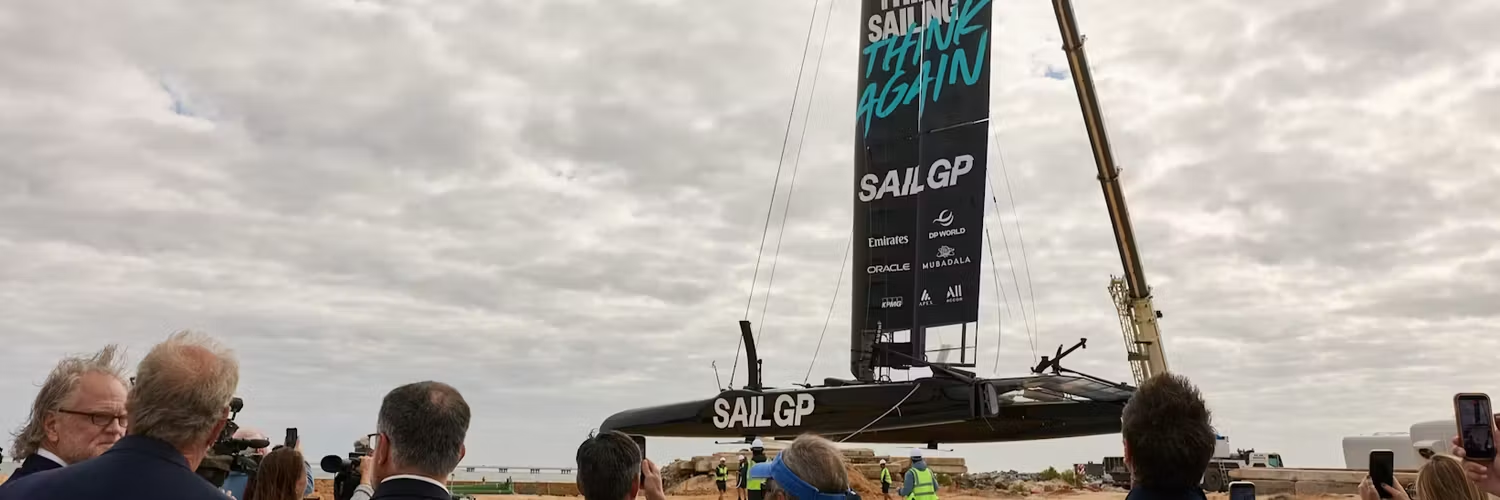
SailGP’s new training facility in Pensacola could be a game changer. For the first time, new and existing teams have a place where they can train between events, work on their sailing and bring new athletes up to speed.
That matters because the teams have an enormous amount of data available to them. They can look at what is happening on the boat in detail, and the list of techniques, manoeuvres and small setup changes they might want to explore must be as long as your arm. But at a SailGP event, teams are lucky to get three hours of training before the racing begins.
These sailors and athletes have reached the top of the game through repetition and improvement, repetition and improvement. You do something, look at how it went, make a change and try it again. In the fast-paced world of SailGP, that familiar way of training has simply not been available to them. Pensacola changes that.
Champions first out of the blocks
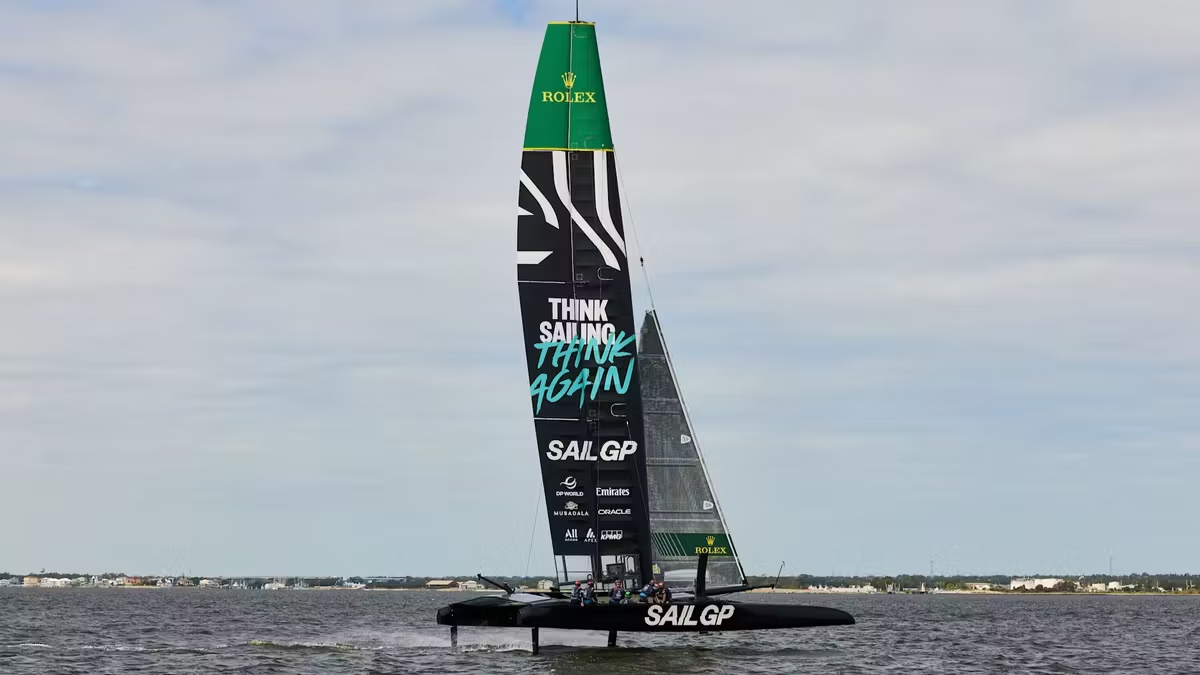
On Monday 19 October, the SailGP-owned, American Magic-operated F50 touched the water for the first time. Emirates GBR were the crew to take it out for that maiden sail, and they feel like ideal candidates to shake the boat down and start learning what it can do.
They are the season five defending champions and are still in the hunt for a place in the three-way Grand Final in Abu Dhabi in November. But they need to find improvements. A week-long training block gives them a chance to settle in away from the fanfare and noise of a SailGP race weekend, and to focus on the small adjustments that could close the gap to pace-setters Australia and Spain.
There is a bigger prize as well. Emirates GBR will be looking to jump Artemis in the final two events and snatch the third qualifying spot for the Grand Final. It is a big ask, and every improvement counts. This is the kind of preparation that could help them find those extra few per cent.
Solving the one-boat problem
Historically, one-boat training sessions at the top level of sailing can run out of value pretty quickly. You often need a second boat in the mix: something to race against around a course, or to line up against in tuning runs. In those tuning runs, one boat usually stays as the constant, the known benchmark against which the other is measured. The second boat tests different settings and variables to see whether there is a small edge to be found.
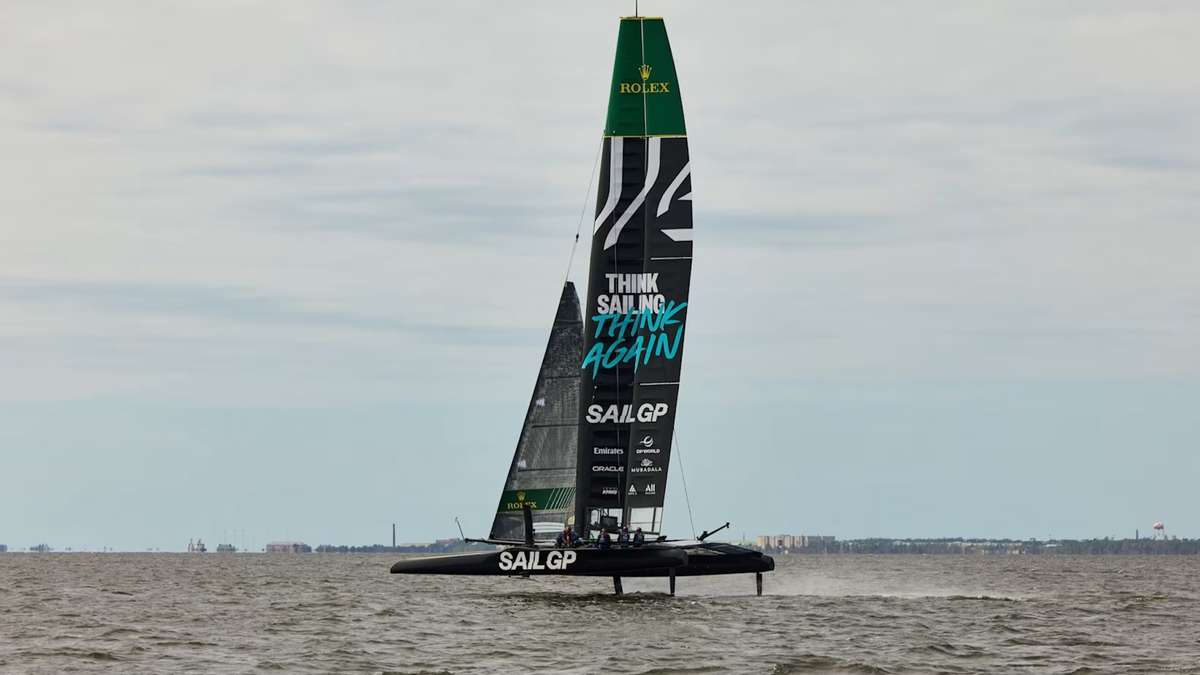
There is a huge amount you can change on an F50: ride height, pitch, wing setup, jib twist and much more. Two-boat testing can open up a valuable window for early, quick learning. But when you have one boat in the flat water off Pensacola, how do you replicate that process?
The answer is to make full use of the data coming off the boat. You could do a two-minute run using a style of sailing that the crew has become comfortable with over the course of the season. That becomes your baseline. Then you roll straight into a test setting, making a change to the technique or setup and comparing the results.
The data is only one part of the answer. You also need the sailors’ feedback: what the boat felt like, whether it was easier to control, whether the manoeuvre was more repeatable and whether the change gave the crew more confidence. Put that together with the numbers, and you can start to see whether there is an opportunity to improve on the team’s baseline.
Learning from the pace-setters
There is also the chance to study what other teams are doing well and try to understand their outstanding modes. Take Spain’s downwind performance in medium to strong breeze. To the naked eye, it looks as if they are sailing a little differently from the majority of the fleet. That information is available for everyone to see. There will be small tweaks and differences the other teams can test to try to get closer to the Spanish boat.
Until now, though, it would have been very high risk to use your warm-up hour before a race solely to focus on one area like that. There are so many other things to do before racing: making sure the boat is ready, running through pre-race routines and getting the whole crew into the right headspace. You cannot spend that limited time testing one downwind mode and hope it suddenly pays off when the racing starts.
A year’s learning in a week
A week in Pensacola is different. You have the time to repeat the same exercise, change one thing, look at the result and try again. You can make mistakes without having to worry about how they will affect the next race. You can come back to a question more than once, rather than making one quick decision based on a short warm-up.
With a week’s worth of sailing, a team could double its F50 sailing hours for the year. You could learn more in seven days than you have done in the previous 12 months. That is a game changer.
I also think Pensacola could become sailing’s team-building capital of the world. SailGP teams are very nomadic. They have 13 intense weekends together over the course of a race season, and the high-performance focus of those weekends puts strain on any team, whether you are at the top of the leaderboard or scrapping at the bottom.
Between regattas, teams debrief on Zoom calls and plan how to improve for the next event. But there is only so much you can do through a screen. Pensacola offers the chance to spend quality time together away from the media focus and pressure of a race weekend. Teams can go for bike rides in the morning and have a meal together in the evening. They can get to know each other properly, rather than only seeing each other in race mode.
SailGP teams sail some of the greatest boats ever invented, and the speed and complexity of these boats mean you need complete trust in the people around you. Yet athletes can spend relatively little time together over the course of a season outside the event weekends. A training block gives them the chance to build that trust and develop a team culture before the critical events arrive in a month’s time, and ahead of season seven.
A proper pathway for reserves
And then there is the opportunity for a new generation of foiling sailors to upskill and get comfortable in this high-speed environment before they ever go near the intense action of a SailGP race weekend.
Until now, reserve sailors within a team have had to scrap for 20 minutes of sailing here or there, across a handful of training days over the course of a season. That group could benefit enormously from the Pensacola setup.
Take a reserve wing trimmer. They could spend a morning on the F50 simulator, locking in the muscle memory for their controls and working on their communication with the rest of the crew. Half an hour later, they could be on the water doing it for real. And not just for 20 minutes, but for hours on end.
That time on the water gives them valuable licensing hours, which they need to race on the circuit. Almost more importantly, it gives them the chance to earn the trust of their teammates. When a reserve is called upon, the rest of the crew needs to know they are ready.
Closing the experience gap
It is important to remember that SailGP is still in its infancy, despite the huge impact it has had on the sailing world. One of the most common criticisms of the league is the challenge for new talent to catch up with the exceptional pool of sailors who have been involved since its inception. The established sailors have years of experience in these boats, and that experience is hard to replace with a few short training sessions.
Pensacola gives the next generation a proper chance to close that gap. There is no place to hide for reserve sailors: by the end of a seven-day training block, it should be clear whether you have the minerals to operate at the highest level and the character to fit in with your teammates.
That will be a test, but it is also an opportunity. SailGP needs a pathway for new athletes to develop, and the league needs teams to be able to bring in new talent without taking an enormous gamble every time. More sailing time, better preparation and a chance to learn alongside experienced teammates could make a real difference.
The Pensacola training setup could be the single biggest thing to level the playing field in SailGP. It gives existing teams the time to improve, gives reserve sailors a genuine route to the start line, and creates the conditions for the faces in the fleet to change over the next decade.
Articles You Might Be Interested in
Emirates GBR and Team 14 claim first slots on SailGP’s Pensacola training F50

SailGP’s year-round training base is about to open for business
American Express secures title rights to SailGP's Hong Kong opener
The RC44: how Russell Coutts hit a winning formula

The Foil Debrief: Five more knots and Geneva would be the best event on the circuit
Los Gallos snatch Geneva from the Flying Roos
Five races, five winners on day one of SailGP's Geneva drift



Member Discussion