
Andy Rice: Learning to fly at Foiling Week

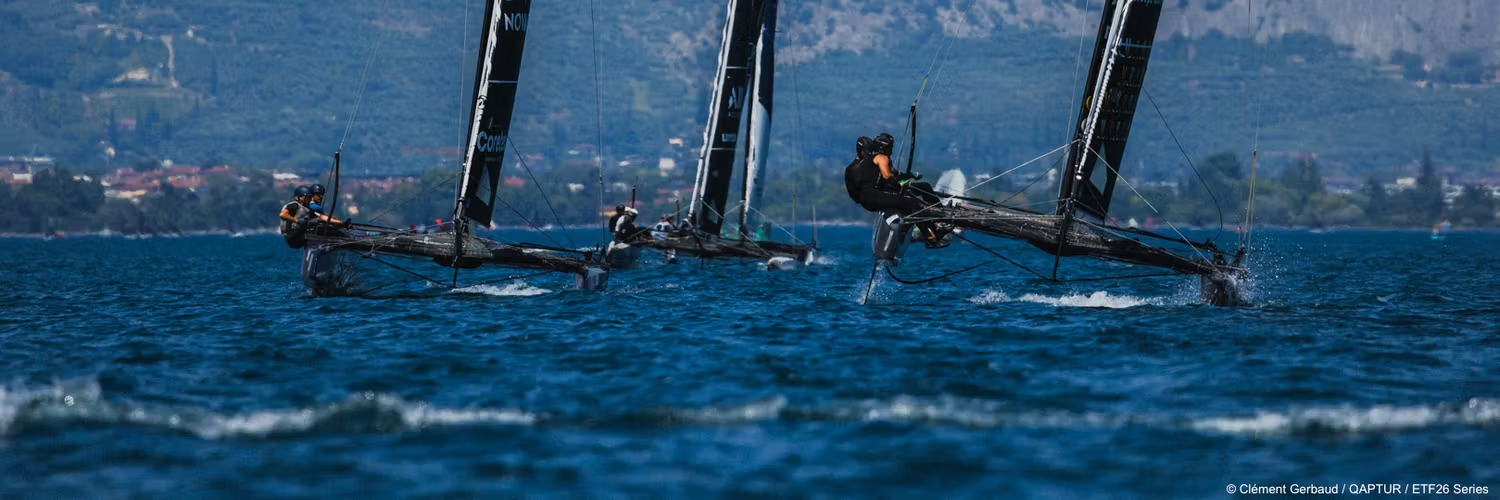
They thought it was funny when they put me on the front of an ETF26 foiling catamaran and left me to work out what the hell I was meant to do next.
I had just jumped off the rib driven by reserve sailor Justin Busuttil to take the place of Sam Street on flight control. Sam is a two-time Waszp World Champion, and I am not. He knows how to fly a 26ft foiling catamaran, and I do not.
I should have been reassured by the presence of Kai Colman, a young Aussie on main trim, sitting next to me, with Kiwi cat expert Graham Sutherland at the back, steering the boat.
Foiling at high speed, a metre or so above Lake Garda, in a gusty early morning Peler breeze was one of the high points among many in my first ever pilgrimage to the festival of high performance watersports called The Foiling Week.
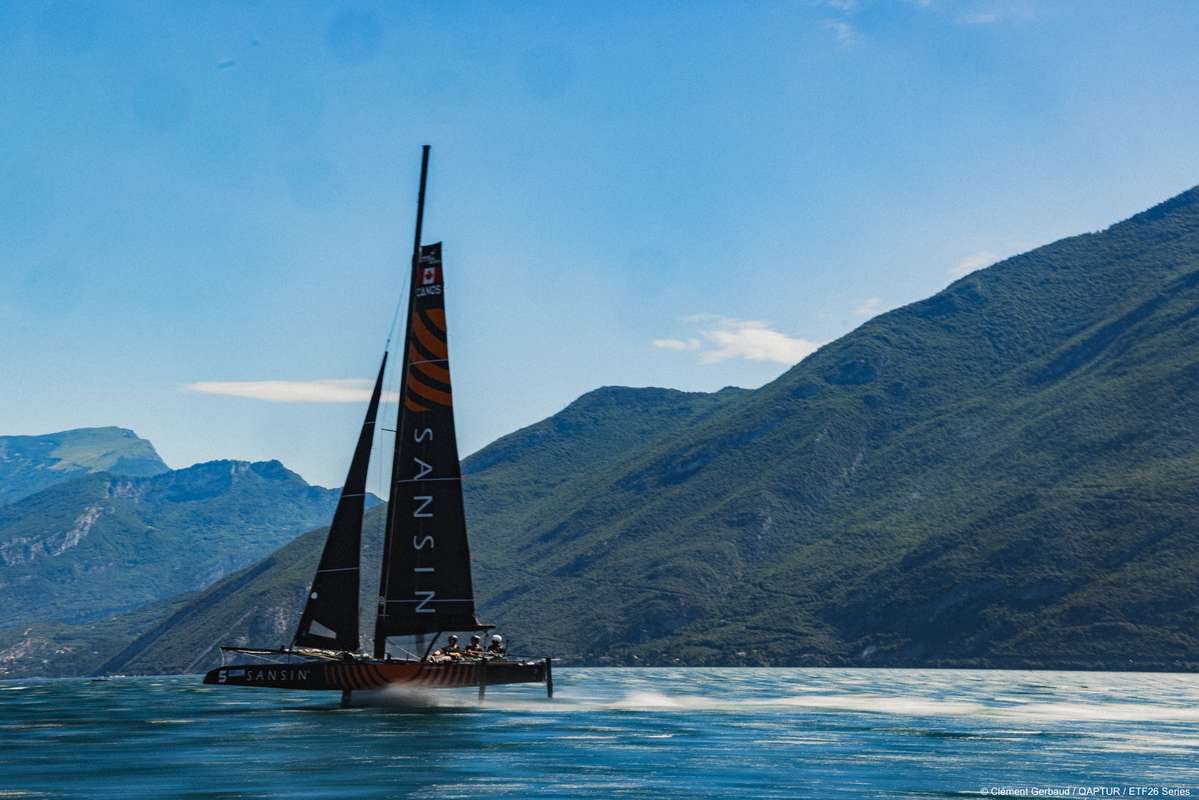
My allotted task on the ETF26 was to keep the leeward bow flying a few centimetres above the surface, running the continuous rake control line. Kai was giving me feedback, as I tried to resist the urge to lower the bow and get the damn boat back in the water. I’ve done a lot of high-speed skiff sailing in my time, but this foiling lark all feels a bit loose.
That said, 32.6 knots of top speed for the 20-minute session marked my all-time highest speed on a sailing boat. Scary but fun. Scary fun. Thanks guys!
The blokes were keen to get me on board because they feel the ETF26 has not got the publicity and awareness it deserves. My brief time on flight control gave me a sense of the interplay and telepathy required between the driver, main trimmer and flight controller to maintain smooth and steady flight. The ETF stands for Easy To Fly, and I can tell you it’s not. To get the best out of this wild ride takes a lot of skill and the ETF name undersells just how challenging this boat is.
On The Foil we talk a lot about pathways into SailGP and America’s Cup. Where do you get the necessary skills? I think the ETF26 ticks a lot of relevant boxes. All the controls are mechanical, not push-button digital like in SailGP and the Cup but even so, the skills of honing that three-way choreography of steering, trimming and flying are heavily tested. With such limited time available for training and racing on the F50, a trio of SailGP sailors couldn’t help but hone their communication and technical skills on an ETF26.
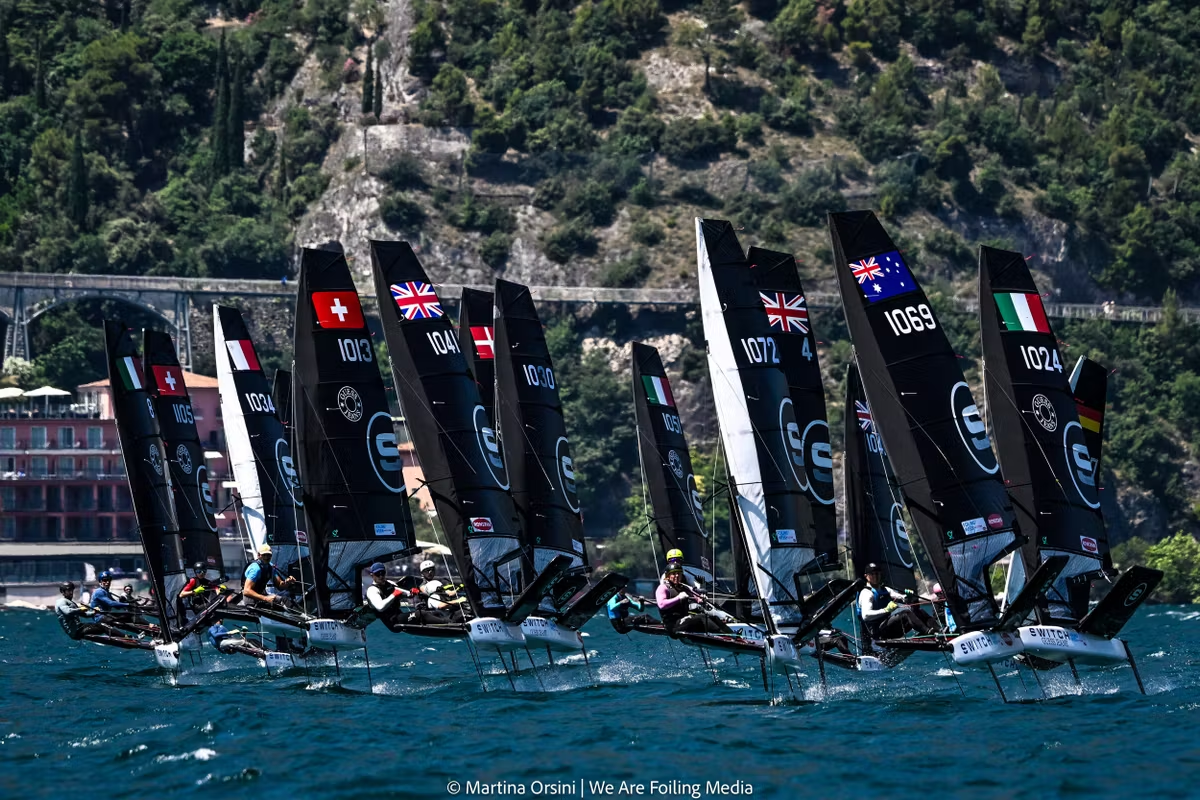
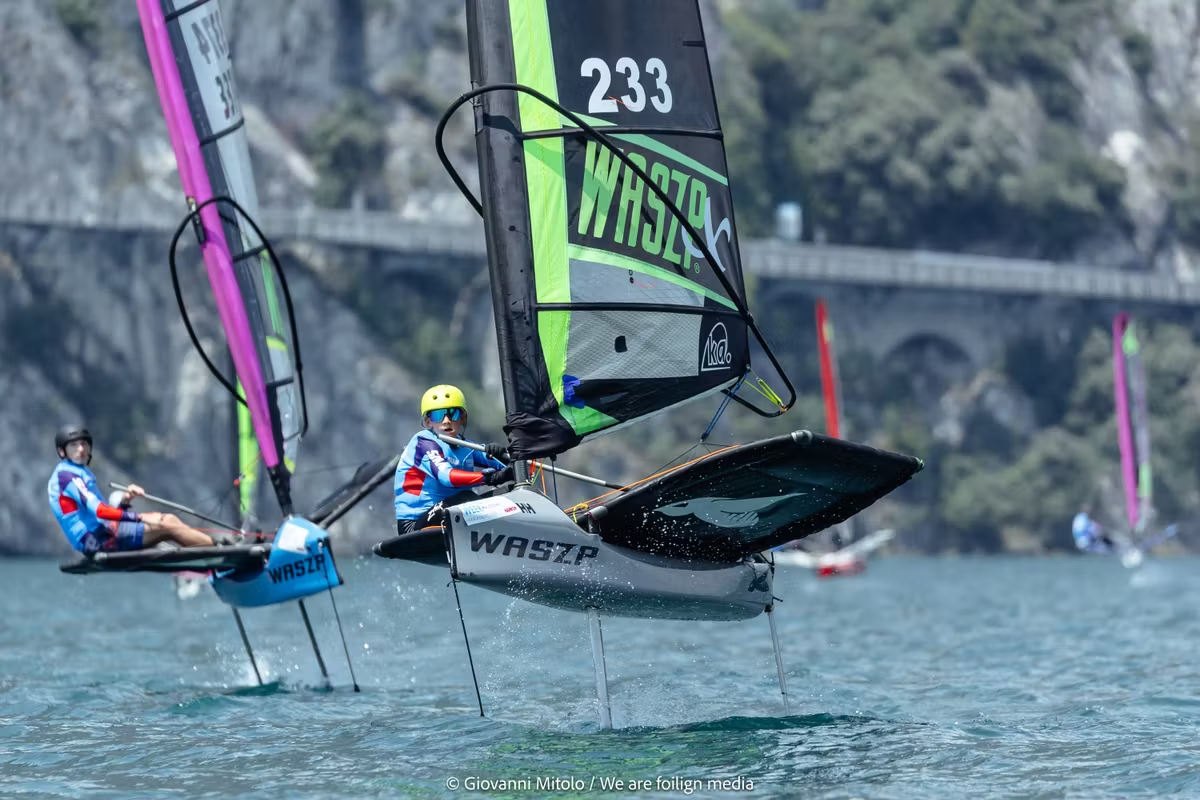
I also had a go at the Switch one-design foiler, a sort of snapshot of what a top-end International Moth was like four years ago. This was so much fun. I’d never been on a Moth or a Switch before, so this was a box I should have ticked a long time ago. John Higham and his friendly team from the manufacturers E6 took me and a couple of others out on to Garda for our trial sail. Ambrogio Beccaria, recent winner of the Vendee Arctique on his IMOCA 60, was also among our group of Switch beginners and we took it in turns to see who could get on to the foil and keep it going without crashing.
There was so much else I would have loved to do while I was there in Malcesine on the eastern side of Lake Garda. Founder of Foiling Week, Luca Rizzotti, has created a Disneyland theme park where it’s possible to try out so many different things. I’ve had a go on e-foilers before and to watch them carving around was a joy; and of course they can go out in a flat calm and still have a great time.
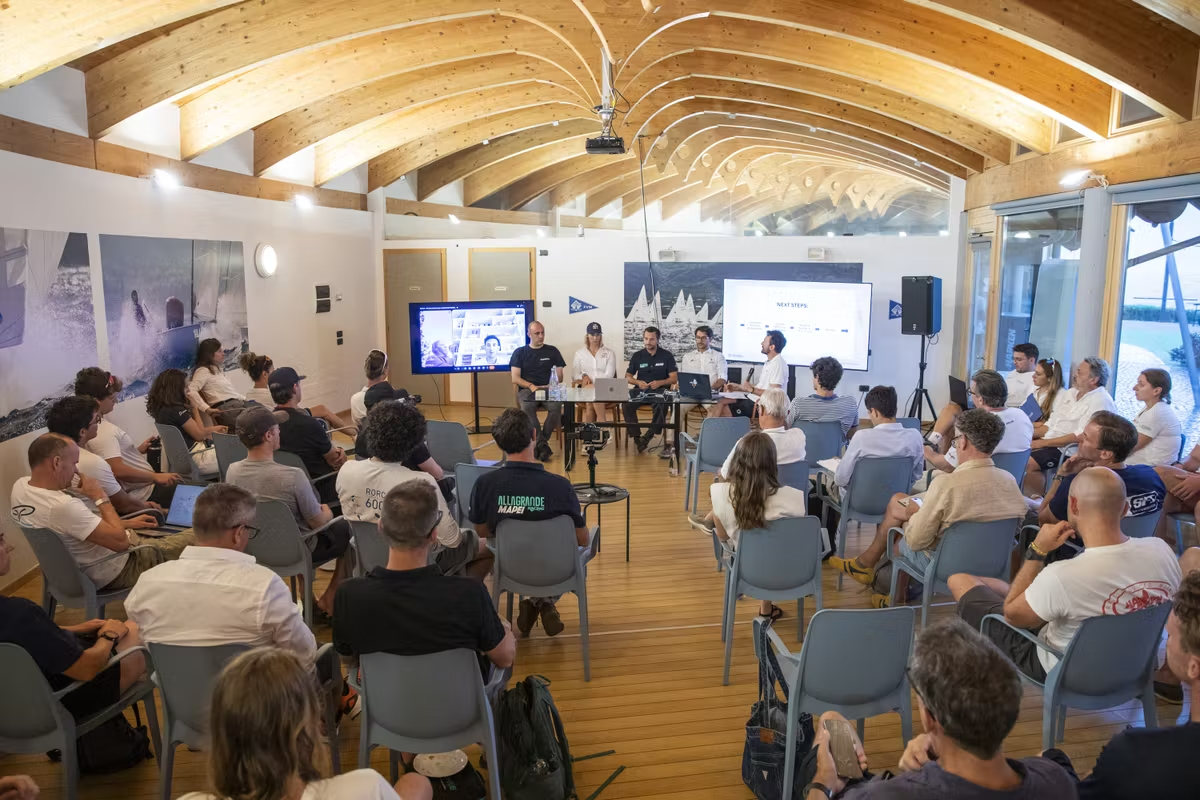
Luca had also invited me to sit on a panel at the Foiling Congress which brought together a forum of movers and shakers in the industry including a number of prominent sailors and coaches including IMOCA sailors like Francesca Clapcich and the aforementioned Ambrogio Beccaria, as well as SailGP’s community manager Tom Herbert-Evans and longstanding sailor and now head coach to Emirates Team New Zealand, Ray Davies. There were even representatives from the Ferrari Hypersail project there too.
Apart from throwing around a lot of good ideas, this was a great networking opportunity, so it sort of felt like I was doing some work while having a great time in foiling paradise.
While for me the most attractive side of Foiling Week was the pick n mix opportunity to try so many things, for others the racing is a bit more important. We’ve spoken a lot on The Foil about the difficulty of getting your way into SailGP or the America’s Cup. It’s a bit of a closed shop, with the issue of who you know still being as important as what you know and how fast you can sail.
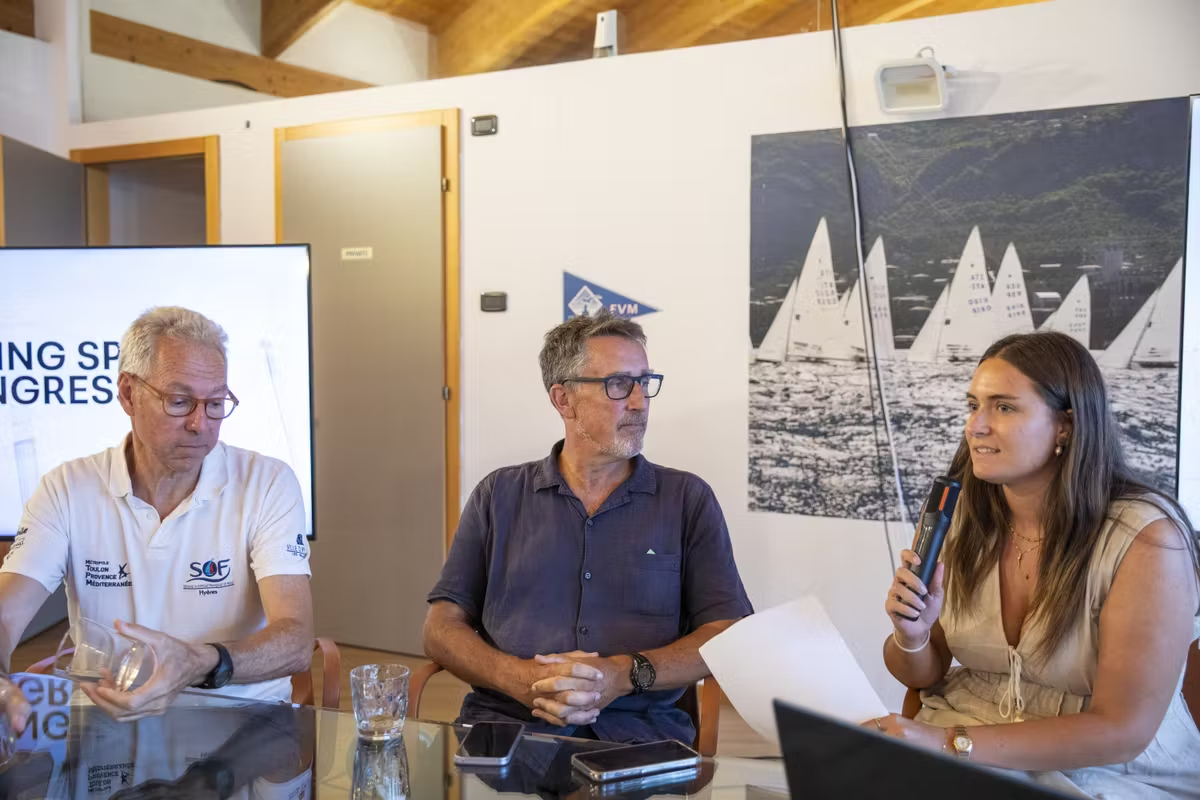
I spoke to Sime Fantela, Croatia’s Olympic 470 gold medallist from Rio 2016 as well as the 2018 49er World Champion. He was competing in his International Moth and won the class regatta at Foiling Week. For him, continuing to perform well in a highly regarded foiling class is the best way of getting spotted for a possible future in SailGP, just as the French team’s new wing trimmer Enzo Belanger has done since winning the Moth Worlds at Garda a year ago.
It’s a long, hard road getting to the top of the sport, with no guarantee that the narrow top of the pyramid will have space for you - even if you’re as accomplished as a proven world-class talent like Sime Fantela. So you’ve got to enjoy what you do for its own sake, and that’s what Foiling Week is so good at. It’s a great showcase of all that’s good in the world of high-speed small-craft foiling. Now I’ve been bitten by the bug, I’ll surely be coming back. And I recommend that you give it a go too, no matter what your level of skill or ambition.
Topics
Articles You Might Be Interested in
The week in racing - 19 Oct ’26
Platoon Aviation’s consistency seals a classic 52 Super Series season
The week in racing - 12 Oct ’26
LIVE: 2026 Sardinia Kiteboard Grand Slam
LIVE: 52 Super Series Valencia Sailing Week – the title decider
Why Les Voiles de Saint-Tropez is so special
The week in racing - 5 Oct ’26
The RC44: how Russell Coutts hit a winning formula



Member Discussion