
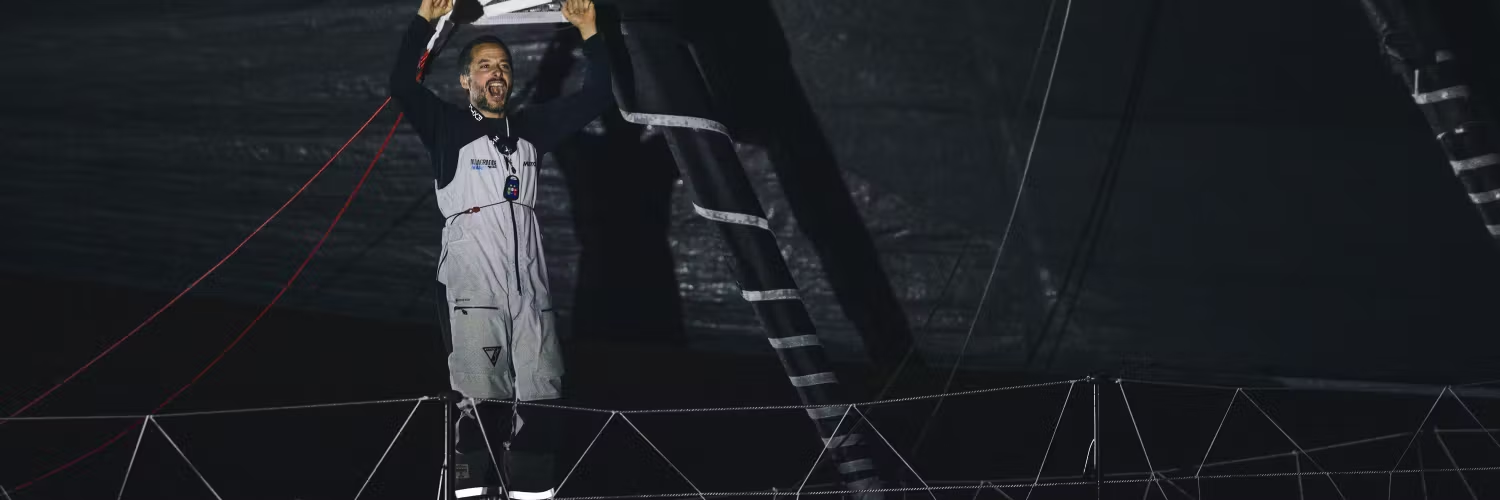
How Beccaria stole the Vendée Arctique in the final miles

For eight days, the Vendée Arctique looked like Sam Goodchild’s race to lose. He’d led since the first night out of Les Sables d’Olonne, built a healthy cushion in the tens of miles, and pointed MACIF Santé Prévoyance at home with the air of a man counting down to a tidy win. Then, a few hundred miles short of the finish, the Bay of Biscay did the one thing a frontrunner dreads: it stopped blowing. A vast patch of dead air settled across the road home, the leader sailed straight into the heart of it, and the commanding position he'd built over a week evaporated in an afternoon.
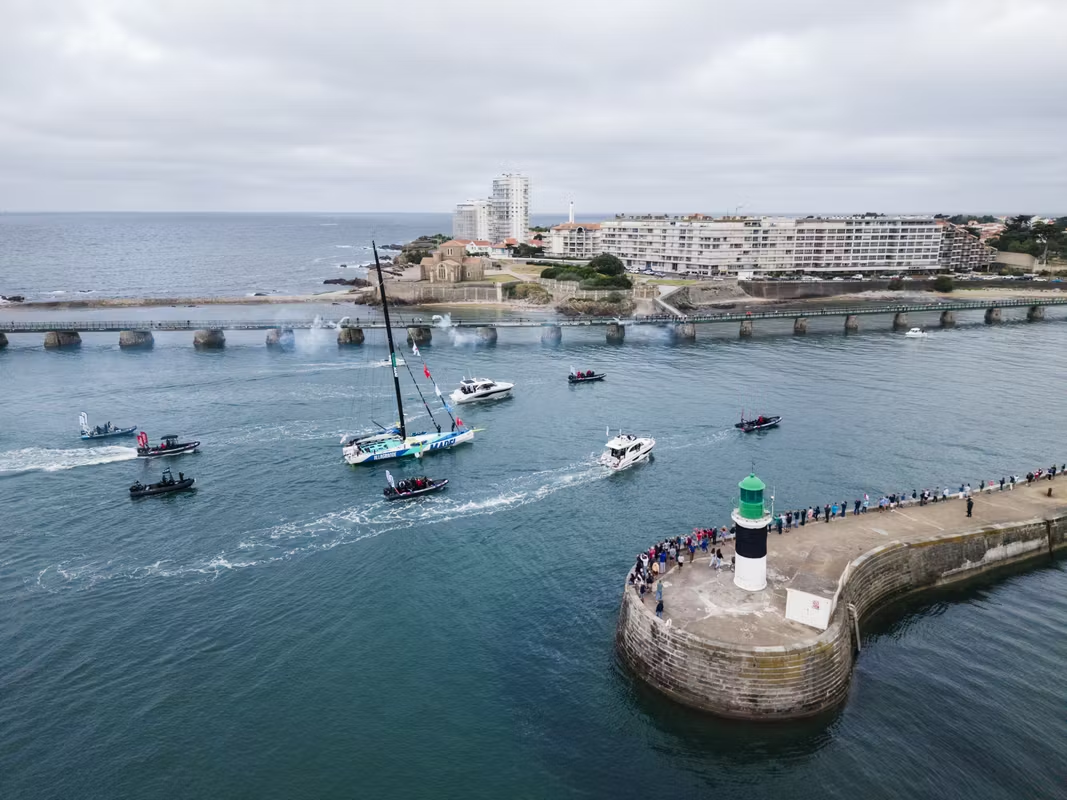
Few would have fancied the eventual winner’s chances halfway through. Ambrogio Beccaria had been as low as fifth, had spent twenty-odd minutes in pitch black after his electronics died, having to climb over the side into the freezing Atlantic to cut a fishing net off his own keel. Yet on Monday evening, with barely any wind to work with, the Italian slipped past Élodie Bonafous and then Goodchild, and in the small hours of Tuesday he crossed the line first to win his maiden solo IMOCA race aboard Allagrande Mapei.
It caps a finishing order few would have called at the Arctic Circle. Beccaria was home at 03:07 on Tuesday, eight days and a little over fourteen hours after the start. Goodchild followed an hour and a quarter later in second, Violette Dorange took third and a first IMOCA podium, Bonafous came fourth after a costly penalty, and Francesca Clapcich rounded out the top five. Three boats are still racing as we write – Nico d’Estais and Arnaud Boissières scrapping around the Fastnet, Manu Cousin further north again – while Corentin Horeau had to retire back on day three.
You can follow the rest of the fleet on the official tracker.
We left this story with Goodchild becoming the first sailor to reach the Arctic Circle in a solo race. Here’s how the second half – the long road back – played out…
Fri 12 June: The fleet turns for home
By Friday morning, five of the eight remaining skippers had ticked off 66° North – Bonafous, Dorange and Beccaria following Goodchild across on Thursday evening, Clapcich during the night – with d’Estais and Boissières crossing through Friday and only Cousin still to go.
Milestone behind them, the leaders bore away and lit up. Off Iceland the foils came alive, the front boats reaching over 25 knots through a building four-metre sea, the miles falling away fast. For Beccaria, who had ground through days of upwind and reaching while quicker boats edged clear, the change was a tonic. “Finally, we had some nice downwind and I was quite fast,” he said. He clawed his way up to third past Dorange, while Goodchild stretched his margin back out beyond a hundred miles over Bonafous.
There was even room for a bit of fun as the fleet marked the crossing – Boissières in fancy dress, Clapcich in a Hawaiian shirt – before the serious question of the week swung into view: how to get back south around Ireland.
Sat 13 June: Two ways round Ireland
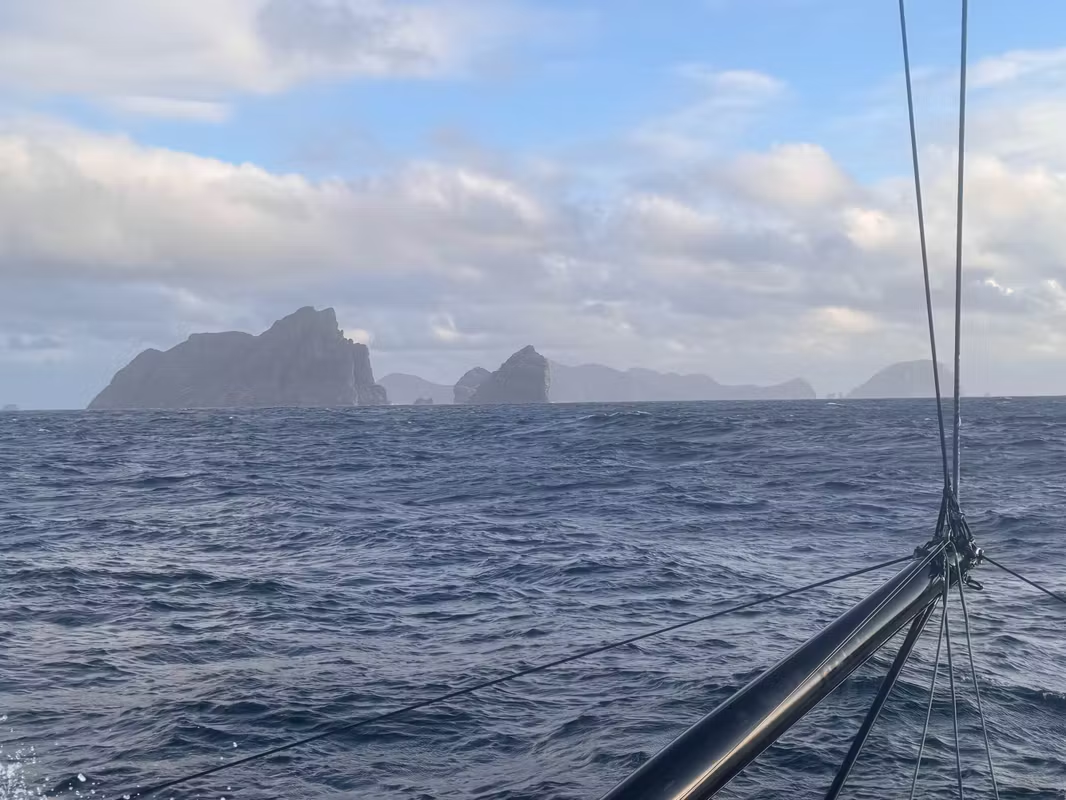
This was the fork that shaped the race. Inside lay the North Channel between Northern Ireland and Scotland and on down St George’s Channel – shorter, more direct, and worth fifty or sixty miles on the routing software, but a gauntlet of tidal gates, shipping and traffic-separation schemes funnelled into water barely twenty kilometres across in places. Outside was the long way around the west of Ireland: more distance, but far less to go wrong.
To that point the race had run more or less to form, the upwind-strong Verdier boats of Goodchild and Bonafous setting the pace – and it was those two who backed themselves to take the harder, faster line. Goodchild, who knows the North Channel from his Figaro years, went inside without a second thought. Bonafous reasoned her way to the same call.
Beccaria, back up to third, did the opposite. The prospect of the inside route – “strong winds, rough seas, adverse current, a traffic separation scheme to negotiate in a narrow passage” – made his stomach turn, he admitted, and a recent autopilot scare had left him in no mood to gamble. He committed to the west of Ireland knowing exactly what it might cost. “The worst part is that I know it’s probably the winning route,” he said, reckoning he felt “a little bit like I’m the only one going against the tide.” But Dorange and Clapcich came to the same verdict and followed him outside.
Goodchild, meanwhile, was threading the Irish coast at around 60 per cent pace, in no rush to risk it all in such tight, tidal water. “It almost feels like a sightseeing cruise in the middle of a race,” he said, complete with a dolphin escort as the sea finally flattened. By nightfall, boats that had spent a week converging on a single point were strung right across the chart.
Sun 14 June: A calm gathers in the bay
Cousin crossed the Arctic Circle around 1am, the last of the eight to do so, and at last the whole fleet was pointed home. Goodchild cleared St George’s Channel into the Celtic Sea and still held over a hundred miles at midday – but by now the story had moved to the forecast.
Race meteorologist Christian Dumard had flagged a large zone of calm building in the Bay of Biscay from Sunday evening, a barrier reaching from the tip of Brittany down towards the latitude of Bordeaux and edging east toward Les Sables d’Olonne by Tuesday. A typical summer feature, he reckoned, but a cruel one this week: the choice was to dive deep into Biscay and turn back east for a clean angle to the line, or hug the Brittany coast and risk meeting the fresh breeze head-on. A week of short nights was adding up, too, as the tired skippers crawled through every transition.
All of a sudden the long western detour didn’t look so expensive at all: if the frontrunners hit the calm first, the boats behind could close the gap right back up. ETAs that had Goodchild docked on Monday began drifting into Tuesday. Every boat could see the same trap laid out on the chart; what none of them could know was who the calm would swallow and who it would let slip through. Bonafous, lying second, already sensed the whole thing would come down to the wire.
Mon 15 June: The lead evaporates
On Monday the trap shut. Goodchild, first into the windless patch, slowed to a crawl while the chasers kept rolling and chewed into his lead. For the man who had led all week, there was little to do but make peace with it. “In the end, you simply have to accept what you cannot control,” he said.
Then came the blow that reshaped the podium fight. The international jury handed Bonafous a twelve-hour penalty for clipping the North Channel traffic-separation scheme, to be served at sea. She didn’t dispute the penalty, but the timing was merciless, and she described learning of it “like the ground disappeared beneath my feet”, having only just clawed her way back to second.
With Bonafous stopped and serving her time, Beccaria and Dorange – all but side by side since the Arctic Circle – came surging up from the west. Dorange was relishing it: “there are so many possible scenarios, and I really can’t wait to see how this all ends,” she said. By around 6pm the tracker showed what would have seemed far-fetched a few days earlier – Beccaria in front, the becalmed Goodchild slipping to second. Further back it was a rough night for d’Estais, who snapped a headsail tack fitting at 18 knots and had to go out onto the bowsprit in the dark to fit a new one, all while Boissières chipped away at his lead.
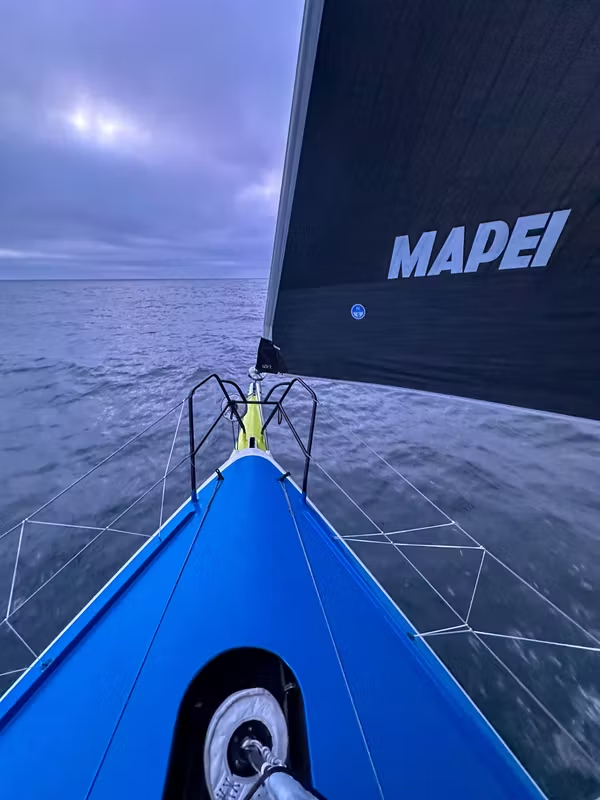
Tues 16 June: Beccaria takes it
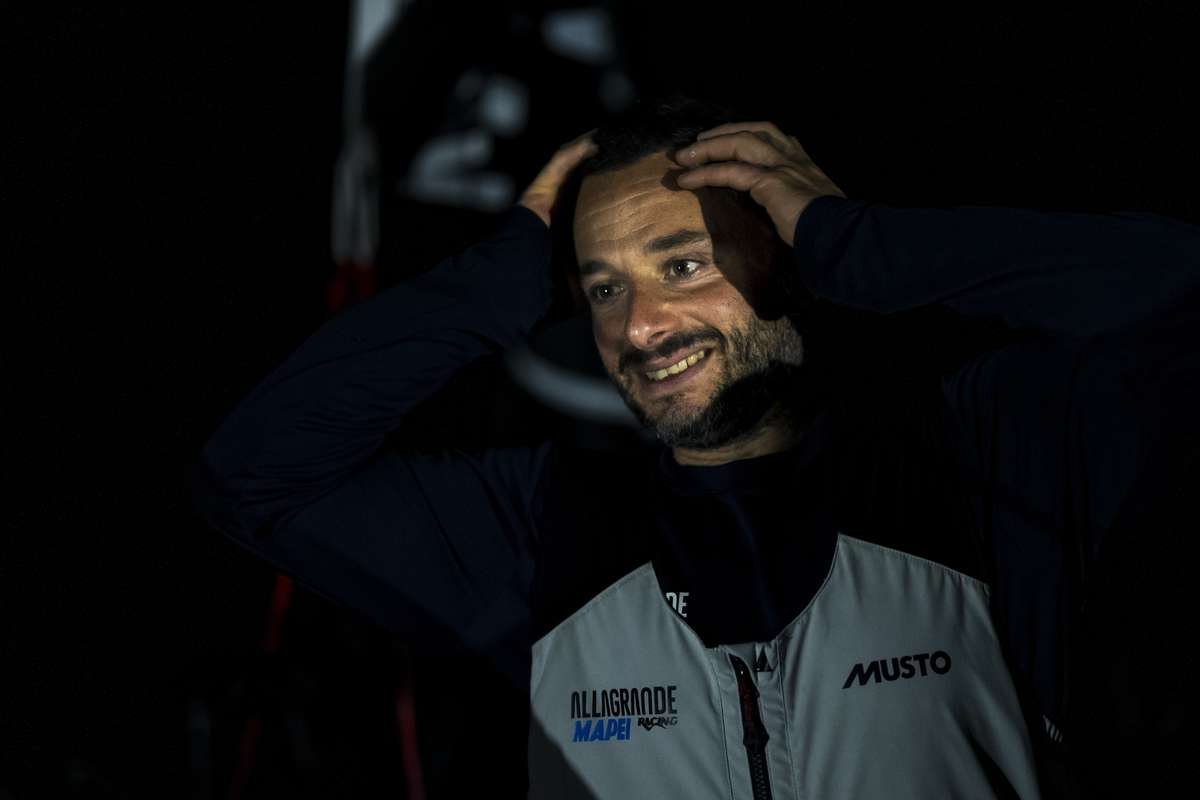
Beccaria crossed in the dark at 03:07, eight days, fourteen hours out of Les Sables d’Olonne – a first solo IMOCA win, and a hard-earned one given where his week had started. The scale of it wasn’t lost on him. “I never thought I could win,” he admitted, recalling how close he’d come to turning back in the opening 24 hours. “I would never in a million years have thought I could make up 200 miles.” Goodchild came in an hour and a quarter later for a second place that must have stung, having led since the opening night and lost it only in the closing hours.
Dorange claimed third and her maiden IMOCA podium, having closed to within twenty miles of the front as Bonafous’s twelve-hour penalty dropped her to fourth. Clapcich completed the top five, wrapping up the longest solo race of her life.
And it’s not done yet: d’Estais and Boissières were rounding the Fastnet within a hundred miles of one another, Cousin still grinding south off Scotland in 30 knots-plus, three skippers chasing places and points long after the race crowned its winner. Follow them on the tracker.
Final standings as of 16 June (provisional, pending jury ratification)
- 1) Ambrogio Beccaria (Allagrande Mapei) – finish 16/06 01:07:50 UTC – elapsed 8d 14h 05m 50s
- 2) Sam Goodchild (MACIF Santé Prévoyance) – 02:22:53 UTC – 8d 15h 20m 53s
- 3) Violette Dorange (Initiatives-Cœur) – 03:23:53 UTC – 8d 16h 21m 53s
- 4) Élodie Bonafous (Association Petits Princes – Quéguiner) – 06:09:59 UTC – 8d 19h 07m 59s
- 5) Francesca Clapcich (11th Hour Racing) – 07:03:11 UTC – 8d 20h 01m 11s
A marker laid down for the cycle
What unfolded at the front is the oldest lesson in offshore racing, relearned the hard way: nothing’s safe until the line. Goodchild sailed a near-faultless week and still lost. Beccaria spent his first 24 hours close to quitting, slid down the order, even went over the side to clear his own keel – and still found his way to the front.
As the opening act of the 2025–2028 IMOCA cycle and the long build towards the next Vendée Globe in November 2028, it’s a handy early read on who’s quick, who’s durable, and who can keep a clear head when it all comes undone within reach of home. Or, in the words of d'Estais, still out there grinding through fog and broken gear, “offshore racing teaches you self-confidence and humility at the same time.”
Topics
Articles You Might Be Interested in
Three legs and an electronic brain: how Ferrari Hypersail will fly (Pt. 2/7)
Django 7X edges out Balthasar for Rolex Middle Sea Race overall win
Grigio and Giallo: Up close with the finished Ferrari Hypersail hull (Pt. 1/7)
Inside the Batmobile: a first look at Ferrari Hypersail
Why pro sailors dread the Middle Sea Race - Course Preview
The week in racing - 12 Oct ’26
The Tabarly Effect: how one quiet sailor built a nation of ocean racers
The week in racing - 5 Oct ’26



Member Discussion