
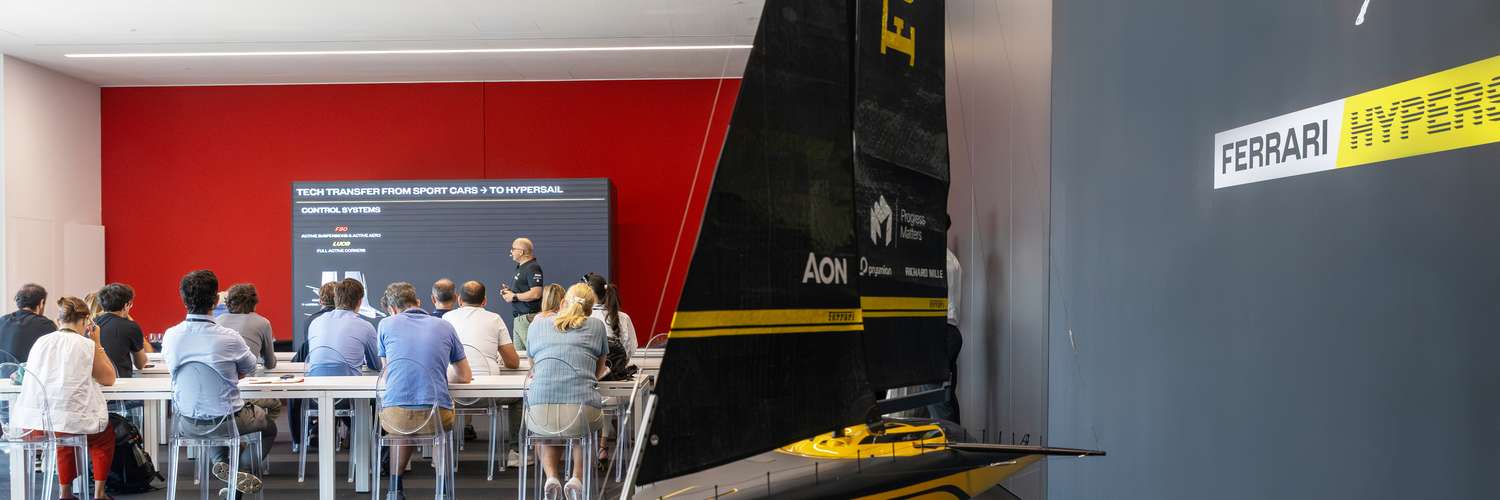
The tech behind Ferrari Hypersail

Ferrari has never built a sailing boat. So it's fitting that its first isn't a boat in any usual sense, but a 100-foot machine designed to fly across oceans. Hypersail is a fully foiling monohull – the first of its kind – 20 metres across, with a 40-metre mast. It's built to lift clear of the water and stay there, not for the 20-minute blast of an America's Cup race but for weeks on end, through ocean swells of two to eight metres.
The ambition is two records at once: to be the fastest offshore boat ever built, and the first monohull to hold the round-the-world record – a mark that has only ever belonged to multihulls – all with no engine and no fuel, at speeds touching 50 knots. A couple of weeks ago I was invited to Maranello to meet the people behind Hypersail, try the team's simulator, explore the boat virtually in Ferrari's VR room – and to get hands-on with their patented winch-by-wire system.
How winch-by-wire works
Let’s start here, because it reflects how Ferrari is rethinking everything from first principles. A conventional mechanical or hydraulic winch feeds the sail's load straight back to the sailor – so the harder the sail pulls, the harder the grinding. Winch-by-wire severs that link. The crew's effort no longer drives a transmission at all but is converted instantly into electricity, pooled and redistributed around the sail plan wherever it's needed. The pedestals become pure generators, so a grinder can hold a steady, efficient cadence instead of straining as the loads climb.
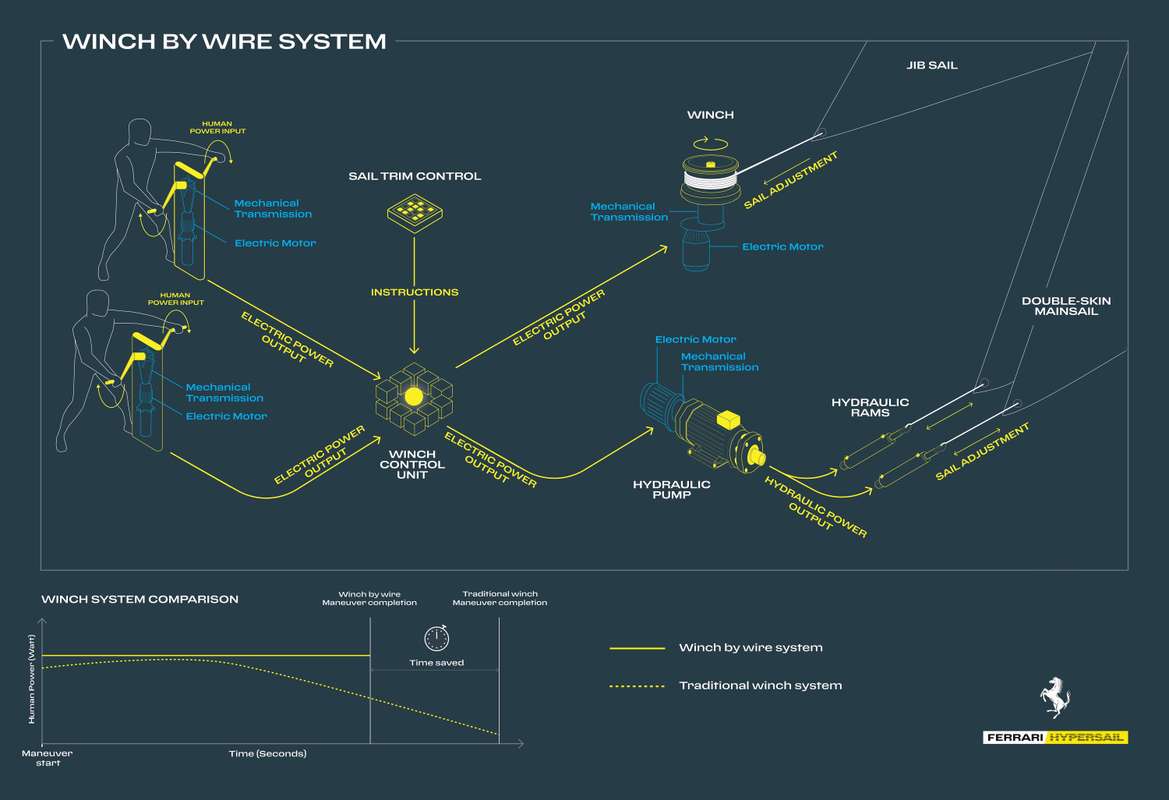
“As far as we know it's the first time anyone's approached a concept like this,” says technical team leader Marco Ribigini. “It brings a great benefit in efficiency, in the capability of a few people to do what more people need to do, and in using less power from your body. These systems work at a constant speed, producing power, instead of increasing the strength as the load increases.”
The result is striking: a single crew member can manage sail loads of up to 9 tonnes. For comparison, a single grinder on a maxi yacht, working through conventional winches and gearboxes, tends to top out at a working load of somewhere between 2 and 5 tonnes.
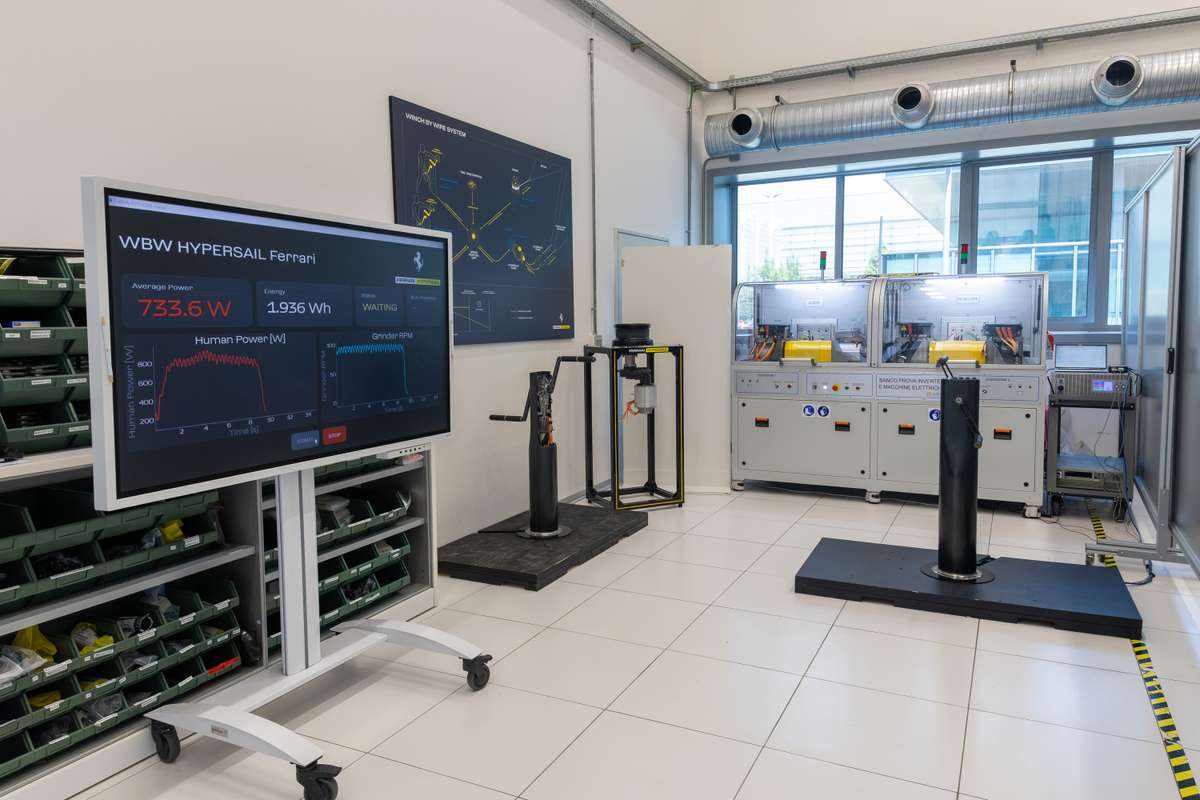
I was given the chance to try it next to a conventional grinding pedestal, and you feel the difference the moment the load comes on. Where the old system overwhelms you mid-manoeuvre, this one just keeps turning at the same rate, providing far more power for the same effort. It's impressive tech, and may well find its way onto other boats before long.
But the sail plan is the only part of Hypersail the crew powers by hand. Everything below deck runs off the battery, and whatever energy the boat can harvest around it.
Power from the elements
A boat built for flying across oceans has to move its foils, run its electronics, control its own flight and even make the crew's drinking water – for weeks at a time. And in the case of Hypersail, without a drop of fuel aboard.
“Hypersail is the first foiling monohull for ocean racing to achieve complete energy autonomy,” Ribigini says. “Thanks to an electrical system that ensures the ideal balance between efficiency and performance … all on-board adjustments are powered entirely by energy generated while underway.”
The reasoning was practical before it was environmental. Cutting weight was the priority, and ditching the hundreds of litres of diesel a 40-day voyage would demand was one of the biggest savings going – which left only the elements to power the boat.
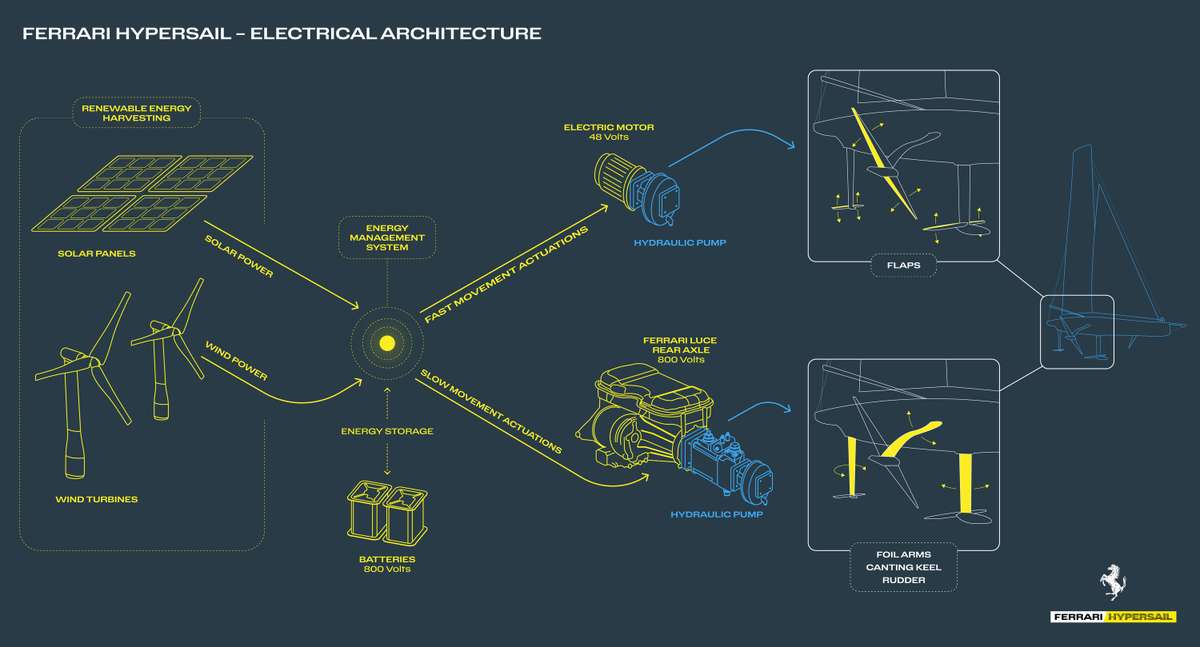
The boat draws on several renewable sources:
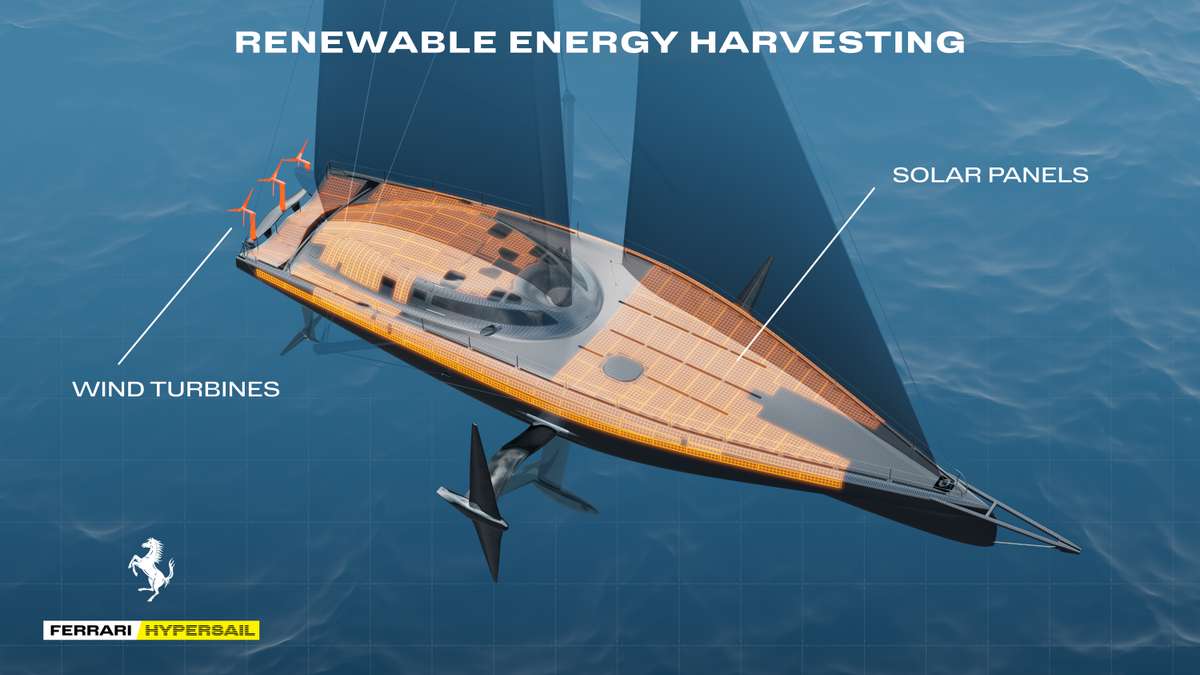
- Solar: around 100 square metres of walkable, specially gripped panels set into the deck and topsides, generating up to roughly 20kW. Their placement was worked out by modelling sun exposure across latitudes and likely routes, then fitting panels only in the high-yield zones – the engineers found a kilo at the stern was worth two on the deck.
- Wind: custom, removable turbines at the stern that keep working past 60 knots of apparent wind, where commercial units give up around 50, for a drag penalty of just 3 per cent.
- Kinetic: an experimental mast on the bow that harvests power from the boat's pitching, a little like a self-winding watch.
- Hydro: generation from the boat's movement through the water is in the mix too, though there's little detail on it yet.
It is managed across four voltage levels, each matched to its job – 800V for the big, high-load keel and foil cants, 48V for the fast-moving flaps, and 24V and 12V for the electronics. Whatever isn't used at once is stored rather than wasted, in two 800V battery packs, one with 50 kWh and the offering 150 kWh.
A matter of reliability
Unlike a car, there's no pulling into the pits for repairs out in the middle of the ocean. So what happens when something breaks?
“Reliability is one of the key items, so what we did mainly covers three things,” the project’s chief technology officer, Matteo Lanzavecchia, told The Foil. “One thing: we put redundancy in the system. For example, we have two battery packs, not just one. We are able to guarantee the power supply without stopping the boat and without doing anything, because we can automatically switch from one battery to the other.
“The second topic is that all the electric motors and engines we put on the boat are basically the same. We have a lot of spare parts. If we have an issue, you can use that motor in another place. There is not a specific motor for a specific function, so you can have spare parts.
“The third part is the crew on board. They are not just sailors; they’re sailors with an engineering background, and they know the systems very well. The guys that are on the boat will always be connected to a sort of remote garage, like we have in F1 or in Hypercar. These guys, who will be here in Maranello or somewhere else, are able to predict potential failures and suggest what to do.”
Letting the boat fly itself
If winch-by-wire and the energy system keep Hypersail powered, the flight control is what keeps it flying. Holding a foiling monohull level across a moving ocean for 40 days is beyond human capability. In the America's Cup crews trim their foils constantly, but that's a 20-minute race, not six weeks in swells of up to eight metres. So Ferrari built an autopilot that lets the boat fly itself.
At its heart is a sensor array the team calls the "sea carpet", which reads the water ahead like a road: it maps the incoming waves and a predictive model trims the flaps to meet each one before it arrives. “We want the boat very close to sea level, like the car, because aerodynamically it's much more efficient to stay low,” explains Lanzavecchia.
A single controller manages all six degrees of freedom – course, ride height, pitch, roll, leeway and righting moment – with two groups of actuators doing the work: the small, fast, low-energy flaps, and the big, slow, high-energy cants that reposition the surfaces the flaps sit on.
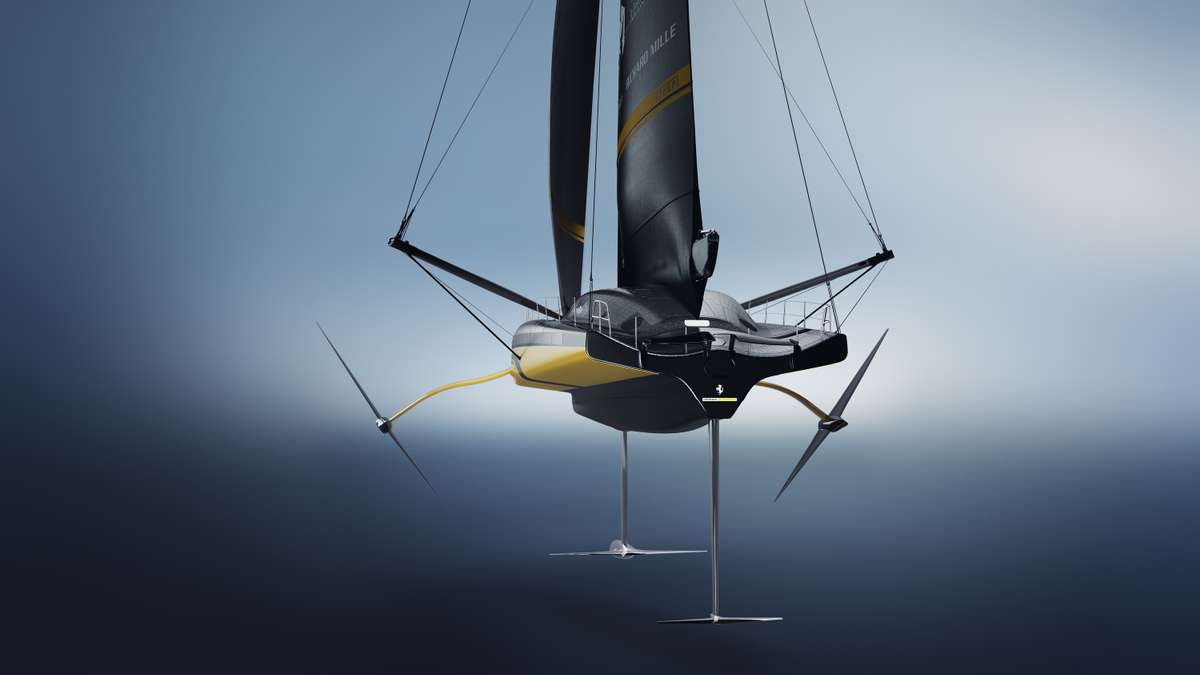
“Our idea is a flight control where the sailor sets the correct ride height of the boat, and then thinks about where he'd like to go,” says Lanzavecchia. “All the stability is guaranteed by the system. It's exactly what we do on our vehicles.”
By the team's own simulator estimates, switching that control on adds 10 to 20 per cent in performance – three or four knots of average speed in rough water, which over a lap of the planet quickly adds up.
All of which begs the question: why is one of motorsport’s biggest names building an ocean racer at all? More on that here.
Where it goes from here
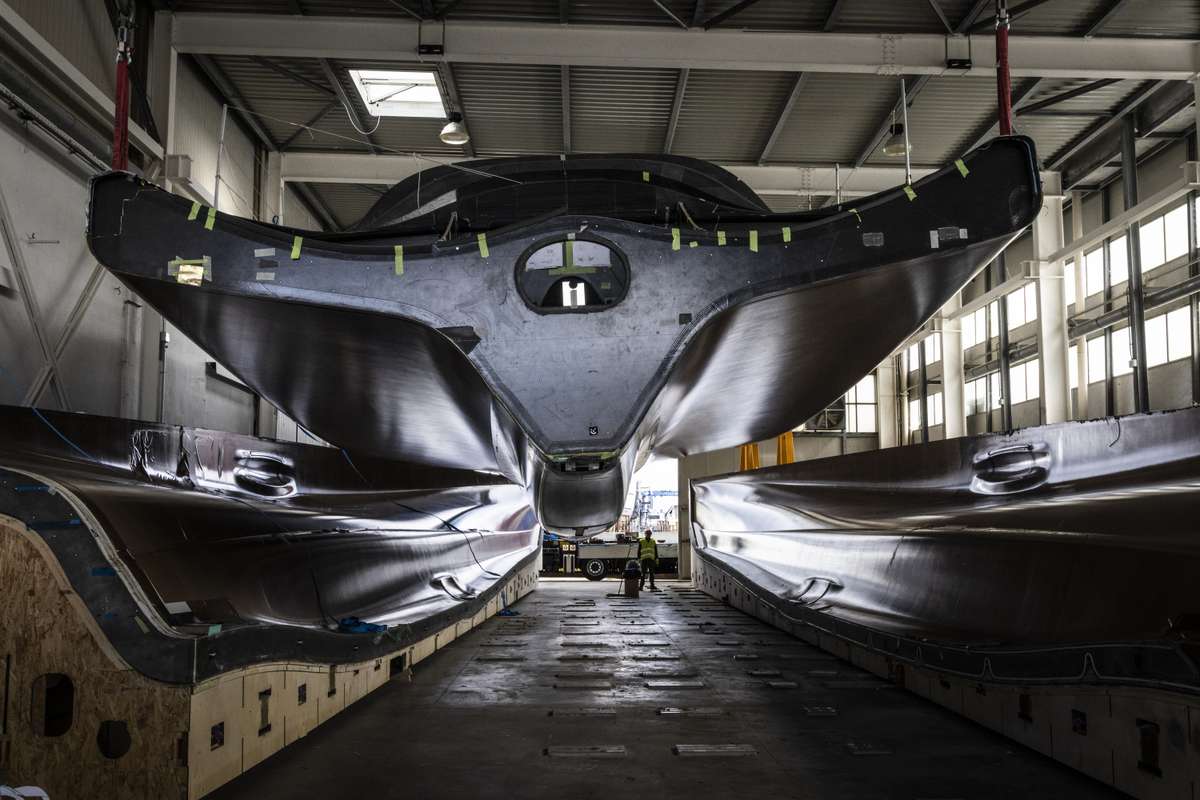
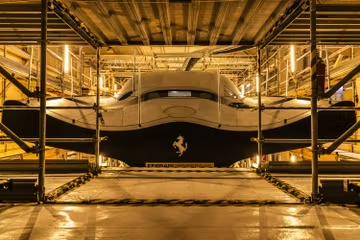
A few weeks ago the hull came out of its mould in Pisa, after more than a year of curing and lamination, and the mechanical, hydraulic and electrical systems are going in now. By the end of the year it moves to its base to have the appendages – rudders, foil arms, foils and the winged canting keel – and the mast fitted, followed by structural load testing and then towing tests. The foils are almost ready, down to their final machining, and the crew is due to be revealed in September: an international mix of sailors with foiling and ocean-racing experience.
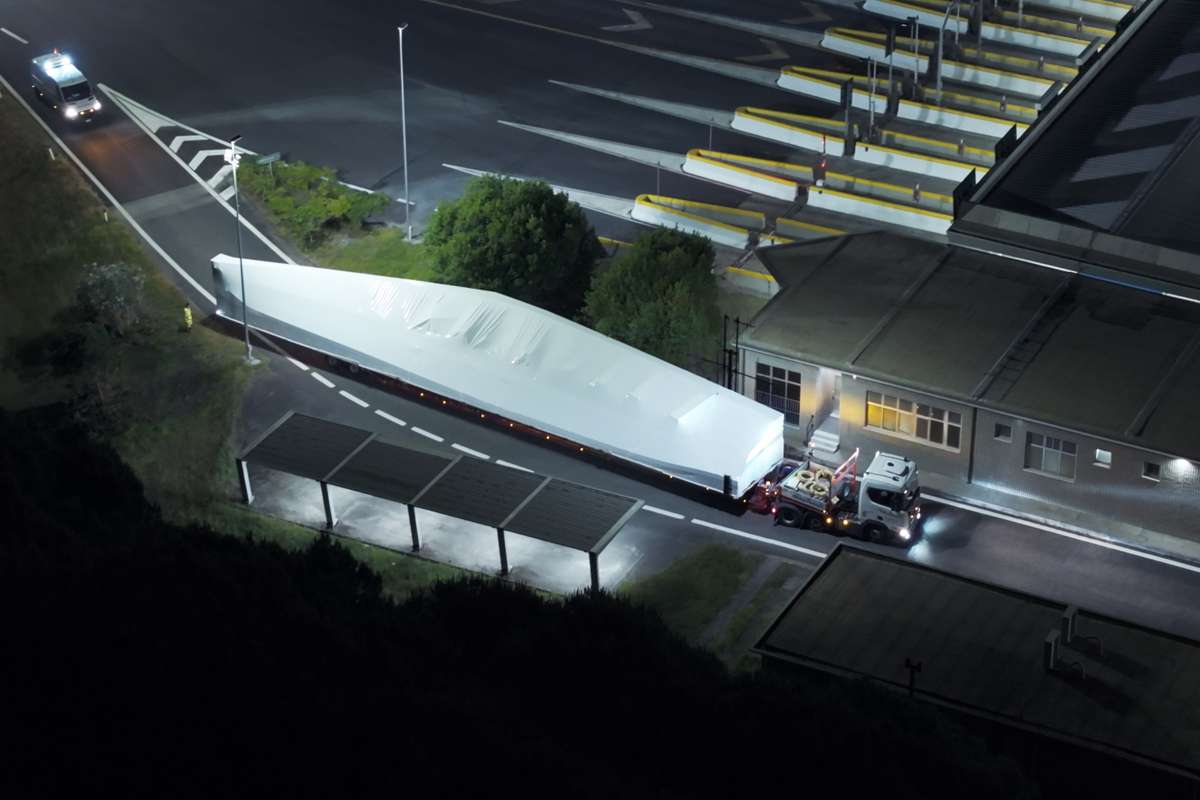
The boat should be in the water by the early months of next year, with racing possible by the end of 2027, all subject to how soon the crew can master it and prove it dependable. A full record attempt may be years off yet – because before any clock starts, the priority is keeping the crew safe and the boat in one piece.
For more on the project: Everything we know about Ferrari Hypersail
Articles You Might Be Interested in
Three legs and an electronic brain: how Ferrari Hypersail will fly (Pt. 2/7)
Django 7X edges out Balthasar for Rolex Middle Sea Race overall win
Grigio and Giallo: Up close with the finished Ferrari Hypersail hull (Pt. 1/7)
Inside the Batmobile: a first look at Ferrari Hypersail
Why pro sailors dread the Middle Sea Race - Course Preview
The week in racing - 12 Oct ’26
The Tabarly Effect: how one quiet sailor built a nation of ocean racers
The week in racing - 5 Oct ’26



Member Discussion