
Vendée Arctique: Goodchild first to Arctic Circle at the race’s turning point

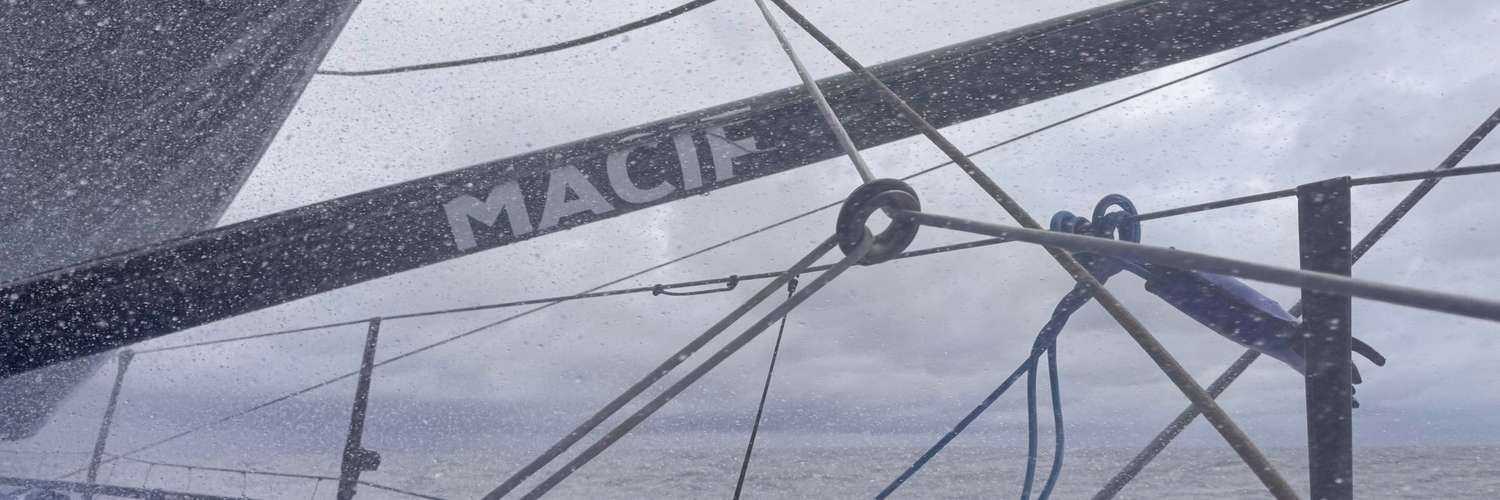
Sam Goodchild has taken the Vendée Arctique somewhere it’s never been. At 09:45 on Thursday morning, the Franco-British skipper of MACIF Santé Prévoyance steered across the Arctic Circle, becoming the first competitor to reach 66 degrees north in the three-edition history of the race – and the first sailor anywhere to get there solo and racing in an IMOCA. The previous two editions never had the weather to allow it. This one did, and Goodchild got there first.
That keeps him exactly where he's been since the opening hours of the race: out in front. At the halfway mark the order reads Goodchild, then Élodie Bonafous (Association Petits Princes – Quéguiner), Violette Dorange (Initiatives-Cœur), Francesca Clapcich (11th Hour Racing) and Ambrogio Beccaria (Allagrande Mapei) – with Arnaud Boissières (APRIL Marine), Nicolas d'Estais (Café Joyeux) and Manu Cousin (Coup de Pouce) making up the back group out near the Faroes, and Corentin Horeau (MACSF) already out of the race.
You can follow the fleet live on the official tracker.
As the first major event of the 2025–2028 IMOCA cycle, the Vendée Arctique is the opening chapter in the build-up to the next Vendée Globe on 12 November 2028, and the big story this year is that there’s no set course. The nine starters left Les Sables d'Olonne on Sunday with one instruction: cross the Arctic Circle wherever you like, then come home.
Here's how the first half has played out…
Sun 7 June: A fleet of nine heads for the unknown
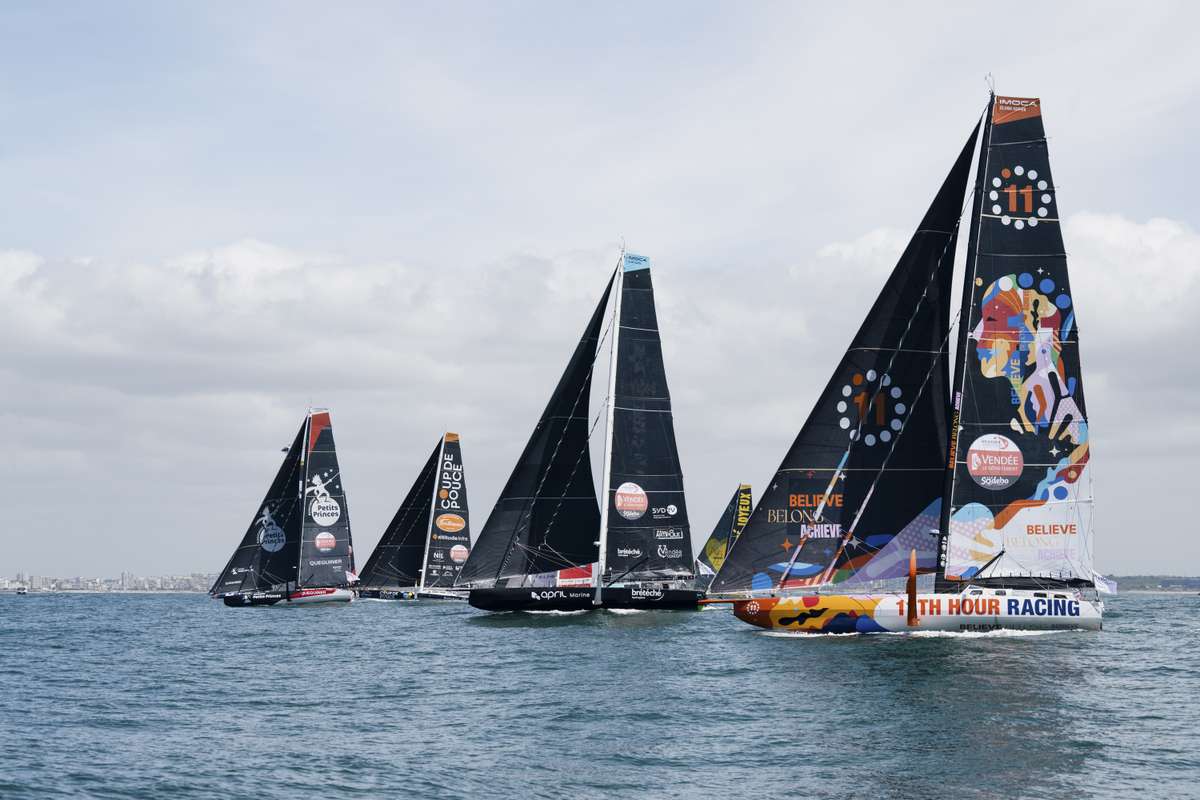
The fleet of nine slipped out of Les Sables d'Olonne at 13:02 in a feeble 4-7 knots of breeze, down a channel lined two kilometres deep with spectators. For a race that's really a curtain-raiser to the 2028 Vendée Globe, the send-off felt like the main event. "Sailing out through the channel is always a magical moment," said Clapcich, who admitted it gave her goosebumps, while Dorange reckoned she "almost cried the whole way through." The light air briefly suited d'Estais, the only daggerboard boat in a fleet of foilers. Then the chess began: Cousin and Boissières peeled off west around Île d'Yeu while the rest threaded the gap between island and coast. By nightfall the breeze had filled in, the foils started singing, and Goodchild led the way out front ahead of Horeau.
Mon 8 June: The breeze fills in and the gloves come off
That soft start was never going to last. A first front swept through on Monday morning and the mood changed in minutes. "We passed the front and it was quite sudden and quite violent," said d'Estais, already seasick and not loving it: "At first it was fun, but now it's not so much, and it won't be until we get to Ireland." Cousin lost two or three hours overnight fixing a mainsail hook – exactly the sort of gremlin that surfaces the moment the gun goes. Up front, Goodchild was driving hard and keen to break clear of Horeau, the pair trading 20-plus-knot bursts as they set course across the Celtic Sea towards Ireland.
Tues 9 June: A contender lost, and a fleet on its guard
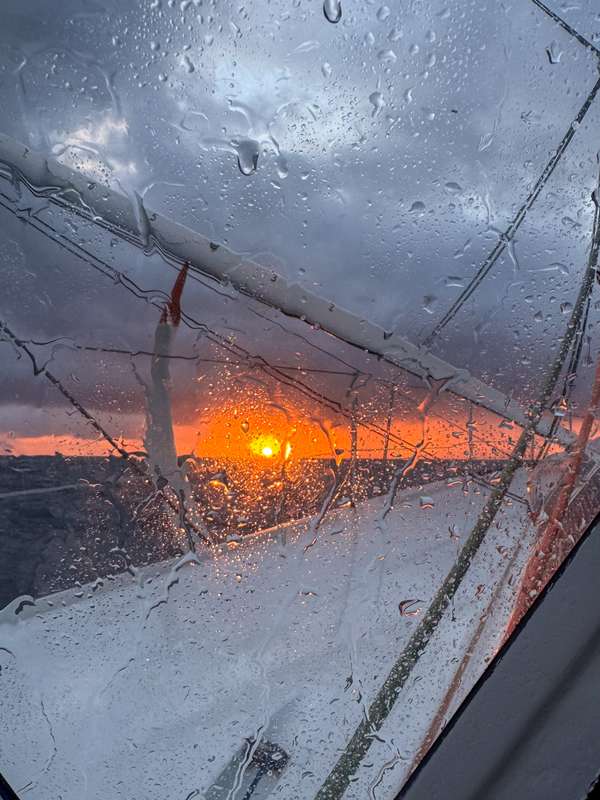
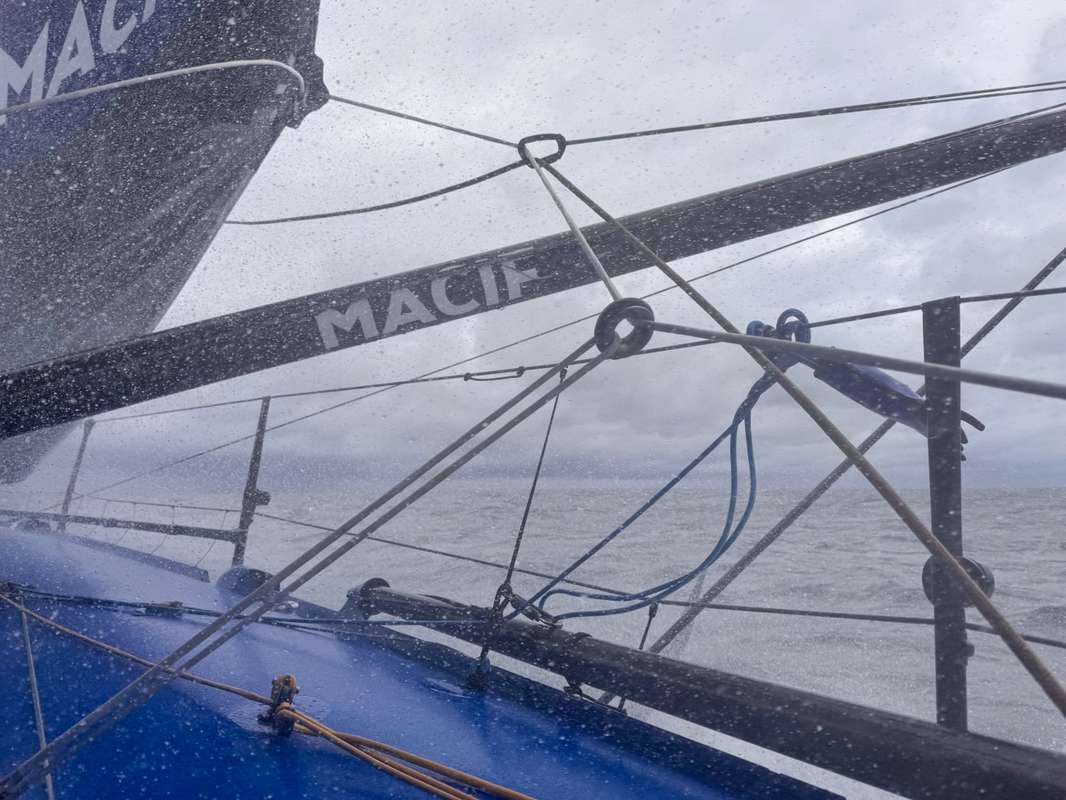
Then the Atlantic showed its teeth. Punching upwind in close to 30 knots with a four-metre sea, Tuesday was the hardest day so far, and the most expensive. Bonafous summed it up from the cockpit, dark rings under her eyes: "I've put on a riding helmet because we're doing a rodeo." Boissières dug out a helmet too, wary of getting hurt as the boat slammed off the waves. "Even making a cup of coffee is difficult," he said. And d'Estais, still queasy, offered the line of the race: "Racing is brilliant 80 per cent of the time, but right now we're in the other 20 per cent."
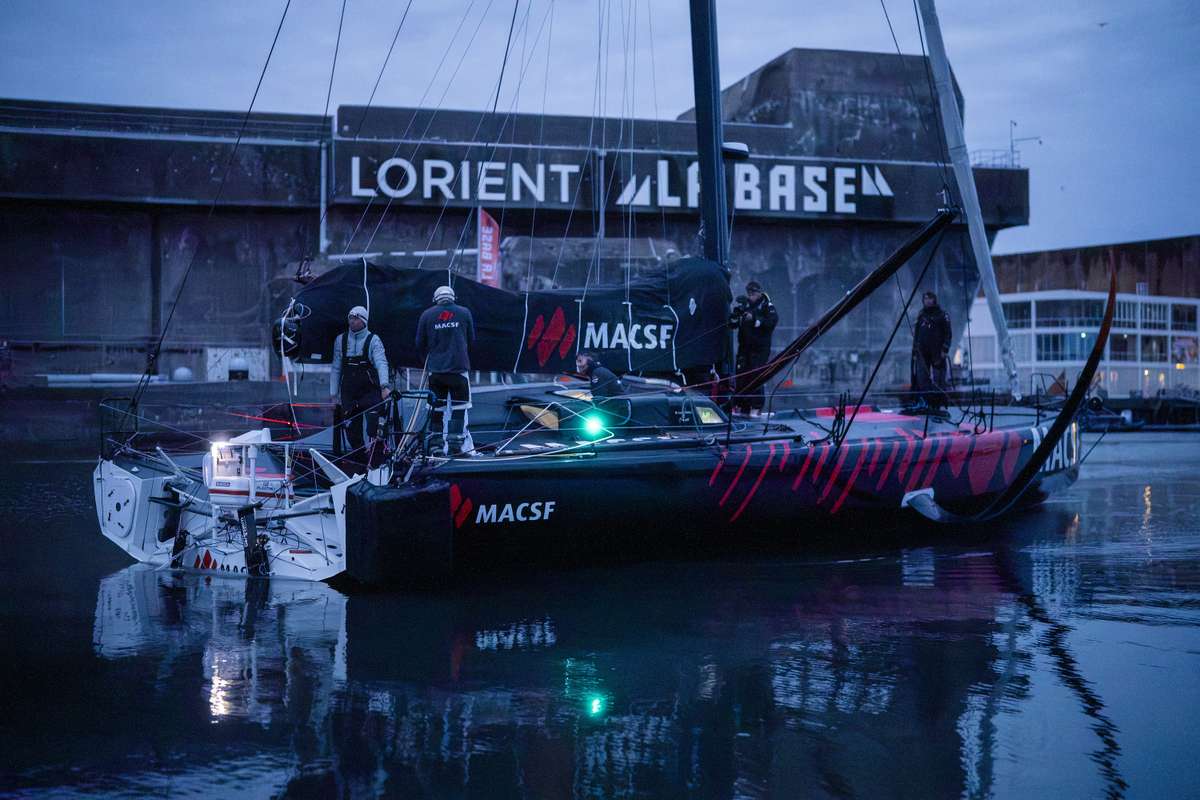
The real drama, though, belonged to Horeau. Lying second around a hundred miles from the Fastnet and scrapping with Dorange and Bonafous, the MACSF skipper – making his solo IMOCA debut – felt the J3 chainplate, the deck fitting that anchors the headsail, tear clean out of the deck. Lose that and the mast is suddenly a good deal more vulnerable. After two hours hunting for a fix, he turned for Lorient. "These are extreme machines that we push very hard," he said, taking it on the chin. "I'd rather it happened now than in the Vendée Globe." Goodchild was sorry to see him go: "It's tough to see him turning back. He was sailing really well."
Nine became eight.
Weds 10 June: The Arctic puzzle starts to take shape
Wednesday brought respite, and one of the stranger images of the race. With the leaders down to around 15 knots over a near-flat sea, the fleet went into recovery mode – naps banked, hot food at last, the batteries slowly clawing back up. Goodchild, who'd finally slept well, marvelled at the pace: "It feels like we've done about 10 days' worth of sailing in three days, all in different conditions."
Not everyone got to put their feet up. Off the north coast of Ireland, Beccaria found a rope and a buoy wrapped around his keel and no option but to go in after them. The Italian, racing his first big solo IMOCA event, pulled on a wetsuit and dived under the hull five times in icy water to cut it free, filming the lot. "I cried a little bit before diving," he said. Understandable, with the boat pitching in 18 knots and squalls. It cost him an hour-plus and a clutch of miles, on top of the electrical gremlins that had earlier dumped him into a "total blackout" at 20 knots.
By now the strategic puzzle was sharpening. With a windless zone waiting beyond the circle, the fleet had long written off the loop round the west of Iceland – too big a detour, and whale-protection zones to dodge. As race meteorologist Christian Dumard pointed out, the quickest point to reach the circle isn't necessarily the best place to start the run home. Nobody, meanwhile, fancied a return down the east of the UK through the oil rigs and shipping. "That route isn't really open for me," said Goodchild, "and I'm quite happy about that."
Thurs 11 June: A historic crossing, with the race still wide open
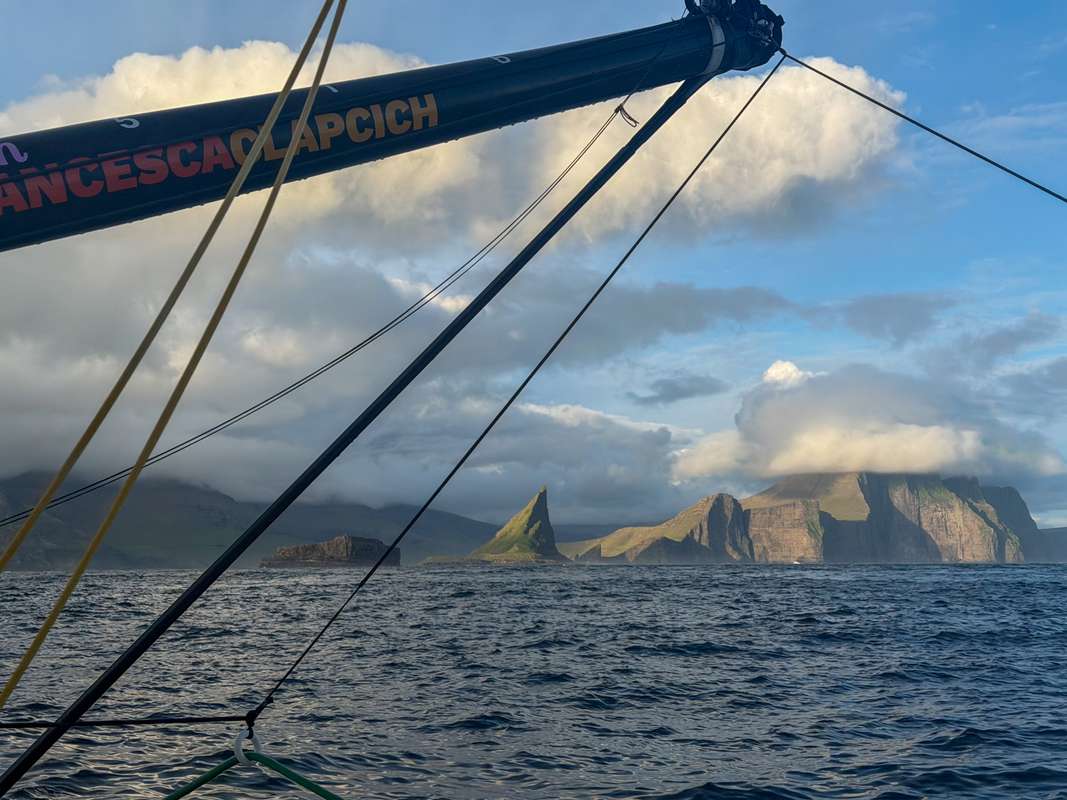
Which brings us to Thursday, and the record. Climbing through fog so thick Goodchild called it "grey, grey, grey… at times it really feels like the Southern Ocean," the leader described the whole thing as a "condensed mini-Vendée Globe" – cold water, endless humidity, condensation on every surface and, this far north, a sun that barely sets. At 09:45 he crossed 66 north, having nudged his crossing point west to set up a cleaner angle for the descent. "I could have crossed the Arctic Circle a little faster," he said, "but the main objective was to improve the return route" – though the moment wasn't lost on him: "very few people get the chance to experience this, and even fewer alone.”
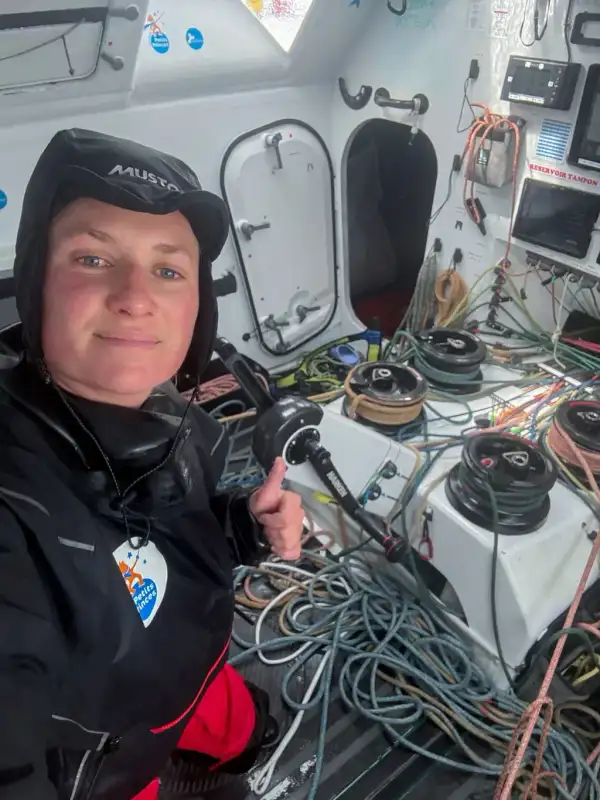
Bonafous was next due across, a few hours back and feeling every mile of the brutal stretch behind her. "Right now I'm crossing the centre of the low-pressure system and I'm stuck in very light winds. I'm literally exhausted," she reported, cold enough to have dug out her warmest layers. "Everything is either wet or half-wet." Dorange and Clapcich were pushing north behind her, the top four spread across the chart but but all still firmly in the race.
Down the order, it was a day of sharp contrasts. Boissières sat all but parked near the Faroes, tickled by the oddness of it – "I crossed paths with a small cargo ship; it's quite surprising to see other people in a place like this" – and cheered by what lay ahead: "The Arctic Circle is now less than 300 miles away, so naturally that puts a smile on your face." Beccaria, who'd gambled on slipping west of the Faroes and had just about every problem thrown at him, was groping through "thick, icy fog" so featureless he felt "somewhere outside of time," at one point shutting the boat up and firing the engine simply to thaw out. And d'Estais, who'd backed an easterly line to round the low-pressure system blocking the route, was quietly pleased it was paying off, and rather taken with the view: "you realise how lucky we are to be here. Sometimes I think I chose the wrong profession and should have become an explorer instead."
Now for the long road home
Goodchild's lead is comfortable rather than commanding, and on this evidence the harder half may be still to come. The free-route format means the leaders' chosen crossing points now dictate how cleanly they can get south – and there's already a depression forecast to make a nuisance of itself off Ireland on the way back.
The latest routings have the front-runners home in Les Sables d'Olonne between Sunday evening and Monday, but a lot can change before then.
Follow the fleet live on the official tracker.
Articles You Might Be Interested in
The week in racing - 14 Sep ‘26
United By The Ocean edge out 11th Hour Racing to win the first Ocean Race Atlantic

Podcast: Valencia SailGP review, and does the ACP break its own rules?
One week in: Q&A with The Ocean Race Atlantic’s Niall Myant-Best
The week in racing - 7 Sep ‘26
LIVE: The Ocean Race Atlantic fleet departs New York
The week in racing - 31 August ‘26
The week in racing - 17 August ‘26



Member Discussion