
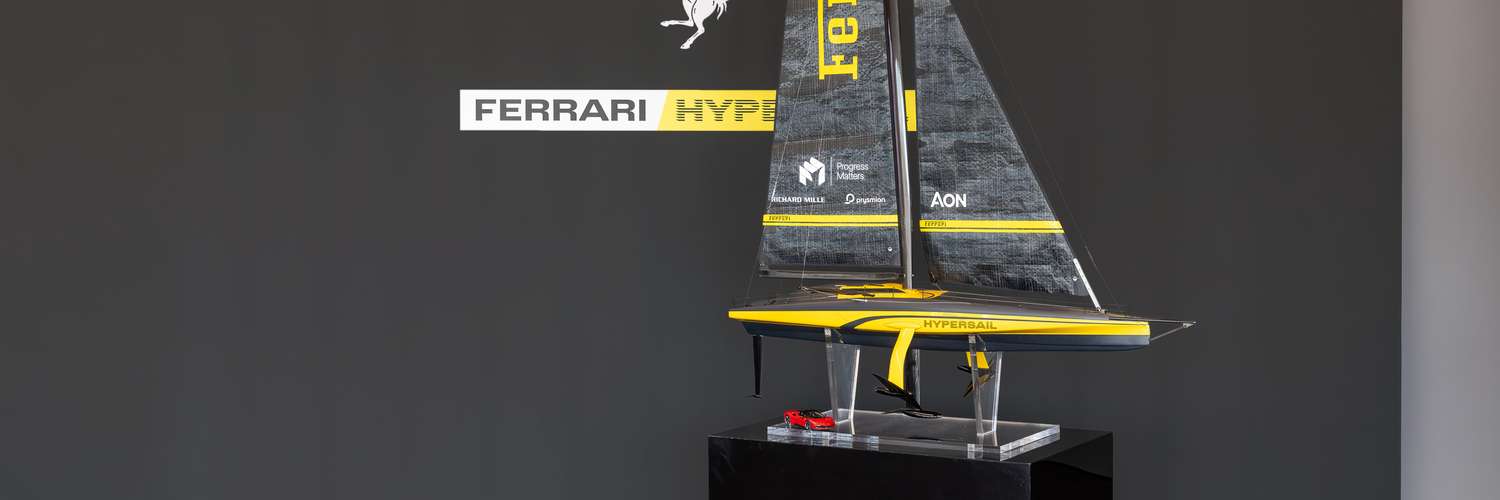
Ferrari Hypersail: Why a car company is building an ocean racer

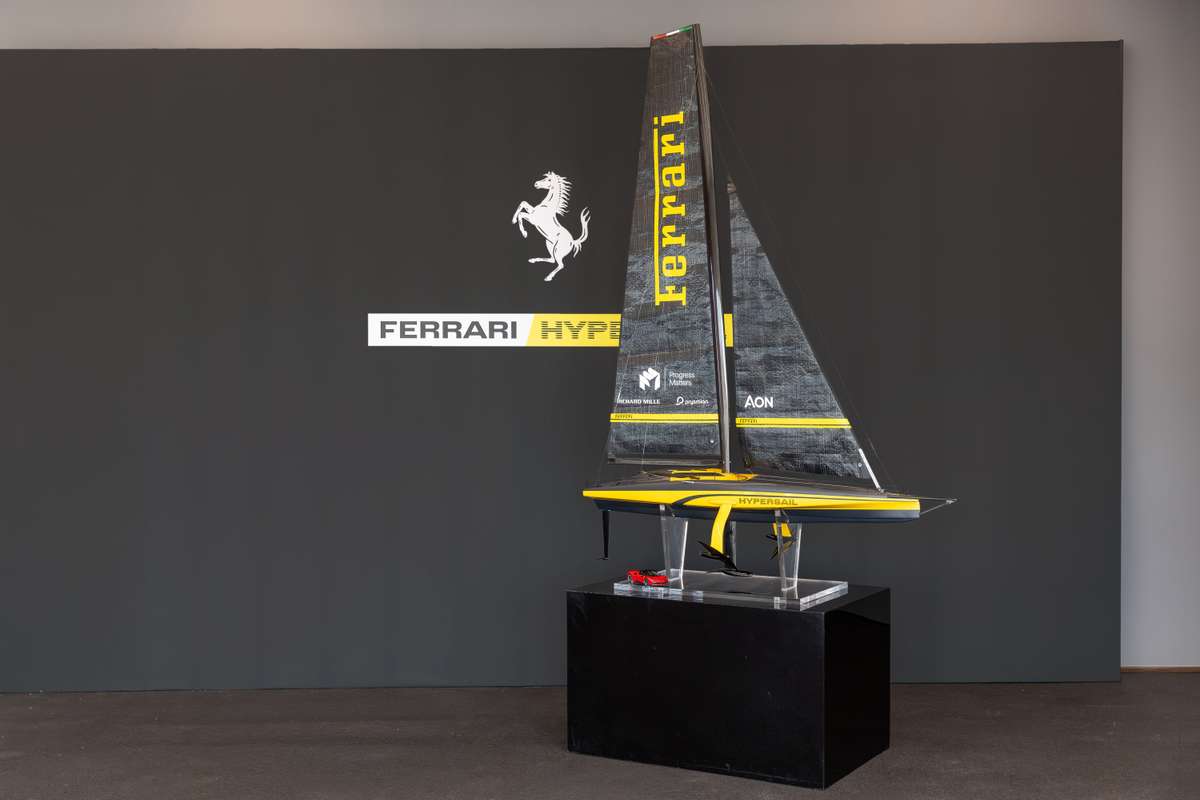
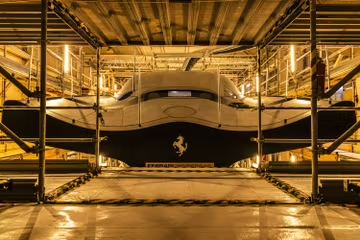
Ferrari has never built a sailing boat. Its first is Hypersail, a 100-foot fully foiling monohull designed to fly across oceans on renewable energy alone and chase records that have only ever belonged to multihulls. It's an audacious piece of engineering, and it raises the question: why is one of motorsport's biggest names building an ocean racer at all?
Ferrari puts it down to three things: performance, innovation, and what it calls "contamination", its own term for two-way technology transfer. The project was conceived as a marriage of the company's two defining qualities – the raw performance of the F80 hypercar and the efficiency of the Luce, its first all-electric car – fused, in Ferrari's telling, through a constant exchange of know-how. The company casts it as open innovation, carrying the Prancing Horse's expertise beyond the racetrack and the tarmac and into a world it’s never worked in before.
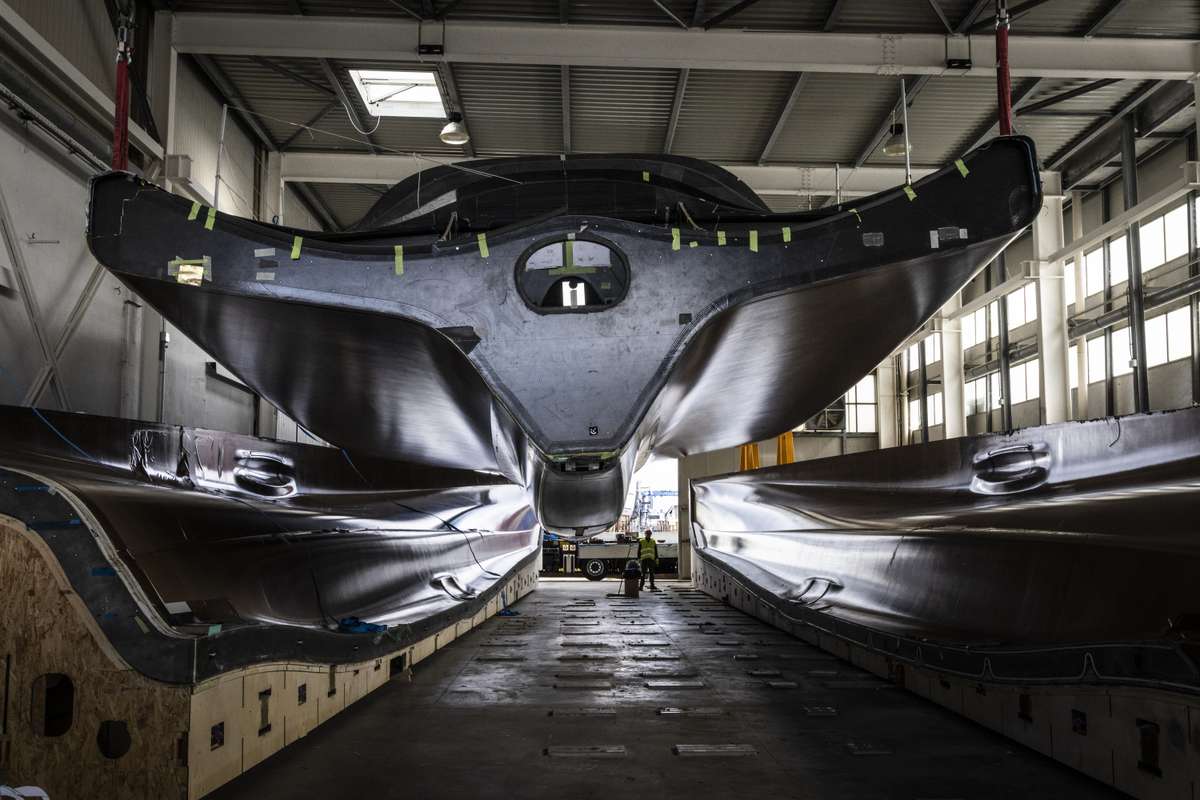
Bridging those two worlds is chief technology officer Matteo Lanzavecchia, who alongside Hypersail heads vehicle engineering for the sports cars. Ask him what the boat and the cars share, and the answer is less about hulls and horsepower than a change in priorities.
“Looking from an engineering point of view, we have the same goals or challenges. I have been in Ferrari for a long time, and we are always pushing performance. This boat, of course, is about performance. But at the same time, in recent years at Ferrari, we’ve been working a lot in terms of efficiency and energy management. In the past, we made high-performance cars, and we didn't care too much about the consumption. If we had issues with mileage, we put a bigger tank. But nowadays, the balance between performance and energy management is a must.”
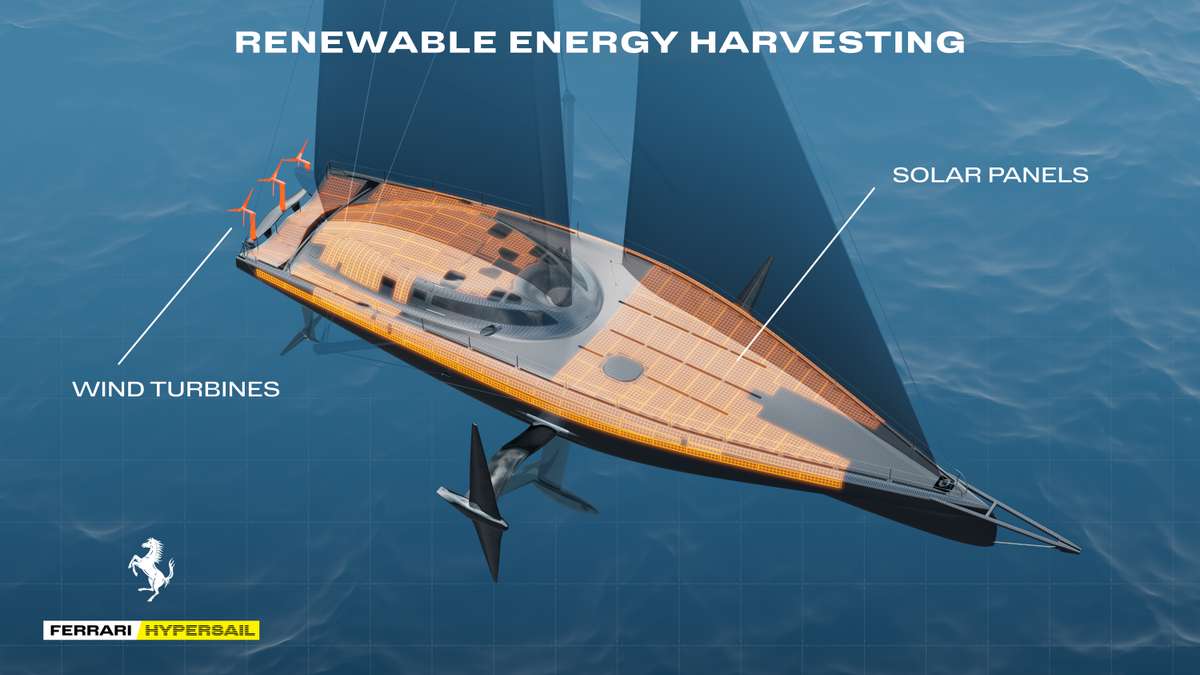
That sits alongside Ferrari's wider move into electrification – a company built on the combustion engine now learning to generate and manage its own power. It shows in the control systems, too. Where a Ferrari 20 years ago had ABS and little else, the F80 hypercar now runs more than 20 systems at once, and Lanzavecchia sees the boat's autopilot – the automated flight control that holds the hull stable across a moving ocean – as the same idea in a different medium.
“In recent years, we’ve been adding new control systems to our vehicles. These systems are able to exploit the full performance of the car, and everything we put in place in the vehicle is seamless. The driver is turning the steering wheel and braking, but all the systems are working in the background. That was exactly the same principle that we put into the flight control of Hypersail.”
The sharing isn't limited to ideas and systems; whole components have made the jump too. An electric axle lifted from the Luce sits inside Hypersail, driving the hydraulics that move the foils and the propeller when the boat’s in harbour.
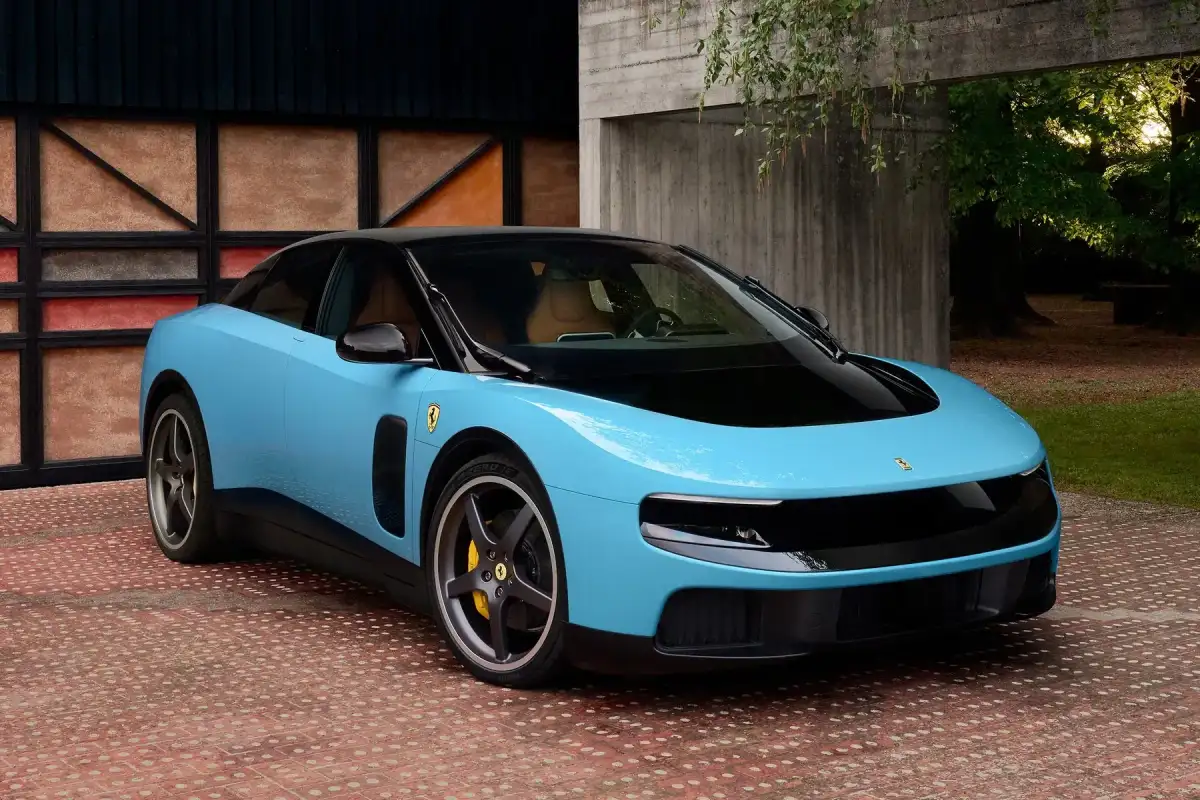
“The Luce was a big challenge, because aerodynamically we were pushing a lot of downforce. The first goal there was the best aerodynamic efficiency – to be less draggy. That's exactly why we chose a monohull; compared with a trimaran it's smaller, with less frontal surface. The efficiency isn’t just aerodynamic, but electronic and mechanical too. Everything we learned on the Luce, we were working on at the same time on Hypersail.”
Beyond that, the crossovers stack up:
- Motors: the winch-by-wire pedestals – where the crew's grinding is converted into electricity rather than driving the sails directly – spin the exact same electric motors found in the active suspension of the Ferrari Purosangue and F80.
- By-wire philosophy: the thinking behind them comes from the 12Cilindri Manuale, Ferrari's electronic manual gearbox, which turns a physical action into an electronic signal while keeping an analogue feel.
- Energy conversion: the boat's surplus energy runs through a DC-DC converter lifted from the F80, 98 per cent efficient.
- Software: the F80's "Boost Optimisation" algorithm, which decides where on a lap it's worth spending battery energy and once saved 35 kilos of battery weight, has been repurposed for Hypersail's foil controllers, judging which wave is worth flying over and which is better surfed.
- Working methods: even the development process has crossed over, driver-in-the-loop simulation becoming sailor-in-the-loop.
- Expertise: the know-how runs deep too, with Hypersail's head of aerodynamics having held the same role in Ferrari's Formula 1 team.
And the traffic isn't one-way. The project holds more than 18 patents, and winch-by-wire has itself been reversed back into the road cars, where the same thinking now underpins Ferrari's new manual gear shifter by-wire.
And that’s the point. Ferrari still wants the record – no monohull has ever held it, and being first would be quite the feat. But whether or not Hypersail out-runs the trimarans, the innovation coming off it is already finding its way back onto the road. In the end, Hypersail is a laboratory that just happens to race across the sea.
Topics
Articles You Might Be Interested in
Three legs and an electronic brain: how Ferrari Hypersail will fly (Pt. 2/7)
Django 7X edges out Balthasar for Rolex Middle Sea Race overall win
Grigio and Giallo: Up close with the finished Ferrari Hypersail hull (Pt. 1/7)
Inside the Batmobile: a first look at Ferrari Hypersail
Why pro sailors dread the Middle Sea Race - Course Preview
The week in racing - 12 Oct ’26
The Tabarly Effect: how one quiet sailor built a nation of ocean racers
The week in racing - 5 Oct ’26



Member Discussion